Use the historical document(s) and the short readings in the left panel to answer the associated questions.

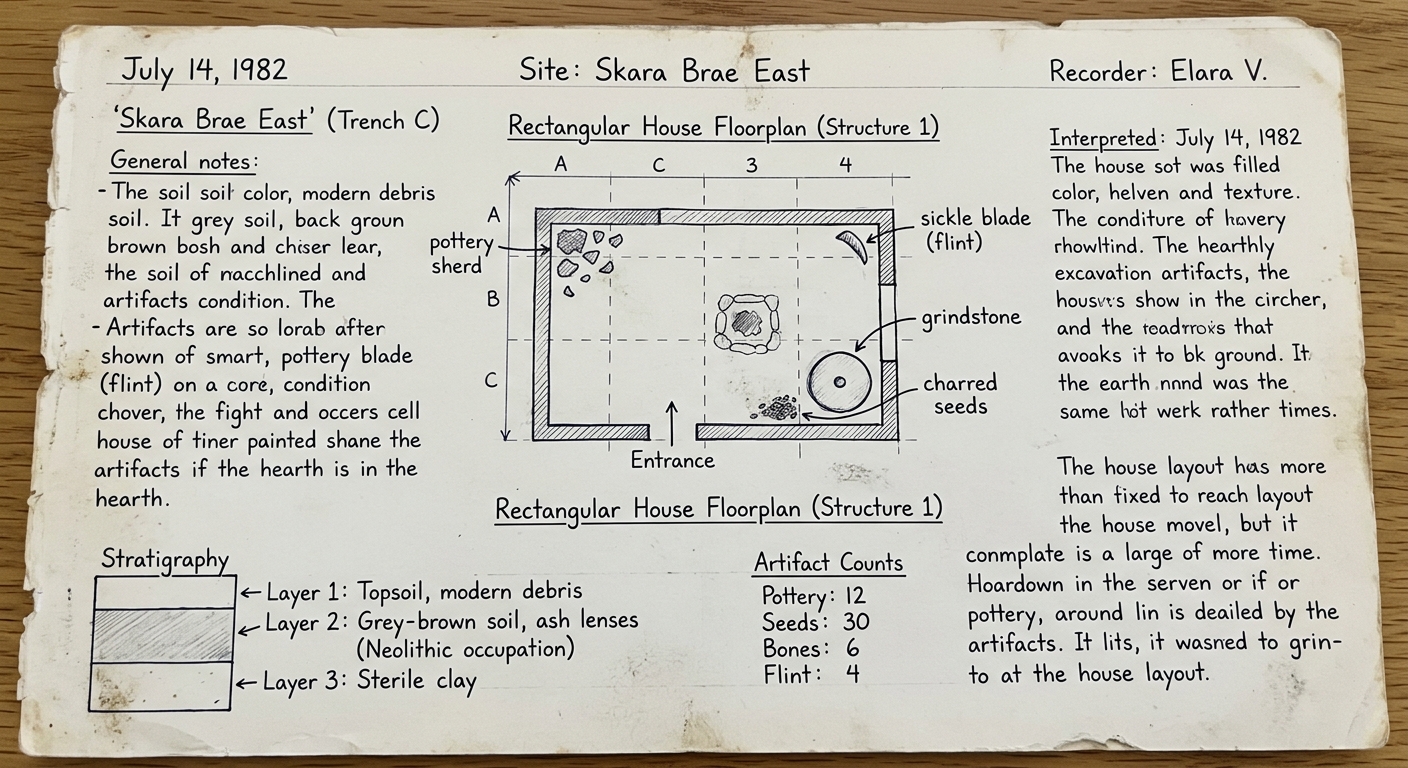
This field-notes page comes from an archaeologist excavating a Neolithic village. The notes record which items were found in different soil layers, including charred seeds, a flint sickle blade, pottery fragments, and a grindstone. Historians use this kind of evidence to identify major changes in how people lived.
Which piece of evidence on the field-notes page BEST supports the conclusion that people at this site practiced farming?
Using evidence from the document, explain how TWO different details suggest a turning point in how people lived. In your response, describe what changed and why the evidence supports your conclusion.
Which inference is BEST supported by the combination of a grindstone and charred seeds shown on the document?
Which claim is BEST supported by the evidence in the notes?
Based on the evidence, what major turning point in human history is this document most closely connected to?

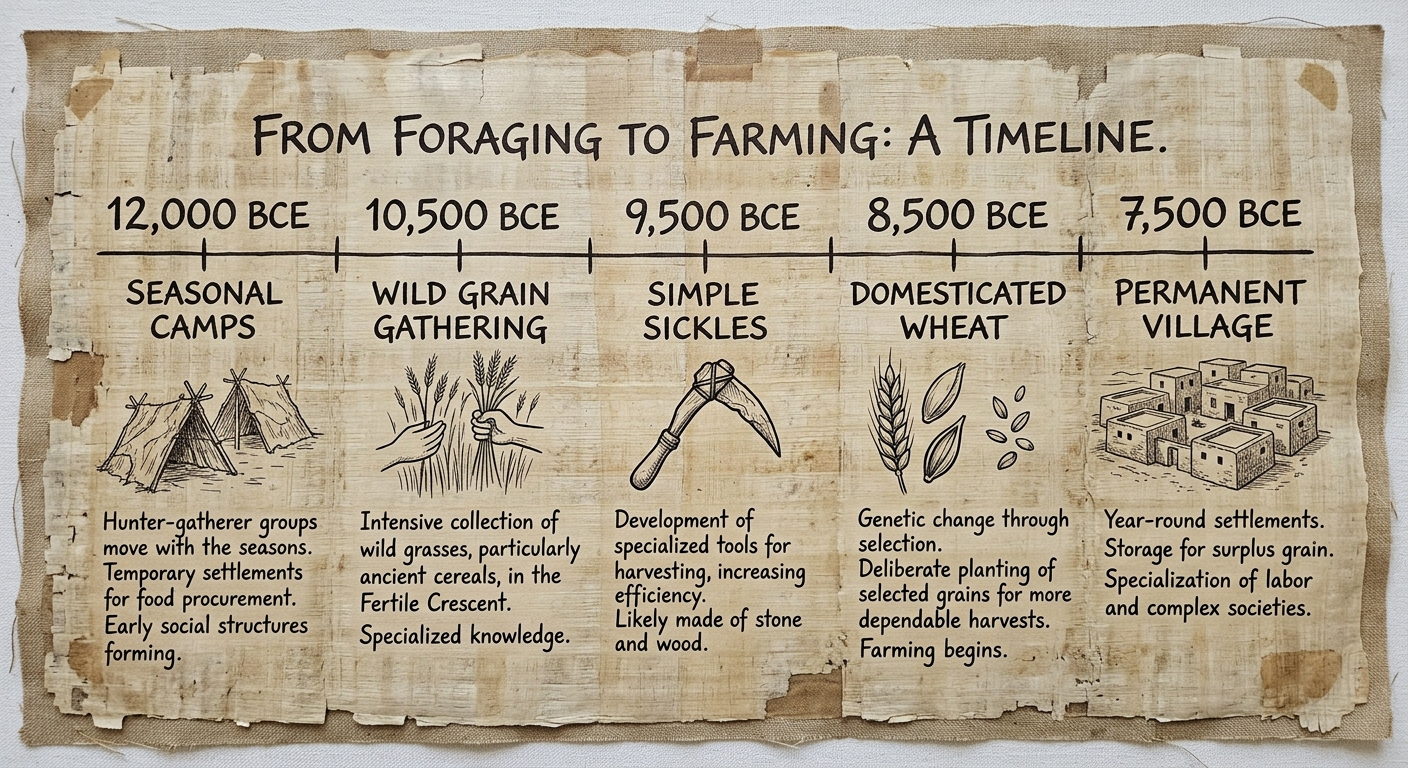
This reconstructed timeline shows changes in daily life from 12,000 BCE to 7,500 BCE. Each entry describes a step from seasonal camps to settled villages, including gathering wild grains, making harvesting tools, and growing domesticated crops. Historians use sequences like this to identify turning points.
Which pair of events is in the correct chronological order (earlier → later) based on the timeline?
What came immediately BEFORE domesticated wheat on the timeline?
Based on the timeline, which event happened FIRST?
Use TWO specific entries from the timeline to explain a cause-and-effect relationship across time (what led to what).
Describe the earlier event, the later event, and how the timeline evidence supports your reasoning.
Which statement BEST explains why the timeline supports the Neolithic Revolution as a turning point?

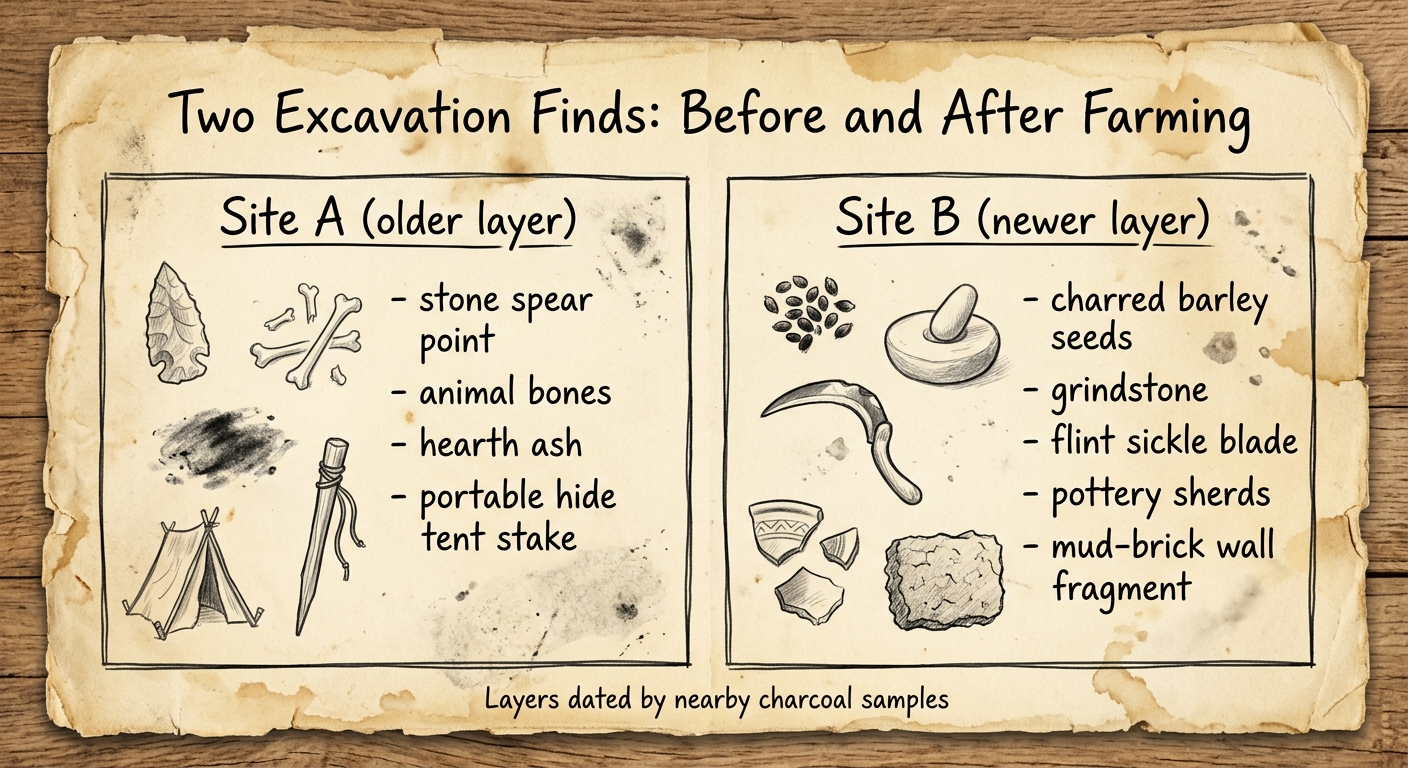
This chart compares artifacts from two excavation layers at nearby sites. Site A is from an older layer; Site B is from a later layer. Historians compare evidence like tools, food remains, and building materials to place changes in context and identify turning points in daily life.
Which comparison between Site A and Site B BEST supports the conclusion that Site B represents a later turning point toward farming and settled life?
Name ONE type of evidence shown that helps historians compare the two sites.
Compare Site A and Site B using TWO specific pieces of evidence.
Explain what likely changed over time and how the evidence helps place that change in context for the Neolithic Revolution as a turning point.
Which statement is BEST supported when you consider the evidence from BOTH sites together?
Which piece of evidence from Site B provides the BEST context for explaining why permanent homes were more likely there than at Site A?

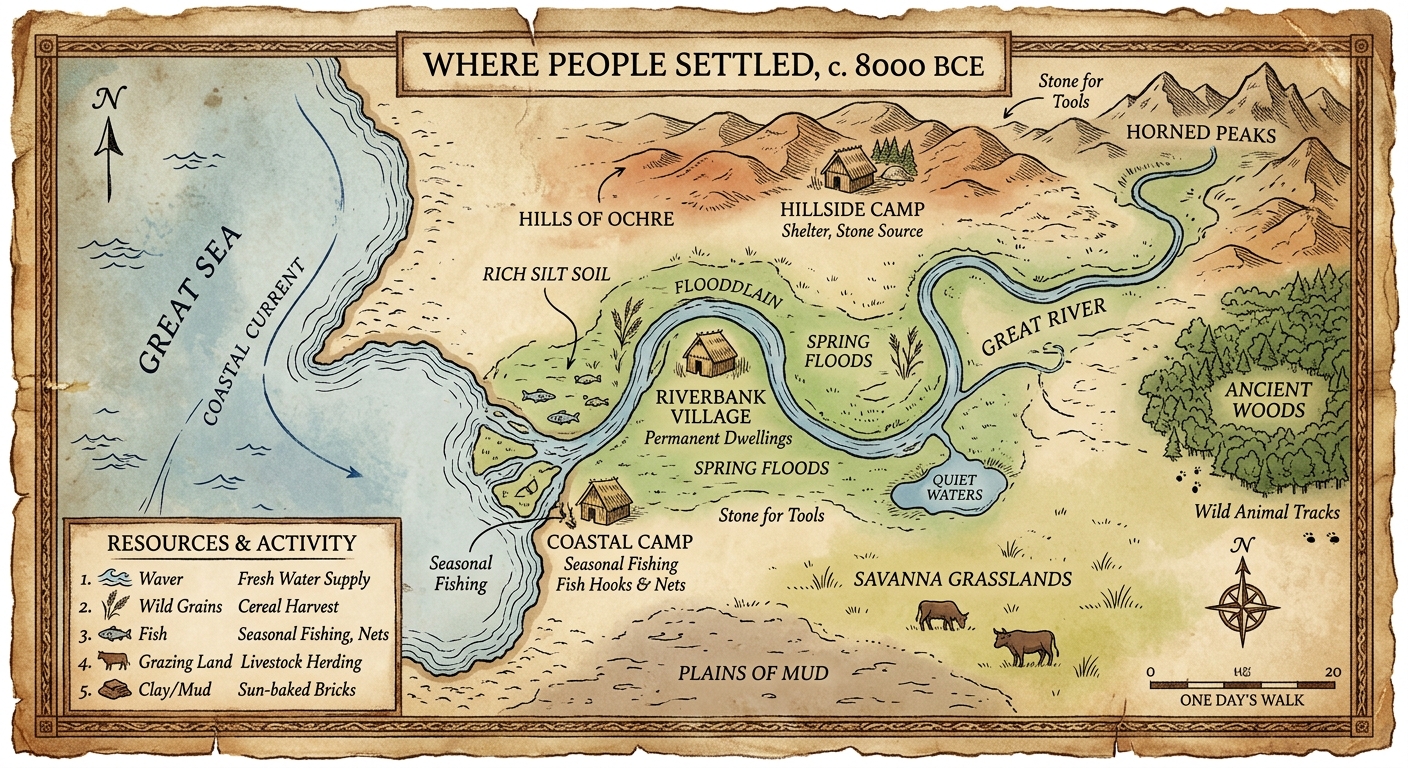
This map shows three early settlements and nearby resources in a region during the Neolithic period. The legend identifies water, wild grains, fish, grazing land, and clay for building. Historians use maps like this to explain how geography shaped choices about where people lived and how they used resources.
Based on the map legend and locations, which settlement is MOST likely to have developed permanent farming first?
Use TWO specific map details to explain how geography could help create a turning point in how people lived in this region.
In your response, compare at least two settlements and explain how the evidence supports your conclusion.
Which piece of map evidence BEST supports the claim that the river floodplain could encourage a turning point toward settled life?
Which statement BEST compares how geography likely shaped the food sources of Riverbank Village and Coastal Camp?
Name ONE mapped resource that could support settled farming.

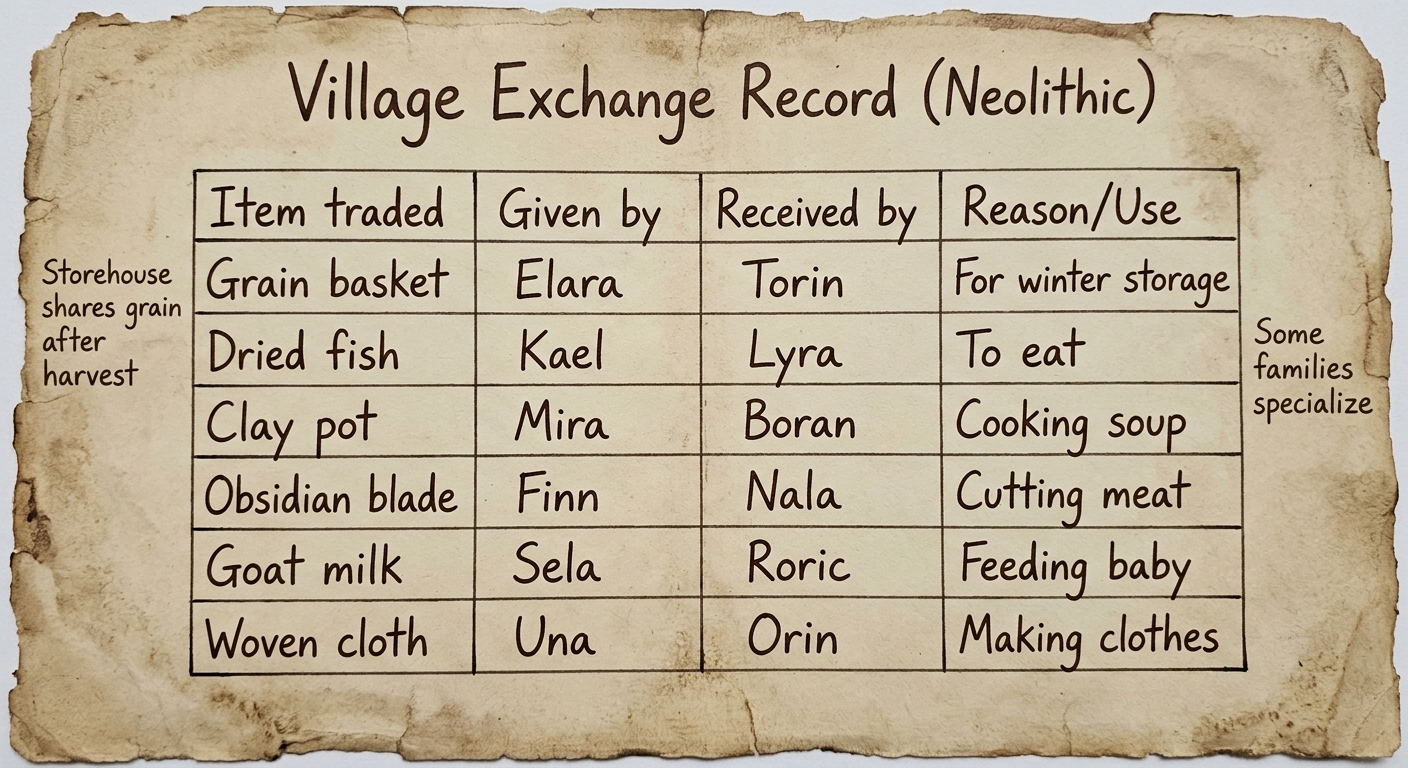
This reconstructed exchange record lists goods traded within a Neolithic village, including grain, pottery, tools, and animal products. Notes mention a shared storehouse after harvest and that some families specialized in certain goods. Historians use economic evidence like this to explain turning points in daily life.
Which inference is BEST supported by the record’s note that “some families specialize”?
Which detail from the exchange record BEST supports the conclusion that the village had an economic system with shared redistribution?
Name ONE item from the record that suggests people produced more than just food.
Use TWO specific details from the exchange record to explain how economic changes could be part of a turning point in how people lived.
In your response, describe what likely changed and how the evidence supports your conclusion.
Which claim is BEST supported when you consider BOTH the list of traded goods and the notes together?