Use the historical document(s) and the short readings in the left panel to answer the associated questions.
Use the historical document(s) and the short readings in the left panel to answer the associated questions.
Use the field note image to track how a settlement could change over time. The sketch shows a river, canal, houses, a temple, and symbols used for counting goods. Use this evidence to place developments in order and explain how shared customs and beliefs helped unite people as the settlement grew.
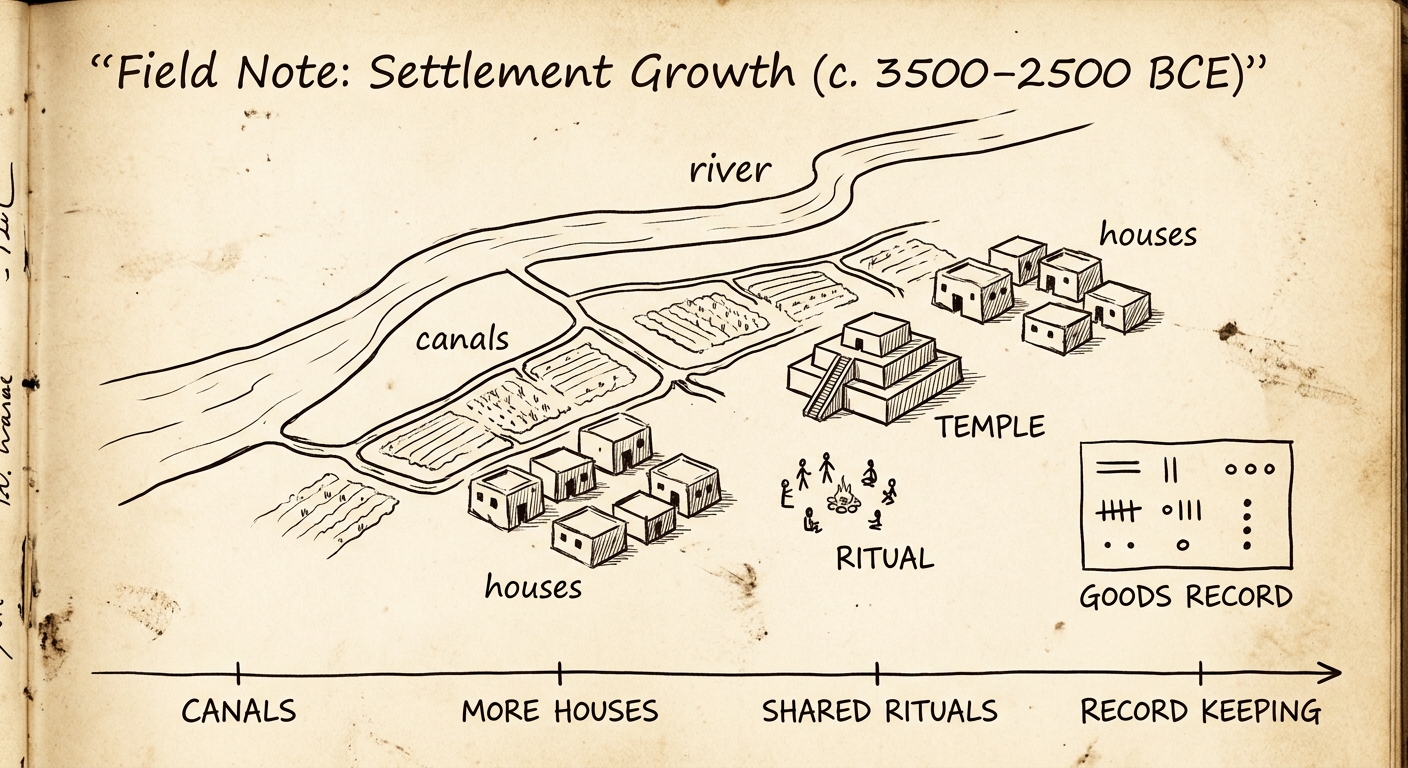
Use evidence from the field note to explain how shared customs or beliefs could help a settlement stay united as it grew over time.
Write one well-formed paragraph.
Which sequence best shows a logical order of developments for this settlement over time?
Based on the field note, which development most likely happened first?
Explain a cause-and-effect chain, in time order, showing how irrigation and food surplus could lead to new shared customs, beliefs, or ideas in a growing river valley settlement. Write one well-formed paragraph.
Which piece of evidence from the field note MOST directly supports the idea of shared customs and beliefs (a group identity)?
Read the field note image. It summarizes evidence from a river valley civilization. Use the map, tablet sketch, and timeline to place key developments in time and connect them to features of complex societies (cities, government, technology, writing, specialization, and social hierarchy).
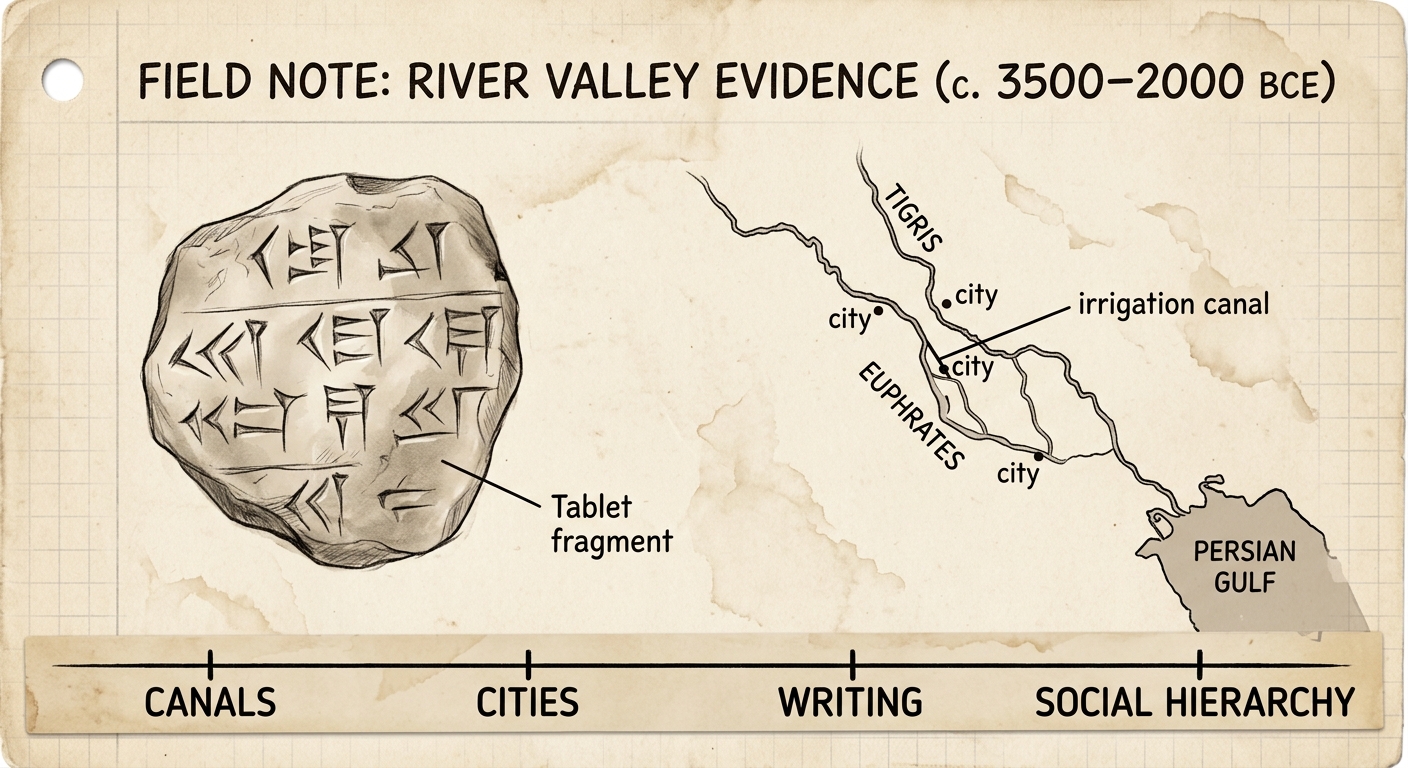
Use evidence from the document to explain how building irrigation canals could lead to the growth of cities and job specialization over time.
Write one well-formed paragraph.
Which characteristic of a complex civilization is MOST directly supported by the “tablet fragment” part of the document?
The standard says Mesopotamia, the Nile River valley, the Indus River valley, and the Yellow River valley developed complex societies.
Using the document as an example, explain two characteristics that would likely appear in ANY of these river valley civilizations, and explain why they would develop in that order over time. Write one well-formed paragraph.
Which sequence best matches the order shown on the document’s timeline?
Based on the timeline in the document, which development happened earliest?
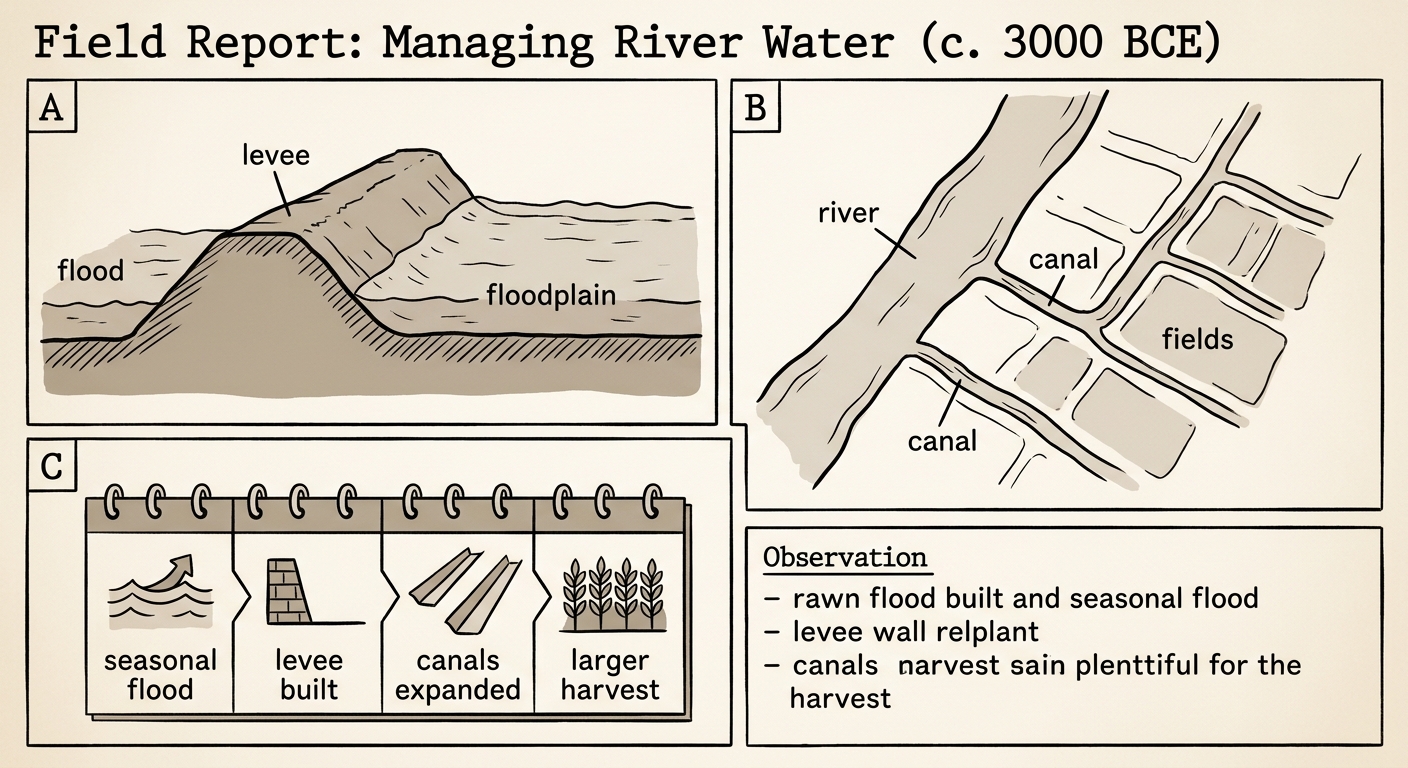
Study the field report image about river flooding and water control. Use the diagrams and timeline to explain how people changed their environment. Then place the steps in time order and connect those changes to improved farming and settlement growth.
Use evidence from the document to explain a cause-and-effect chain, in time order, showing how flooding could lead people to build levees and canals and how these changes could affect farming.
Write one well-formed paragraph.
Which sequence best matches the time order shown in the document?
Which change in the document is the clearest example of people modifying the environment to manage a river?
According to the timeline in the field report, what happened immediately before canals were expanded?
Choose two river-valley environmental challenges shown or implied in the document.
Explain, in time order, how people could respond to those challenges and how the responses could help a civilization grow.
Write one well-formed paragraph.
Study the city ration record image. The roles list and grain amounts show how hierarchy shaped access to resources. Use the timeline to place changes in order, then explain how leadership and specialization could strengthen social ranks and limit opportunities for some groups over time.
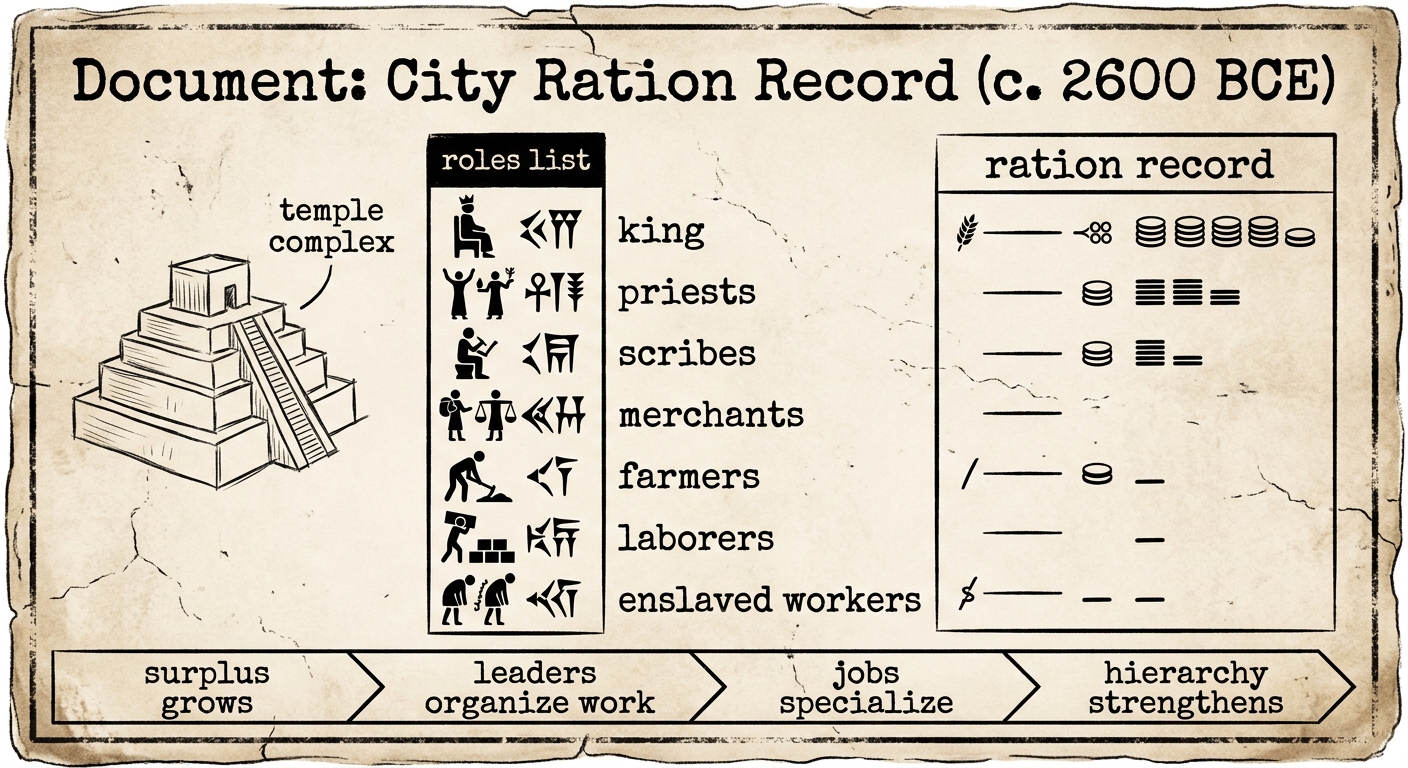
Which evidence MOST directly shows unequal access to resources in this society?
Which sequence best matches the order shown on the timeline?
Choose two groups from the roles list. Explain how hierarchy could affect each group’s access to power, wealth, or jobs over time, using the ration record as evidence.
Write one well-formed paragraph.
In the document’s timeline, what happens immediately before hierarchy strengthens?
Use evidence from the document to explain, in time order, how leaders organizing work could increase their power and change people’s access to jobs or wealth.
Write one well-formed paragraph.