Use the historical document(s) and the short reading in the left panel to answer the questions. Compare perspectives and use evidence from the sources to support your answers.
Historical Document:
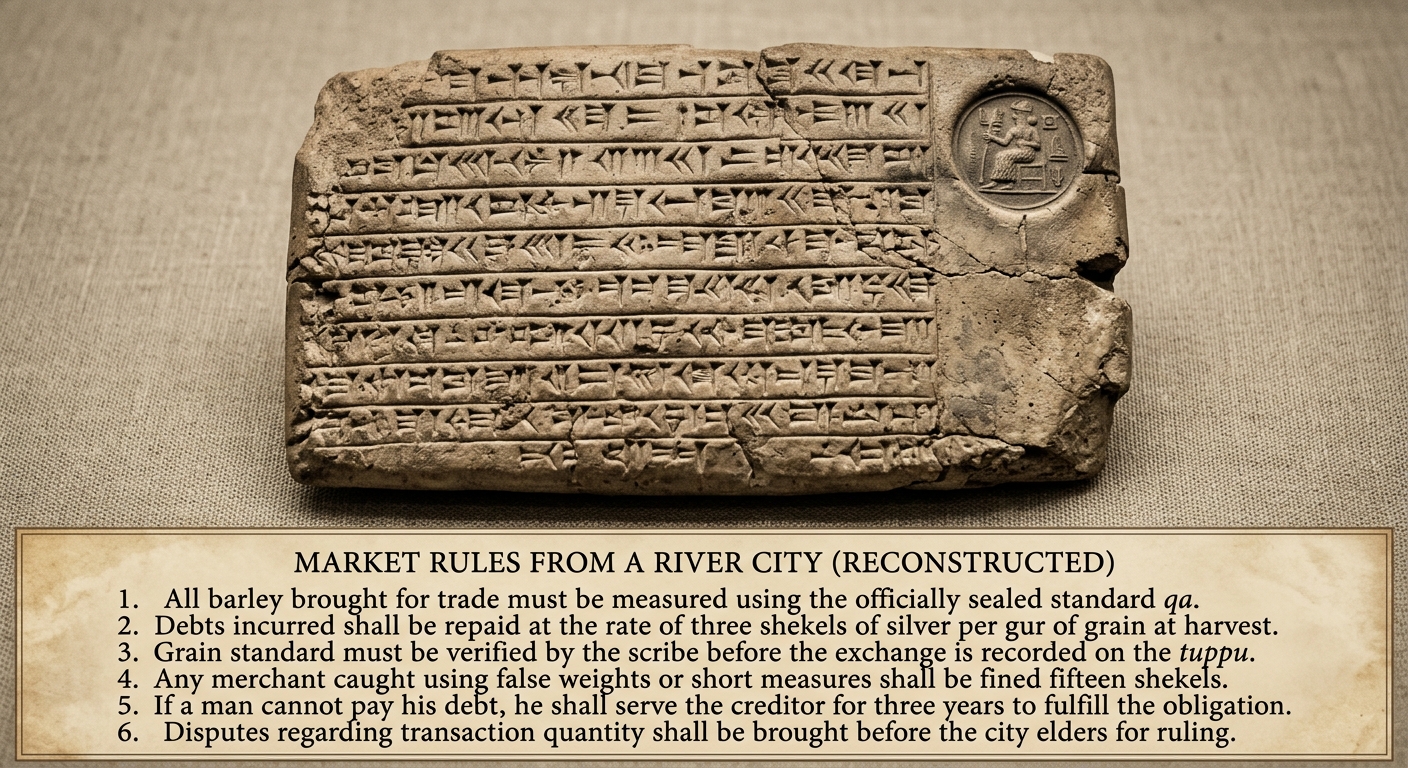
This reconstructed tablet describes market rules in an early river-valley city. It lists shared expectations about fair weights, debt repayment, and punishments for cheating. Like other ancient societies, these rules helped people cooperate in crowded settlements and supported trade and farming.
Which comparison best contextualizes this tablet within early river-valley civilizations?
Explain how living near a major river could influence what rules or customs a society valued. In your answer, connect the tablet’s focus (trade/debts/fair weights) to at least one other river-valley region and describe how its geography or economy could lead to similar or different priorities.
Using evidence from the reading, explain one way shared customs or beliefs helped maintain order in early settlements. Then compare it to one other river-valley civilization (for example, Egypt, Indus Valley, or China) by describing a different custom or belief that also shaped community identity and cooperation.
Which problem in an early settlement is this kind of written rule most likely meant to address?
Based on the reading and document, which shared custom is the tablet most directly trying to strengthen?
Historical Document:

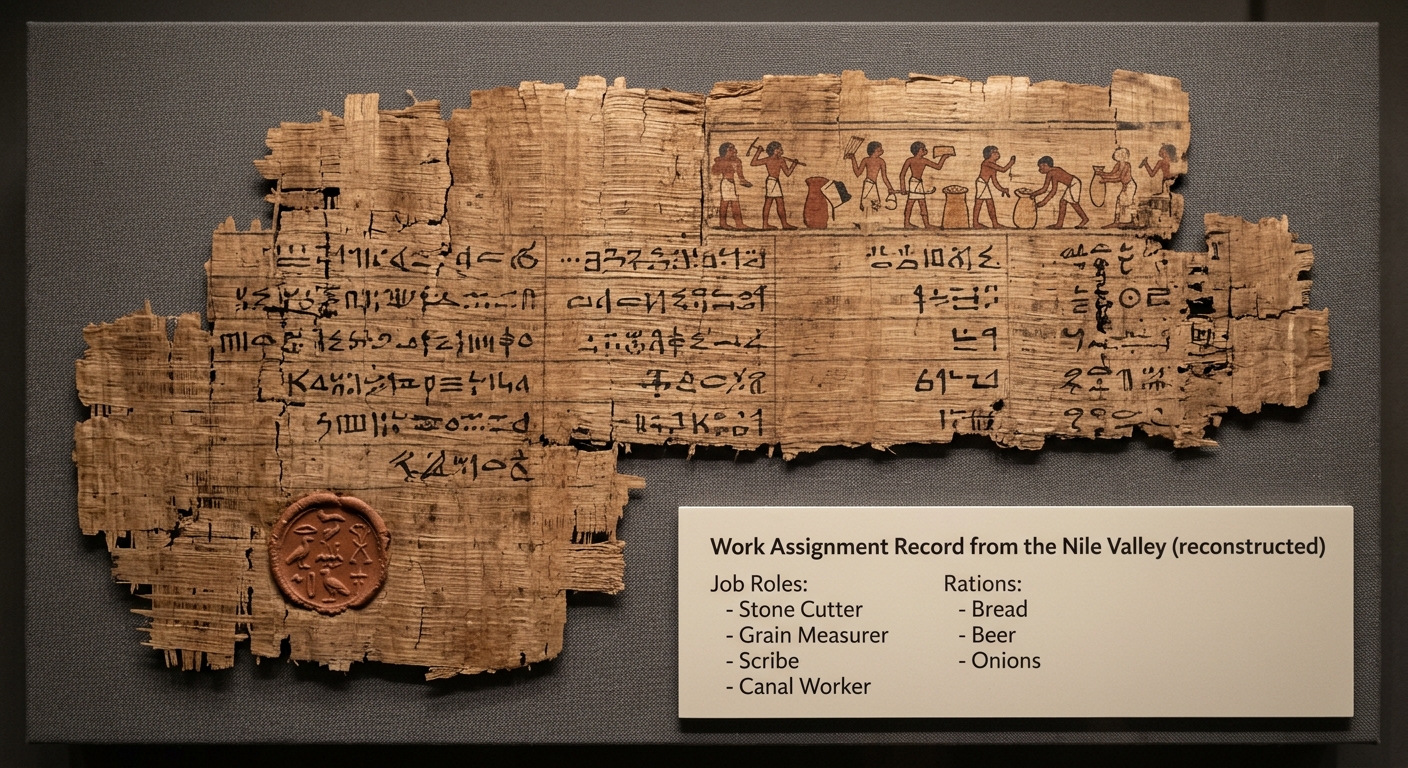
This reconstructed record lists work roles and rations in a Nile Valley community. Tracking jobs, supplies, and payments suggests specialization and organized authority. Many river-valley civilizations developed similar systems to manage cities, labor, and resources, though each region’s geography and needs shaped its priorities.
Explain how a river’s geography could shape how a civilization organized labor and resources. In your answer, connect the Nile Valley example to at least one other river-valley region (Mesopotamia, Indus, or Yellow River) and describe one similarity and one difference.
Which comparison best contextualizes this Nile Valley work record within other early river-valley civilizations?
Which characteristic of a complex society is most directly shown by this document and reading?
In context, why would a river-valley civilization be most likely to create documents like this?
Using evidence from the reading, explain how this document reflects at least two characteristics of complex civilizations (for example, government, job specialization, cities, record keeping, technology, or social hierarchy). Then compare to one other river-valley civilization by describing a different example of those characteristics.
Historical Document:

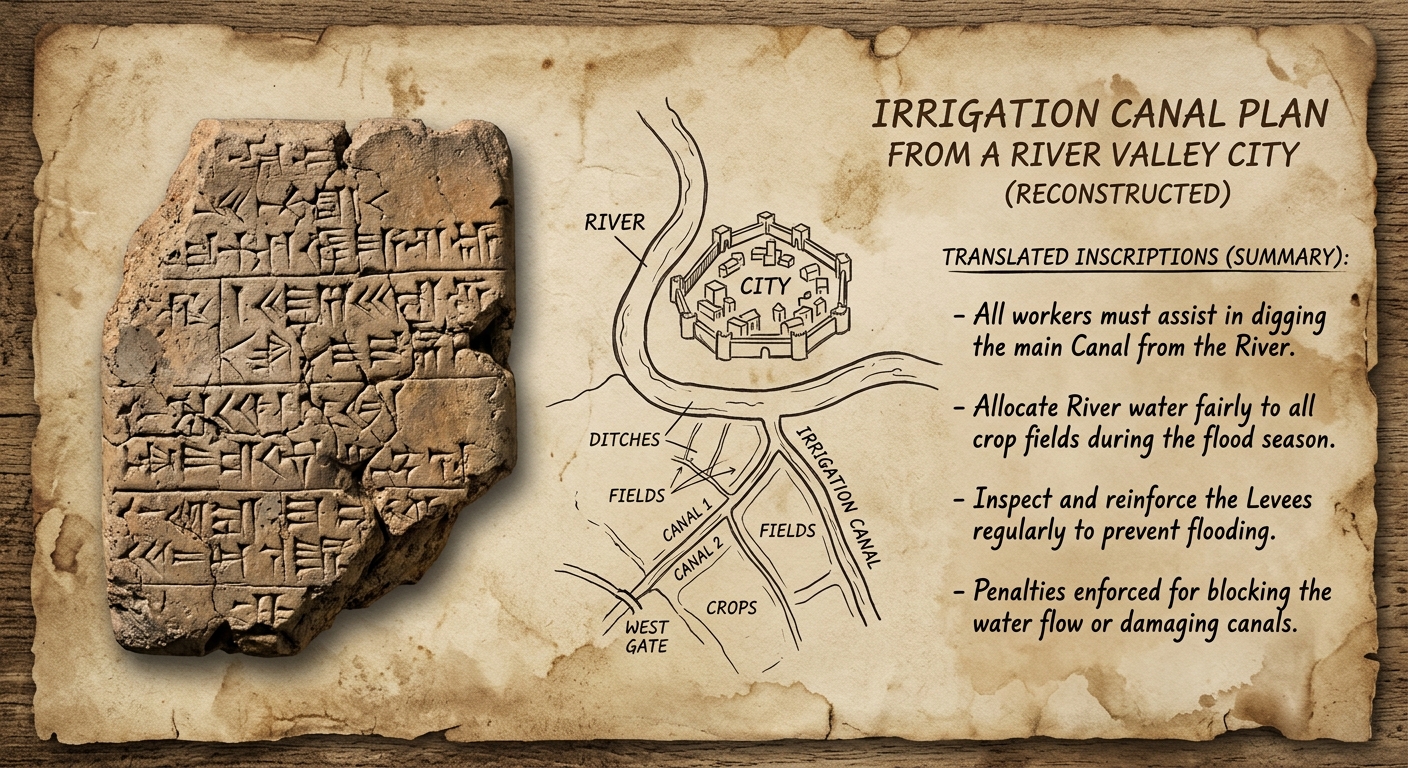
This reconstructed irrigation plan lists duties for clearing canals, repairing levees, and sharing water fairly. It suggests people changed their environment to protect fields and prevent conflict. River-valley civilizations often recorded similar plans, but local flooding patterns and resources shaped how irrigation was managed.
Why would a river-valley society most likely include penalties for blocking water or neglecting canal work?
Which comparison best contextualizes this irrigation plan within other early river-valley civilizations?
Compare how differences in river behavior (predictable vs. unpredictable flooding) could lead to different irrigation priorities. Use the document to support your answer, and include one example from another river-valley region.
Which relationship between people and the environment is best shown by this document and reading?
Using evidence from the reading, explain how this document shows people adapting to and modifying their environment. Then compare it to one other river-valley civilization (Nile, Indus, or Yellow River) by describing a different example of environmental modification and why it was needed.
Historical Document:

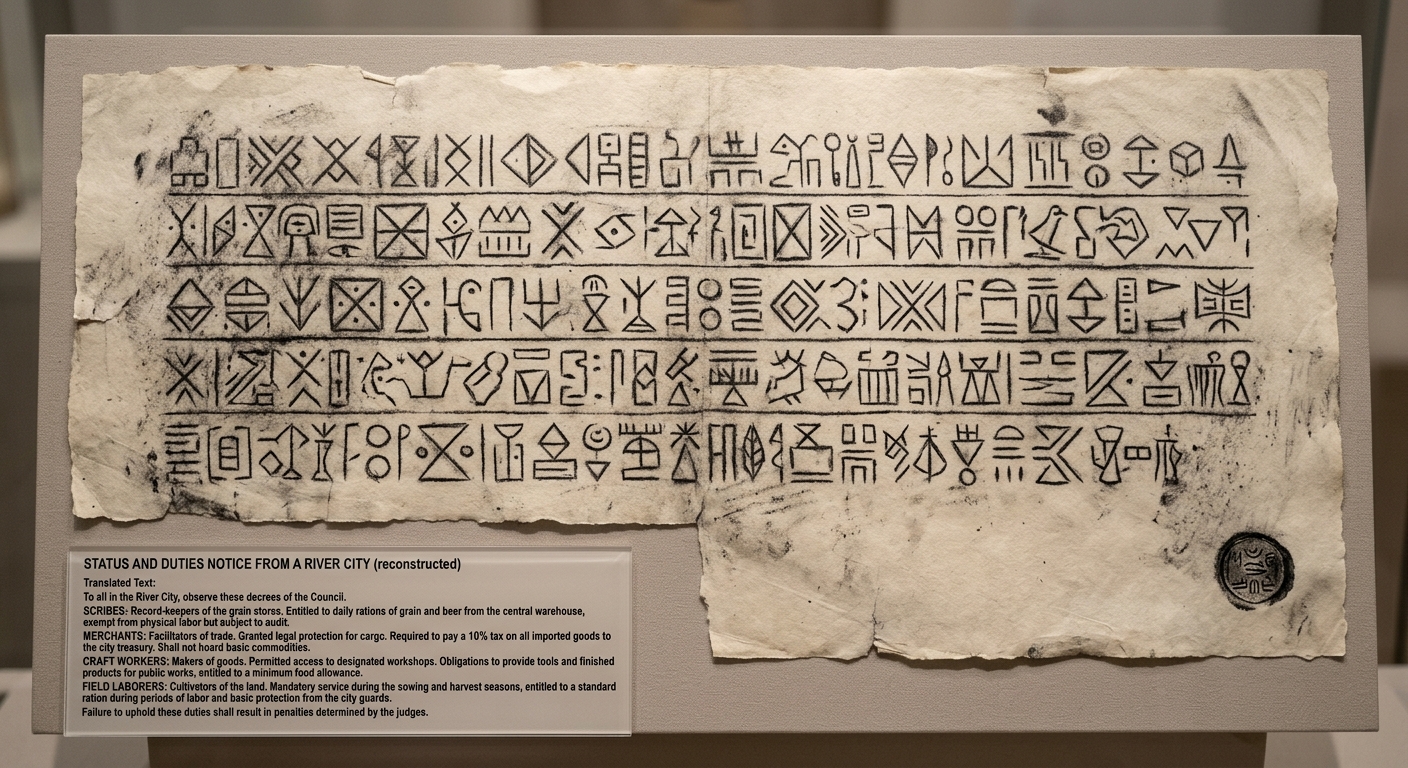
This reconstructed notice lists different social groups and their duties in a river-valley city. It shows that some people had special protections or access to resources, while others owed more labor or taxes. Many early civilizations organized society in hierarchies that shaped power and opportunity.
Which comparison best contextualizes this notice within other early river-valley civilizations?
Which idea about early river-valley civilizations is BEST supported by this document and reading?
Using evidence from the reading, explain how social hierarchies could influence who had power, wealth, and jobs in a river-valley civilization. Then compare to one other civilization (Egypt, Indus, or Yellow River) by describing a different example of how status affected people’s roles.
Explain how the growth of cities and trade in early river-valley civilizations could make social hierarchies more important. Use the document to support your answer, and include one similarity or difference from another river-valley region.
In context, what is one likely reason leaders would post or record rules about status and duties?