Use the historical document(s) and the short readings in the left panel to answer the associated questions.
Use the historical document(s) and the short readings in the left panel to answer the associated questions.
Historical Document:
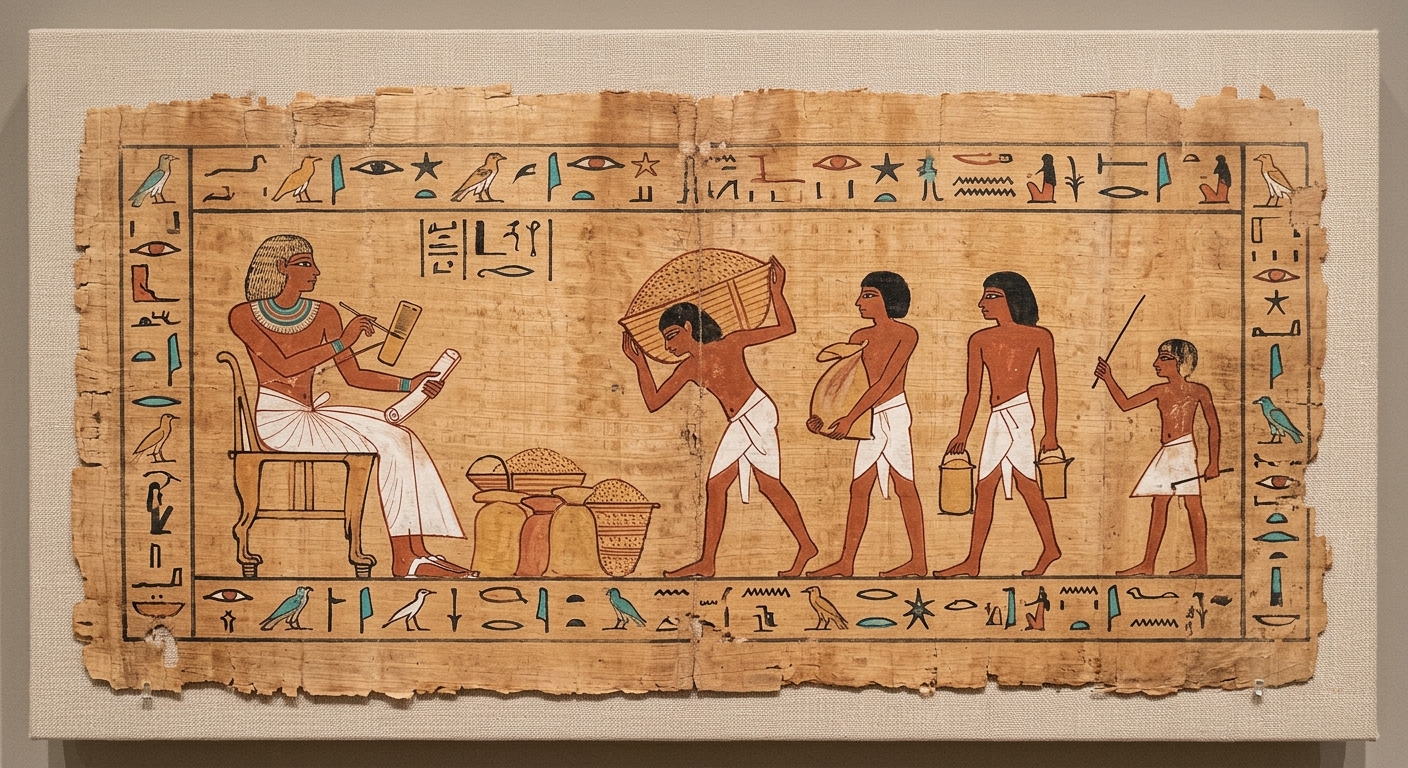
Tomb Painting (Ancient Egypt)
Archaeologists found paintings like this in Egyptian tombs. The scene shows people bringing grain to an official who records what is collected. In many river valley societies, officials controlled food supplies. A person’s job and social position affected their power and access to wealth.
Explain how the document shows that political or social hierarchies could affect access to wealth or resources.
Use at least two specific details from the document as evidence.
Gather evidence from the document to compare the roles of two groups shown (for example, officials/scribes and workers).
How might these different roles have affected each group’s daily life or opportunities?
Which statement is BEST supported by evidence in the document?
Which detail from the document is the STRONGEST piece of evidence that a social hierarchy existed?
Based on the document, which person likely had the MOST access to power and wealth?
Historical Document:
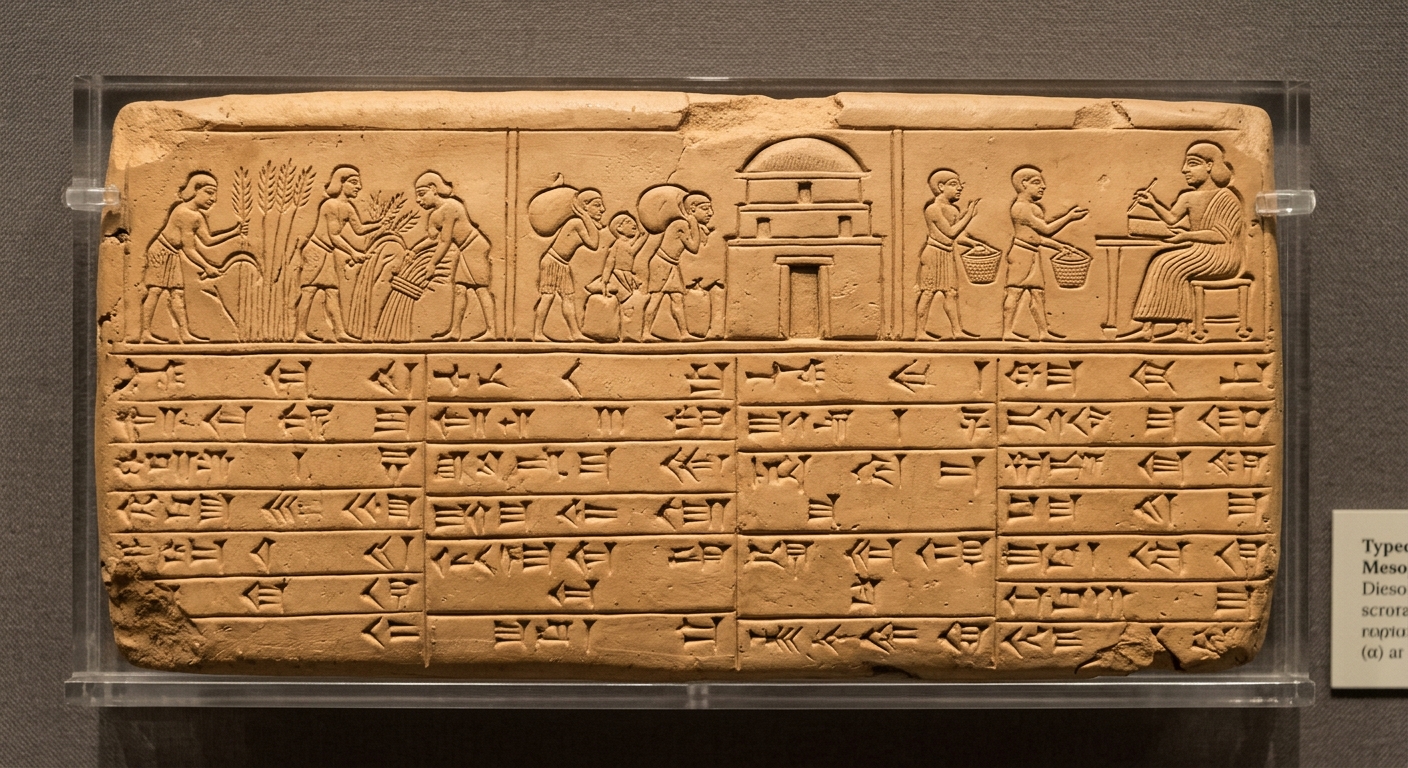
Ration Tablet (Mesopotamia)
Archaeologists found clay tablets used to track grain and rations. The pictures show a sequence: crops are harvested, grain is carried to storage, and an official records what is given out. This order suggests that controlling records and distribution happened after workers produced and delivered food.
Which evidence from the document BEST shows job specialization in this society?
Which conclusion about power is BEST supported by the order of events shown?
Explain how the sequence shown on the document helps you infer which group had more control over food supplies.
Use at least two details from the document as evidence.
Using the document, compare how the timing of workers’ jobs and the official’s job could have affected each group’s access to wealth or power.
Use evidence from the sequence.
Which event happens SECOND in the sequence shown on the document?
Historical Document:
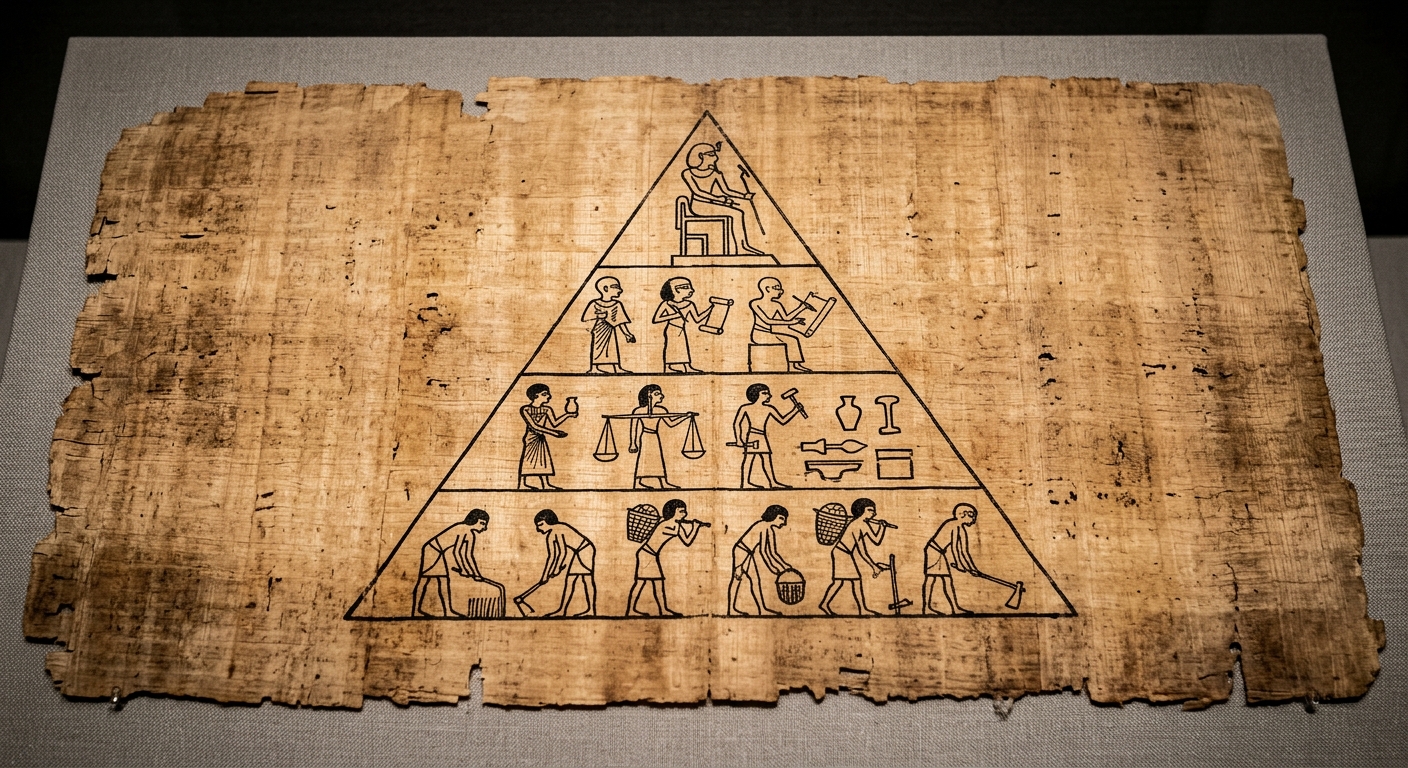
Social Hierarchy Diagram
(River Valley Society)
Some archaeologists have found drawings that show how people in a society were ranked. This diagram places leaders and religious officials at the top and workers at the bottom. The order suggests that people higher up had more power and access to wealth than those who did manual labor.
Which comparison is BEST supported by the hierarchy shown in the document?
If you were contextualizing this document, which background fact would be MOST helpful for interpreting it?
Contextualize the document by explaining one reason why early river valley societies might develop a hierarchy like the one shown.
Then use one detail from the document to connect your context to evidence.
Compare the roles of two groups shown in the hierarchy (for example, scribes/priests and farmers/laborers).
Using evidence from the document, explain how their positions could have affected their access to power, wealth, or jobs.
Which statement is an interpretation (not a direct observation) based on the document?
Historical Document:
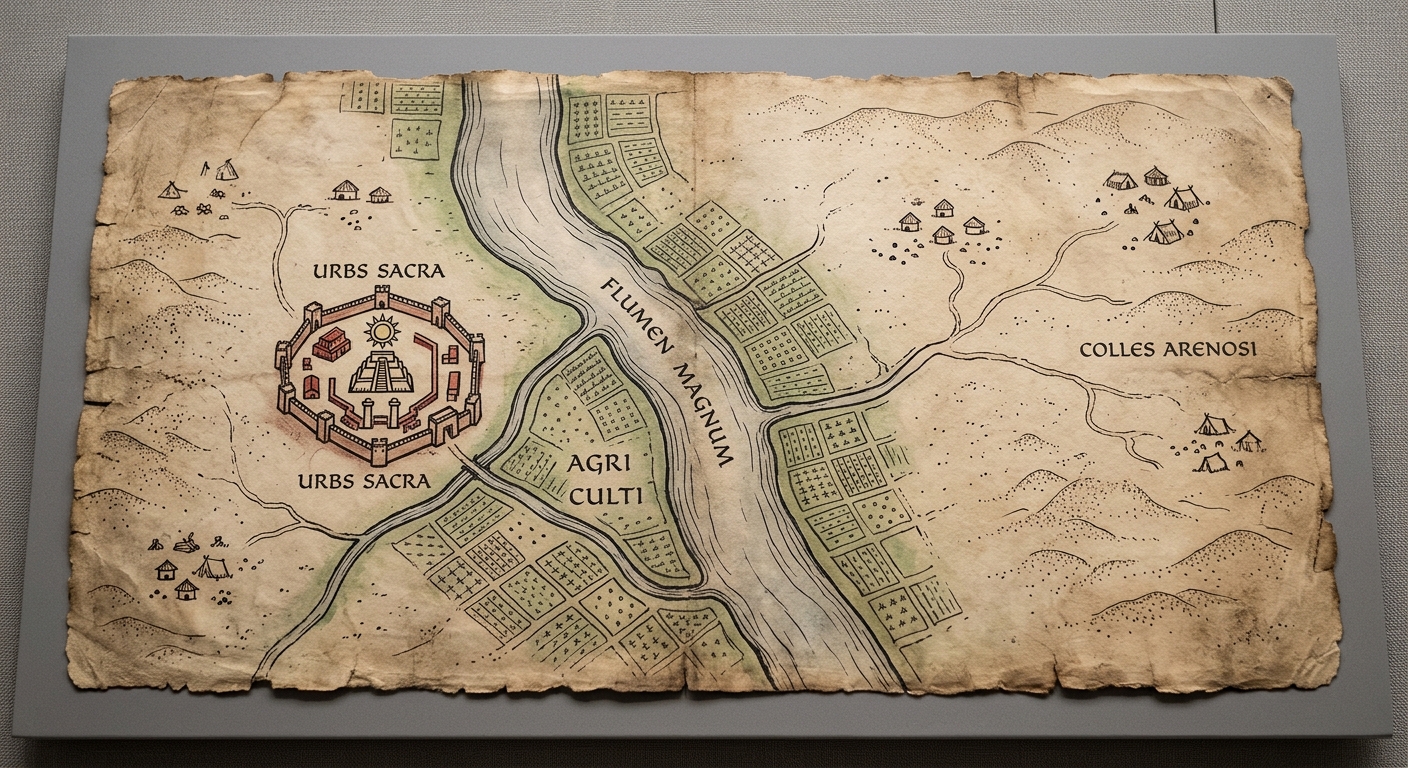
River Valley Settlement Map (Archaeological Drawing)
Archaeologists sometimes reconstruct maps
showing where people lived and worked near a river. This drawing shows canals and irrigated fields close to the river, with a walled temple-city nearby. Smaller huts sit farther into the dry land. Location could affect jobs, resources, and power.
Using evidence from the map, explain how geography could shape social hierarchy in this river valley society.
Use at least two specific map details.
Which location on the map likely had the GREATEST access to stored food and officials?
Compare two areas on the map (for example, the temple-city and the huts). How might living in these different places affect jobs and access to wealth? Use evidence from the map.
Which comparison is BEST supported by evidence from the map?
Which inference is BEST supported by the canals and fields shown?
Historical Document:
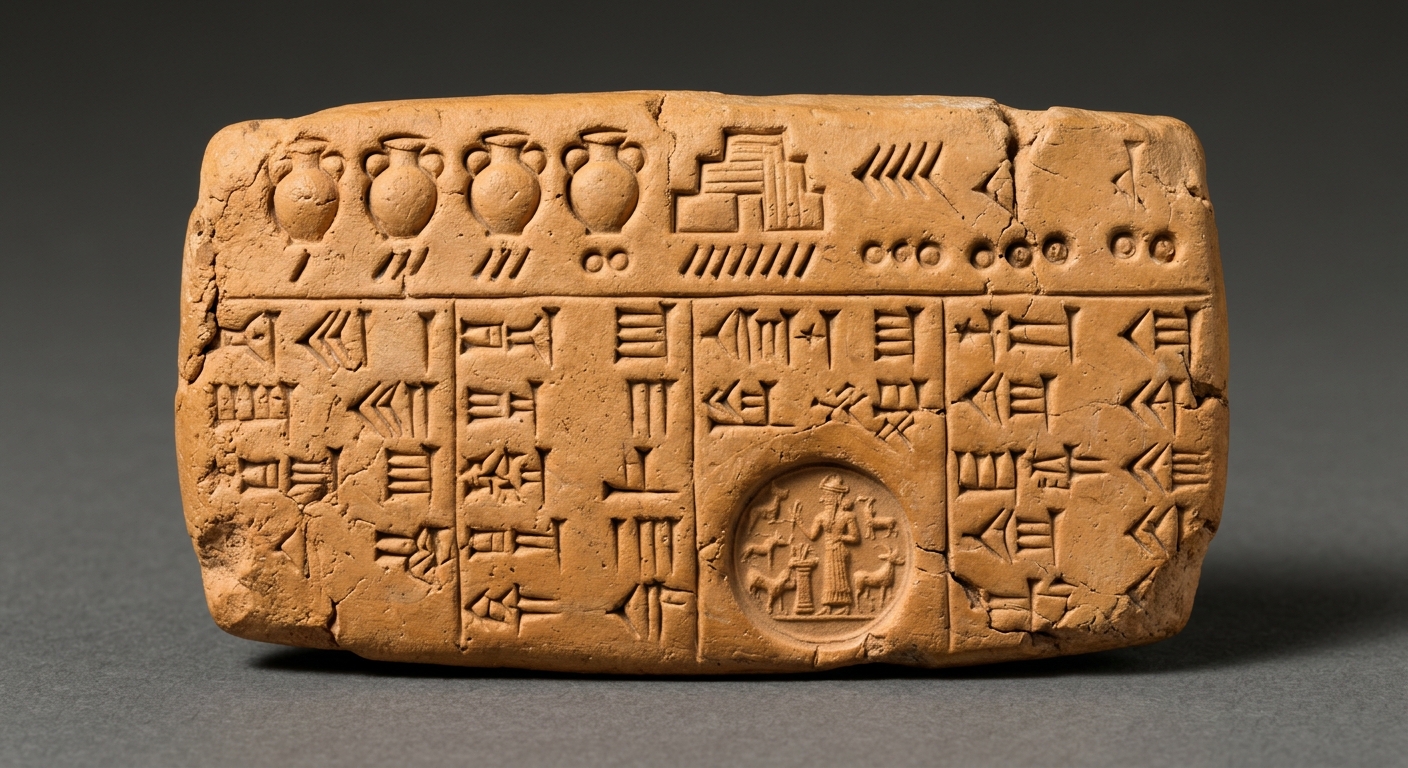
Accounting Tablet (Mesopotamia)
Archaeologists found clay tablets used to record goods stored and distributed by officials. This tablet shows symbols for grain containers and a storehouse, along with marks that likely represent amounts given out. Keeping records helped leaders manage surpluses and could control who received rations and wealth.
Which feature of the document is the BEST evidence that this society used record keeping to manage its economy?
Explain how this document suggests a connection between economic record keeping and social hierarchy.
Use at least two details from the document or reading as evidence.
Compare two groups likely involved in this economic system (for example, officials/scribes and farmers/workers).
Using evidence, explain how each group’s role could affect their access to wealth or jobs.
Which conclusion about economic power is BEST supported by the document?
If you were contextualizing this document, which background fact would be MOST helpful?