Use the historical document(s) and the short readings in the left panel to answer the associated questions.
Use the historical document(s) and the short readings in the left panel to answer the associated questions.

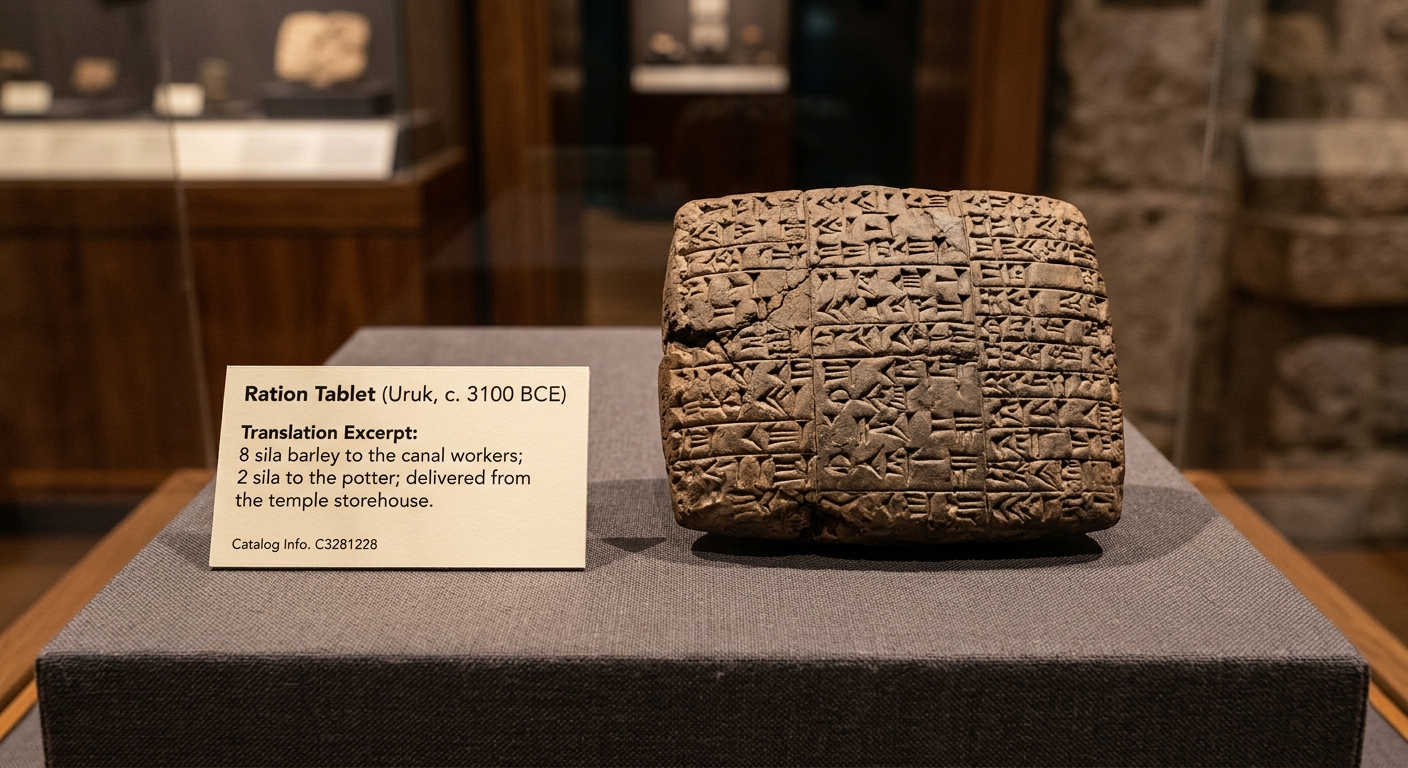
This ration tablet from Uruk records how grain was measured and distributed to different workers. By writing down shared rules for who received food and from where, people in the settlement built common practices and a sense of group organization.
One document cannot tell everything about a society. Identify one limitation of using this tablet to understand group identity in Uruk, and name one additional type of evidence (artifact or source) a historian could use to learn more. Explain your reasoning in a short paragraph.
Based on the translation, which inference is most supported about life in Uruk?
Which characteristic of a settlement is this tablet best evidence of?
Which detail is the best evidence that people in the settlement followed shared customs or rules?
Using evidence from the curator note and the tablet’s translation, explain how this document shows that people living together developed shared customs, ideas, or ways of organizing their community. Cite two specific details as evidence.
This Egyptian granary record lists events by date, including “Year 5” and the “Month of Inundation.” It notes when grain was received and when rations were issued to brickmakers. Recording time in order helped the settlement track work and resources using shared rules.
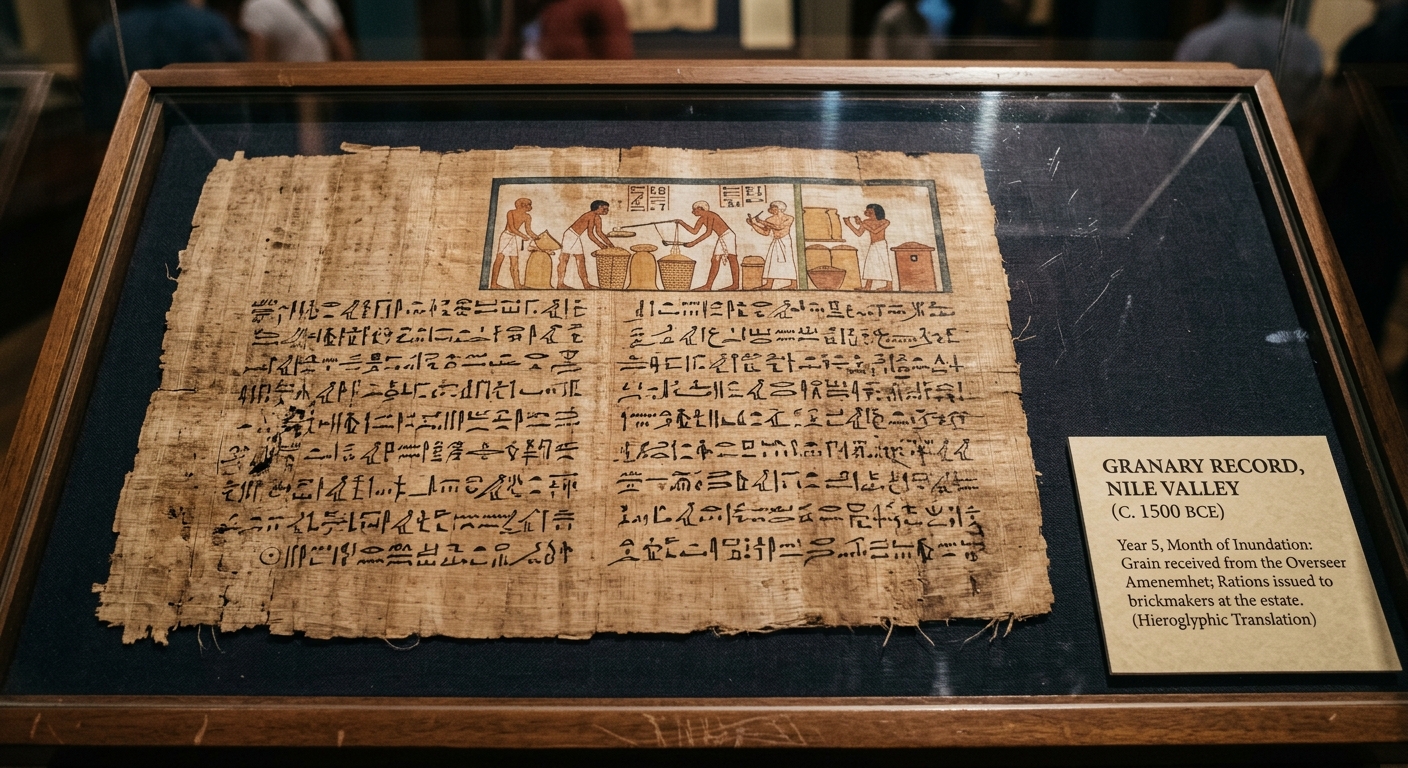
Which phrase from the document best shows that the record uses chronological time?
Why would recording events in time order help people in a settlement develop shared customs or organization?
A historian wants to know whether this record reflects the experience of all people in the settlement across time.
Identify one limitation of using this document for that purpose, and name one additional type of evidence that could help.
Explain your reasoning in a short paragraph.
Which event most likely happened before rations were issued to brickmakers?
Use evidence from the curator note and the document’s translation to explain how chronological record-keeping could strengthen group identity or shared customs in the settlement.
Cite two specific details from the sources.
This Indus Valley seal was pressed into clay to mark goods for trade. The repeated animal image and symbols suggest shared ideas about identity and ownership across the community. Because many seals follow similar patterns, historians infer that people used common standards and signs to organize exchange.
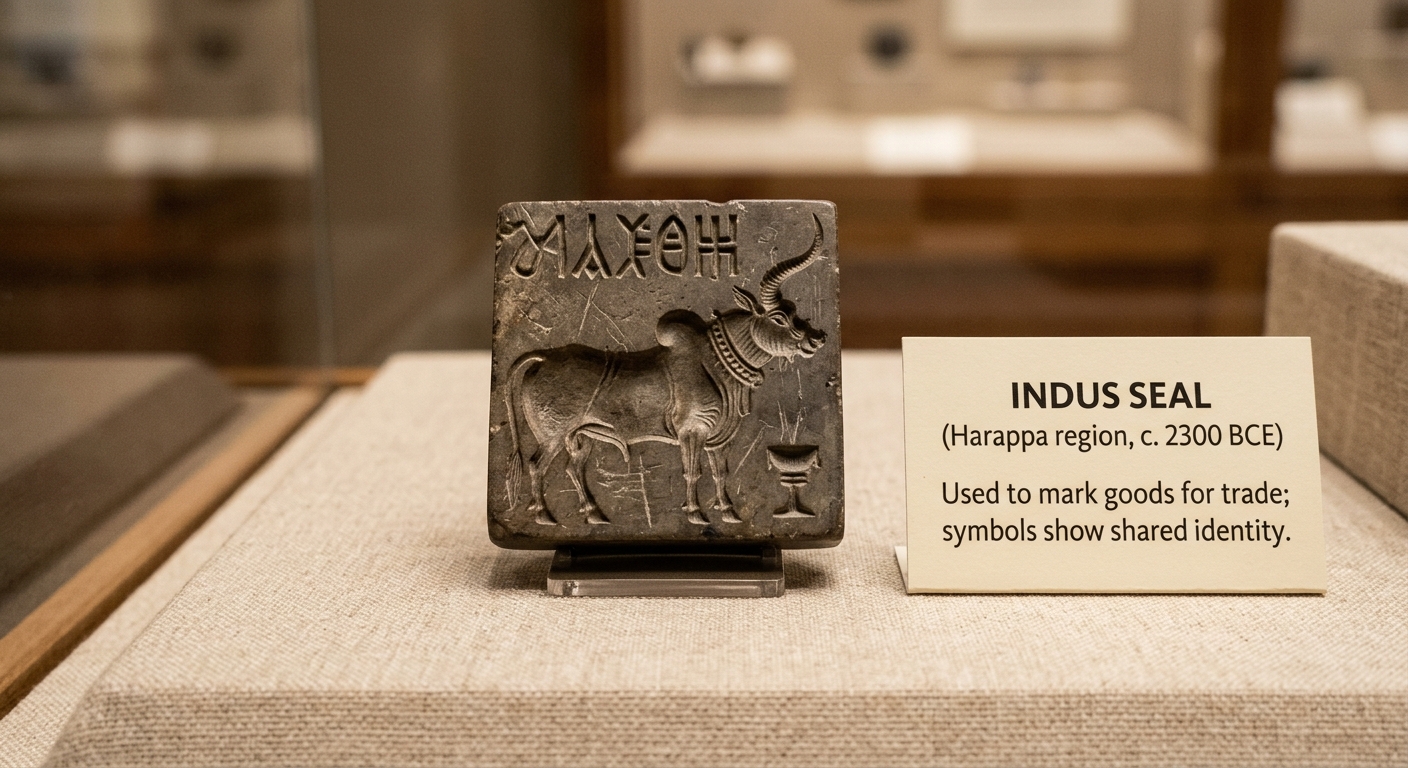
Which broader context best explains why people in a river-valley settlement would use seals like this?
A historian wants to compare group identity in different Indus cities. Which additional evidence would best support a comparison with this seal?
Using evidence from the curator note and the seal image, compare what this source can tell historians about shared identity to what a different type of document (such as a ration record) could reveal.
Cite two details from the seal/curator note and explain how they help historians compare societies.
Which conclusion best compares what this seal suggests about settlement life to what an administrative record (like a ration list) might also show?
Contextualize this seal within life in an early river-valley settlement. Explain how living in a community that produced and exchanged goods could lead to shared customs, ideas, or symbols. Cite two specific details from the sources.
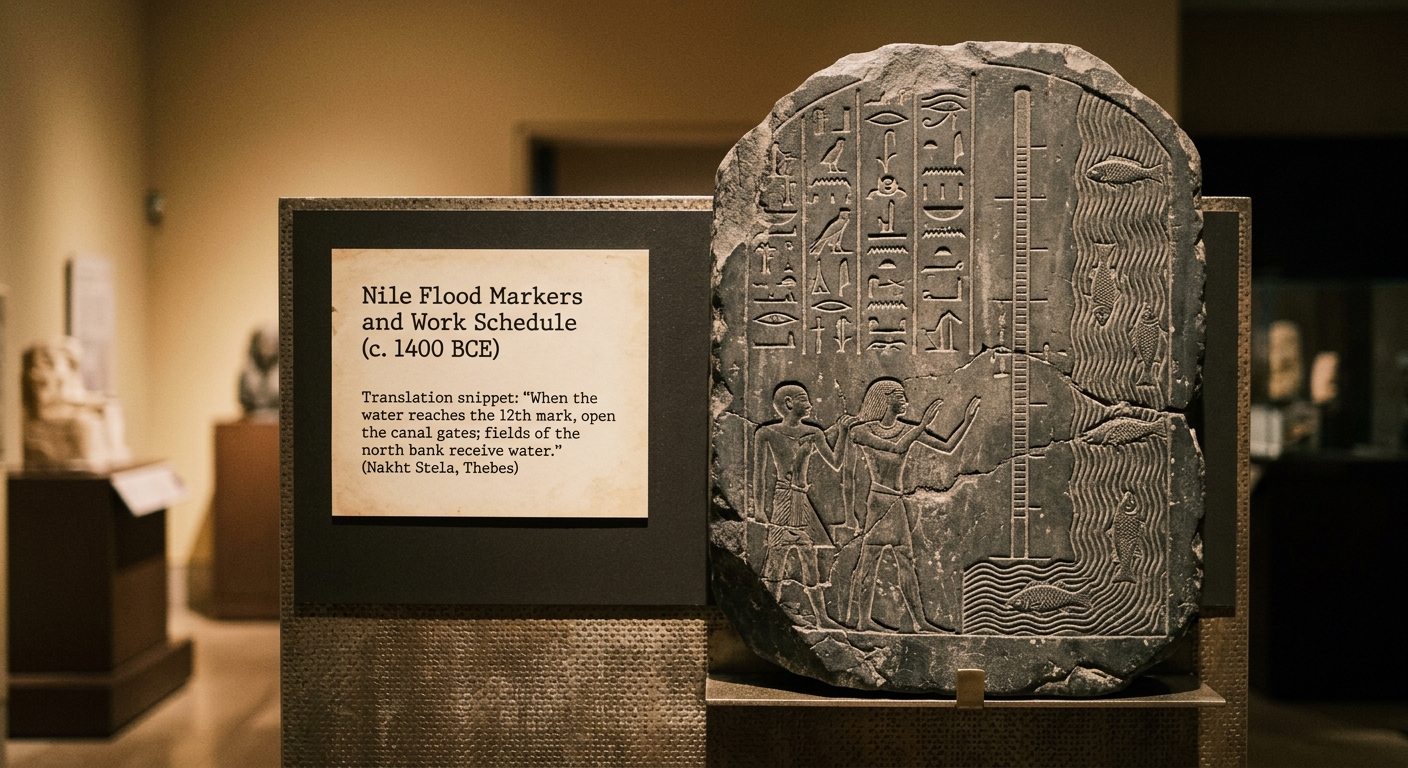
This Egyptian inscription links river conditions to decisions about land and water. It uses flood measurements to explain when canal gates should be opened so nearby fields receive water. Shared geographic knowledge—where canals, banks, and fields were—helped people coordinate work and follow the same rules for farming in a river-valley settlement.
Which additional evidence would best help a historian compare how different river-valley settlements used geography to organize community life?
Based on the sources, what is the most likely purpose of measuring the river level?
Using evidence from the curator note and the inscription’s translation, explain how shared geographic knowledge could help people develop shared customs or community organization.
Cite two specific details from the sources as evidence.
One document cannot show everything about how people used geography. Identify one limitation of this source for understanding community life, and name one additional type of evidence that could help (artifact or source).
Explain your reasoning in a short paragraph.
Which detail best shows that people used geographical information to make community decisions?
This wage-and-granary account shows how a river-valley settlement managed resources. The record lists barley received into storage and then distributed in different amounts to workers such as boat crews, brickmakers, and scribes. Tracking production and distribution helped the community follow shared economic rules and organize labor.
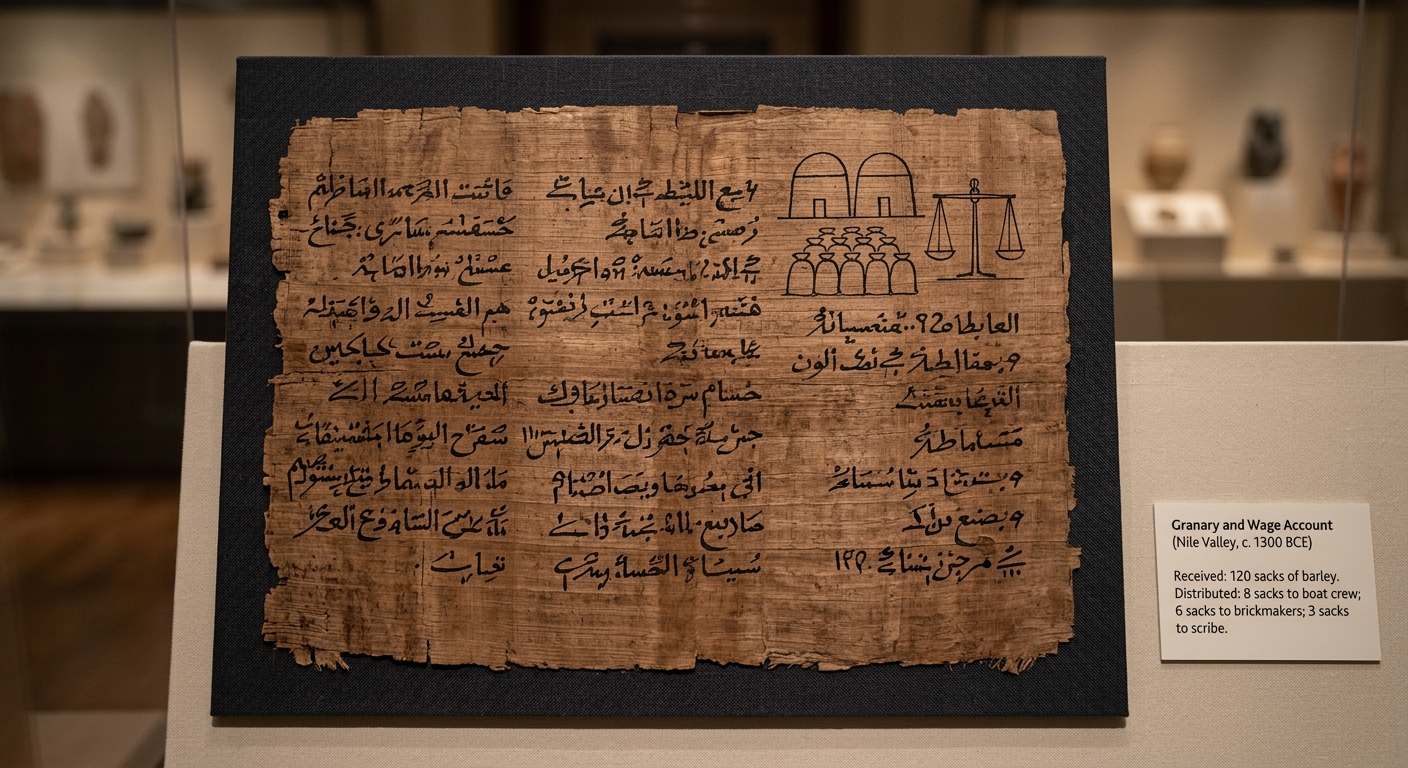
Which economic activity is this document most directly evidence of?
Which additional evidence would best help a historian compare economic systems in two river-valley civilizations?
Based on the sources, which conclusion about the settlement’s economy is best supported?
Using evidence from the curator note and the document’s translation, explain how this account shows an economic system that depends on shared rules for production and distribution.
Cite two specific details as evidence.
One economic record cannot show everything about how an economy worked.
Identify one limitation of using this document to understand economic life in the settlement, and name one additional type of evidence a historian could use.
Explain your reasoning in a short paragraph.