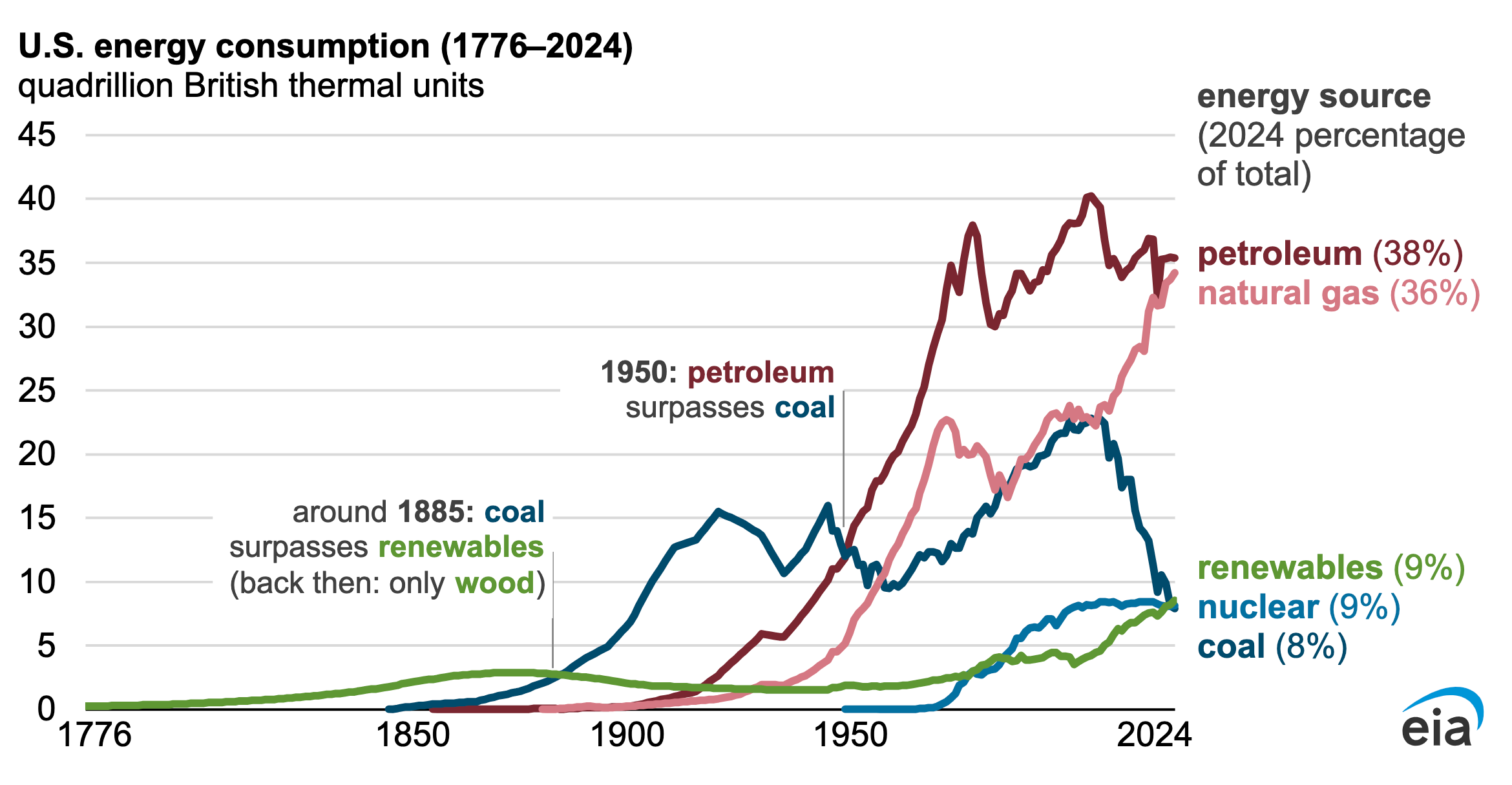
 Which of following is challenging petroleum (oil) as the top energy source in the United States?
Which of following is challenging petroleum (oil) as the top energy source in the United States?
Describe how hydraulic fracturing is used to extract natural gas
Evaluate the economic benefits with the environmental costs of hydraulic fracturing
Describe how hydraulic fracturing is used to extract natural gas
Evaluate the economic benefits with the environmental costs of hydraulic fracturing
Which of following is challenging petroleum (oil) as the top energy source in the United States?
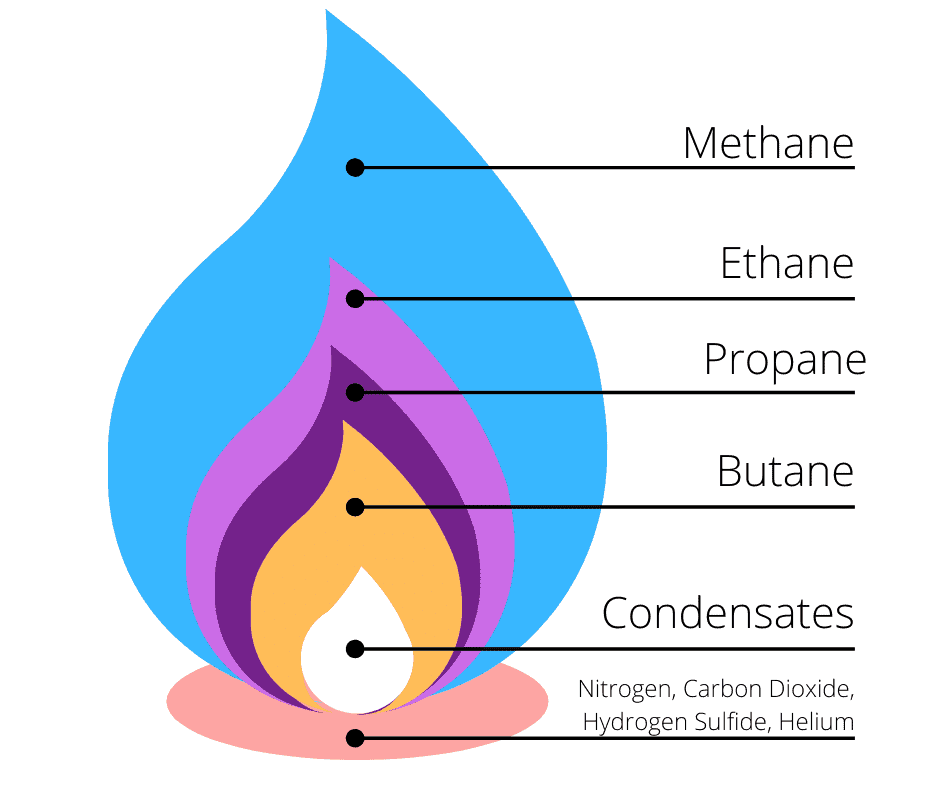 Natural gas is an odorless, gaseous mixture of hydrocarbons that is primarily made up of methane (CH4).
Because natural gas is colorless, odorless, and tasteless, natural gas companies add a harmless chemical that smells like rotten eggs to natural gas to give it a distinct and unpleasant odor, which helps people detect leaks in natural gas pipelines.
What does natural gas smell like rotten eggs?
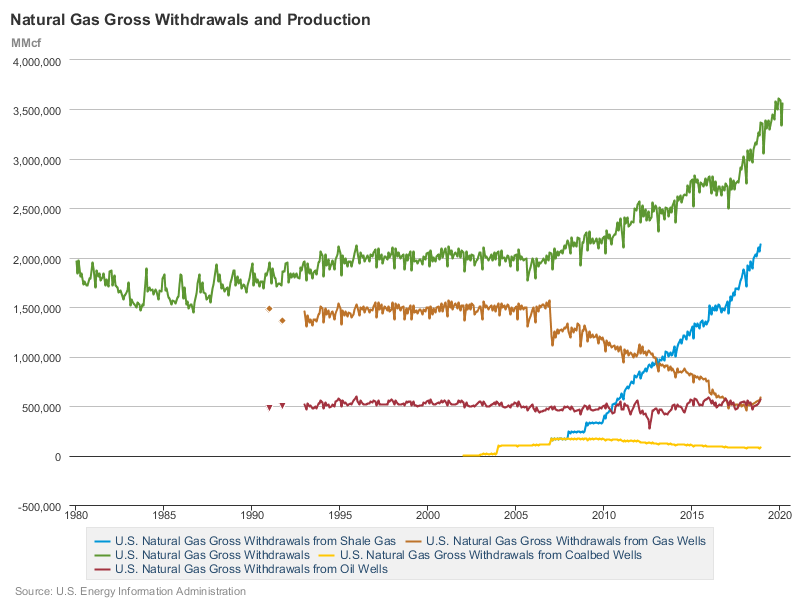
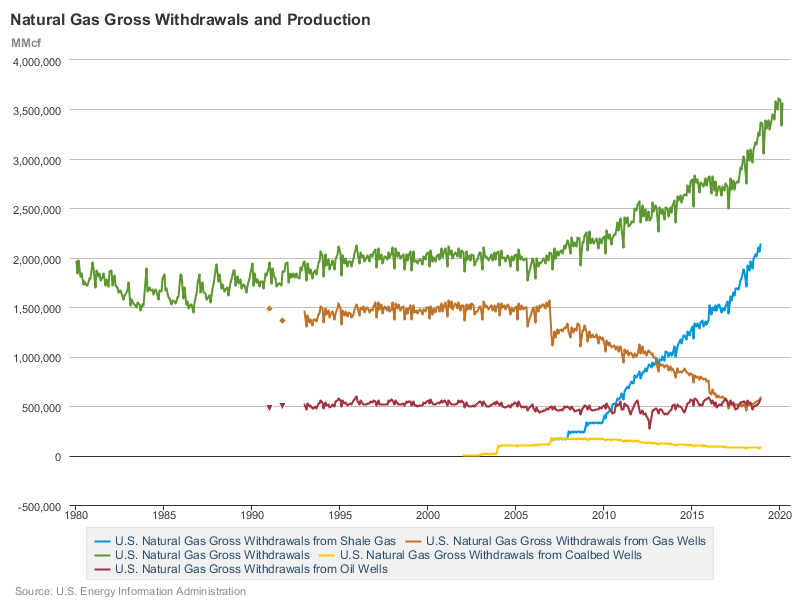
The United States has produced commercial amounts of natural gas since the early part of the 20th century.
Production dipped slightly in the 1980s, then remained fairly steady through the 1990s. But in 2005, production of natural gas increased again.
What accounts for the increase in natural gas production after 2005?
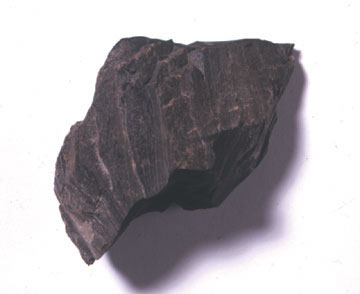 Shale is a sedimentary rock made of compacted silt and clay particles that settled in slow-moving ancient waters (seas, lagoons). As layers accumulated, the weight compressed the fine particles together.
Shale gas is natural gas trapped within shale formations.
Porosity vs. Permeability:
Porosity = how many spaces exist in rock for liquid/gas to occupy
Permeability = how easily liquid/gas flows through rock
Rocks and sediments vary in their porosity (space that can hold liquid or gas).
What do you think is the porosity of the shale that makes it able to hold gas?
Rocks and sediments vary in their permeability (ability of liquid or gas to flow through the rock).
What do you think is the permeability of the shale that makes it able to hold gas?
We know that there is natural gas in some shales. But how do we get it out?
Use the model to explore how methane moves within shale and how to release the gas from the shale.
The shale layer that contains natural gas is colored light brown in this model.
The natural gas is represented by little red dots.
Drill a well to extract natural gas: Press the directional buttons to drill. Drill down until you find the shale, and then drill horizontally.
Once you have drilled your well, do the following: set off explosions, fill with water, and pump out fracking fluid.
When you have a productive well, you will be able to see your natural gas production levels on the graph.
This video demonstrates how to use the model:
Hydraulic fracturing begins with drilling . Once you reach the shale, you switch to drilling .
Shale gas is trapped in the pores of shale rock, but the rock has low permeability. How can this gas be accessed?
During hydraulic fracturing, what happens to the water used in the process?
Unlike the last model, in which you could see where the shale was, in this model, you are left to drill "blind."
The model works in the same way; the shale layer is still colored light brown. But you don't know the shape of the shale layer before drilling.
In the field, natural gas drillers have a little bit of an idea of the shale's location and shape. They use sophisticated seismology equipment to determine the shapes of underground formations. But they also have to turn the drill horizontally well before seeing the shale layer, unlike this model.
Try drilling some wells to see how much methane you can release from the shale formation.
Were you able to successfully produce natural gas with your wells?
Can you predict the shape of a shale layer by examining a single small sample of it?
Which of the following is NOT a contributing factor to the amount of methane that can be extracted from a shale gas well?
The graph shows that natural gas output from a well decreases over time. Which statement best explains why this happens?
Fracking uses large amounts of water mixed with chemicals to fracture shale rock and release natural gas.
A key environmental concern is water contamination from fracturing fluids or methane gas leaking into aquifers, the underground layers that store freshwater for drinking and irrigation.
Contamination can occur if:
Fractures extend deeper than intended and reach underground aquifers
Well casings crack or fail, allowing fluids to seep into water sources
Wastewater stored in surface pools leaks into the soil
Try to drill without contaminating the aquifer.
Some companies use water instead of propane for fracking. Water-based fracking has a lower cost but has been known to contaminate groundwater.
Were you able to drill without contaminating the aquifer using water?
Some companies use propane instead of water for fracking. Propane has a lower risk of water contamination but is highly flammable and expensive.
Were you able to drill without contaminating the aquifer using propane?
Propane and butane are flammable and explosive, making them dangerous to handle.
Consider the options for fracking fluid and select your choice:
Consider which fracking method has the advantage in each category.
Water-Based Fracking | Propane-Based Fracking | |
|---|---|---|
Cost | ||
Safety | ||
Water contamination | ||
Environmental impact |
Why are some sedimentary rocks described as like "jelly doughnuts"?
What problem makes "layer cake" rocks harder to produce oil and gas from?
Which economic factor made extraction from layer cake rocks more attractive in the 2000s?
What technological improvement helped free up more oil and gas from deep underground?
With the rise in fracking, what concerns have emerged?
What is the largest consumer of energy in the United States?
Which of the following best describes hydraulic fracturing?
What is "frac fluid"?
Why can't water from fracking be returned to the drinking water supply?
What can pumping fracking water back underground cause?
Fracking highlights a difficult choice between which two essential resources?