Use the historical document(s) and the short readings in the left panel to answer the associated questions.
Use the historical document(s) and the short readings in the left panel to answer the associated questions.
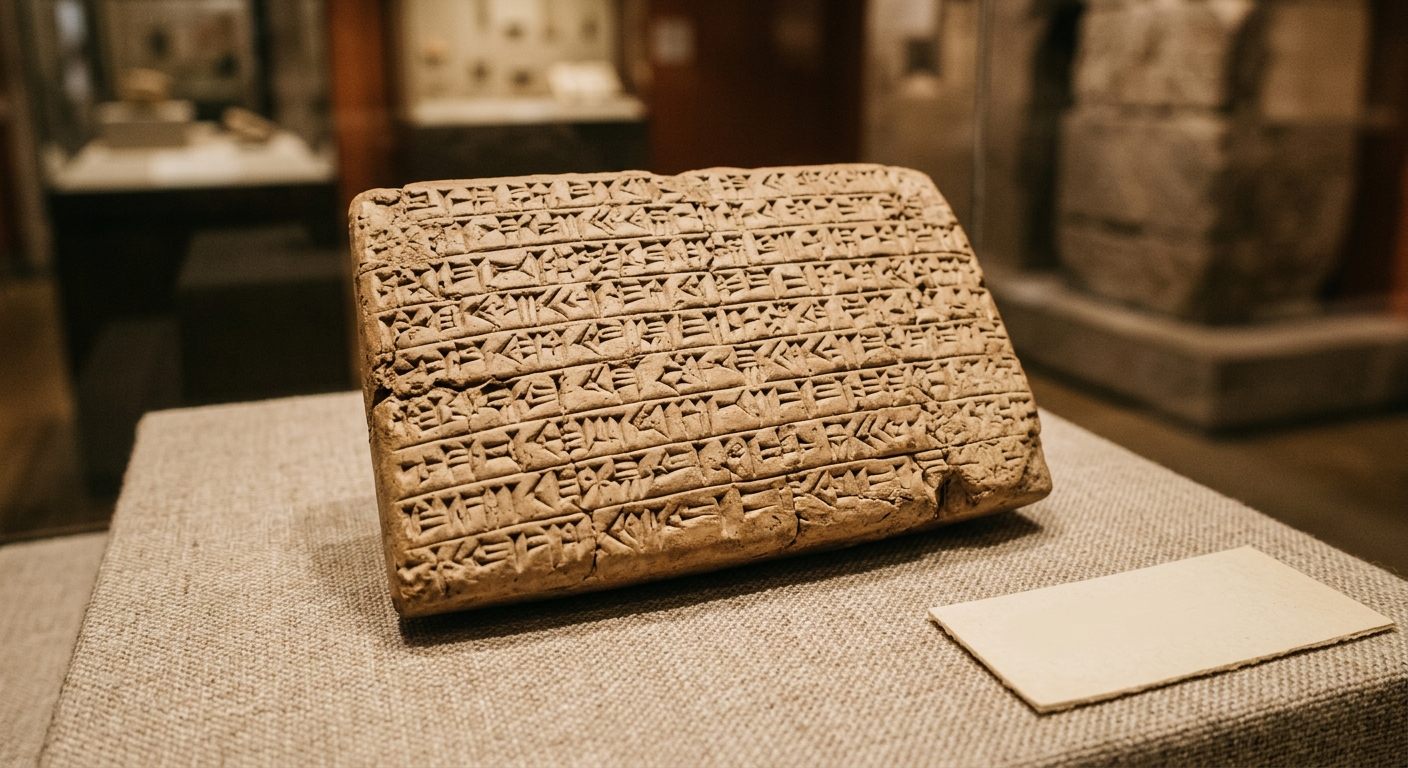
Archaeologists found this clay tablet in Mesopotamia. It records a temple worker receiving barley and oil as payment. The marks are cuneiform, an early writing system used to track goods and labor. Such records helped governments and cities organize large building projects and food supplies.
Based on the document description, what is the most reasonable conclusion about why writing was important in early Mesopotamian cities?
Which characteristic of a complex society is MOST directly supported by a tablet that records payment in barley and oil?
A student claims: “This tablet proves Mesopotamia had cities.” What is the BEST evaluation of this claim using evidence?
Using evidence from the reading and the tablet image, explain how record keeping could strengthen government in a complex society. Write one well-formed paragraph.
Identify one limitation of using a single administrative tablet to understand Mesopotamian society, and describe one additional type of evidence a historian could use to build a stronger conclusion.
Write one well-formed paragraph.
Historical Document (Reading – 49 words)
Along the Nile, officials recorded annual flood levels to plan farming and store grain. Early records were simple marks; later ones became more detailed as cities grew. Keeping year-by-year records helped rulers predict shortages, assign labor for canals, and collect grain over time.
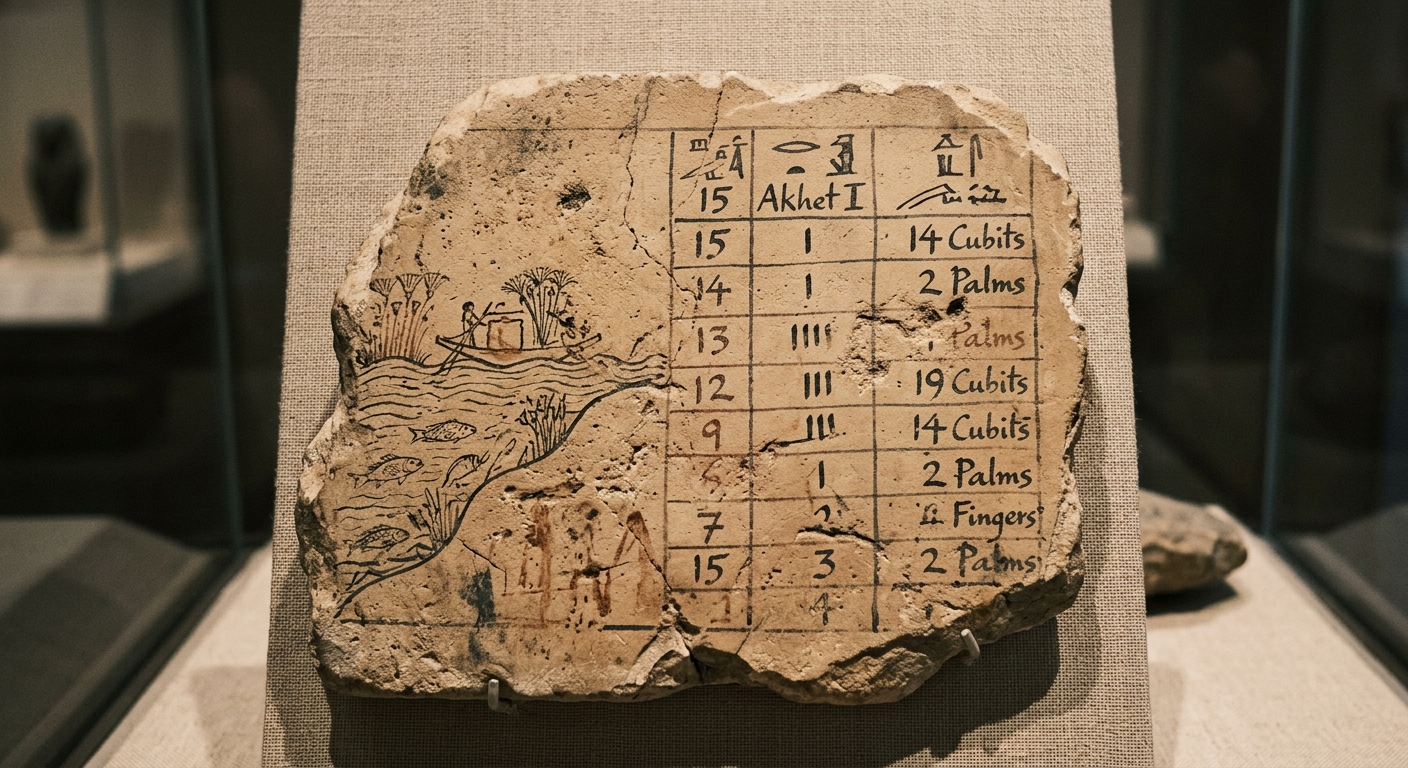
Which sequence best matches the chronological development described in the reading?
Which conclusion about change over time is best supported by the reading?
A student says: “Officials first built canals, and only later started keeping flood records.” Which evaluation is BEST, using evidence from the reading?
Using evidence from the reading and the flood record document, explain how keeping year-by-year records could lead to stronger government over time in a river valley society.
Write one well-formed paragraph.
Identify one chronological limitation of using a single flood record document to understand Nile Valley society, and describe one additional type of evidence that could help confirm the sequence of developments.
Write one well-formed paragraph.
Historical Document
Archaeologists found this stamp seal in the Indus River valley. Merchants likely pressed seals into clay to mark goods in trade. The animal and symbols may have identified an owner or workshop. Like Mesopotamian tablets, seals show record keeping and specialized jobs in early cities.
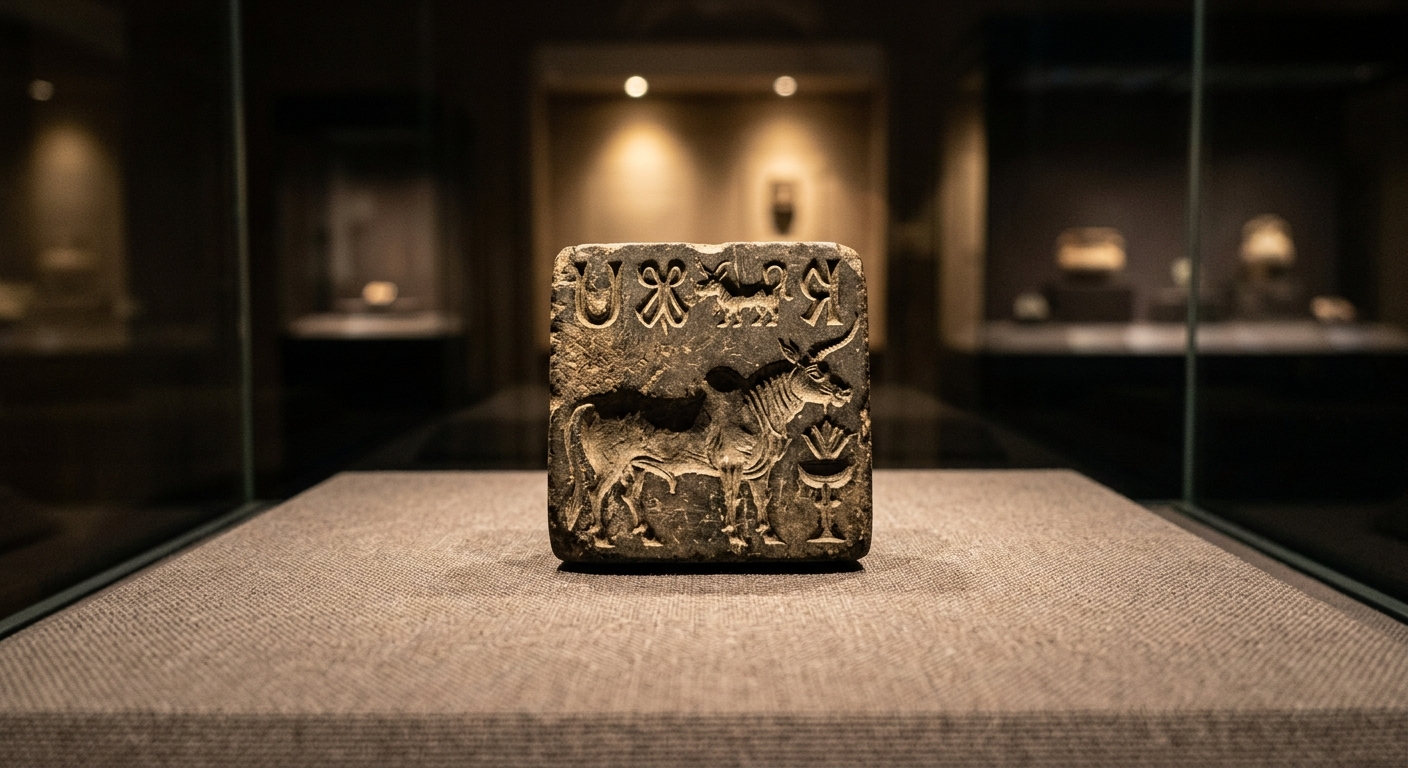
Which comparison is BEST supported by the reading?
Which piece of contextual information would MOST strengthen a historian’s interpretation that the seal was used in trade?
A student says: “Because the Indus script is not fully translated, the seal cannot be used as evidence for any characteristic of a complex society.” Which evaluation is BEST?
Using evidence from the reading and the seal image, explain one way the seal reflects a characteristic of complex societies and contextualize why that characteristic mattered in early river valley cities.
Write one well-formed paragraph.
Identify one limitation of using the seal alone to compare Indus society with another river valley civilization, and describe one additional source that would improve the comparison.
Write one well-formed paragraph.
Historical Document (Reading – 50 words)
This map highlights four early river valley regions where complex societies developed. Each area formed near major rivers that provided fresh water, fertile soil, and transportation routes. Although separated by deserts and mountains, these regions show a shared pattern: settlements and cities clustered along river floodplains.
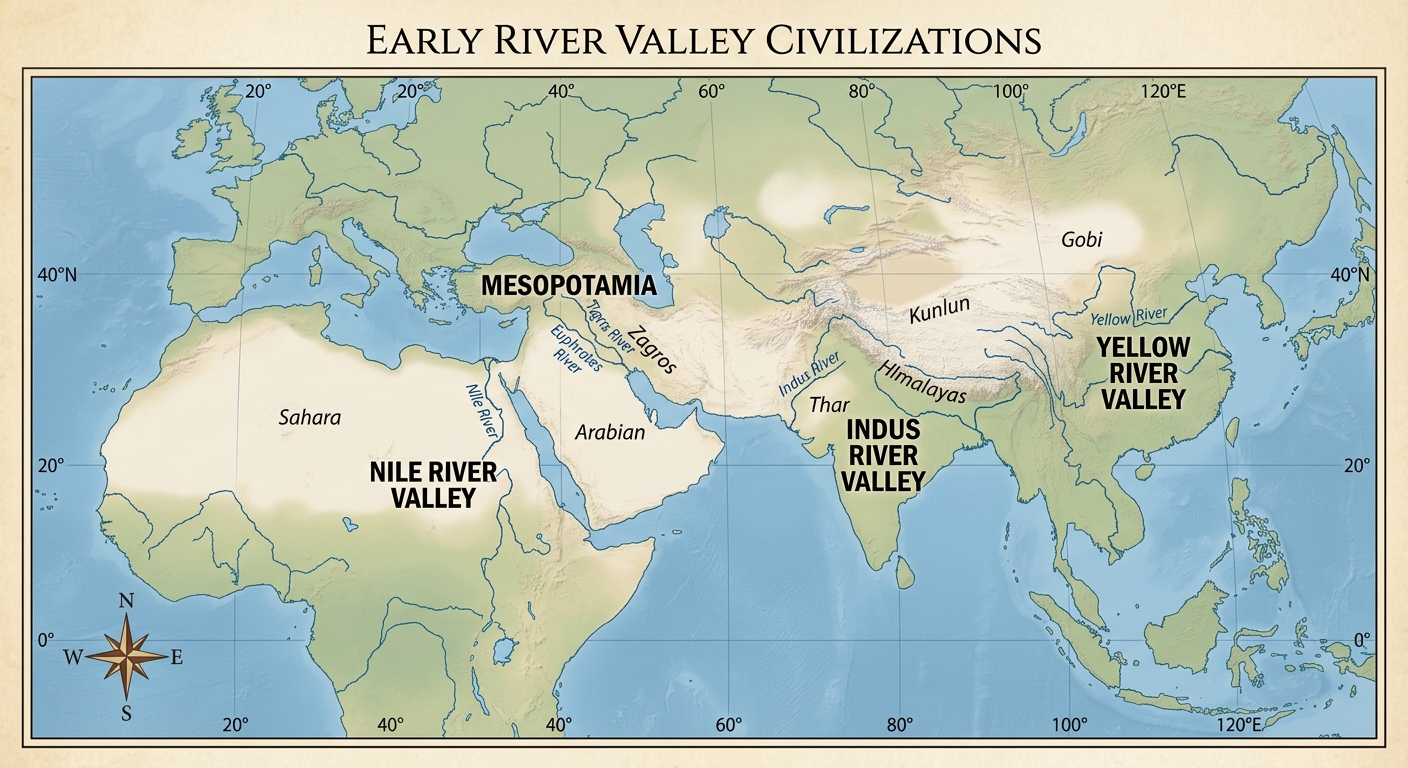
Based on the map and reading, what is the BEST geographic explanation for why early cities formed along these rivers?
Which inference about the physical environment is BEST supported by the map’s placement of the four river valleys?
A student claims: “Because these civilizations were far apart, they could not share any characteristics of complex societies.”
Which evaluation is BEST, using the map and reading?
Using evidence from the map and reading, explain how rivers could support the growth of cities and job specialization in early complex societies.
Write one well-formed paragraph.
Identify one limitation of using this map alone to explain why complex societies developed, and describe one additional type of evidence a historian or geographer could use to strengthen the explanation.
Write one well-formed paragraph.
Historical Document
Archaeologists found standardized stone weights and a balance scale in an early river valley city. Merchants and officials used them to measure grain, oil, and metals for trade and taxes. Standard measures made exchanges more predictable and helped governments collect and store resources to support workers and projects.
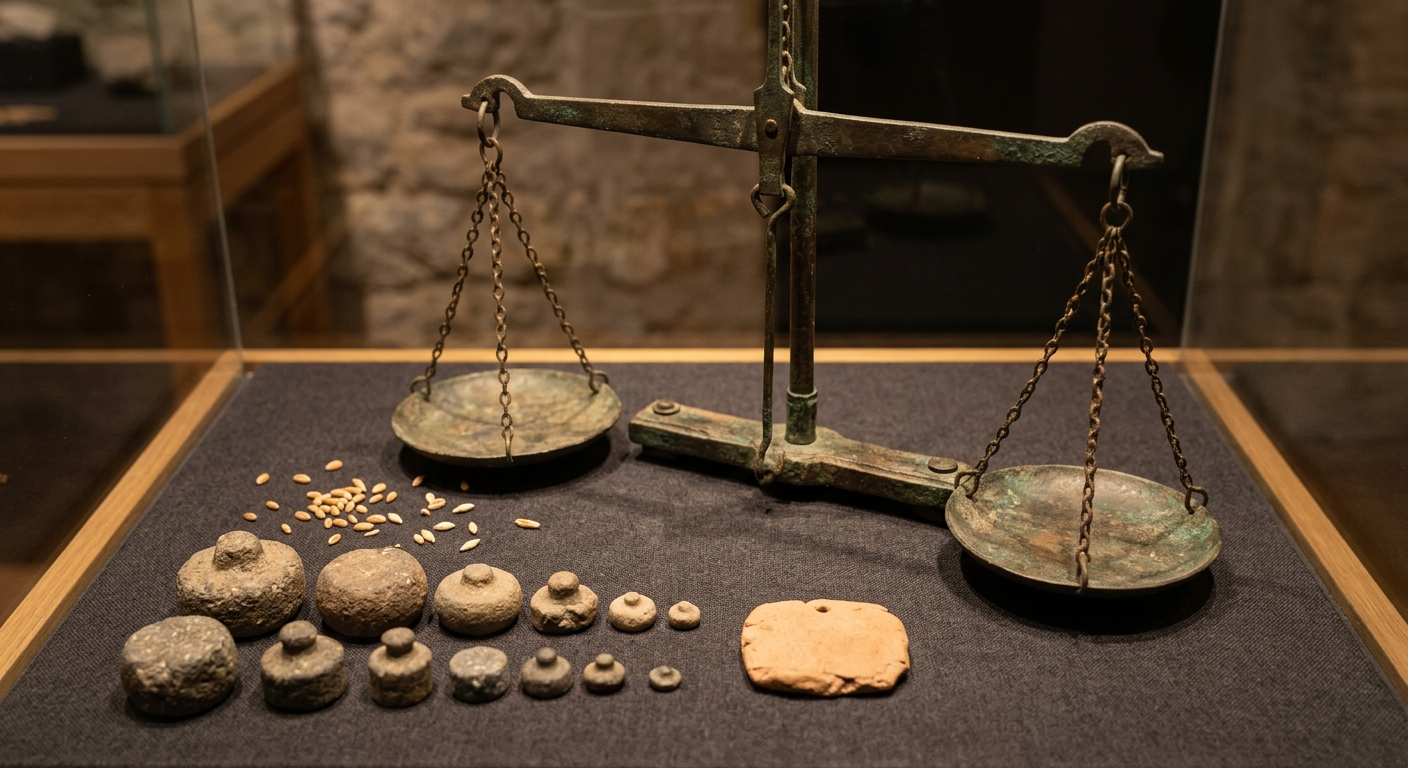
Based on the reading, what is the BEST economic reason standardized weights would matter in a complex society?
Which characteristic of a complex society is MOST directly supported by evidence of standardized weights used for taxes and trade?
A student claims: “Standard weights only mattered for merchants, not for government.” Which evaluation is BEST using evidence from the reading?
Using evidence from the reading and the scale image, explain how standard measures could support both trade and a government-run system of taxes or redistribution in a river valley city. Write one well-formed paragraph.
Identify one limitation of using weights and a scale alone to understand the economy of a river valley civilization, and describe one additional type of evidence that would strengthen conclusions about how the economy worked. Write one well-formed paragraph.