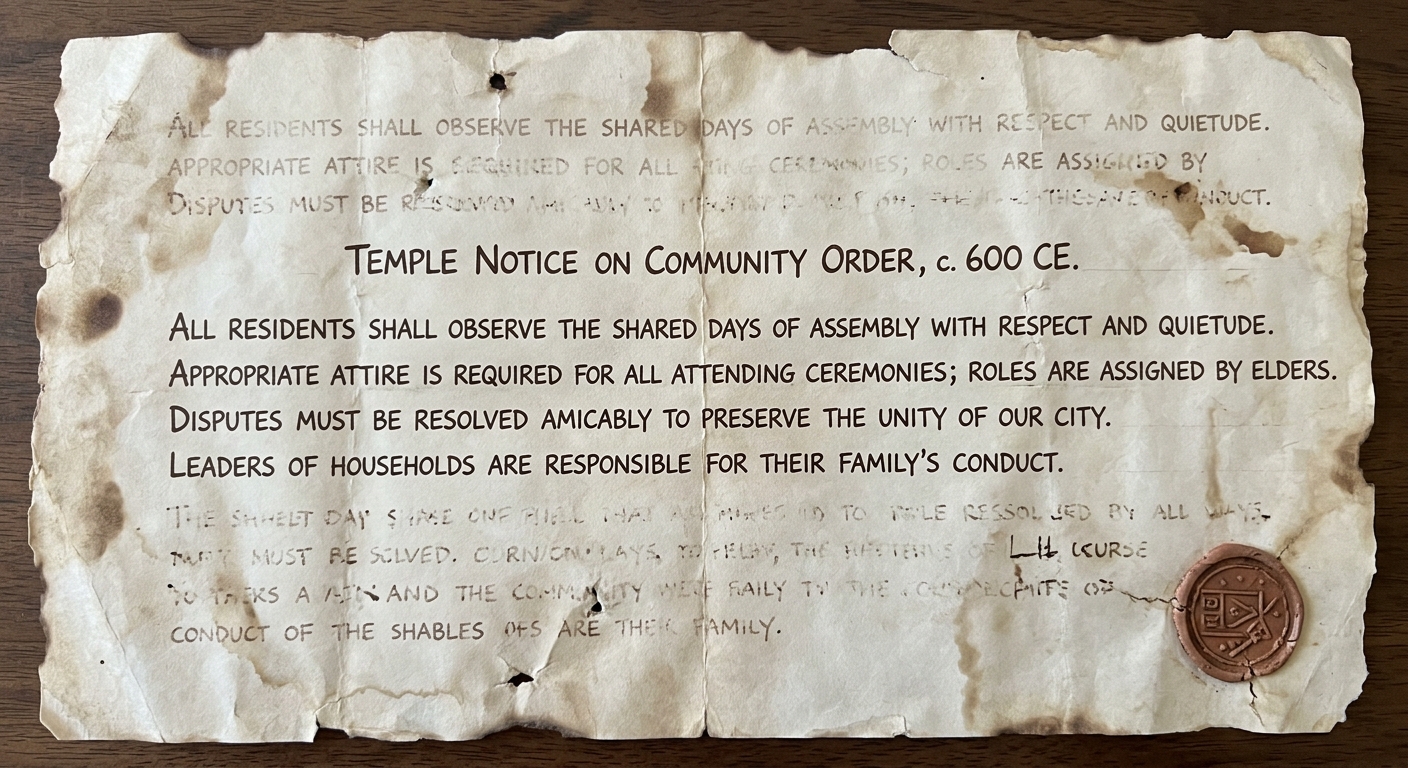
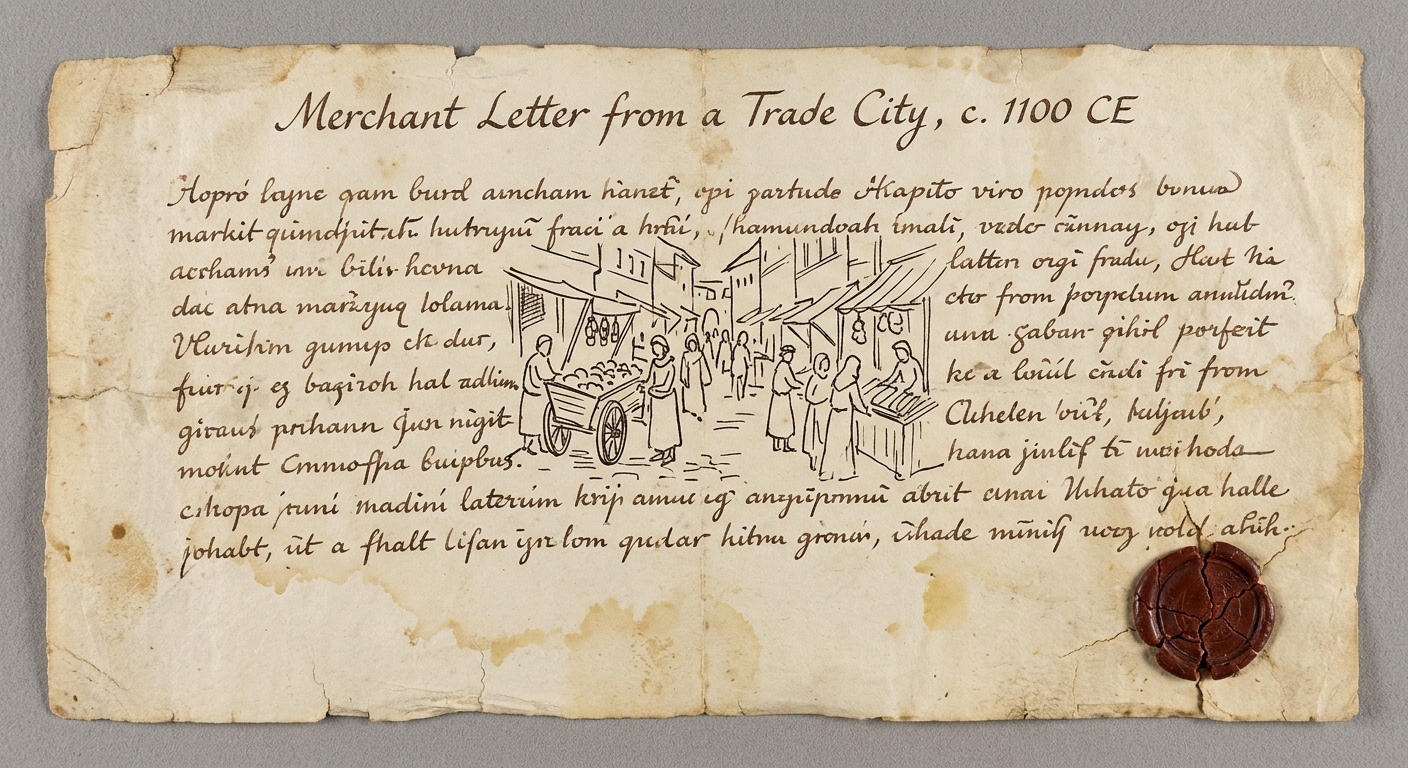
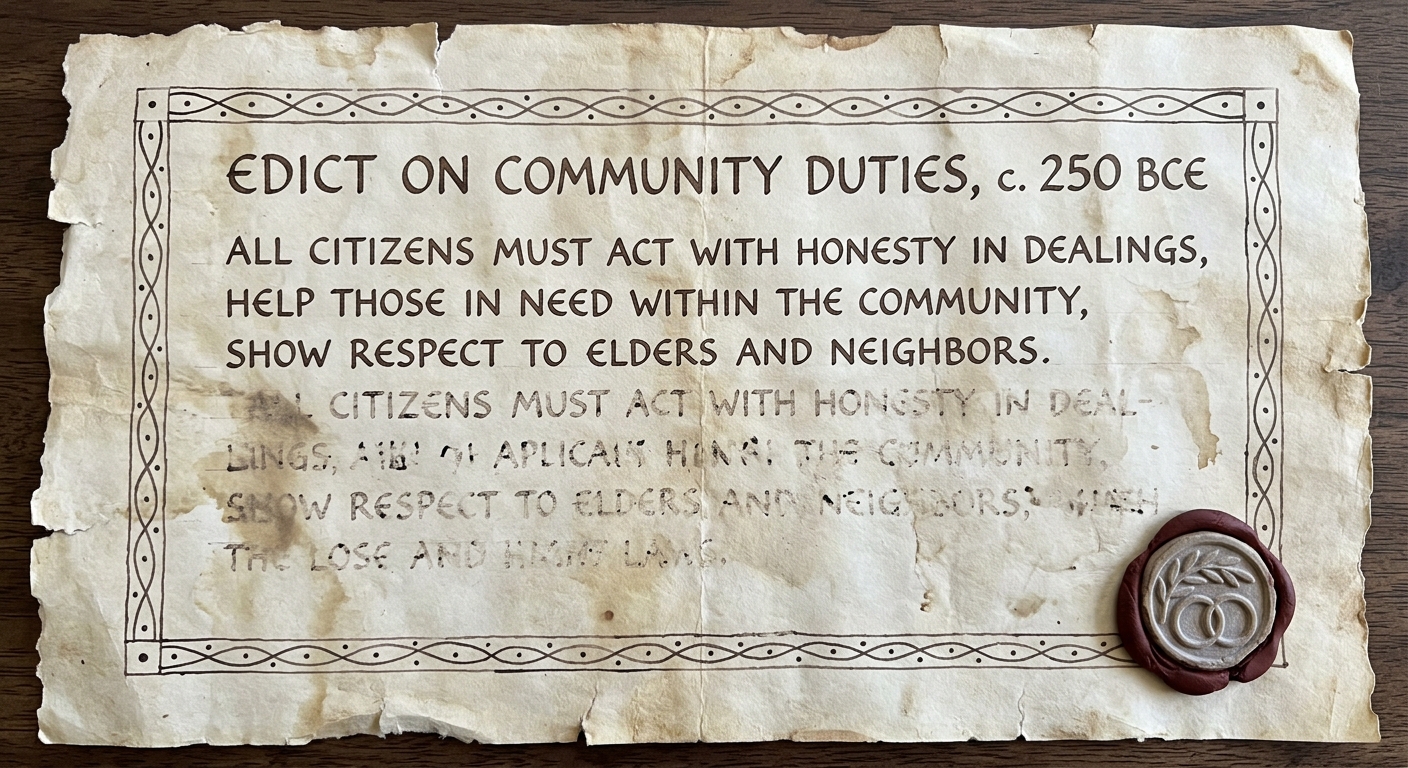
Use the historical document(s) and the short readings in the left panel to answer the associated questions.
Excerpt (transcribed):
In the market city, I saw people pray in different ways. Some bow toward a holy house, others light lamps before a shrine, and many give coins to the poor. Traders say one God judges all, yet all honor rules for right living and special days of worship.
Which detail from the excerpt best supports the idea that different religions can share expectations about moral behavior?
Which pair of details from the excerpt most clearly shows a difference in worship practices?
Based on the excerpt, what is the most likely purpose of the author describing several religious practices in the same place?
Using evidence from the document and excerpt, explain one similarity and one difference among the belief systems or religious practices described.
Use at least two specific details from the excerpt.
What inference can you make about how complex societies supported religion in public life in this trade city?
Support your inference with two pieces of evidence from the document and excerpt.
Excerpt (transcribed):
The council orders all households to practice honesty in trade, give food to the hungry, and show respect for elders and strangers. These duties, taught in our temples and meeting halls, protect the community. Those who refuse the shared rules bring disorder and must make amends.

Which detail from the excerpt best supports the idea that belief systems are based on shared values?
According to the excerpt, why might the council connect shared moral duties to community stability?
Which conclusion is best supported by the excerpt about how communities pass on shared values?
Using evidence from the document and excerpt, explain how two different duties reflect shared community values.
Use at least two specific details from the excerpt.
What inference can you make about why the council mentions that these duties are taught in “temples and meeting halls”? Support your inference with two pieces of evidence from the excerpt.
Excerpt (transcribed):
The temple leaders announce a shared day of worship each week so all households gather in peace. They teach that common rituals strengthen unity and reduce conflict. The notice lists roles for men and women during ceremonies and warns that ignoring these duties can disturb social order in the city.

Which detail from the excerpt best supports the idea that belief systems can be used to unify groups of people?
According to the excerpt, why would temple leaders expect common rituals to reduce conflict?
Which conclusion is best supported by the excerpt about how belief systems may affect social order and gender roles?
Using evidence from the document and excerpt, explain how the shared worship day could unify the community. Use at least two specific details from the excerpt.
What inference can you make about why the notice includes roles for men and women during ceremonies?
Support your inference with two pieces of evidence from the excerpt.