Twa kɔ nsɛm atitiriw so
Log in
Sign up for FREE
arrow_back
Laabri

6.4 - Comparative World Religions - Practice B

star
star
star
star
star
Last updated about 2 months ago
15 Nsɛmmisa
Hyɛ no nsow a efi ɔkyerɛwfo no hɔ:

Use the historical document(s) and the short readings in the left panel to answer the associated questions.

Use the historical document(s) and the short readings in the left panel to answer the associated questions.

6.4.a
6.4.b
6.4.c
Ɛhia
2
6.4.a
DOK.SS.2
Ɛhia
1
6.4.a
DOK.SS.2
Ɛhia
2
6.4.a
DOK.SS.2
Ɛhia
1
6.4.a
DOK.SS.2
Ɛhia
1
6.4.a
DOK.SS.2
Ɛhia
2
6.4.b
DOK.SS.2
Ɛhia
1
6.4.b
DOK.SS.2
Ɛhia
1
6.4.b
DOK.SS.2
Ɛhia
1
6.4.b
DOK.SS.2
Ɛhia
2
6.4.b
DOK.SS.2
Ɛhia
2
6.4.c
DOK.SS.2
Ɛhia
1
6.4.c
DOK.SS.2
Ɛhia
2
6.4.c
DOK.SS.2
Ɛhia
1
6.4.c
DOK.SS.2
Ɛhia
1
6.4.c
DOK.SS.2

Historical Document:

Inscription attributed to Emperor Ashoka (Mauryan Empire), about 250 BCE.

This translated inscription urges people to live by dhamma: treat others with respect, avoid needless violence, and honor different religious groups. Ashoka ordered messages like this carved on stone and placed across his empire to promote shared moral behavior.
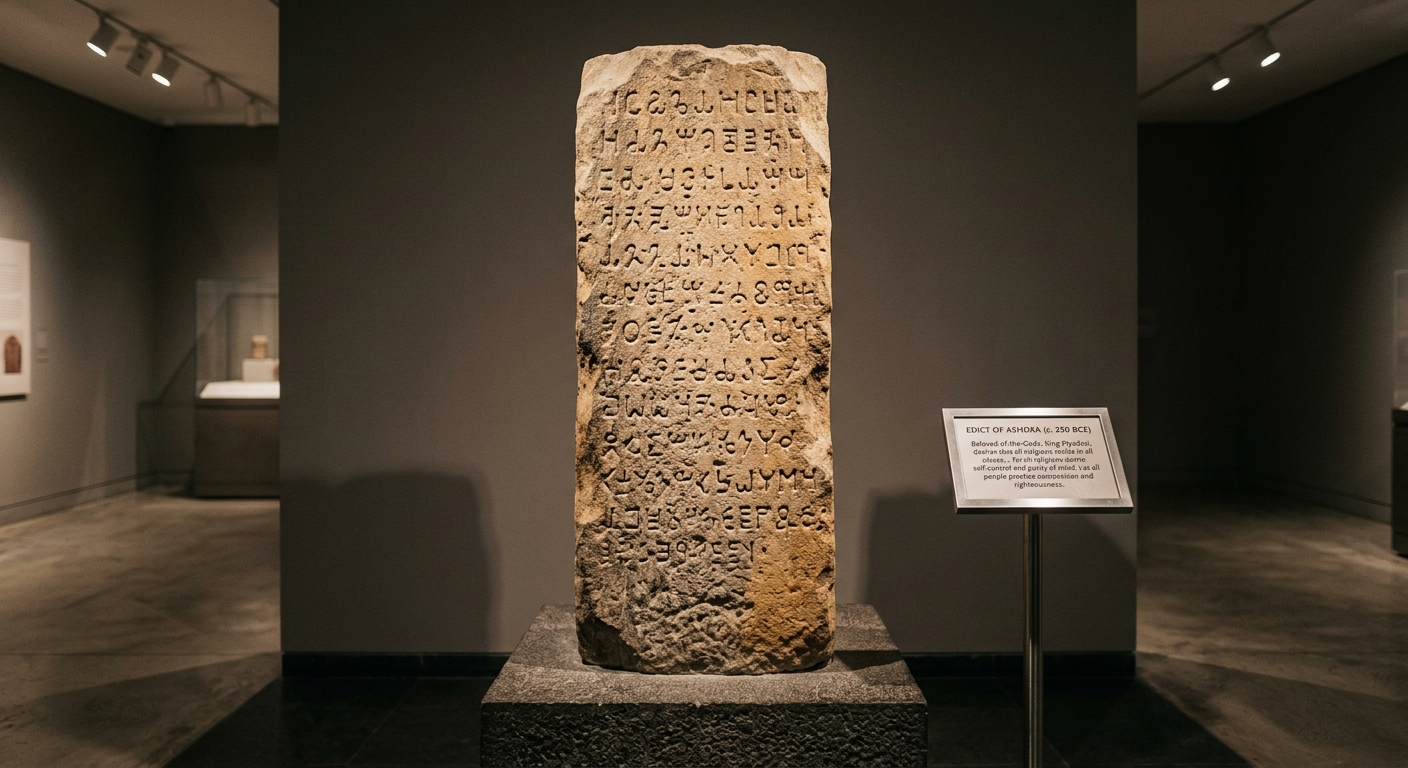
Museum-style photo of a weathered stone inscription labeled 'Edict of Ashoka (c. 250 BCE)' with carved script and a small placard showing an English translation.

Asemmisa {{asɛmmisaAhyɛnsode}}
1.

Using evidence from the document, explain one way Ashoka’s message could have influenced how different religious groups interacted over time in his empire.

Write a well-formed paragraph.

Asemmisa {{asɛmmisaAhyɛnsode}}
2.

What is the BEST chronological inference supported by the document about Ashoka’s use of carved stone messages?

Asemmisa {{asɛmmisaAhyɛnsode}}
3.

Place this document in chronological context:

describe one event or development that likely happened earlier and one that likely happened later.

For each, explain your reasoning using the document’s date and topic.

Write one paragraph.

Asemmisa {{asɛmmisaAhyɛnsode}}
4.

Based on the date in the document, this inscription was created closest in time to which event?

Asemmisa {{asɛmmisaAhyɛnsode}}
5.

Which timeline statement is MOST accurate based on the document’s date (c. 250 BCE)?

Historical Document:

Law code attributed to Hammurabi, king of Babylon, c. 1750 BCE.

This translated law explains how society should handle harm and disputes. By carving rules in stone and clay, Babylonian leaders promoted shared expectations about justice and responsibility. The document shows a belief system based on mutually held values about order and fairness.

Museum-style photo of a clay tablet labeled 'Code of Hammurabi (c. 1750 BCE)' with cuneiform-like writing and a small placard showing a translated law.

Asemmisa {{asɛmmisaAhyɛnsode}}
6.

Place this document in chronological context:

describe one development that likely happened earlier and one that likely happened later.

For each, explain your reasoning using the document’s date and topic.

Write one paragraph.

Asemmisa {{asɛmmisaAhyɛnsode}}
7.

What is the BEST chronological inference supported by the document about why leaders recorded laws in durable materials?

Asemmisa {{asɛmmisaAhyɛnsode}}
8.

Based on the date, which development is most likely to have happened later than this document?

Asemmisa {{asɛmmisaAhyɛnsode}}
9.

Which timeline statement is MOST accurate based on the document’s date (c. 1750 BCE)?

Asemmisa {{asɛmmisaAhyɛnsode}}
10.

Using evidence from the document, explain how recording laws could help spread and preserve mutually held values over time.

Write a well-formed paragraph.

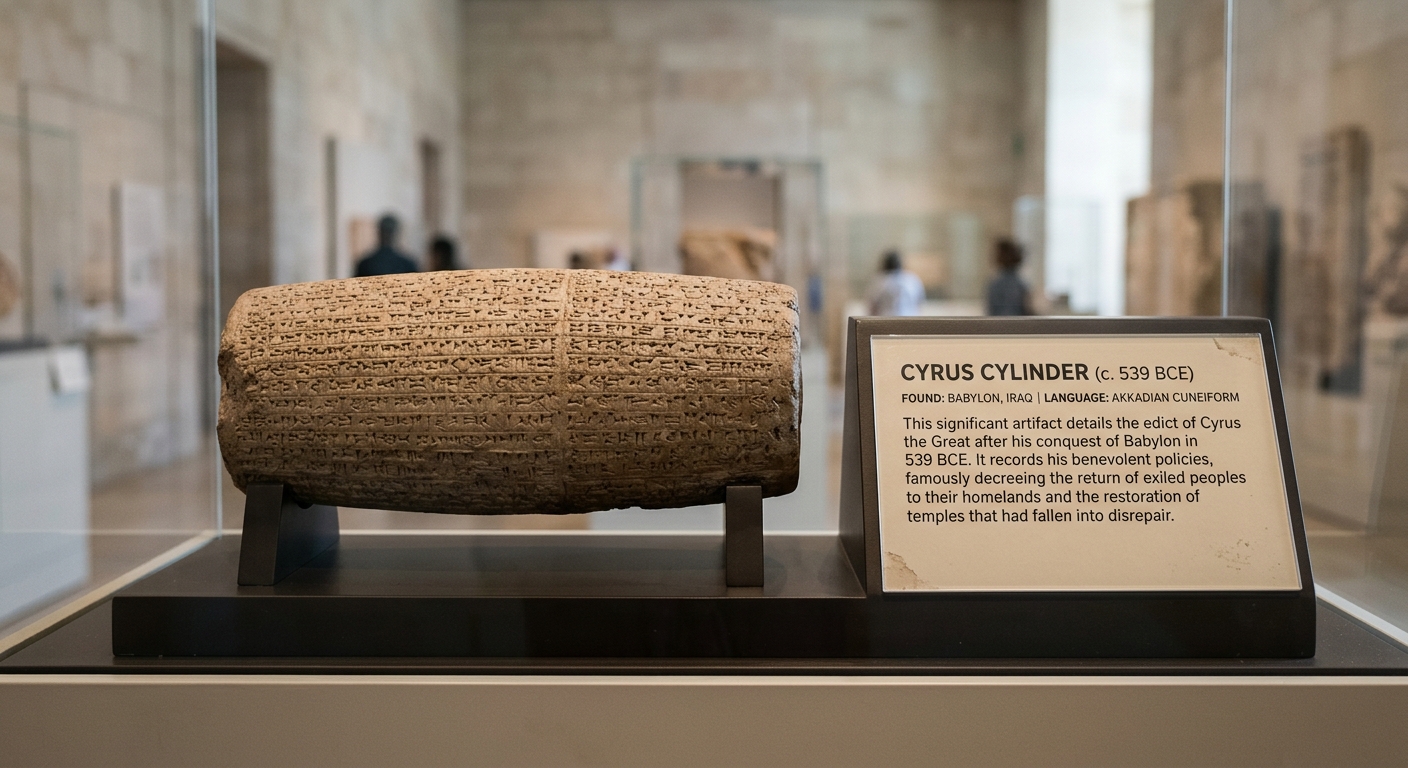
Historical Document: Inscription attributed to Cyrus the Great (Persian Empire), c. 539 BCE.

This translated inscription describes a ruler allowing conquered peoples to return home and restore their temples. By publicly supporting local worship practices, the policy could unify a diverse empire under shared expectations of loyalty and order while reducing rebellion among different religious communities.

Museum-style photo of an ancient inscription labeled 'Cyrus Cylinder (c. 539 BCE)' with carved script and a placard mentioning restoring temples and allowing peoples to return.

Asemmisa {{asɛmmisaAhyɛnsode}}
11.

Using evidence from the document, explain one way this policy could have helped unify different religious groups in the empire over time.

Write a well-formed paragraph.

Asemmisa {{asɛmmisaAhyɛnsode}}
12.

What is the BEST chronological inference supported by the document about how the policy could affect religious groups over time?

Asemmisa {{asɛmmisaAhyɛnsode}}
13.

Place this document in chronological context:

describe one development that likely happened earlier and one that likely happened later.

For each, explain your reasoning using the document’s date and topic.

Write one paragraph.

Asemmisa {{asɛmmisaAhyɛnsode}}
14.

Which timeline statement is MOST accurate based on the document’s date (c. 539 BCE)?

Asemmisa {{asɛmmisaAhyɛnsode}}
15.

Based on the date in the document (c. 539 BCE), this inscription was created closest in time to which development?