Use the historical document(s) and the short readings in the left panel to answer the associated questions.

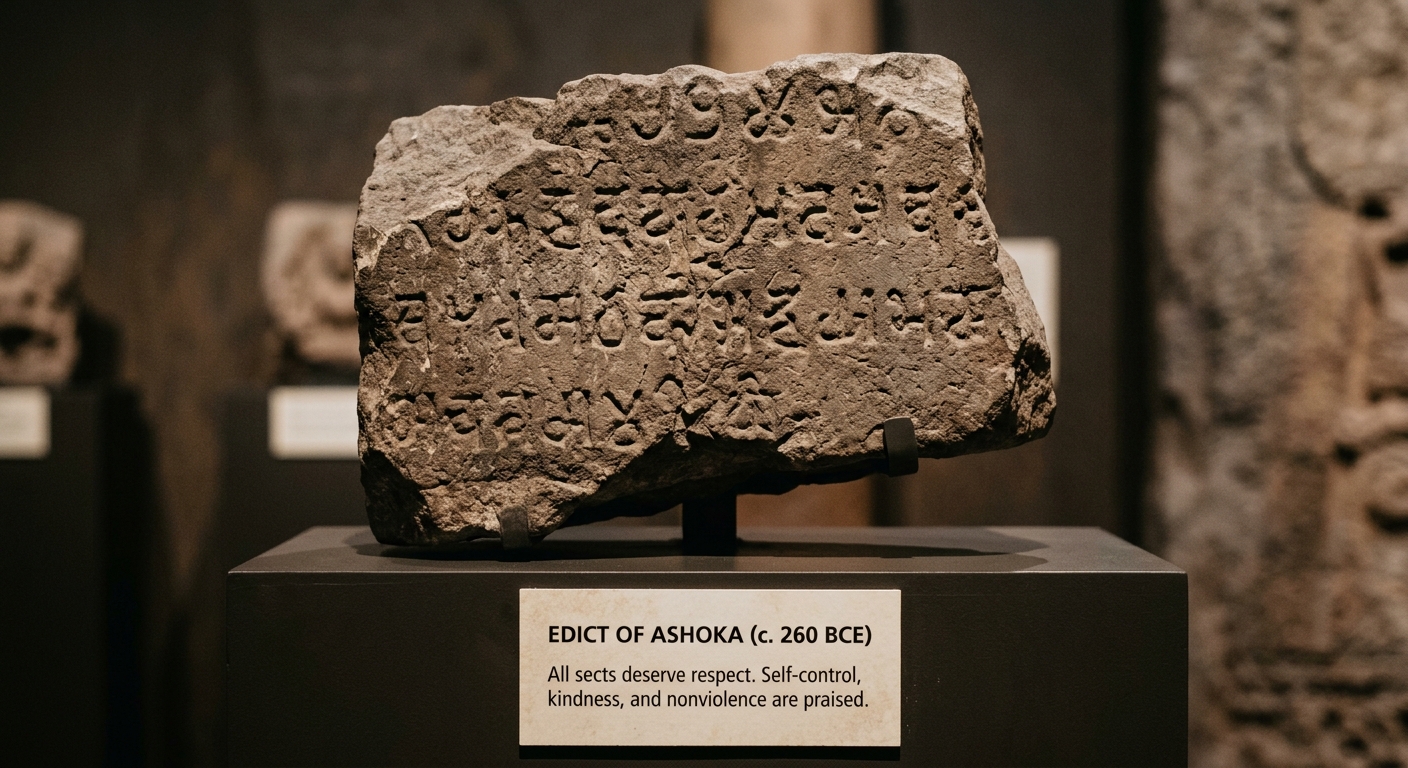
This museum label shows a translated excerpt from an edict issued by Emperor Ashoka of the Maurya Empire (about 260 BCE). After a destructive war, Ashoka promoted dhamma: ethical behavior, respect for different religious groups, and nonviolence across his empire.
Based on the context provided, what is a likely reason Ashoka would display messages like this across his empire?
Using evidence from the document, compare one belief in Ashoka’s message with a similar belief from another religion or belief system you have studied.
Explain one similarity and one difference.
Explain how time, place, and government power could shape religious ideas.
Compare Ashoka’s use of public messages to one other society where leaders supported or regulated religion.
Which idea in the document is MOST similar to a teaching found in several major religions, including Buddhism, Christianity, and Islam?
If you wanted to compare Ashoka’s message with the beliefs of another civilization in the same era, which source would be MOST useful to pair with this document?

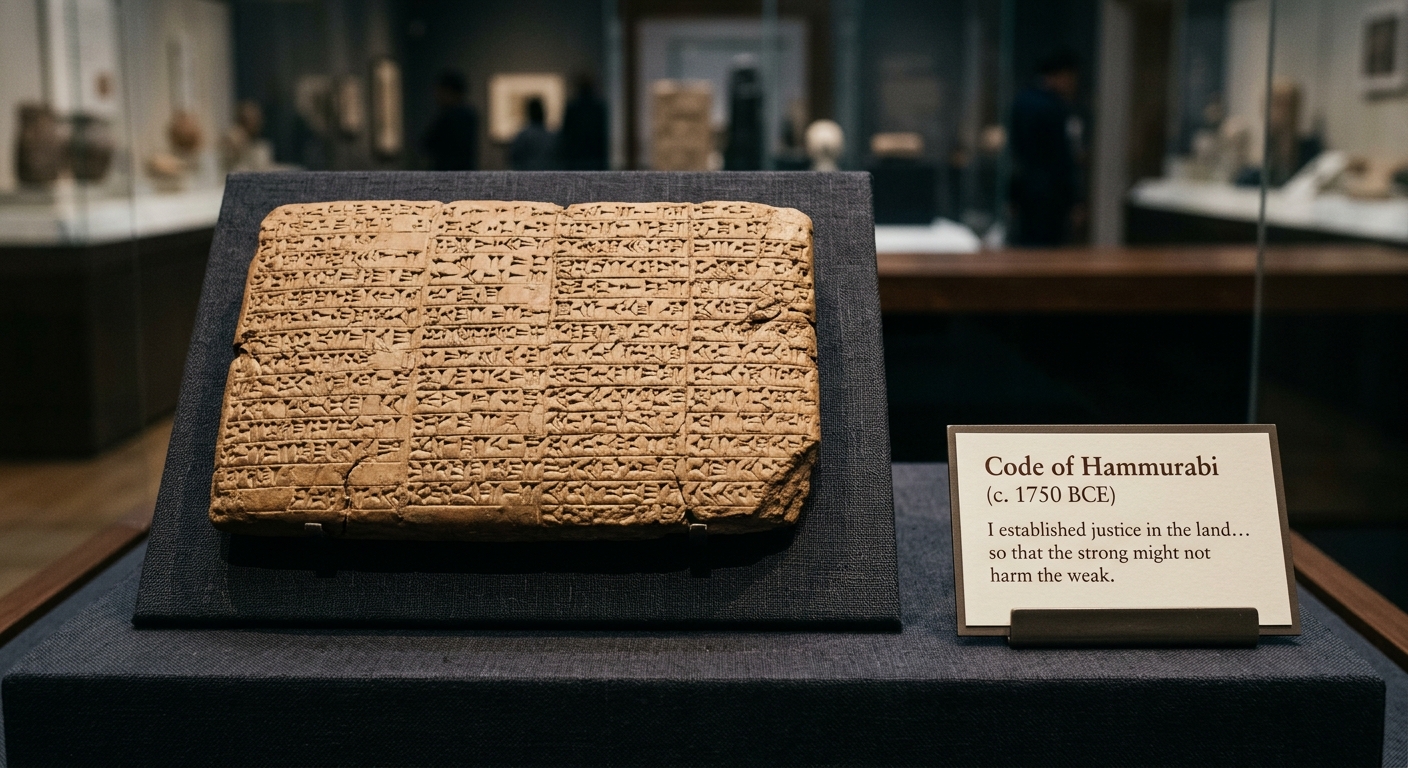
This museum label shows a translated excerpt from the Code of Hammurabi, a Babylonian law collection from about 1750 BCE. The text presents justice as a shared value that should guide society. It claims laws exist to protect the weak and limit the power of the strong.
To compare Hammurabi’s message to another belief system in the same broad era, which source would be MOST useful?
Explain how time, place, and government power could shape shared values.
Compare the role of law in Babylonia to one other society where leaders connected rules to moral or religious values.
Which statement BEST explains how this document reflects a belief system based on shared values?
Which context BEST helps explain why a Babylonian ruler would emphasize protecting the weak in a law code?
Using evidence from the document, compare Hammurabi’s emphasis on justice with a value taught in another religion or belief system you have studied.
Explain one similarity and one difference.

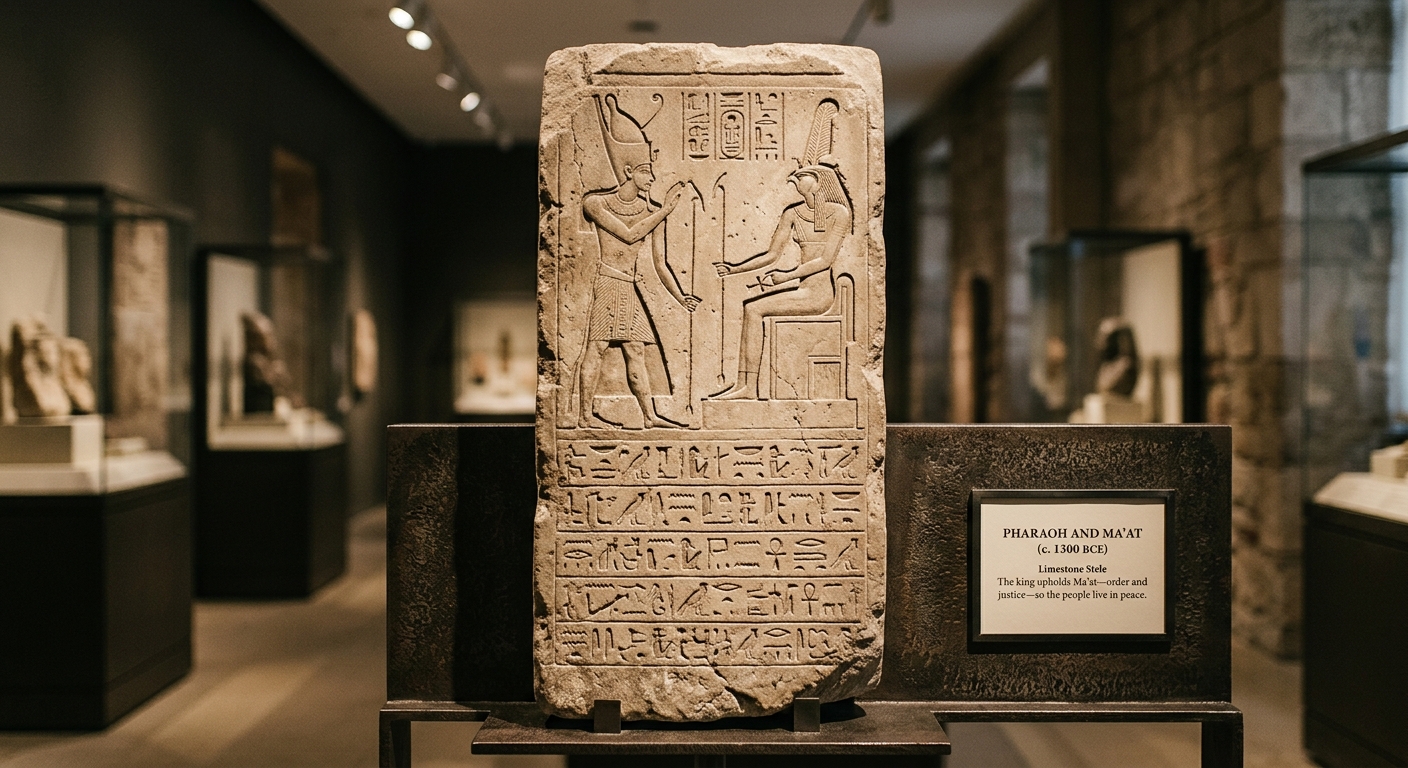
This museum label shows a translated excerpt from an Egyptian royal inscription (about 1300 BCE). It links the pharaoh’s authority to Ma’at (order and justice). By presenting the ruler as responsible for social order, the inscription suggests religious ideas could unify the kingdom and support obedience.
Which statement BEST explains how this document suggests belief systems can support social order?
Using evidence from the document, compare how this inscription uses religion to unify people with one other belief system you have studied.
Explain one similarity and one difference.
To compare how different societies used religion to unify people, which additional source would be MOST useful to pair with this inscription?
Explain how time, place, and government power could shape how religion affected social order and gender roles.
Compare Egypt to one other society where beliefs influenced social rules.
Which context BEST helps explain why an Egyptian ruler would emphasize Ma’at in a public inscription?