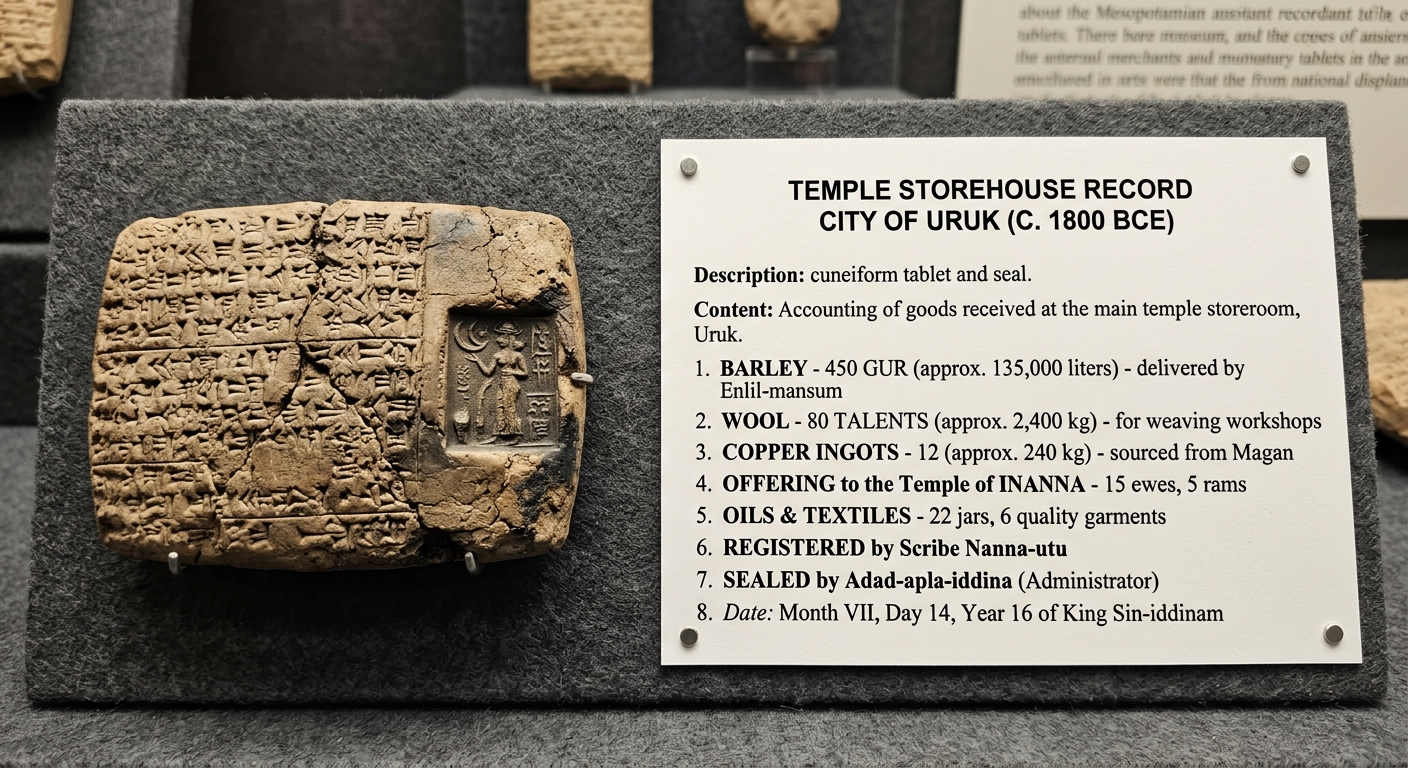
Read the short document below. It shows how a temple helped organize trade. People brought goods as offerings, and officials recorded what was stored and exchanged. Use the document to answer the questions.
Use the historical document(s) and the short readings in the left panel to answer the associated questions.
Use the historical document(s) and the short readings in the left panel to answer the associated questions.
Read the short document below. It shows how a temple helped organize trade. People brought goods as offerings, and officials recorded what was stored and exchanged. Use the document to answer the questions.
Explain one benefit and one cost for farmers or merchants when the temple requires offerings or tribute. Connect your answer to scarcity and decision making.
The document suggests that people faced scarcity because they had to decide how to use limited goods. Which choice BEST describes the tradeoff shown?
Which detail from the document BEST shows how a belief system affected the economy?
Using evidence from the document, explain two ways a temple (as a religious institution) could support economic activity such as trade or production.
Which feature of an economic system is MOST clearly shown by the temple’s role in the document?
Read the short document below. It shows how shared religious values can shape economic decisions. A donor set aside income from market shops to support public services and charity. Use the document to answer the questions.
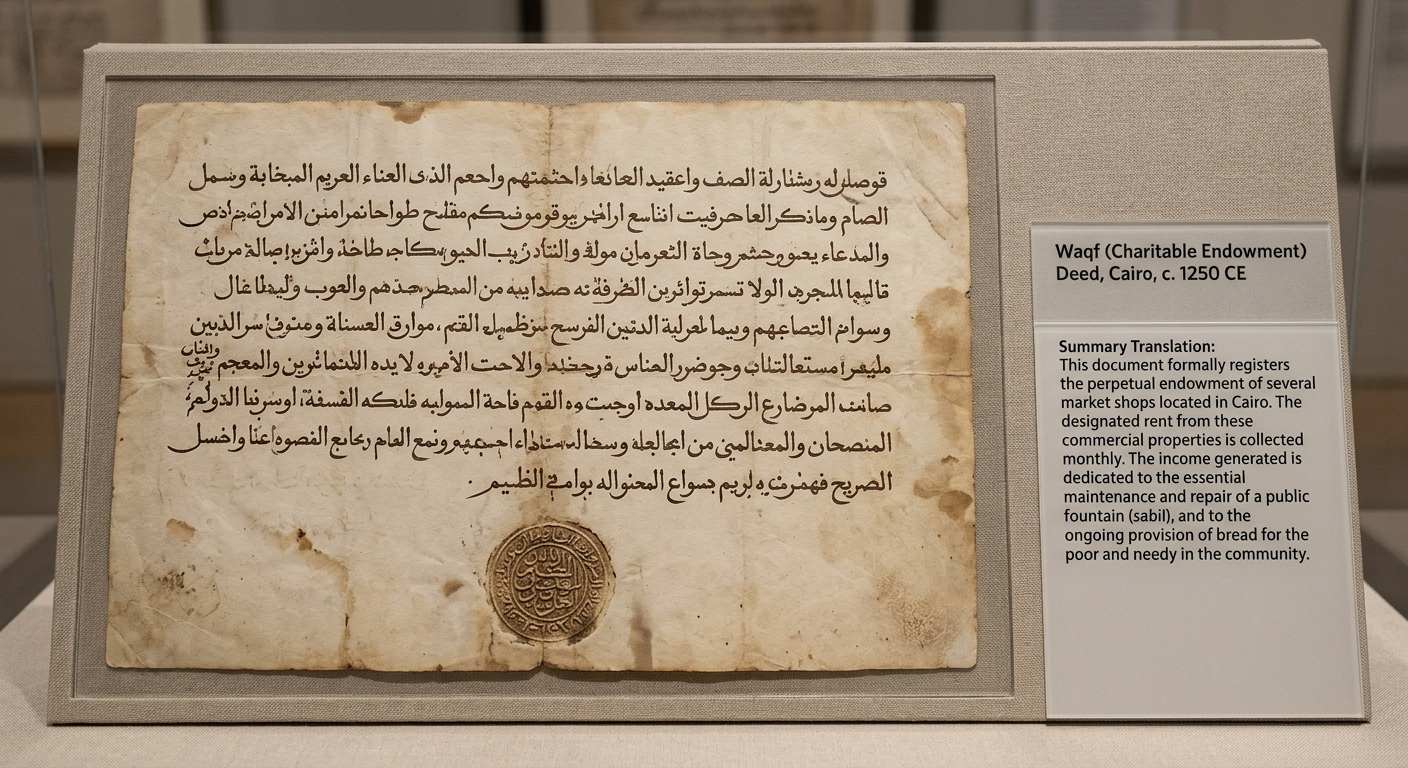
Using evidence from the document, explain two ways shared religious values could shape an economic system in a city.
Which statement BEST explains how belief-based rules like this could affect trade in a city?
Which shared value is MOST directly shown by the donor’s decision in the document?
Explain one benefit and one cost (tradeoff) of funding charity and public services using rent from market shops.
Connect your answer to scarcity and decision making.
Based on the document, what is the MAIN economic role of the endowment (waqf)?
Read the short document below. It shows how a merchant association used shared religious rules to organize market life. The rules could unify members but also limit who could trade and how disputes were handled. Use the document to answer the questions.
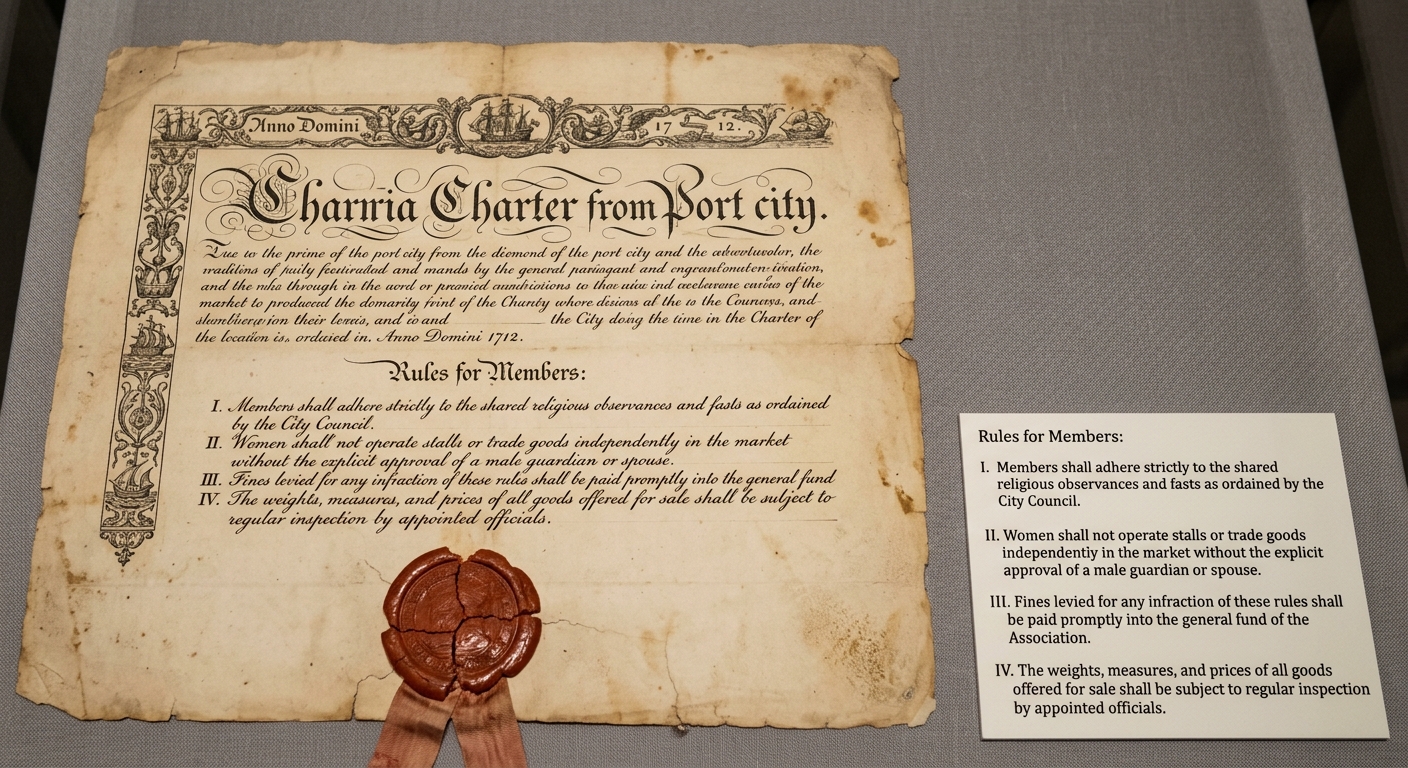
Using evidence from the document, explain two ways belief-based rules could unify a trading group and shape economic activity.
Which document detail BEST shows how a belief system could affect social order in economic life?
Which statement BEST explains how the association’s shared rules could support the economy?
Which feature of an economic system is MOST clearly shown by fines and a common fund?
Explain one economic benefit and one economic cost of limiting who can operate a market stall. Connect your answer to scarcity and decision making.