Use the historical document(s) and the short readings in the left panel to answer the associated questions.

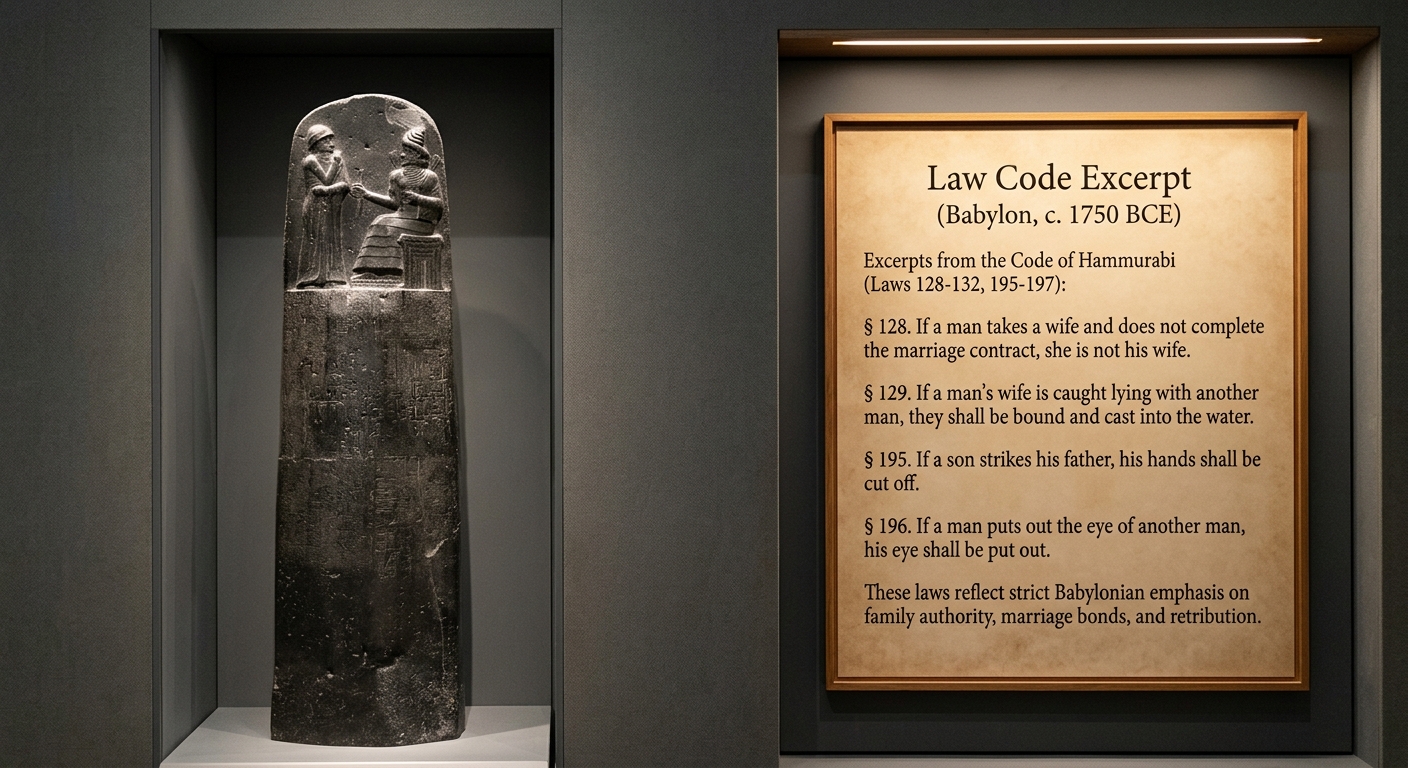
Displayed is a translated excerpt from a Babylonian law code (c. 1750 BCE). It shows how leaders used shared rules to keep order. The excerpt describes family authority and expectations for women and men. Use the document as evidence in your answers.
Explain one way a shared set of rules can unify a group of people and one possible limitation or harm it might create for some members of society.
Use evidence from the document to support both points.
Using evidence from the document, explain two ways these rules could affect
(1) social order and
(2) gender roles.
Cite at least two specific details from the document to support your explanation.
Based on the document, how could a shared law code help unify a group of people?
Which inference about gender roles is MOST supported by the document?
Which statement is BEST supported by the document about how societies maintained social order?

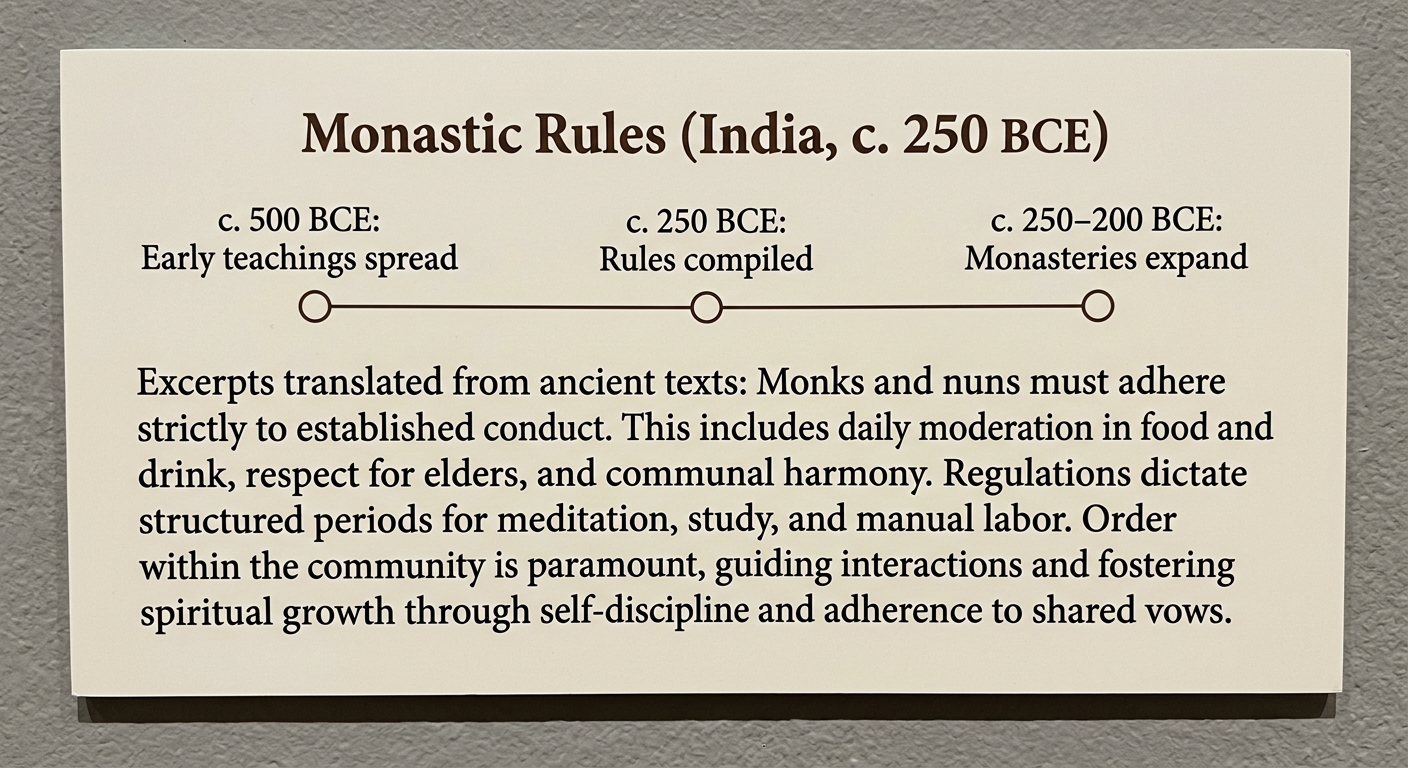
Displayed is a museum-style translation of Buddhist monastic rules from India (about 250 BCE). The timeline shows that teachings spread first, then rules were written later as communities grew. The excerpt describes expectations for monks and nuns that helped organize daily life.
Using chronological evidence from the timeline, explain how the development of written rules could affect social order in a growing religious community.
Cite at least two timeline details in your answer.
Using evidence from the excerpt and timeline, describe one continuity and one change in gender roles as the community developed from early teachings to later monastic rules.
According to the timeline, which event happened FIRST?
Based on the timeline, what is the BEST reason the rules were written AFTER the early teachings spread?
Which claim is BEST supported by the timeline and excerpt about how a belief system can unify a group over time?

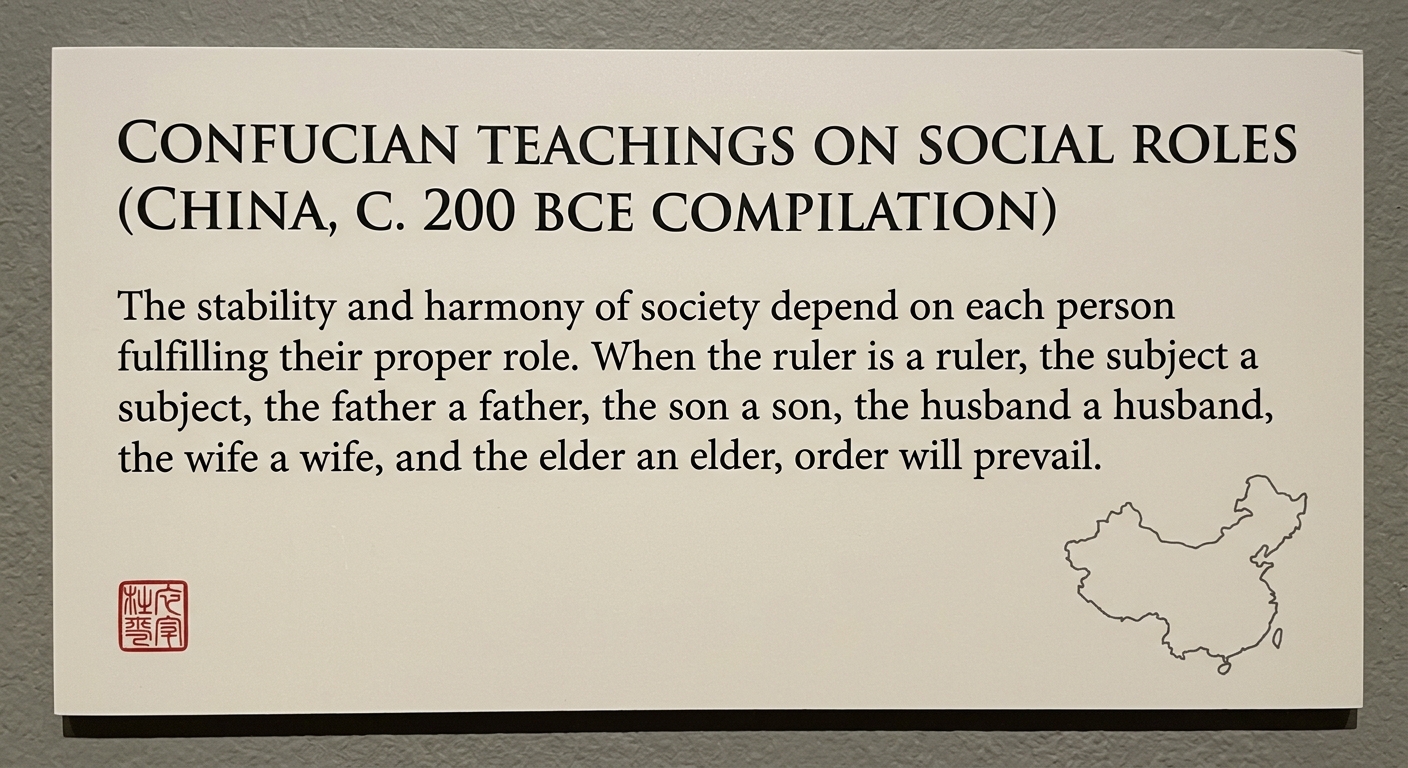
Displayed is a museum-style translation of Confucian teachings collected in China (about 200 BCE). The excerpt explains that harmony comes from people following proper roles in the family and in government. Rulers and officials later used these ideas to promote unity and social order.
Using evidence from the document, compare one idea that could unify people with one idea that could reinforce social hierarchy.
Cite at least two specific details from the excerpt.
Which context BEST explains why rulers might support the ideas in this document?
Which pair of relationships BEST shows how the document connects family order to government order?
Explain how conditions in early imperial China could make these teachings useful for unifying different groups of people.
Use evidence from the excerpt and at least one piece of historical context (for example, governing a large territory).
Which inference about gender roles is MOST supported by the document?

Displayed is a museum-style map showing trade routes and the spread of Islam from about 700–1000 CE. The routes connect deserts, seas, and major cities. Shared beliefs and laws could spread along these pathways, helping unify diverse peoples and shaping social order and gender roles in connected regions.
Which location would MOST likely have been reached earlier by the spread shown on the map, based on distance and routes from Mecca and Medina?
Based on the map, which geographic feature most likely made it easier for ideas and practices to spread between North Africa and Southwest Asia?
Using evidence from the map, explain two ways geography and trade routes could help a belief system unify different groups of people. Cite at least two specific map details (routes, cities, or bodies of water) in your answer.
Which claim is BEST supported by the map about how geography can help unify groups under a belief system?
Contextualize the map: Explain how controlling key route hubs shown on the map could affect social order in connected regions, and describe one possible way this could influence gender roles. Use evidence from the map to support your reasoning.

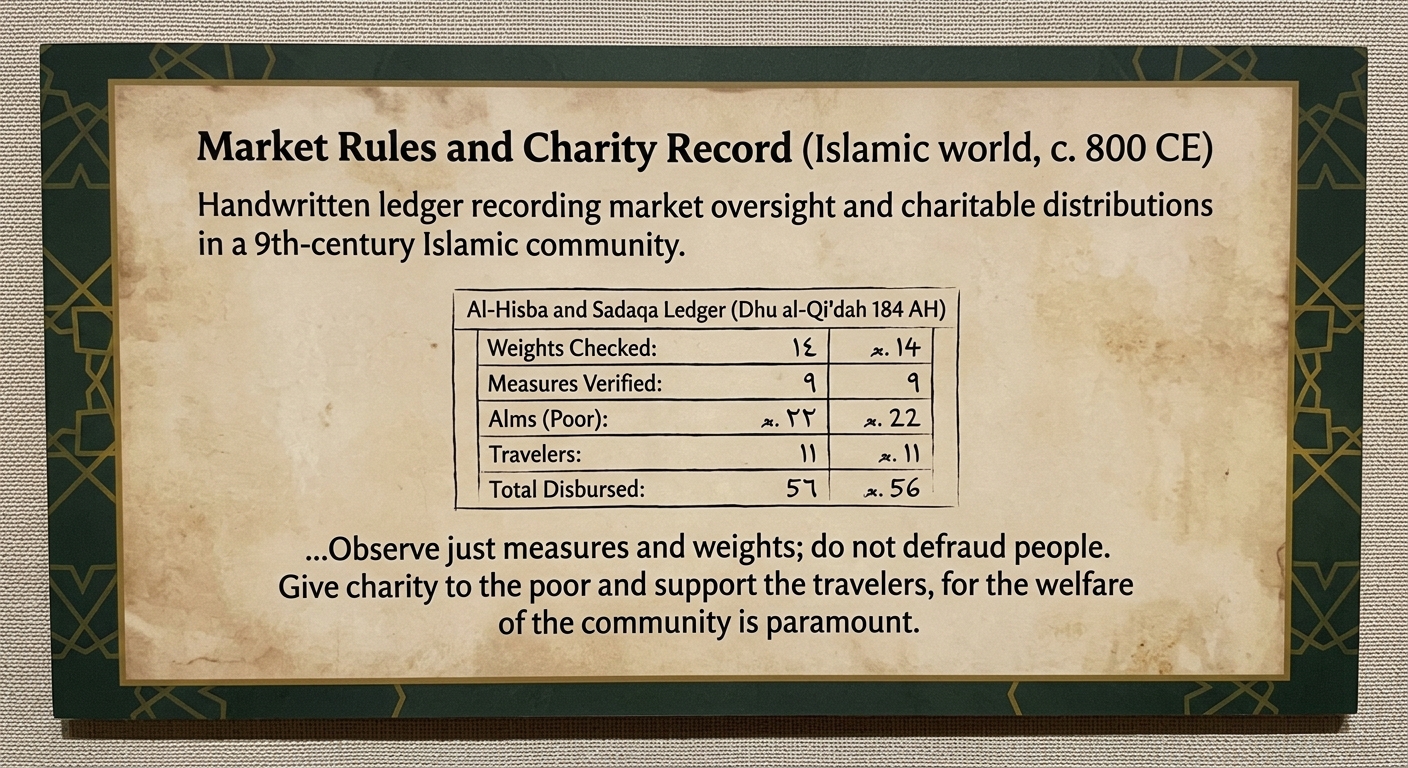
Displayed is a museum-style translation of market rules and a charity record from the Islamic world (about 800 CE). The excerpt links belief to economic life by requiring honest weights and giving support to those in need. Such shared economic expectations could unify communities and shape social order.
Using evidence from the document, explain two ways belief systems can influence an economy.
Cite at least two specific details from the excerpt or ledger (for example, rules about trade or support for people in need).
Explain one possible way these economic expectations could influence gender roles in the society described, and explain one possible limitation or harm.
Use evidence from the document to support your reasoning.
Based on the document, which policy would MOST likely help unify a community’s economic life?
Which economic goal is MOST supported by the document?
Which outcome BEST explains how these economic rules could affect social order?