Twa kɔ nsɛm atitiriw so
Log in
Sign up for FREE
arrow_back
Laabri

6.4b - Comparative World Religions - Practices A through E

star
star
star
star
star
Last updated about 2 months ago
25 Nsɛmmisa
Hyɛ no nsow a efi ɔkyerɛwfo no hɔ:

Use the historical document(s) and the short readings in the left panel to answer the associated questions.
Use the historical document(s) and the short readings in the left panel to answer the associated questions.
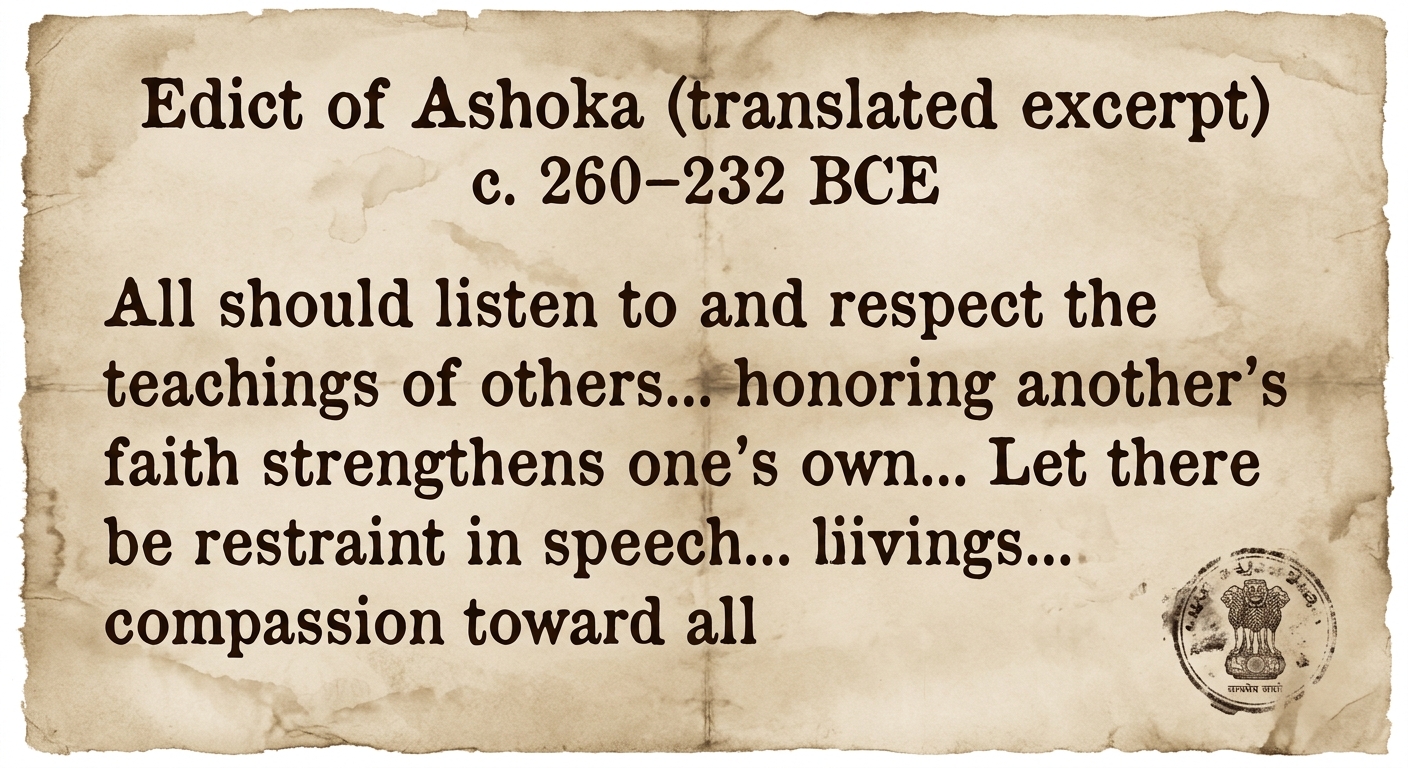
Sepia parchment document titled “Edict of Ashoka (translated excerpt), c. 260–232 BCE,” showing a short excerpt promoting respect for other beliefs, restraint in speech, and compassion, with a small seal at the bottom.
Ɛhia
1
6.4.b
DOK.SS.2
Ɛhia
1
6.4.b
DOK.SS.2
Ɛhia
1
6.4.b
DOK.SS.2
Ɛhia
1
6.4.b
DOK.SS.2
Ɛhia
1
6.4.b
DOK.SS.2
Ɛhia
1
6.4.b
DOK.SS.2
Ɛhia
1
6.4.b
DOK.SS.2
Ɛhia
1
6.4.b
DOK.SS.2
Ɛhia
1
6.4.b
DOK.SS.2
Ɛhia
1
6.4.b
DOK.SS.2
Ɛhia
1
6.4.b
DOK.SS.2
Ɛhia
1
6.4.b
DOK.SS.2
Ɛhia
1
6.4.b
DOK.SS.2
Ɛhia
1
6.4.b
DOK.SS.2
Ɛhia
1
6.4.b
DOK.SS.2
Ɛhia
1
6.4.b
DOK.SS.2
Ɛhia
1
6.4.b
DOK.SS.2
Ɛhia
1
6.4.b
DOK.SS.2
Ɛhia
1
6.4.b
DOK.SS.2
Ɛhia
1
6.4.b
DOK.SS.2
Ɛhia
1
6.4.b
DOK.SS.2
Ɛhia
1
6.4.b
DOK.SS.2
Ɛhia
1
6.4.b
DOK.SS.2
Ɛhia
1
6.4.b
DOK.SS.2
Ɛhia
1
6.4.b
DOK.SS.2

This excerpt comes from the public edicts of Emperor Ashoka of the Mauryan Empire in South Asia. After years of warfare, Ashoka promoted dhamma—ethical behavior such as compassion and respect. These messages were carved on pillars and rocks for diverse communities to read.

Sepia parchment document titled “Edict of Ashoka (translated excerpt), c. 260–232 BCE,” showing a short excerpt promoting respect for other beliefs, restraint in speech, and compassion, with a small seal at the bottom.

Asemmisa {{asɛmmisaAhyɛnsode}}
1.

Based on the document, which value is most clearly being promoted?

Use evidence from the excerpt to choose the best answer.

Asemmisa {{asɛmmisaAhyɛnsode}}
2.

Which line of reasoning is best supported by the document?

Choose the claim that is most strongly backed by evidence in the excerpt.

Asemmisa {{asɛmmisaAhyɛnsode}}
3.

What is the most likely purpose of carving messages like this in public places?

Use the reading stimulus and the document as evidence.

Asemmisa {{asɛmmisaAhyɛnsode}}
4.

Using at least two specific details from the document, explain how the excerpt reflects the idea that belief systems are based on mutually held values.

Write one well-formed paragraph.

Asemmisa {{asɛmmisaAhyɛnsode}}
5.

What can you infer about the challenges of ruling a diverse empire from this document?

Use evidence from the excerpt (and the reading stimulus, if helpful) to support your inference in one paragraph.

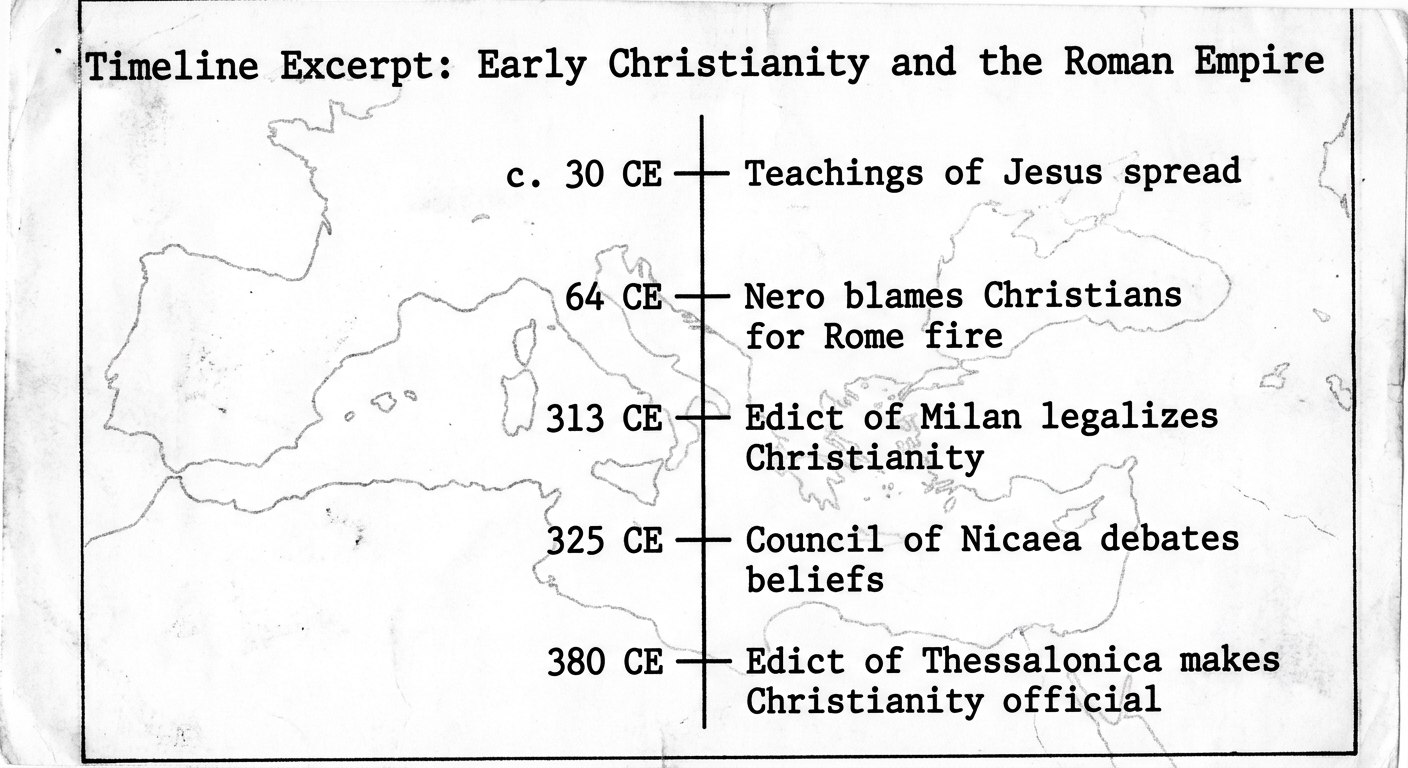
Black-and-white document titled “Timeline Excerpt: Early Christianity and the Roman Empire,” showing five dated events from about 30 CE to 380 CE related to Christianity’s spread and Roman policies.

This timeline summarizes key moments as Christianity developed within the Roman Empire. Over time, debates about beliefs helped shape shared values for Christian communities. Roman policies also changed—from persecution to acceptance—affecting how Christians practiced their faith and organized their religious life.

Asemmisa {{asɛmmisaAhyɛnsode}}
6.

Which event on the timeline happened first?

Use the dates shown in the document as evidence.

Asemmisa {{asɛmmisaAhyɛnsode}}
7.

Which pair of events shows the clearest shift in Roman government policy toward Christianity?

Choose the answer that best uses the timeline’s sequence as evidence.

Asemmisa {{asɛmmisaAhyɛnsode}}
8.

According to the timeline, which event most directly relates to Christian communities defining shared beliefs?

Use the document’s wording and dates as evidence.

Asemmisa {{asɛmmisaAhyɛnsode}}
9.

Using evidence from the timeline, explain how Christian communities’ mutually held values could have become more unified over time.

In your paragraph, reference at least two dated events in chronological order.

Asemmisa {{asɛmmisaAhyɛnsode}}
10.

Choose one change over time shown on the timeline (for example, persecution to legalization).

Explain how that change might have affected the way Christian values were practiced or communicated.

Use at least two specific timeline entries as evidence.

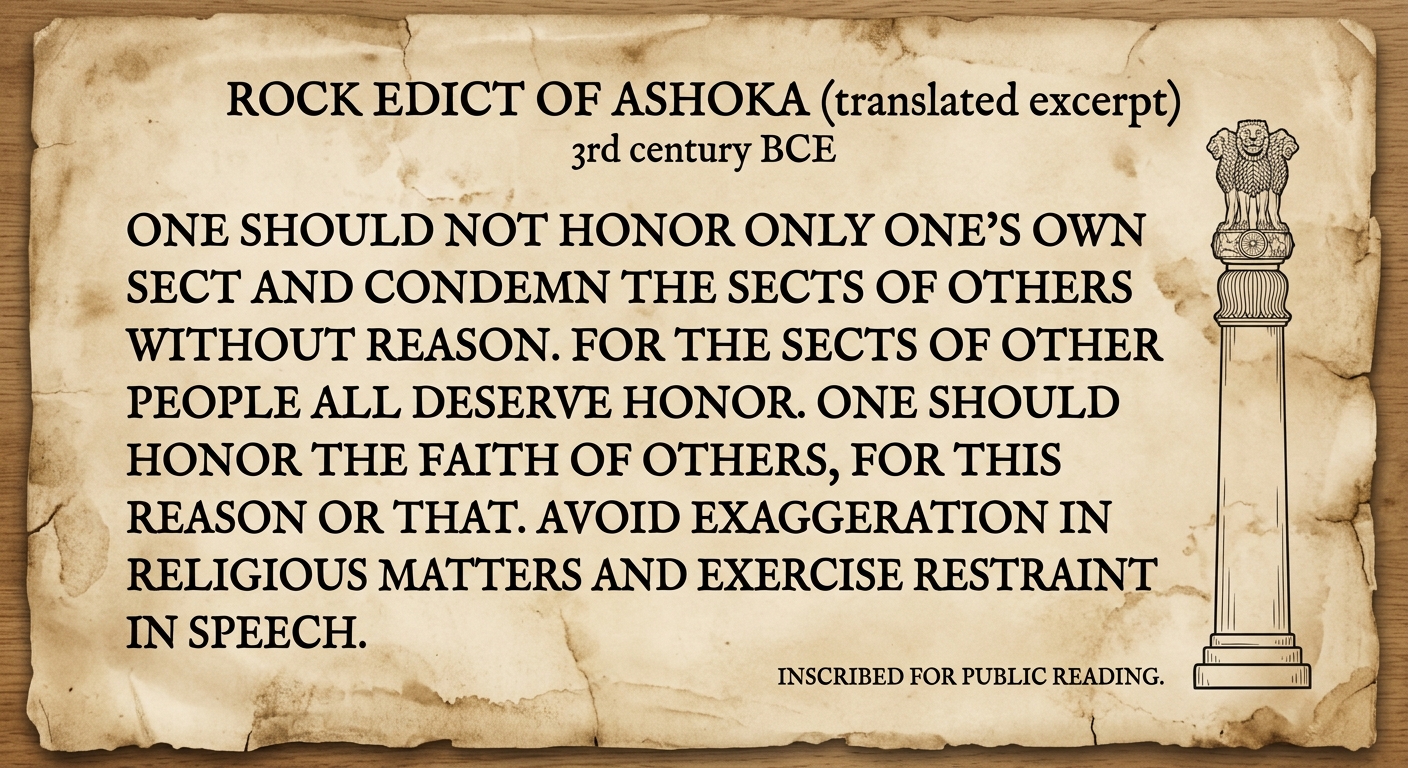
Ashoka ruled the Mauryan Empire in South Asia during the 200s BCE. After violent wars, he promoted dhamma, a moral code stressing compassion and respect. His edicts were carved in public so many religious communities could read them and share common expectations for behavior.

Sepia parchment document titled “Rock Edict of Ashoka (translated excerpt), 3rd century BCE,” with an excerpt about honoring other faiths and showing restraint in speech, plus a small drawing of a stone pillar.

Asemmisa {{asɛmmisaAhyɛnsode}}
11.

Which comparison is best supported by evidence from the document?

Choose the option that most directly matches the excerpt’s message.

Asemmisa {{asɛmmisaAhyɛnsode}}
12.

Which contextual detail from the reading stimulus best explains why Ashoka might publish this message?

Choose the answer that connects historical context to the document’s ideas.

Asemmisa {{asɛmmisaAhyɛnsode}}
13.

Which statement best compares the document’s message to the idea in standard 6.4.b that belief systems are based on mutually held values?

Choose the option that uses the document as evidence.

Asemmisa {{asɛmmisaAhyɛnsode}}
14.

Compare two values emphasized in the document.

Explain how each value could help different religious communities live together in Ashoka’s empire.

Use two specific phrases or details from the excerpt as evidence in one paragraph.

Asemmisa {{asɛmmisaAhyɛnsode}}
15.

Contextualize this document by explaining one historical problem Ashoka might have been responding to.

Use the reading stimulus for context and the document for evidence. Write one well-formed paragraph.

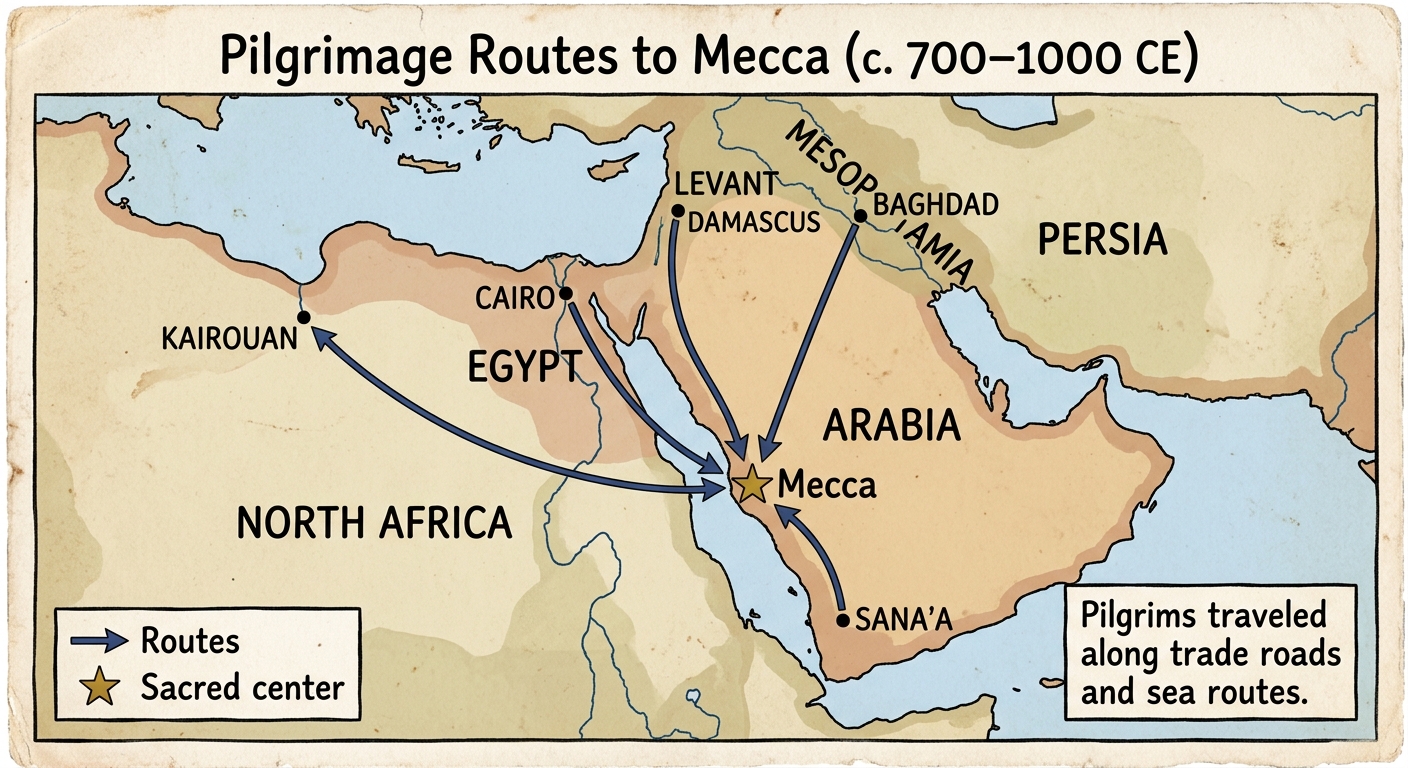
Reading stimulus (40–50 words): Many religions connect shared values to particular places. For Muslims, Mecca is a sacred center linked to the hajj (pilgrimage). This map shows routes that travelers used to reach Mecca, often following trade roads and safer paths between water sources and major cities.

Asemmisa {{asɛmmisaAhyɛnsode}}
16.

Based on the map, what is the best geographic conclusion about Mecca’s role in the region?

Choose the answer most supported by the routes shown.

Asemmisa {{asɛmmisaAhyɛnsode}}
17.

Which inference about movement and environment is most supported by the map and reading stimulus?

Select the best answer using evidence about routes and geography.

Asemmisa {{asɛmmisaAhyɛnsode}}
18.

Which statement best connects the map to standard 6.4.b (mutually held values)?

Choose the option most supported by the evidence in the map and reading stimulus.

Asemmisa {{asɛmmisaAhyɛnsode}}
19.

Using two pieces of evidence from the map (for example, where routes start and where they converge), explain how geography could support the spread of mutually held values.

Write one well-formed paragraph.

Asemmisa {{asɛmmisaAhyɛnsode}}
20.

What can you infer about the relationship between place and belief from this document?

Use evidence from the reading stimulus and at least one specific feature of the map (a route, region, or the location of Mecca) in one paragraph.

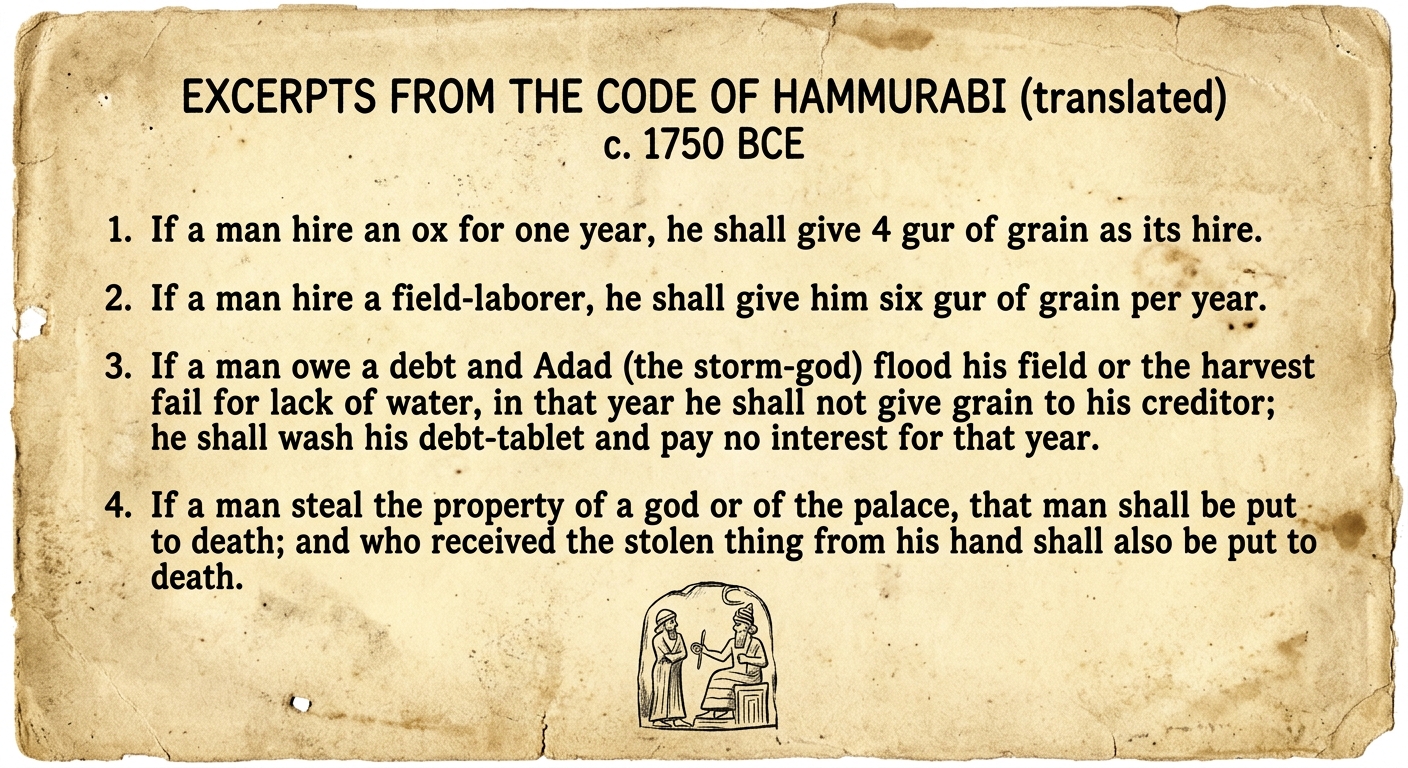
Hammurabi was a king of Babylon in Mesopotamia. His law code (c. 1750 BCE) included rules for trade, wages, and debt. These laws helped set shared expectations for economic behavior so merchants, farmers, and workers understood what payments and penalties were allowed.

Asemmisa {{asɛmmisaAhyɛnsode}}
21.

Which economic idea is most clearly reflected by the laws in the document?

Choose the answer best supported by the excerpt.

Asemmisa {{asɛmmisaAhyɛnsode}}
22.

Which detail from the document best supports the conclusion that Babylon used standardized economic rules?

Choose the evidence that most directly shows shared expectations.

Asemmisa {{asɛmmisaAhyɛnsode}}
23.

How does the document best connect to standard 6.4.b (belief systems based on mutually held values)?

Choose the answer that best explains the link between values and economic behavior.

Asemmisa {{asɛmmisaAhyɛnsode}}
24.

Using two specific details from the document, explain how economic rules could shape people’s choices in Babylon.

Write one well-formed paragraph that uses evidence.

Asemmisa {{asɛmmisaAhyɛnsode}}
25.

Explain how the document suggests a society’s shared values can influence its economic system.

Use evidence from the excerpt and the reading stimulus in one paragraph.