Twa kɔ nsɛm atitiriw so
Log in
Sign up for FREE
arrow_back
Laabri

6.5c - Comparative Classical Civilizations in the Eastern Hemisphere - Practices A through E

star
star
star
star
star
Last updated about 2 months ago
25 Nsɛmmisa
Hyɛ no nsow a efi ɔkyerɛwfo no hɔ:

Use the historical document(s) and the short readings in the left panel to answer the associated questions.

Use the historical document(s) and the short readings in the left panel to answer the associated questions.

6.5.c
DOK.SS.2
6.5.c
DOK.SS.2
6.5.c
DOK.SS.2
6.5.c
DOK.SS.2
6.5.c
DOK.SS.2
Ɛhia
1
6.5.c
DOK.SS.2
Ɛhia
1
6.5.c
DOK.SS.2
Ɛhia
1
6.5.c
DOK.SS.2
Ɛhia
1
6.5.c
DOK.SS.2
Ɛhia
1
6.5.c
DOK.SS.2
Ɛhia
1
6.5.c
DOK.SS.2
Ɛhia
1
6.5.c
DOK.SS.2
Ɛhia
1
6.5.c
DOK.SS.2
Ɛhia
1
6.5.c
DOK.SS.2
Ɛhia
1
6.5.c
DOK.SS.2
Ɛhia
1
6.5.c
DOK.SS.2
Ɛhia
1
6.5.c
DOK.SS.2
Ɛhia
1
6.5.c
DOK.SS.2
Ɛhia
1
6.5.c
DOK.SS.2
Ɛhia
1
6.5.c
DOK.SS.2
Ɛhia
1
6.5.c
DOK.SS.2
Ɛhia
1
6.5.c
DOK.SS.2
Ɛhia
1
6.5.c
DOK.SS.2
Ɛhia
1
6.5.c
DOK.SS.2
Ɛhia
1
6.5.c
DOK.SS.2
Ɛhia
1
6.5.c
DOK.SS.2
Ɛhia
1
6.5.c
DOK.SS.2
Ɛhia
1
6.5.c
DOK.SS.2
Ɛhia
1
6.5.c
DOK.SS.2
Ɛhia
1
6.5.c
DOK.SS.2

(Document A)

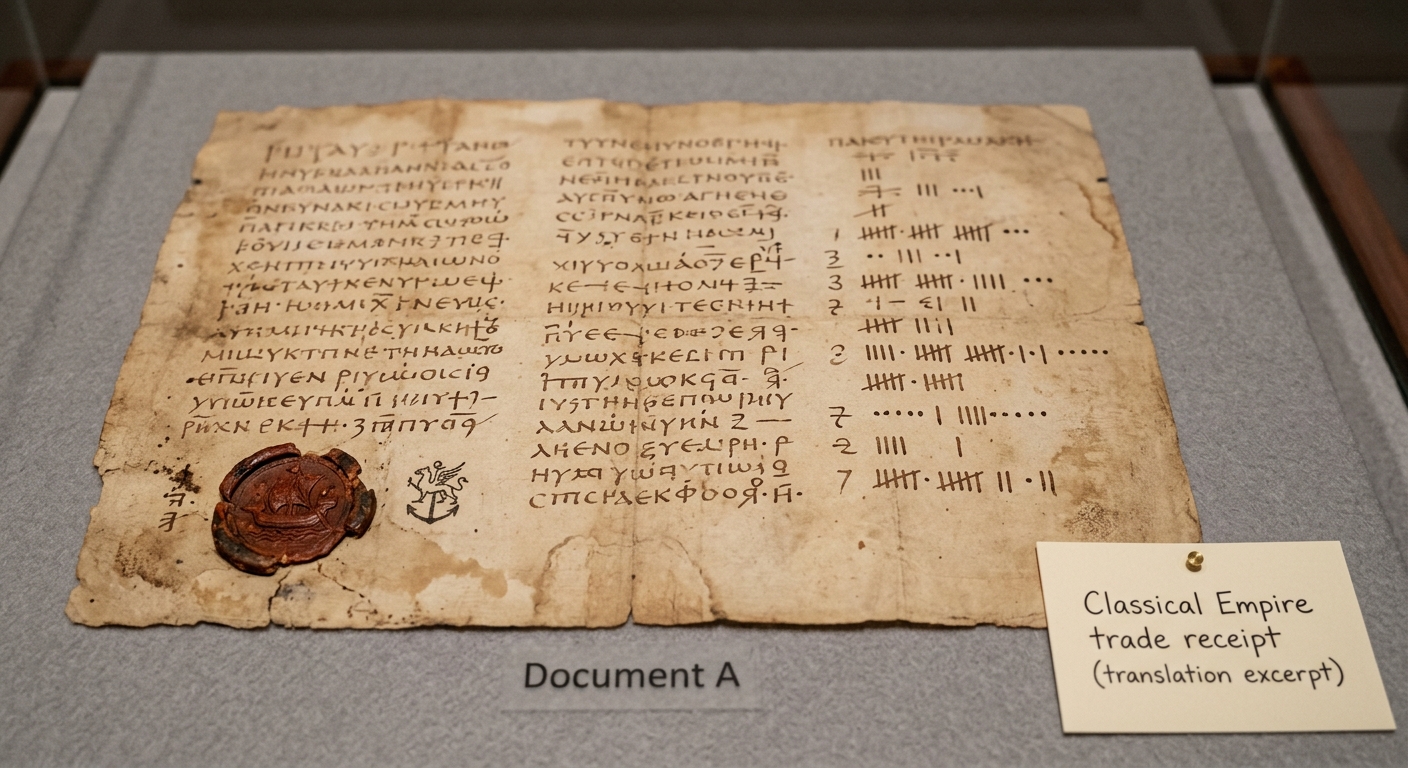
Photo of an ancient trade receipt document with faded handwriting, a red seal, and tally marks, displayed like a museum artifact.

This trade receipt lists silk, grain, and pottery shipped through a well-guarded river port. It records stable fees, paid taxes, and a merchant seal. The note praises paved roads and “peaceful travel under the law,” showing confidence in commerce and public works.
Asemmisa {{asɛmmisaAhyɛnsode}}
1.

Using evidence from Document A, explain whether the document supports the claim that this society experienced a golden age.

In your paragraph, cite at least two specific details and explain what each detail suggests (peace, prosperity, or cultural achievement).

Asemmisa {{asɛmmisaAhyɛnsode}}
2.

What additional type of source would you seek to better determine whether this period was a golden age (for example, a law code, an inscription, a building record, or an artwork)?

Choose one type, and explain how it could confirm or challenge your conclusion from Document A.

Asemmisa {{asɛmmisaAhyɛnsode}}
3.

Which detail from Document A is the BEST evidence of prosperity?

Asemmisa {{asɛmmisaAhyɛnsode}}
4.

Which inference is MOST supported by the phrase “peaceful travel under the law”?

Asemmisa {{asɛmmisaAhyɛnsode}}
5.

Based on Document A alone, which conclusion is MOST reasonable about whether this society was in a golden age?

(Document B)

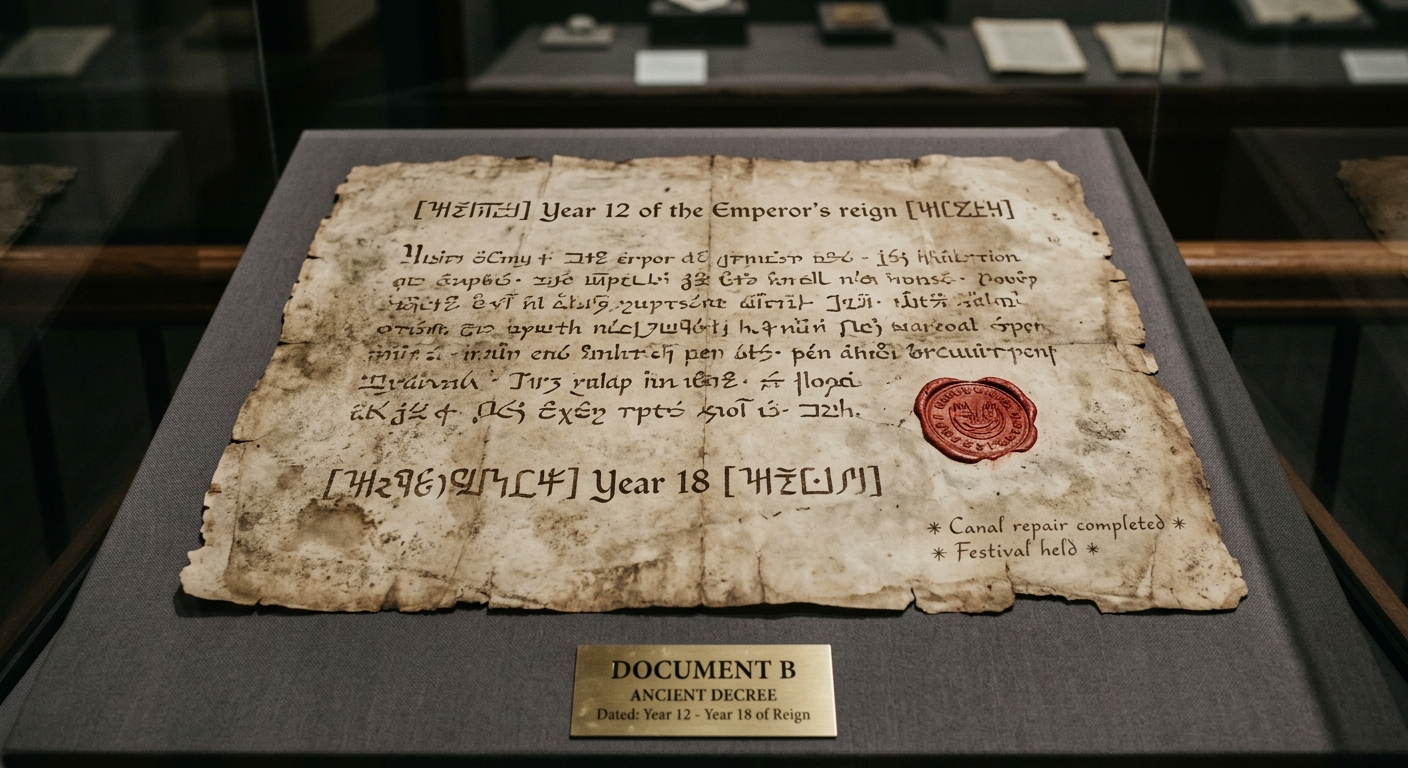
Photo of an ancient decree document with two different dated lines and notes about public works, displayed like a museum artifact.

This public decree lists events from “Year 12” and “Year 18” of a ruler’s reign. It records repairs to a canal, steady grain deliveries, and a city festival. The decree praises safe travel and orders officials to maintain roads and storehouses.

Asemmisa {{asɛmmisaAhyɛnsode}}
6.

What is one limitation of using a single dated decree to decide whether an entire society experienced a golden age?

Explain how another dated source from an earlier or later year could strengthen your conclusion.

Asemmisa {{asɛmmisaAhyɛnsode}}
7.

Which statement BEST explains how the decree’s timeline could support a claim of a golden age?

Asemmisa {{asɛmmisaAhyɛnsode}}
8.

Which inference is MOST supported by the decree including BOTH “Year 12” and “Year 18” entries?

Asemmisa {{asɛmmisaAhyɛnsode}}
9.

Which event happened FIRST, based on Document B’s dates?

Asemmisa {{asɛmmisaAhyɛnsode}}
10.

Using chronological reasoning, explain how the sequence from “Year 12” to “Year 18” could be used as evidence for (or against) a golden age.

Cite at least two specific details and explain what each suggests about continuity or change over time.

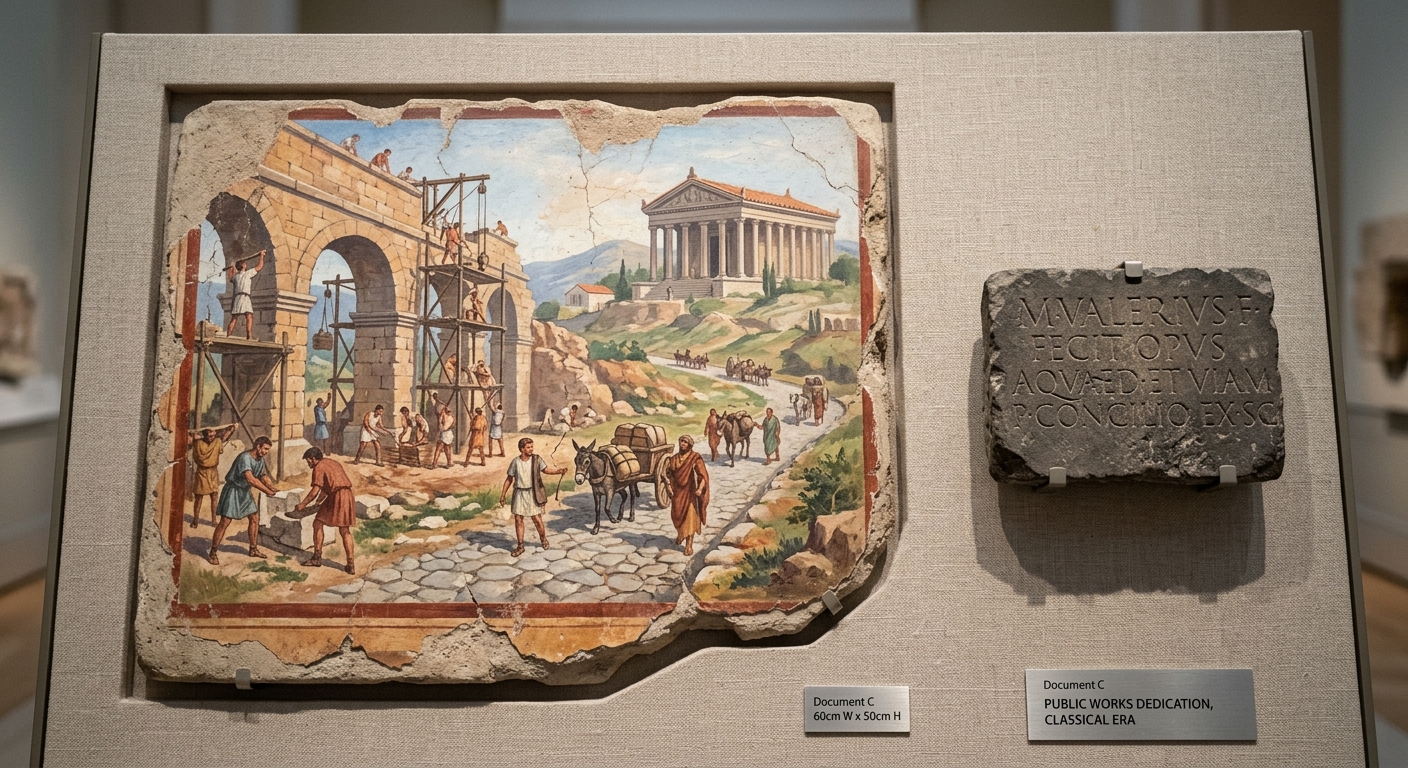
(Document C)

Museum-style photo of a mural fragment and inscription showing public works construction and safe travel in a classical society.

This mural and dedication describe a ruler funding a bridge and road repairs “for merchants and farmers.” It mentions guards posted on travel routes and a public library built “for the city’s learning.” The text praises prosperity “shared in markets” and honors artisans who completed the works.

Asemmisa {{asɛmmisaAhyɛnsode}}
11.

Compared with a trade receipt that lists goods and taxes, what NEW kind of evidence does Document C provide for evaluating a possible golden age?

Asemmisa {{asɛmmisaAhyɛnsode}}
12.

Which contextual detail would MOST help a historian interpret whether Document C reflects a wider golden age rather than a single local project?

Asemmisa {{asɛmmisaAhyɛnsode}}
13.

If another source from the same era described food shortages and frequent raids outside the capital, explain how that would change (or not change) your conclusion from Document C.

Use evidence from Document C and the new context in your reasoning.

Asemmisa {{asɛmmisaAhyɛnsode}}
14.

Which detail from Document C BEST supports the idea of cultural achievement?

Asemmisa {{asɛmmisaAhyɛnsode}}
15.

Use Document C to make a claim about whether this society shows evidence of a golden age.

In your paragraph, cite at least two details and explain how each supports peace, prosperity, or cultural achievement.

(Document D)

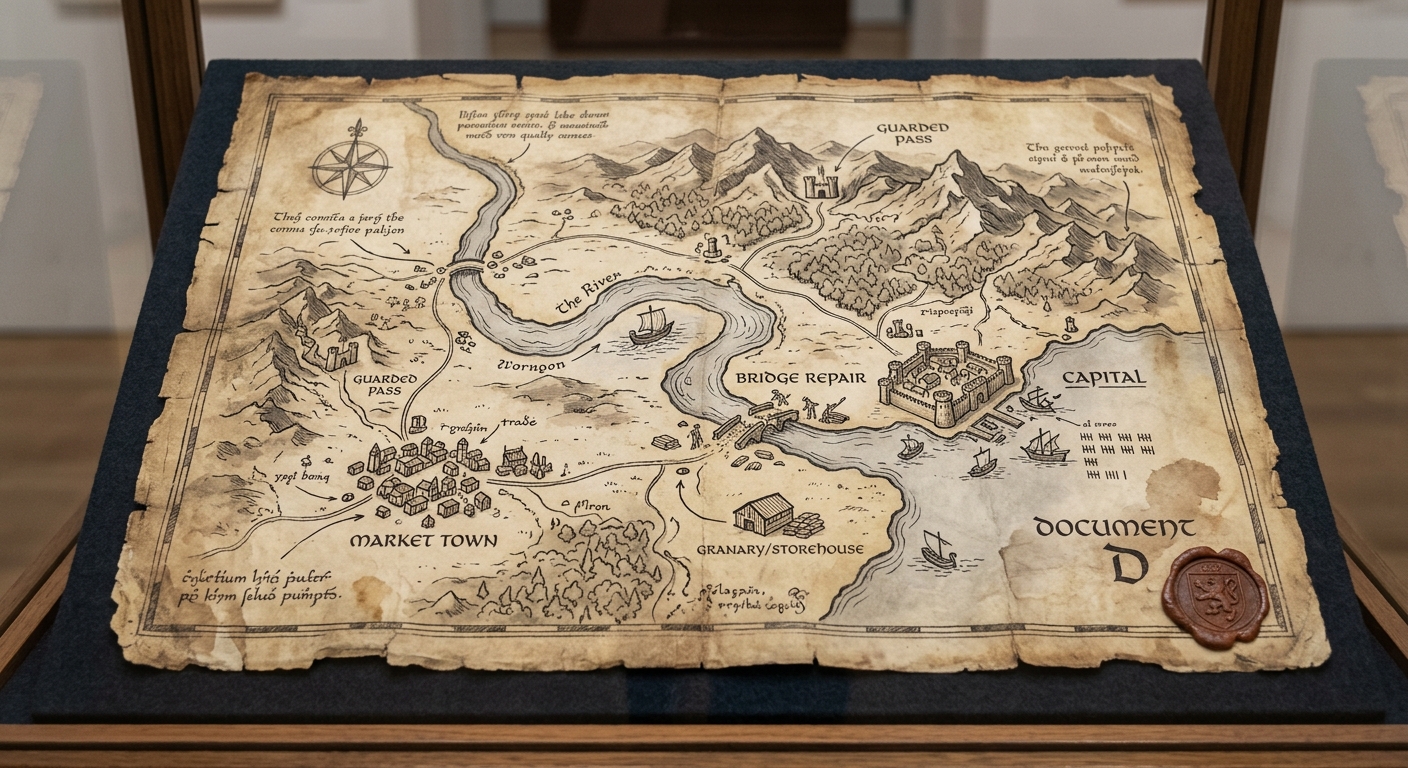
Museum-style photo of an ancient hand-drawn map showing rivers, roads, cities, and notes about guarded routes and markets.

This map marks river ports, mountain passes, and paved roads linking farms to market towns. Notes mention a “guarded pass,” a repaired bridge, and storehouses near a granary symbol. Tally marks beside the port suggest regular shipments. The map highlights how geography shaped trade and security.

Asemmisa {{asɛmmisaAhyɛnsode}}
16.

What additional geographic evidence would you seek to test whether the prosperity shown on this map was widespread across the society?

Choose one type of evidence (for example, another map, a travel account, a port record, or an archaeological survey) and explain how it would strengthen or challenge your conclusion.

Asemmisa {{asɛmmisaAhyɛnsode}}
17.

Which mapped feature BEST shows how geography could support prosperity during a possible golden age?

Asemmisa {{asɛmmisaAhyɛnsode}}
18.

Which inference about peace and stability is MOST supported by the map’s note “guarded pass”?

Asemmisa {{asɛmmisaAhyɛnsode}}
19.

Which contextual information would MOST help a historian use this map as evidence for a golden age?

Asemmisa {{asɛmmisaAhyɛnsode}}
20.

Explain how TWO different map features (for example, river ports, roads, mountain passes, or storehouses) could be used as evidence for peace, prosperity, or cultural achievement during a golden age.

Cite the features and explain your reasoning.

(Document E)

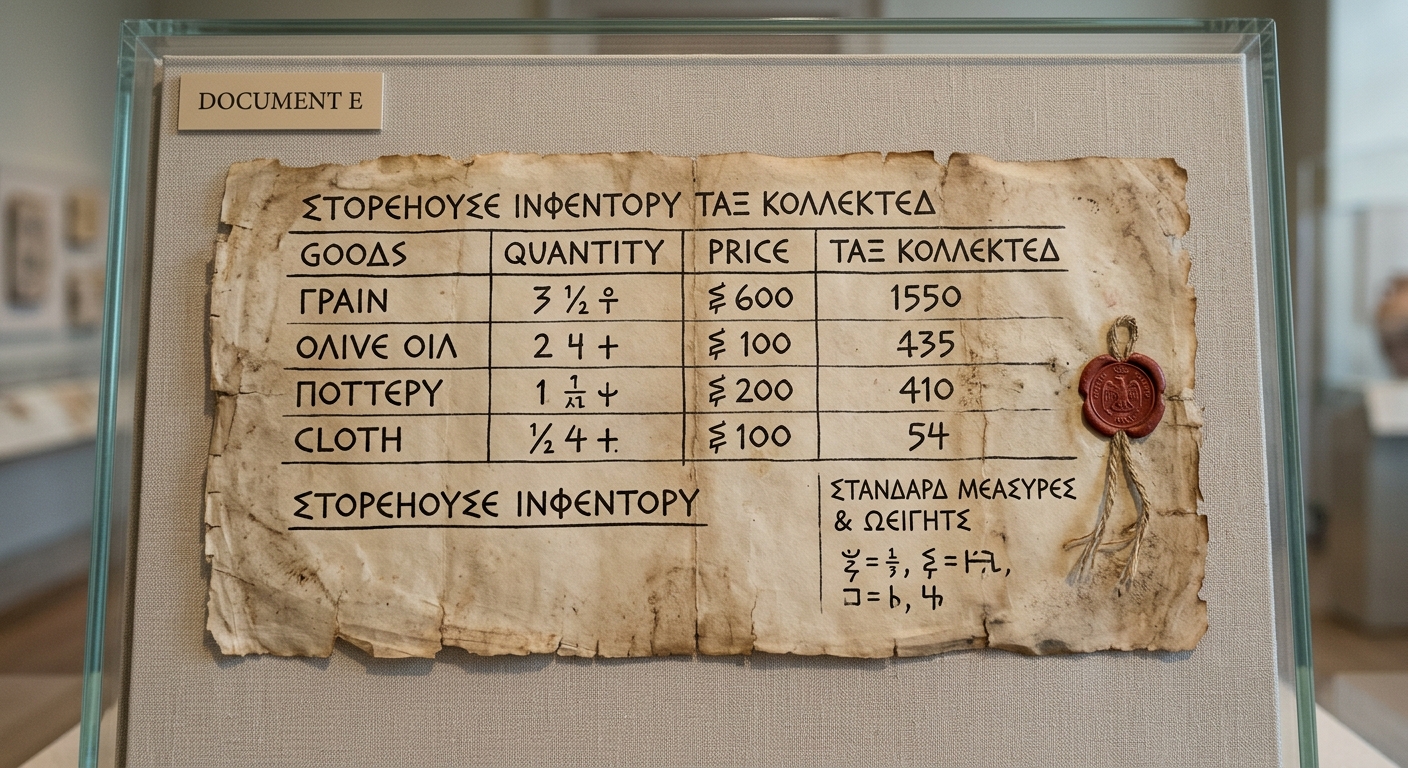
Museum-style photo of an ancient market price list and tax record showing goods, prices, and a seal.

This market record lists prices for grain, oil, cloth, and pottery using standard weights. It notes “tax collected at the gate” and shows entries for goods stored in a public storehouse. The record suggests regulated trade and a government role in managing revenue and supplies.

Asemmisa {{asɛmmisaAhyɛnsode}}
21.

Using evidence from Document E, explain how this record could be used to argue that the society experienced prosperity.

In your paragraph, cite at least two specific details and explain what each suggests about production, trade, or government organization.

Asemmisa {{asɛmmisaAhyɛnsode}}
22.

How could the storehouse entries in Document E best support a claim of prosperity during a golden age?

Asemmisa {{asɛmmisaAhyɛnsode}}
23.

Which detail from Document E is the BEST evidence that the society used a regulated market system?

Asemmisa {{asɛmmisaAhyɛnsode}}
24.

What additional economic source would you seek to evaluate whether prosperity shown in Document E reflects a wider golden age (for example, wage records, a trade log from another port, or tax totals over multiple years)?

Choose one and explain how it would confirm or challenge your conclusion.

Asemmisa {{asɛmmisaAhyɛnsode}}
25.

Which inference about the government’s economic role is MOST supported by the phrase “tax collected at the gate”?