Use the historical document(s) and the short readings in the left panel to answer the associated questions.
Use the historical document(s) and the short readings in the left panel to answer the associated questions.
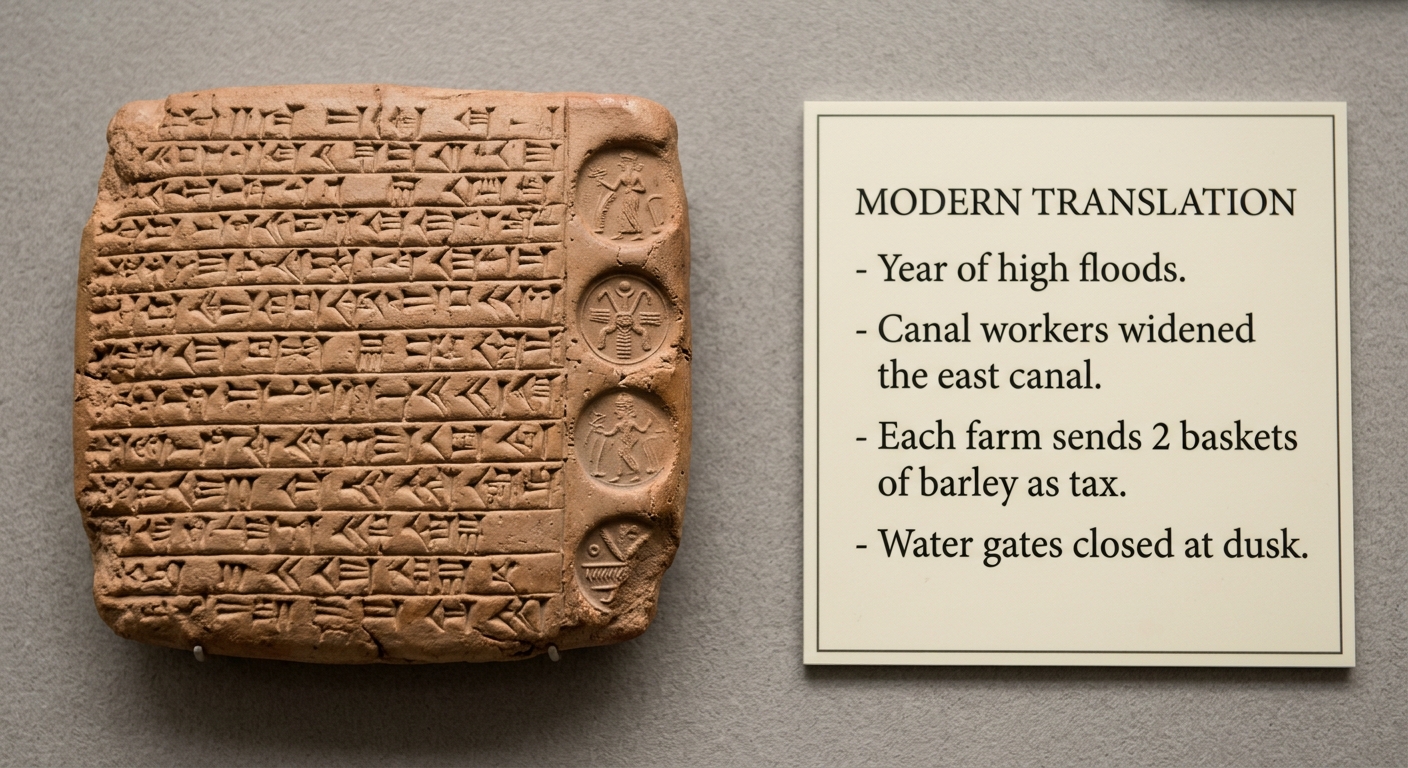
Read the tablet translation. It records officials organizing canal work and controlling water gates after floods. The barley payment shows communities used rules and labor to manage river water. Use this evidence to explain how river valley societies adapted to and modified their environment.
Based on the evidence, describe one adaptation and one modification shown in the sources.
Explain how each helped the society meet its needs.
Using evidence from the tablet translation and the reading, explain one way this society modified its environment to meet population needs.
Include at least two specific pieces of evidence.
Based on the reading and the tablet, what problem were these policies most likely designed to address?
What is the strongest evidence in the document that people modified their environment?
Which conclusion is best supported by the tablet translation?
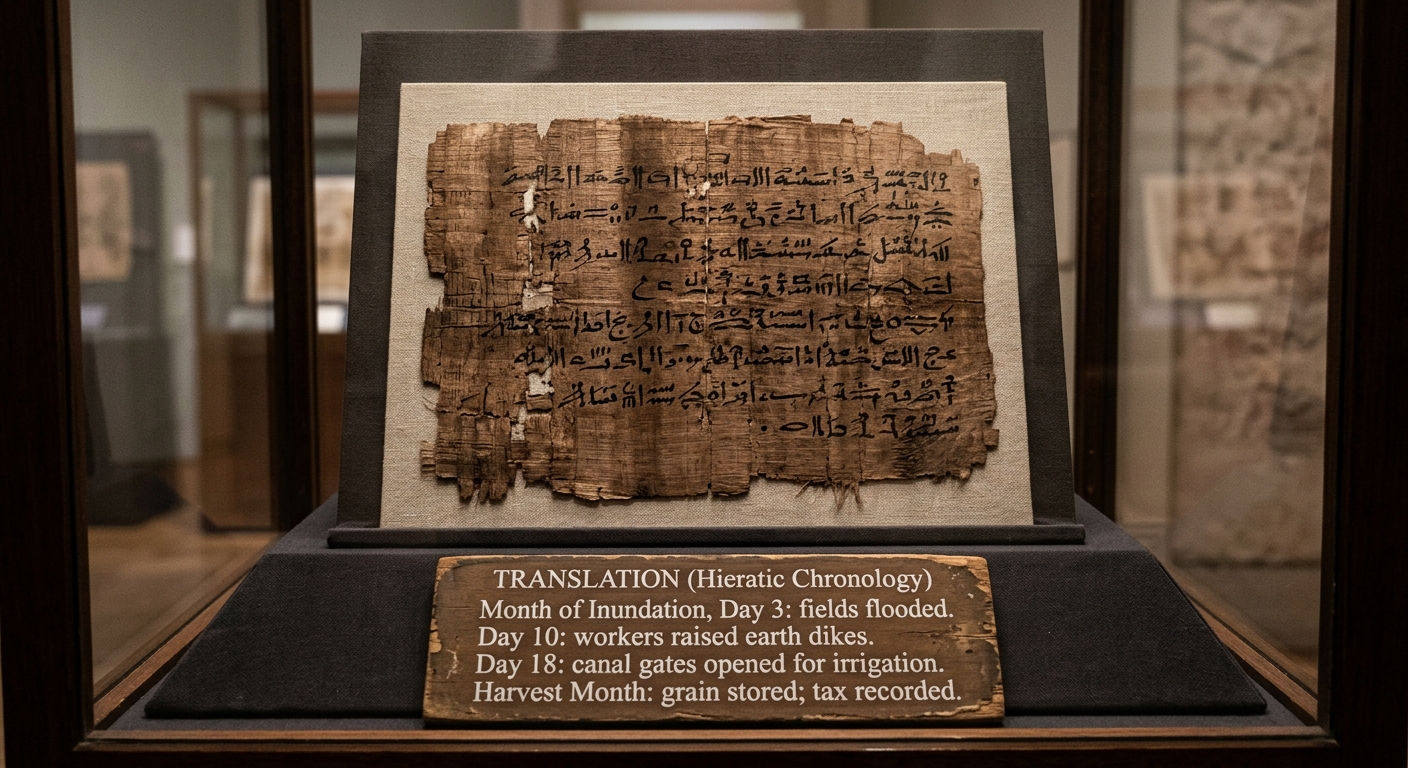
Read the dated record. It tracks flooding, building dikes, opening canal gates, and recording harvest taxes. The sequence shows how officials and workers responded to seasonal river changes. Use evidence from the dates and actions to explain how this society managed water to support farming.
Which statement best describes how the document provides evidence about environmental management?
Explain how the document supports the claim that managing water required both physical changes and organized decision-making.
Use evidence from the record.
Which pair of details is the best evidence that people modified their environment?
Based on the document’s evidence, what is the most likely reason harvest taxes were recorded after the water-control work?
Use at least two specific details from the dated entries to explain how this society adapted to seasonal river flooding.
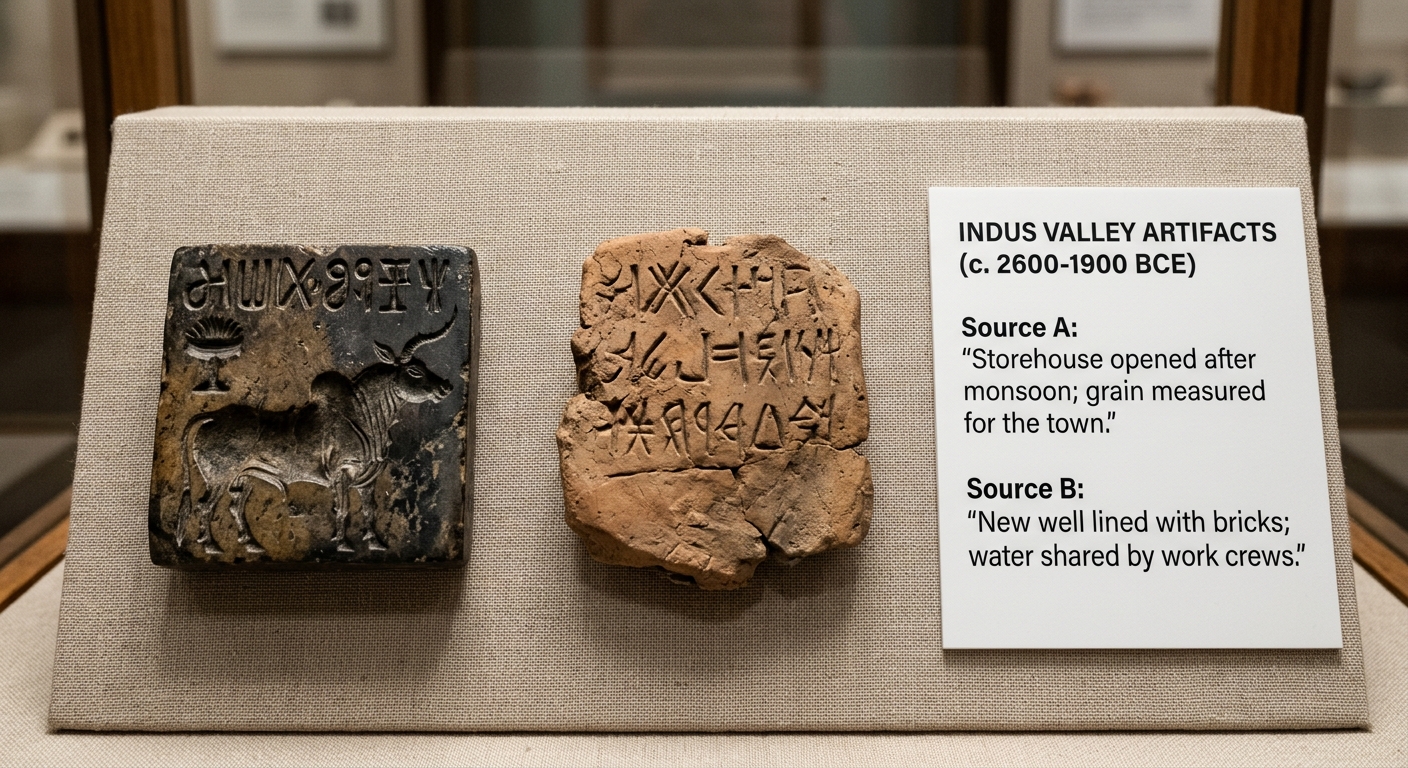
Study Sources A and B on the translation card. Both come from a river valley city that depended on seasonal rains and managed stored grain and shared water. Use evidence from each source to compare how people met basic needs through organization and changes to their environment.
Which statement best contextualizes why these actions mattered in a river valley society?
Compare Sources A and B by explaining one similarity and one difference in how they show people meeting population needs.
Use one piece of evidence from each source.
Which comparison between Sources A and B is best supported by the evidence?
Use evidence from Sources A and B to explain how managing resources could strengthen a complex society in a river valley.
Include at least two specific details.
Which detail provides the best evidence that people modified their environment?
Study the “River and Fields Survey” map and its legend. The map shows a river, canals, a levee, and new fields. Use spatial evidence—where features are placed and what they connect—to explain how this river valley society managed water and expanded farmland.
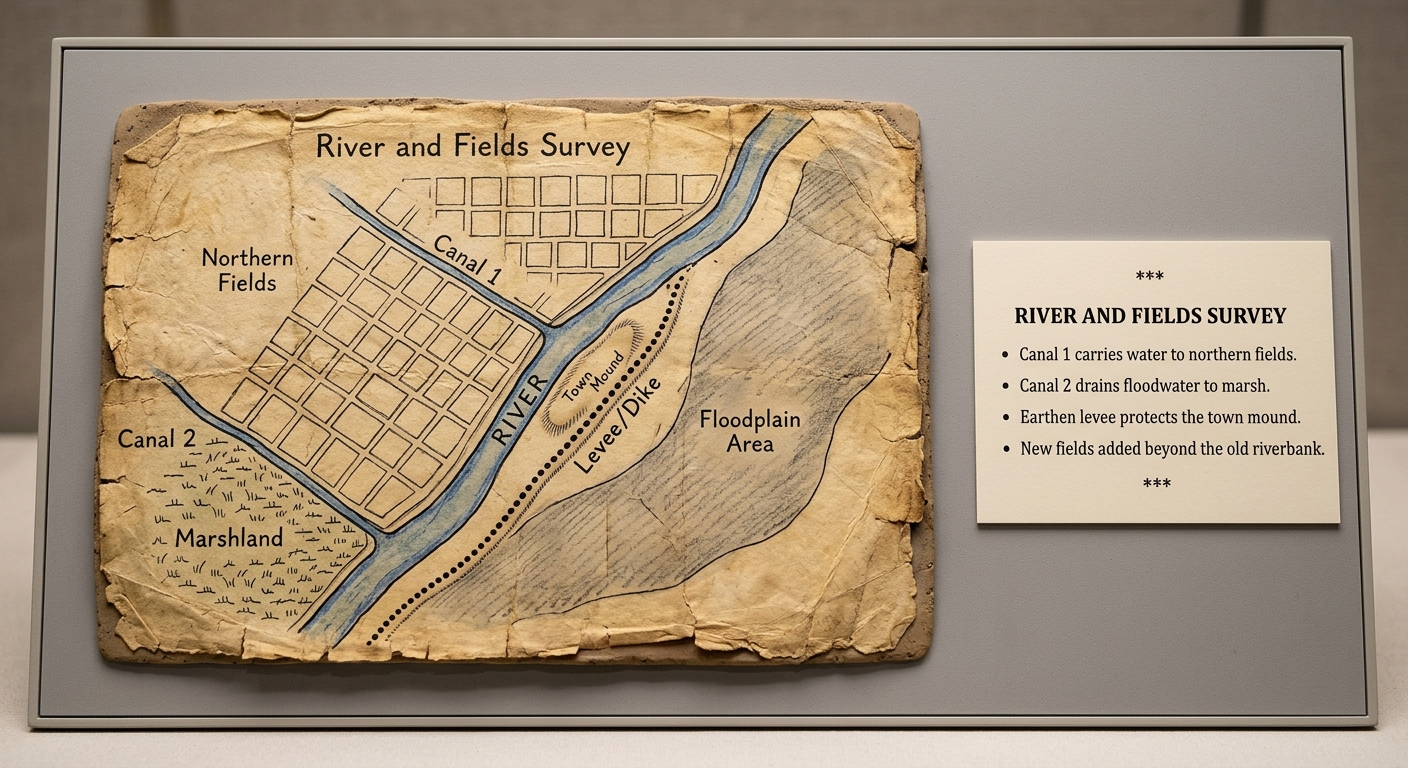
What is the most likely purpose of Canal 2 based on where it leads on the map and the legend?
Which inference is best supported by the map’s placement of Canal 1 and the northern fields?
Which feature provides the best evidence that people modified the environment to reduce flood risk to where they lived?
Explain how the map supports the claim that river valley societies both adapted to and modified their environment.
Use one piece of evidence for adaptation and one for modification.
Use evidence from the map and legend to explain how this society used location (where things are placed) to meet population needs.
Include at least two specific map features.
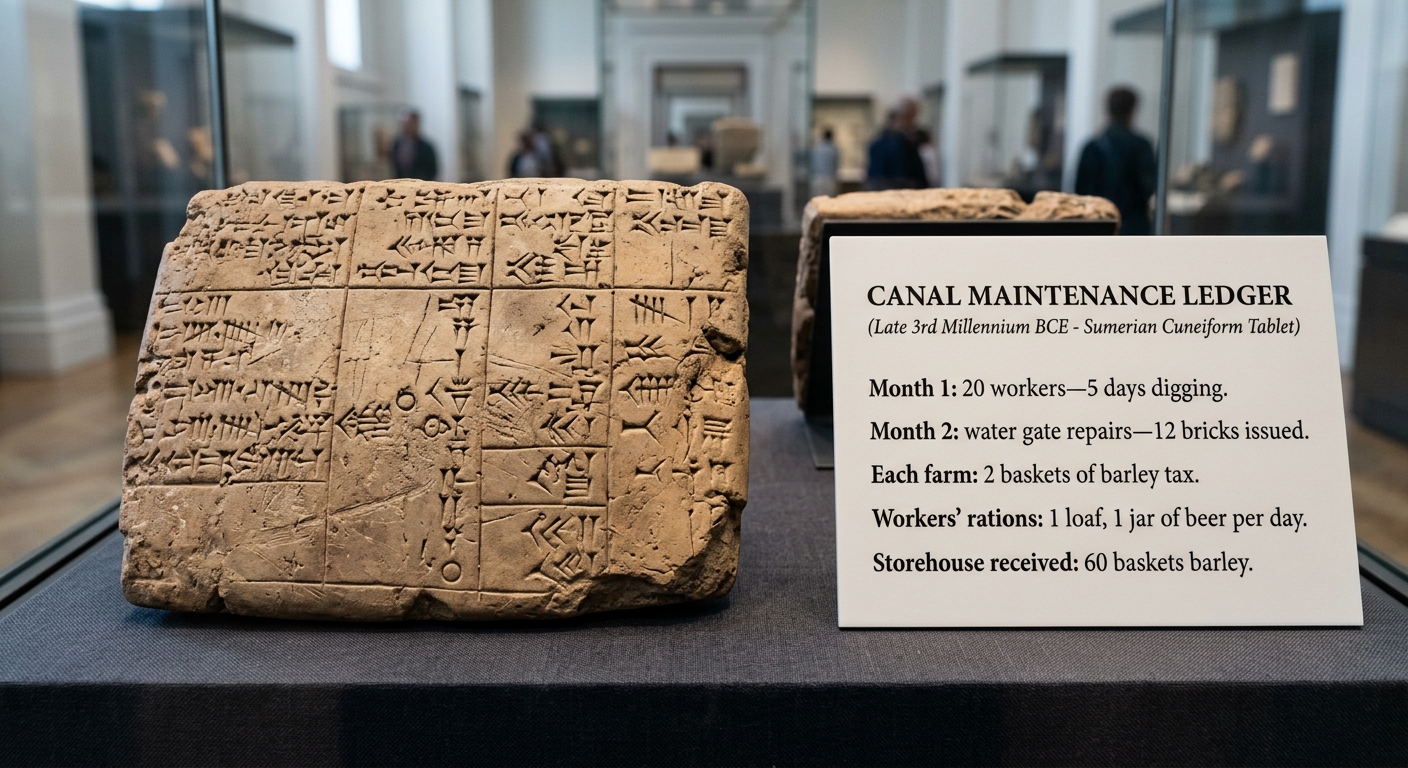
Read the Canal Maintenance Ledger. It lists worker labor days, bricks issued for repairs, and barley taxes collected from farms. The record shows how leaders used taxes and rations to organize public works that changed water flow and supported farming in a river valley.
Which economic role of leaders is most clearly shown by the ledger entries?
Which policy is most consistent with the system shown in the ledger and would most likely keep canals working over time?
Explain how the ledger provides evidence that an economic system helped people modify their environment.
Use at least two specific details from the entries.
Using evidence from the ledger, compare one cost and one benefit of this economic system for farmers or workers in the community.
Which inference about this society’s economy is best supported by the combination of taxes and rations in the ledger?