Use the historical document(s) and the short readings in the left panel to answer the associated questions.
Historical Document:
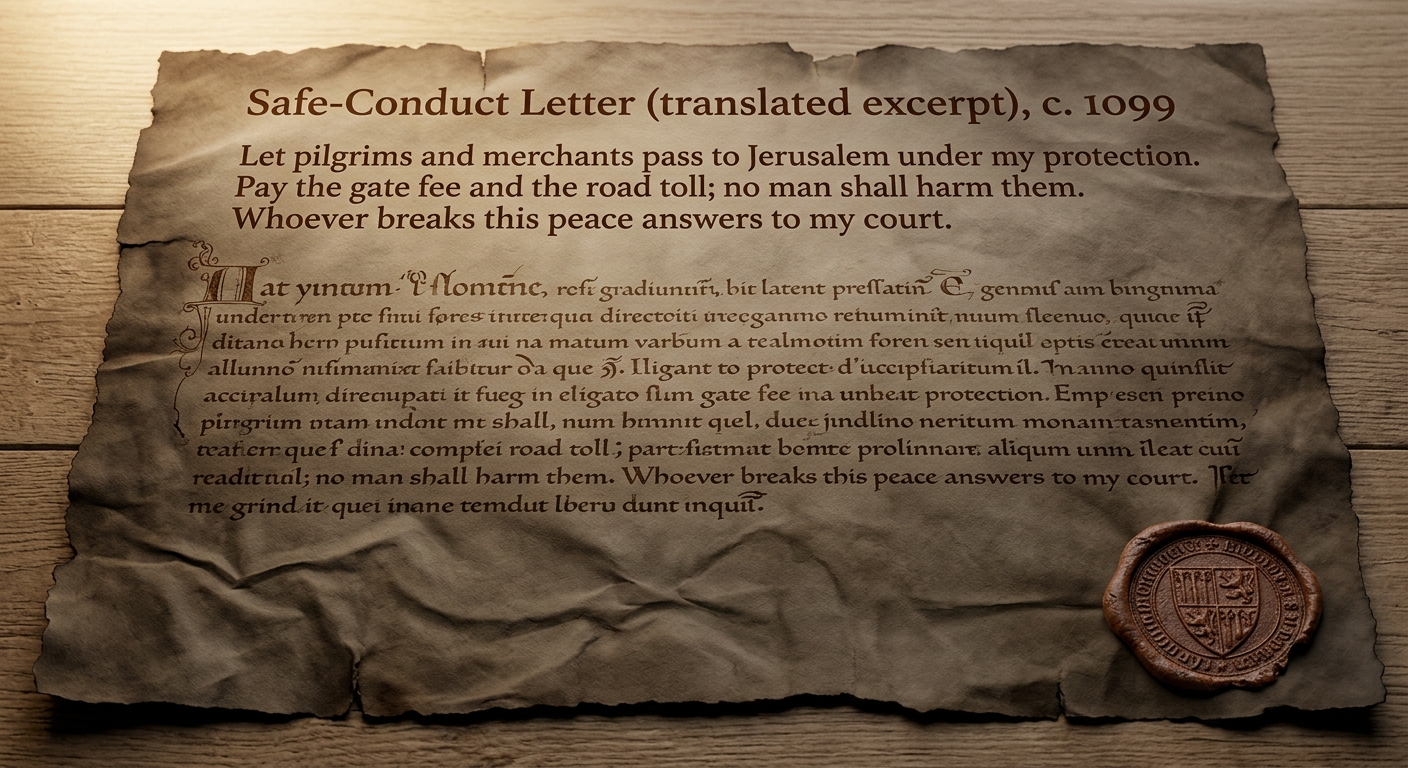
This translated excerpt from a safe-conduct letter (c. 1099) promises protection for travelers going to Jerusalem. It also requires payments such as gate fees and road tolls. Read closely for evidence of religious, economic, and political motives behind competition for holy lands.
Which detail from the document is the strongest evidence of an economic motive connected to travel to Jerusalem?
What perspective about control of travel to Jerusalem is implied by this document?
Explain what the author’s position might be and how pilgrims or merchants might respond.
Use evidence from the excerpt to support your answer.
Using evidence from the document, explain how TWO different motives (religious, economic, or political) could contribute to competition and rivalry over holy lands.
Cite at least TWO specific phrases from the excerpt.
Based on the document, what is the author MOST likely trying to achieve?
Which inference about conflict over holy lands is BEST supported by this document?
Historical Document:

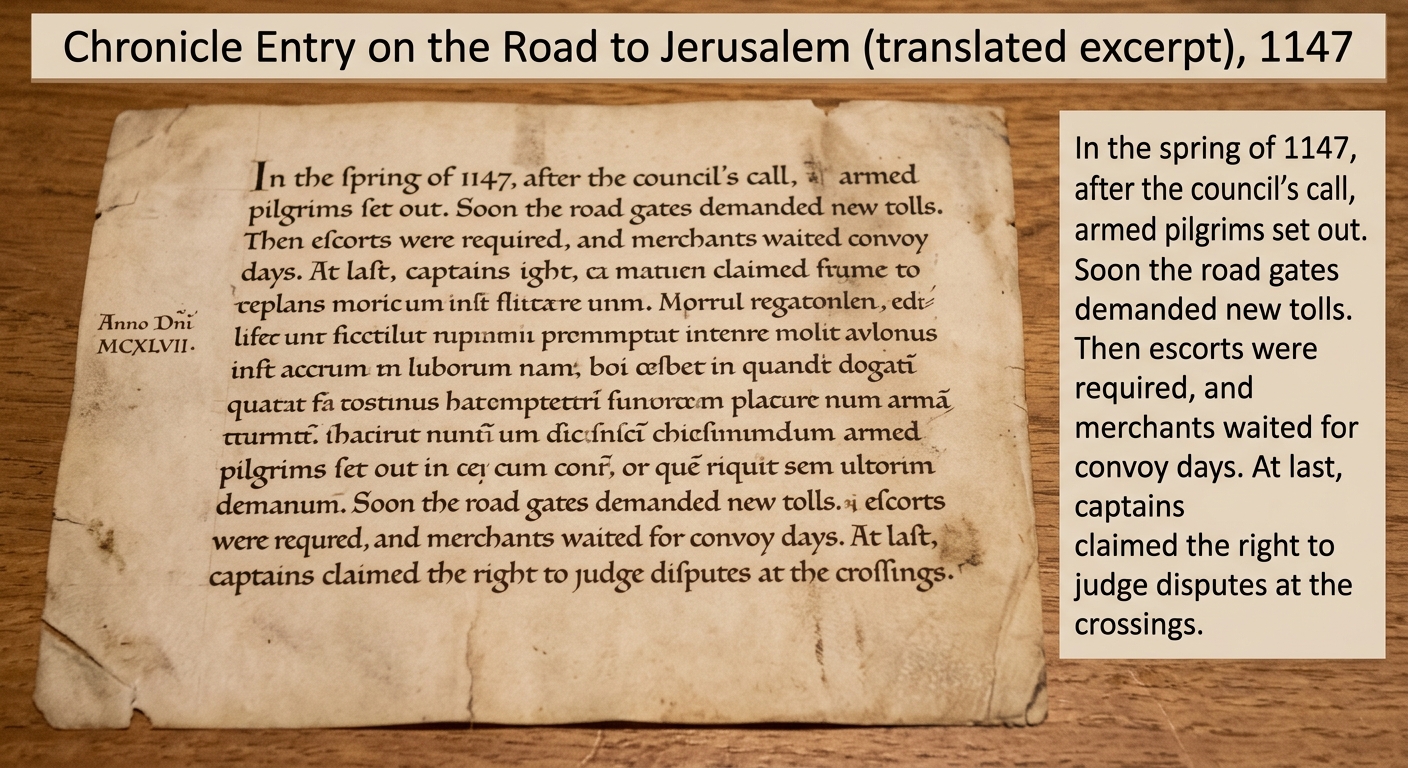
This translated chronicle entry (1147) describes how access to Jerusalem changed over time along a single travel route. Use the dated reference and sequence words to track what happened first, next, and last—and to infer how growing control of the road could contribute to rivalry over holy lands.
Which conclusion about change over time is BEST supported by the excerpt?
According to the sequence in the excerpt, which change happened SECOND?
Which detail is the clearest chronological clue that anchors the events to a specific time?
Explain how the sequence of events in the chronicle could increase competition or rivalry over holy lands.
Use the order of events and cite at least TWO specific details from the excerpt as evidence.
Based on the dated entry (1147), describe one continuity and one change you would expect when comparing earlier travel arrangements to later ones during the Crusades.
Support your answer with evidence from the excerpt.
Historical Document:

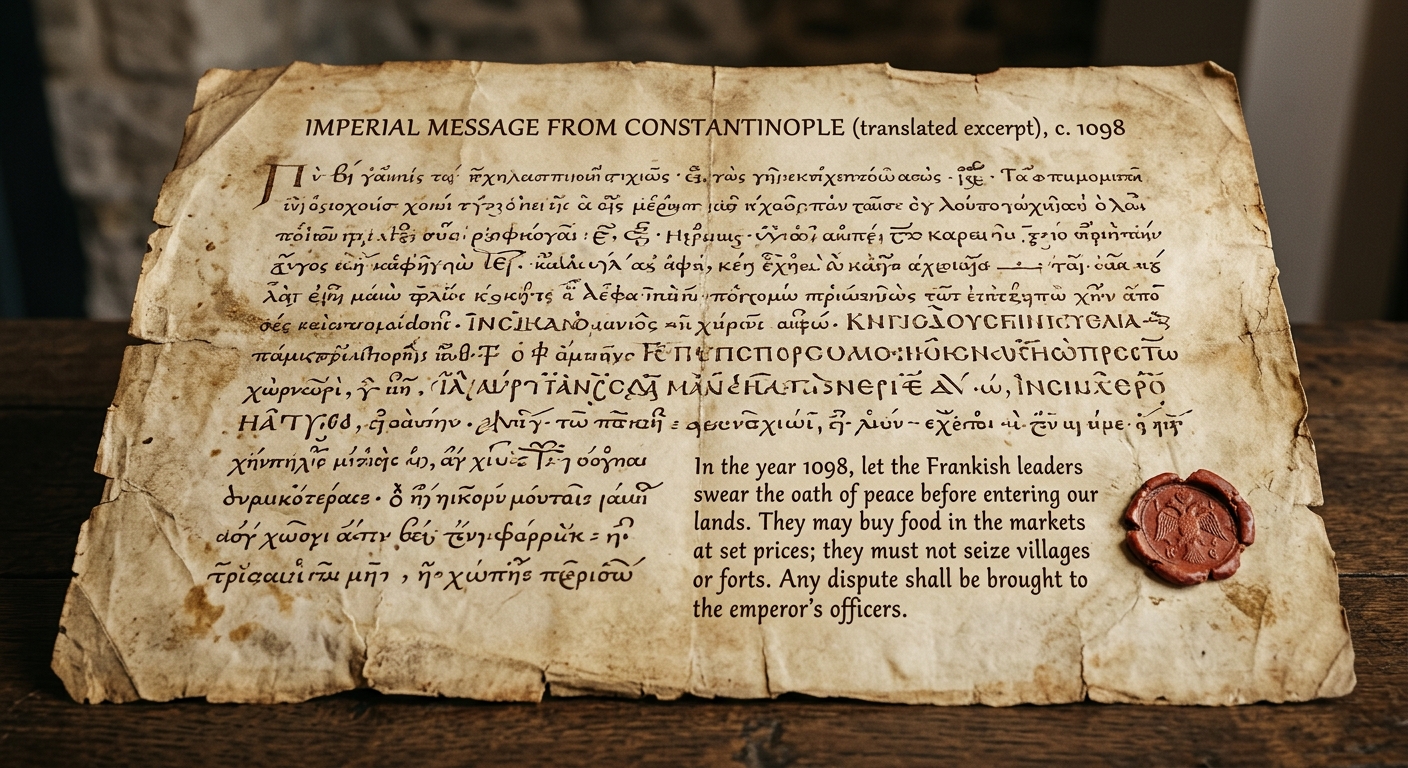
This translated message from the Byzantine capital (c. 1098) was issued as crusading armies crossed imperial territory toward Jerusalem. It reflects Byzantine efforts to manage allies, supplies, and security. Compare its concerns with Western European goals, and use it to contextualize rivalry over holy lands.
Which broader historical situation BEST explains why this message was written?
Explain how its rules could contribute to rivalry among feudal Europe, Byzantines, and Islamic powers.
Use at least TWO details from the excerpt as evidence.
Which statement BEST compares the perspective in this document with a likely perspective of Western European crusaders?
Compare TWO different priorities shown or implied in this document (Byzantine officials vs. crusading leaders).
Use evidence from the excerpt to support each priority.
Which phrase from the excerpt is the strongest evidence of a political motive to control movement and behavior?
Historical Document:

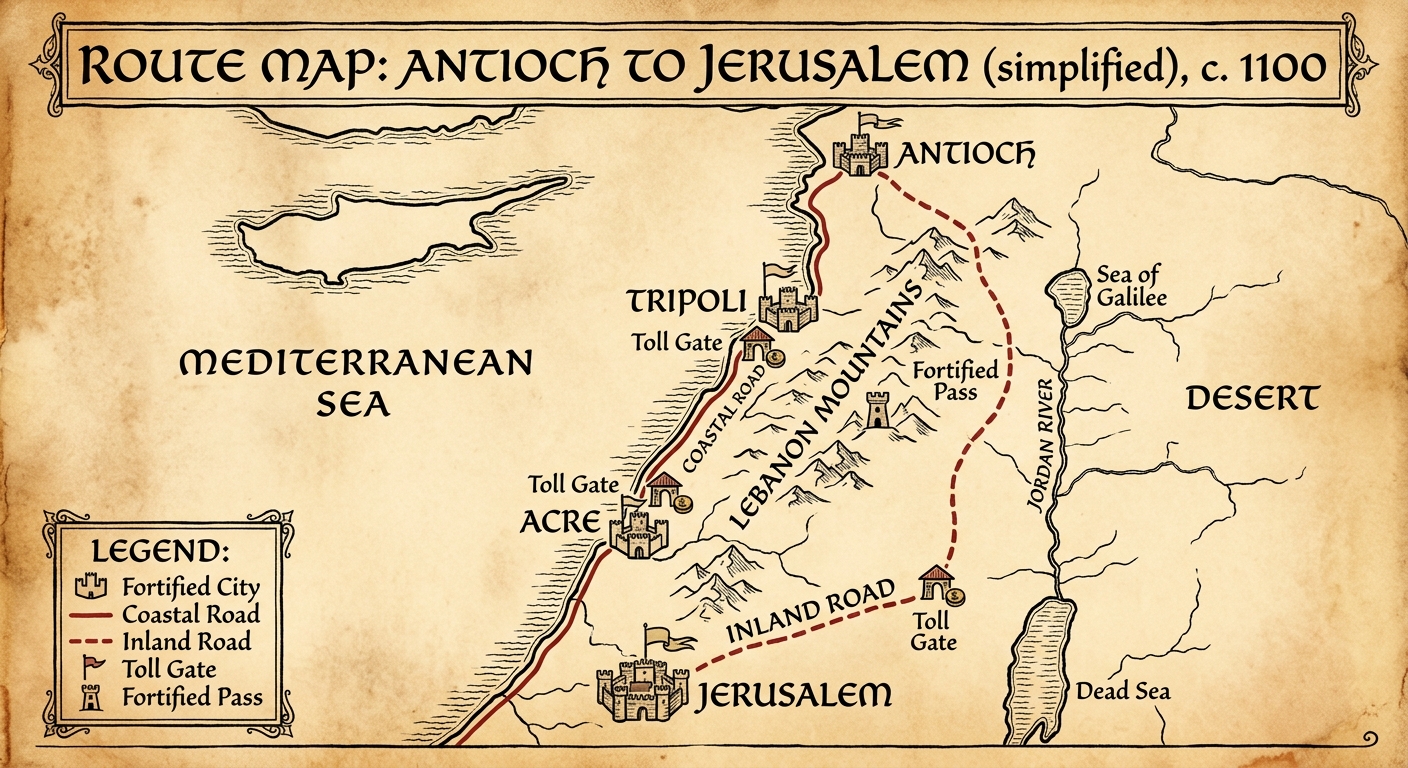
This simplified route map (c. 1100) shows key cities and landforms between Antioch and Jerusalem. Use spatial evidence—ports, mountain passes, and river crossings—to infer where travel could be controlled. Explain how geography shaped economic and political rivalry over access to holy lands.
Using evidence from the map, explain how TWO different geographic factors could increase competition or rivalry over holy lands.
Cite at least TWO specific features or locations as evidence.
Compare the coastal route to the inland route shown on the map. Which route would likely be easier to control, and why?
Use geographic evidence from the map to support your answer.
Based on the map, which geographic feature is MOST likely a chokepoint where leaders could control movement to Jerusalem?
Which location on the map would be the BEST place to collect fees from travelers arriving by sea and continuing by land?
Which inference about competition over holy lands is BEST supported by the map?
Historical Document:

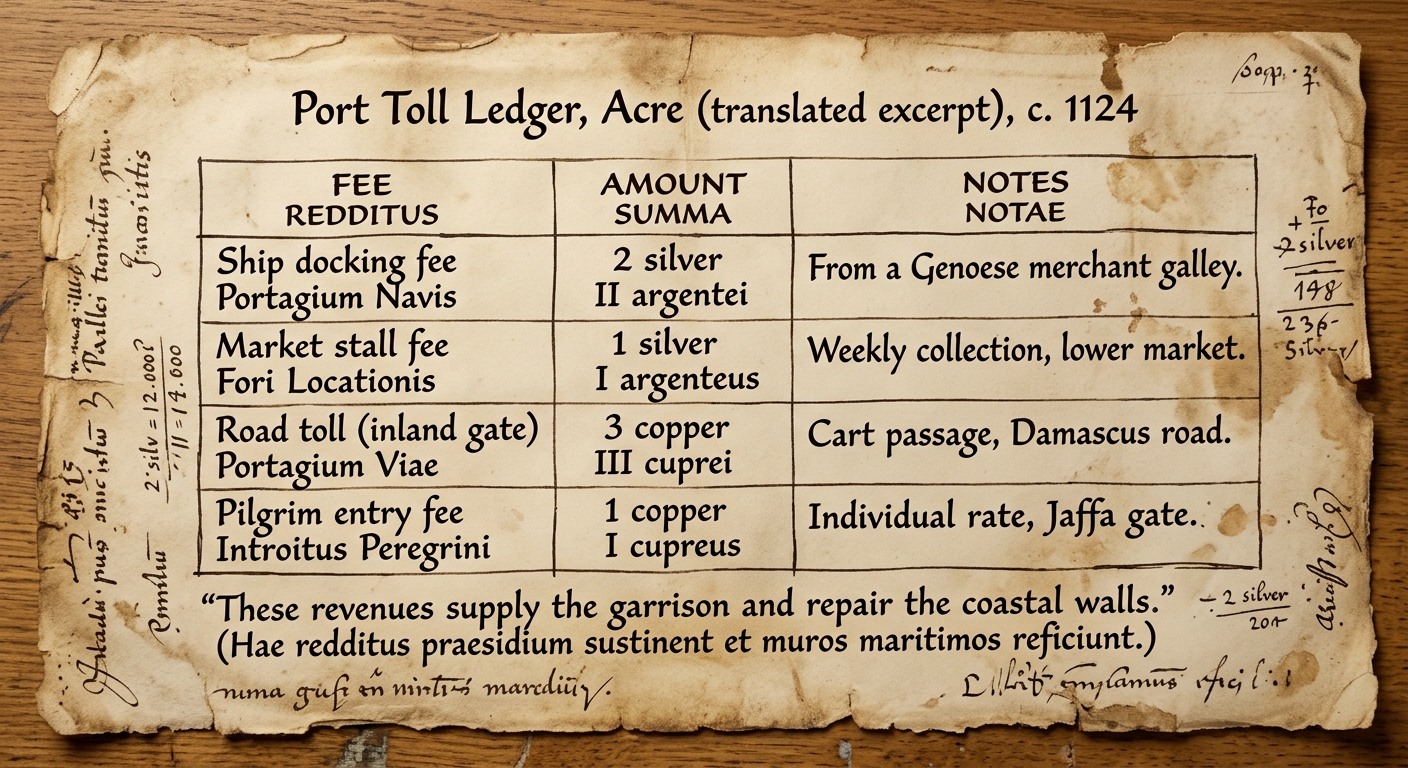
This translated toll ledger from the port city of Acre (c. 1124) lists fees paid by travelers and merchants moving toward Jerusalem. Use the prices and the note about spending to infer how collecting revenue supported control of routes. Explain how such economic systems could fuel rivalry over holy lands.
If the “Road toll (inland gate)” increased, which group would MOST directly face higher costs on the route toward Jerusalem?
What is the BEST inference about how the fee system relates to political or military control of the region?
Using evidence from the ledger, explain how TWO different fees could change economic decisions made by travelers or merchants (for example, route choice or timing).
Explain how those decisions could increase competition or rivalry over holy lands.
Cite at least TWO ledger entries as evidence.
Which entry from the ledger is the strongest evidence that travel to holy lands could be used to raise revenue?
What economic system is shown in this document (for example, tolls, customs, and user fees)?
Explain how controlling this system could lead to conflict over holy lands during the Crusades.
Use evidence from the ledger to support your answer.