Use the historical document(s) and the short readings in the left panel to answer the associated questions.
After the fall of Roman control in Western Europe, attacks and lawlessness increased in many regions. People often turned to nearby landowners for protection, giving labor or goods in return. This local exchange helped create feudal relationships and weakened centralized political power.
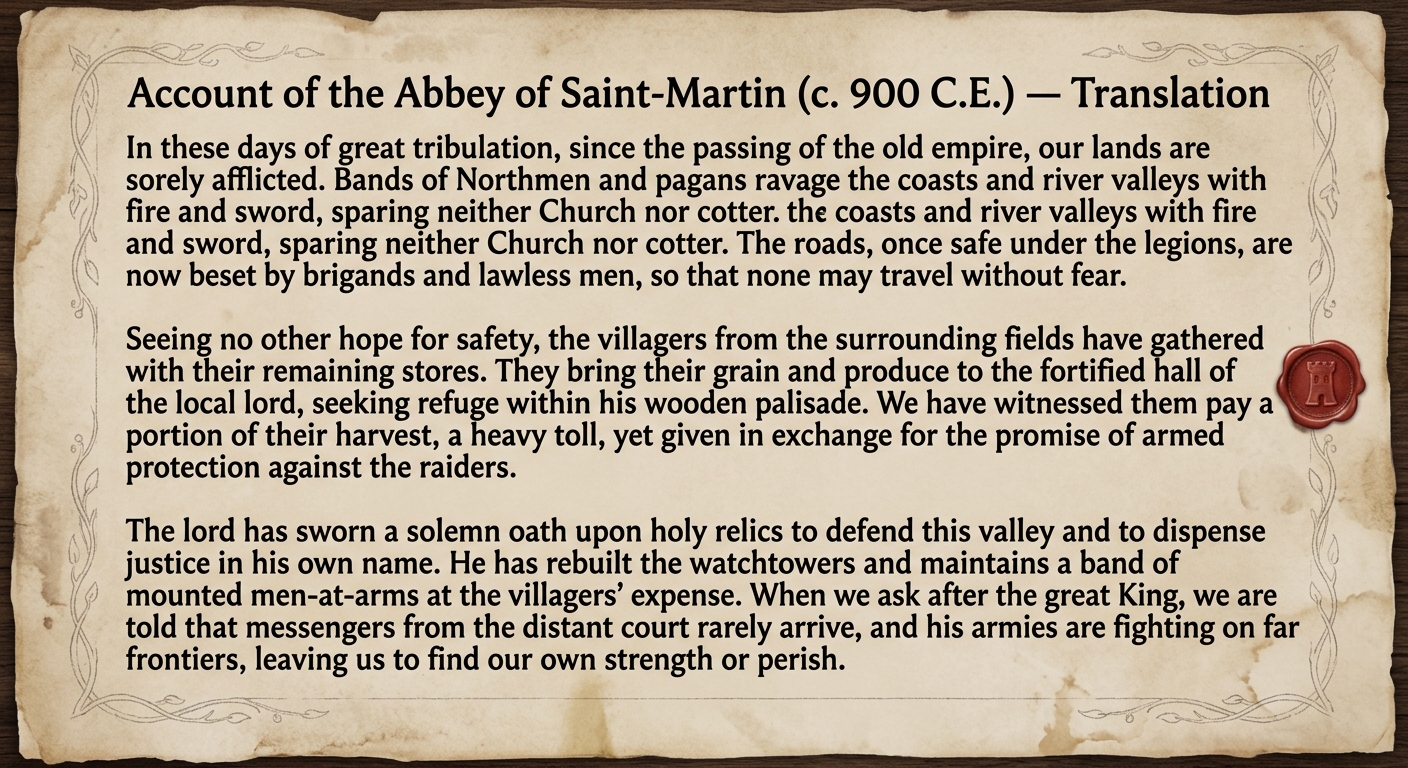
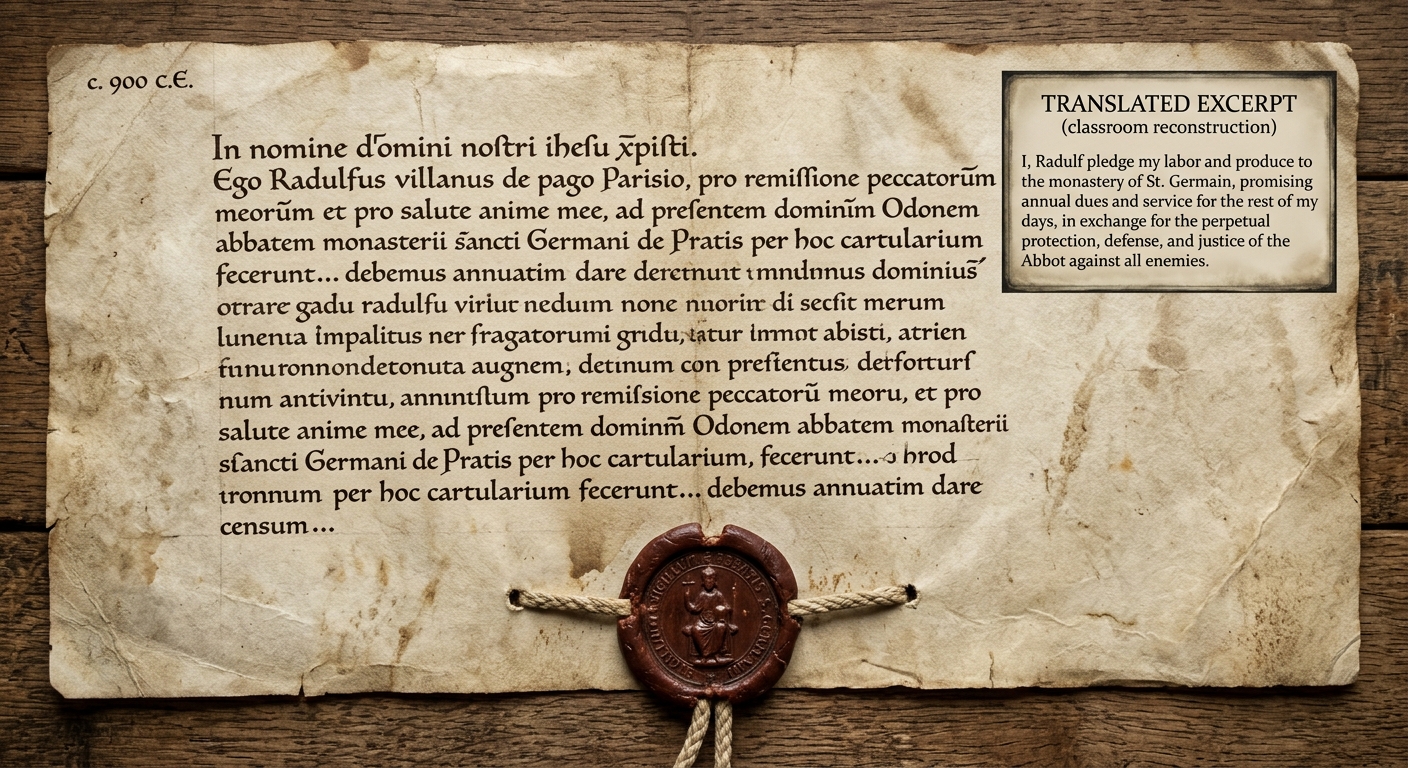
Which statement best describes the exchange at the center of early feudal relationships described in the sources?
Using evidence from the document and the reading, which problem most directly pushed villagers to seek protection from local lords?
Explain how insecurity after the fall of Rome helped lead to feudalism in Western Europe.
Use two pieces of evidence: one from the document image and one from the reading.
Which detail from the document is the strongest evidence that political authority had become decentralized?
Evaluate the document as evidence. Identify one limitation of this source (author perspective or purpose) and explain one way the short reading helps you interpret the document more accurately.

Around 900 C.E., long after Roman rule ended in Western Europe, many villages faced raids and weak royal enforcement. Some people made local agreements with powerful landowners for safety. These arrangements marked a shift toward feudal relationships based on protection and service.
Using the date (c. 900 C.E.) and the reading, explain how the timing of this agreement helps show the connection between the fall of Roman control and the development of feudalism.
Write one paragraph.
Which timeline best matches the sequence suggested by the document and reading?
Describe one cause-and-effect relationship shown across the document and reading that involves time order (what came earlier and what came later).
Write one paragraph.
Which detail is the best clue that this document comes from a time of weakened centralized authority?
Based on the date and the reading, which event most likely happened first?

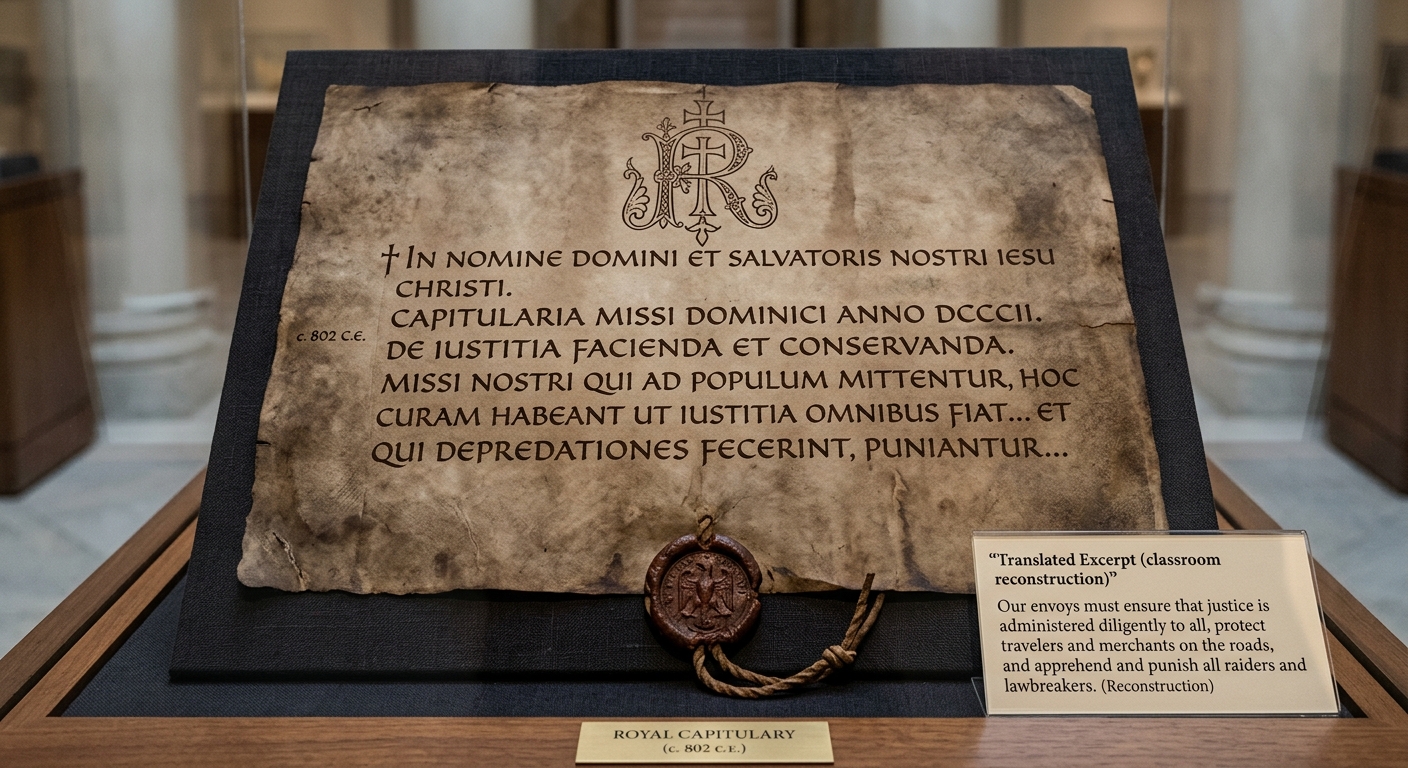
In the early 800s C.E., some rulers in Western Europe tried to restore order after centuries of instability following Rome’s collapse. This document shows an attempt to use royal officials to enforce laws and protect communities, before local lords became the main source of authority in many places.
Contextualize this document: Explain how it fits into the broader transition from Roman rule to feudalism in Western Europe.
Write one paragraph.
Which purpose is most likely shared by this royal order and later feudal contracts between lords and villagers?
Which statement best compares political authority in this document with authority in typical feudal protection agreements?
Which condition after the fall of Rome best helps explain why a ruler would issue orders like the one shown in the document?
Explain one similarity and one difference between this document and a typical feudal protection agreement.
Use evidence from the translated excerpt and the reading. Write one paragraph.

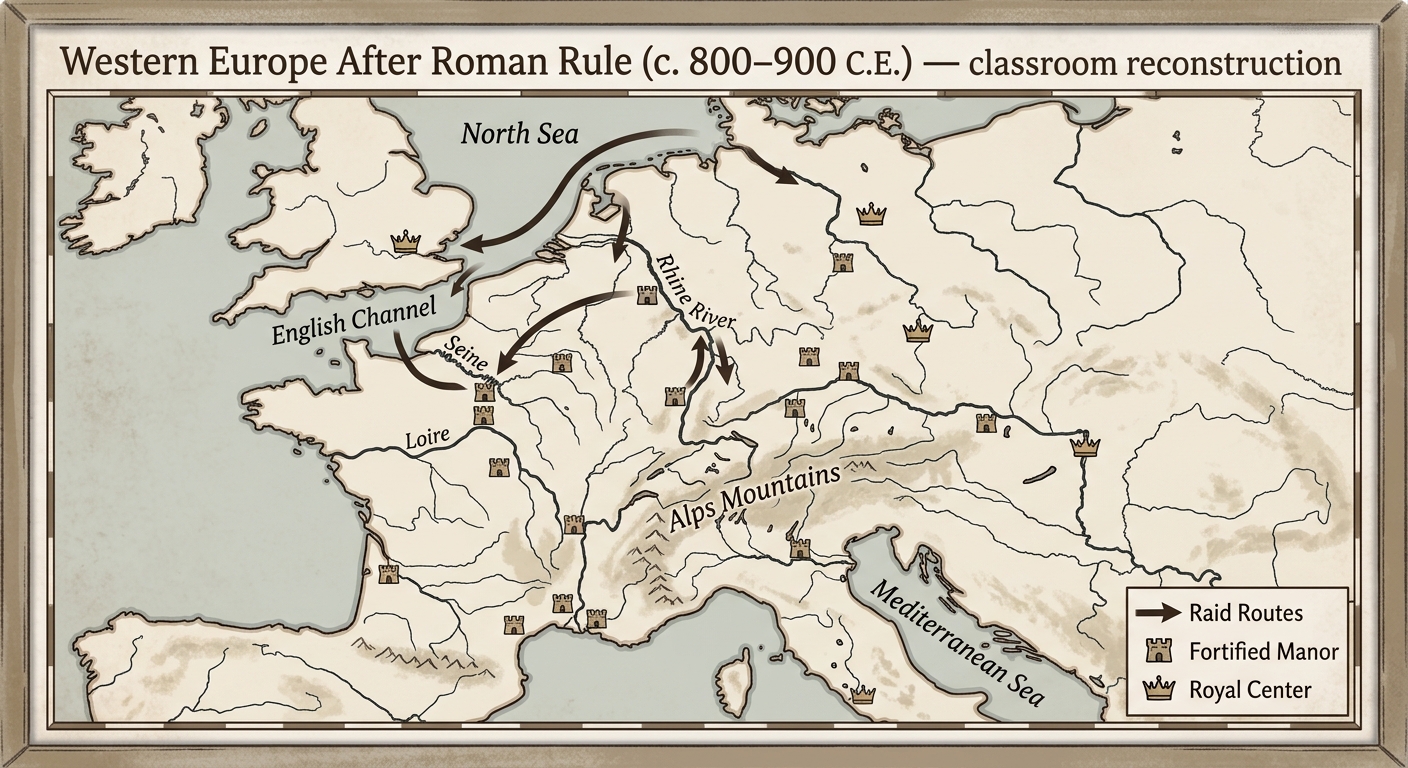
After Roman power weakened in Western Europe, some communities faced frequent raids and unsafe travel. The map shows common routes raiders used and where local forts appeared. These patterns help explain why people often depended on nearby lords for protection instead of distant rulers.
Which area on the map is most likely to build or rely on local forts first, based on its location?
Which statement best explains how the geographic patterns on the map could contribute to the growth of feudalism after Rome?
Compare two areas on the map (one near raid routes and one farther away).
Explain how geography could lead to different levels of insecurity and different reliance on local lords. Write one paragraph.
Use two pieces of evidence from the map to explain why centralized rulers may have struggled to provide protection across Western Europe. Write one paragraph.
Based on the map, which geographic feature would most help raiders move from the coast into inland regions?

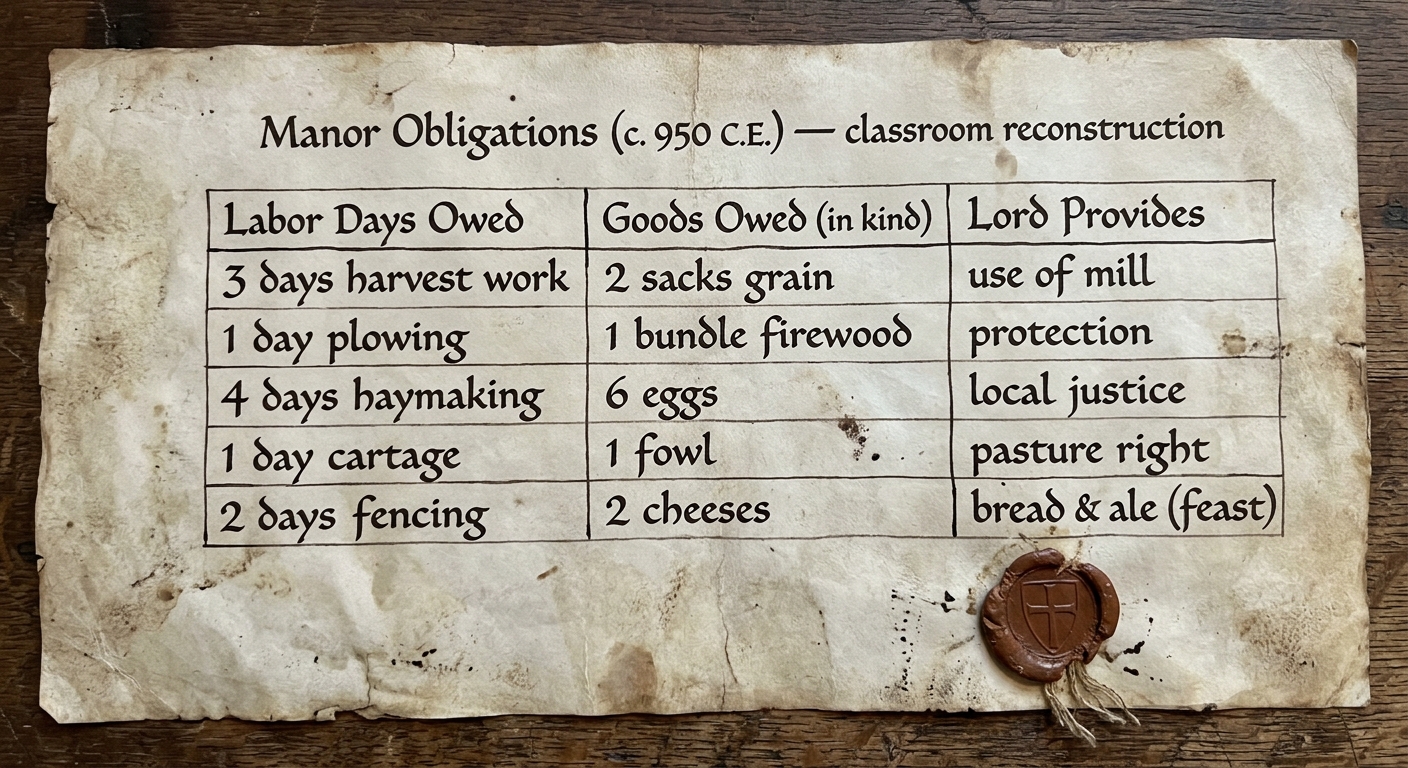
After Roman rule weakened, long-distance trade became riskier and coin use declined in many areas. Villages depended more on local estates for survival. This account lists labor and goods paid “in kind” to a lord, showing how manors organized production and exchanged service for protection.
Which statement best describes the economic system suggested by the document and reading?
Explain how the obligations listed in the document show one way feudalism and manorialism helped meet basic needs after Roman control weakened.
Use two pieces of evidence from the document or reading. Write one paragraph.
Which economic practice is best illustrated by the obligations listed in the document?
Compare the economic system in the document to a cash-based market economy.
Describe one similarity and one difference related to how goods and services are exchanged. Write one paragraph.
Based on the reading, which condition after the fall of Rome most directly helps explain why many payments were made “in kind” rather than with coins?