Twa kɔ nsɛm atitiriw so
Log in
Sign up for FREE
arrow_back
Laabri

7.5 - The Constitution in Practice: - Practice A

star
star
star
star
star
Last updated about 1 month ago
20 Nsɛmmisa
Hyɛ no nsow a efi ɔkyerɛwfo no hɔ:

Use the historical document(s) and the short readings in the left panel to answer the associated questions.

Use the historical document(s) and the short readings in the left panel to answer the associated questions.

Ɛhia
2
7.5.a
DOK.SS.2
Ɛhia
1
7.5.a
DOK.SS.2
Ɛhia
1
7.5.a
DOK.SS.2
Ɛhia
1
7.5.a
DOK.SS.2
Ɛhia
2
7.5.a
DOK.SS.2
Ɛhia
1
7.5.b
DOK.SS.2
Ɛhia
1
7.5.b
DOK.SS.2
Ɛhia
2
7.5.b
DOK.SS.2
Ɛhia
2
7.5.b
DOK.SS.2
Ɛhia
1
7.5.b
DOK.SS.2
Ɛhia
1
7.5.c
DOK.SS.2
Ɛhia
2
7.5.c
DOK.SS.2
Ɛhia
1
7.5.c
DOK.SS.2
Ɛhia
2
7.5.c
DOK.SS.2
Ɛhia
1
7.5.c
DOK.SS.2
Ɛhia
1
7.5.d
DOK.SS.2
Ɛhia
1
7.5.d
DOK.SS.2
Ɛhia
2
7.5.d
DOK.SS.2
Ɛhia
2
7.5.d
DOK.SS.2
Ɛhia
1
7.5.d
DOK.SS.2

Historical Document:

Land Allotment Notice
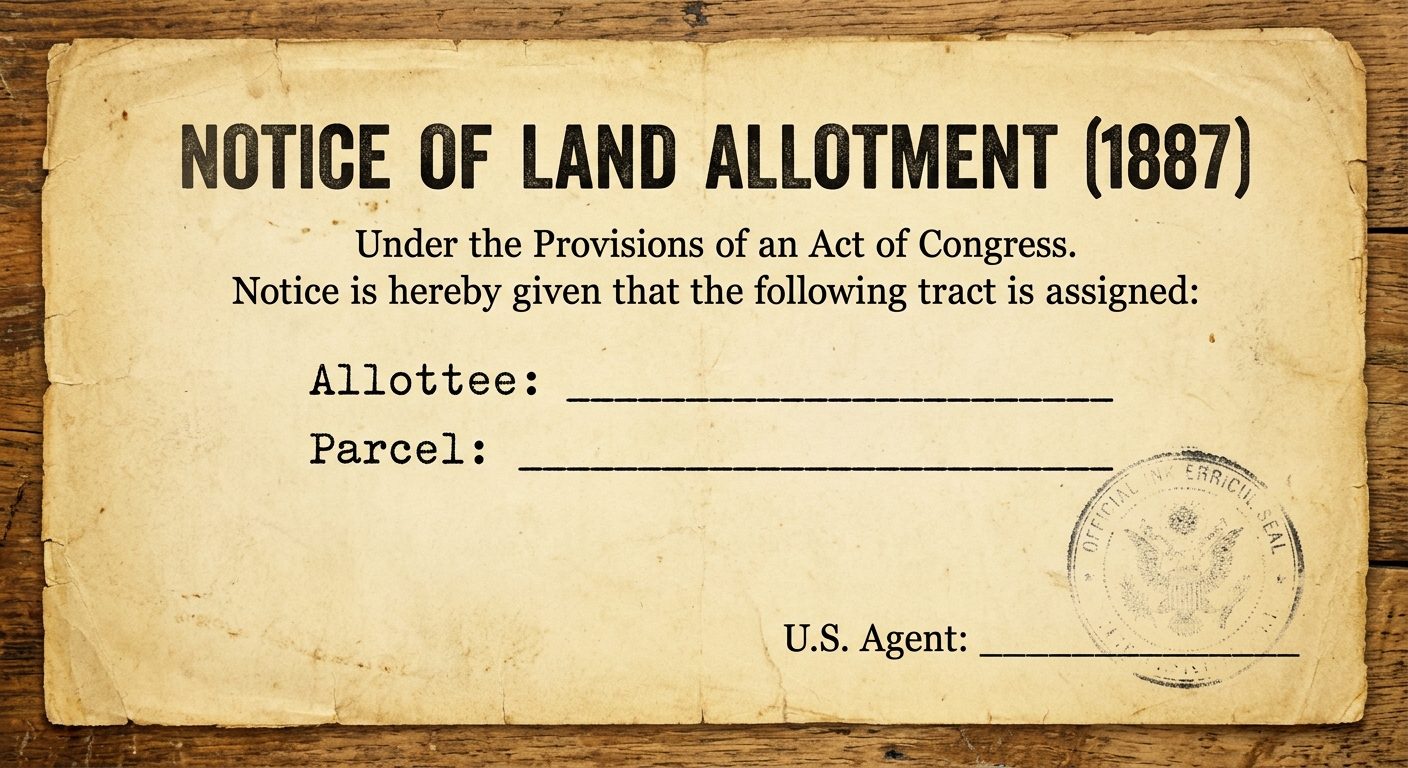
A scanned-looking 1887-style U.S. government notice about land allotment on aged paper with a faint seal and signature line.

This reproduction resembles a notice issued by a U.S. agent in 1887, shortly after the Dawes Act. It announces that a Native family is assigned a specific parcel of land. Officials claimed allotment would encourage farming, but it also reduced tribal control of land.
Asemmisa {{asɛmmisaAhyɛnsode}}
1.

Describe one additional source a historian could use to corroborate (check) what this document suggests about allotment policy, and explain what that source could add.

Write a well-formed paragraph.

Asemmisa {{asɛmmisaAhyɛnsode}}
2.

Which question could be best answered by gathering additional evidence from maps created before and after allotment?

Asemmisa {{asɛmmisaAhyɛnsode}}
3.

Based on the reading stimulus, which inference is best supported about one effect of allotment policies on Native nations?

Asemmisa {{asɛmmisaAhyɛnsode}}
4.

Which detail from the document most directly indicates it was created by the U.S. government (rather than a tribal council)?

Asemmisa {{asɛmmisaAhyɛnsode}}
5.

Using evidence from the document and the reading stimulus, explain one reason U.S. officials might have supported allotment and one reason a Native nation might have opposed it.

Write a well-formed paragraph.

Historical Document:

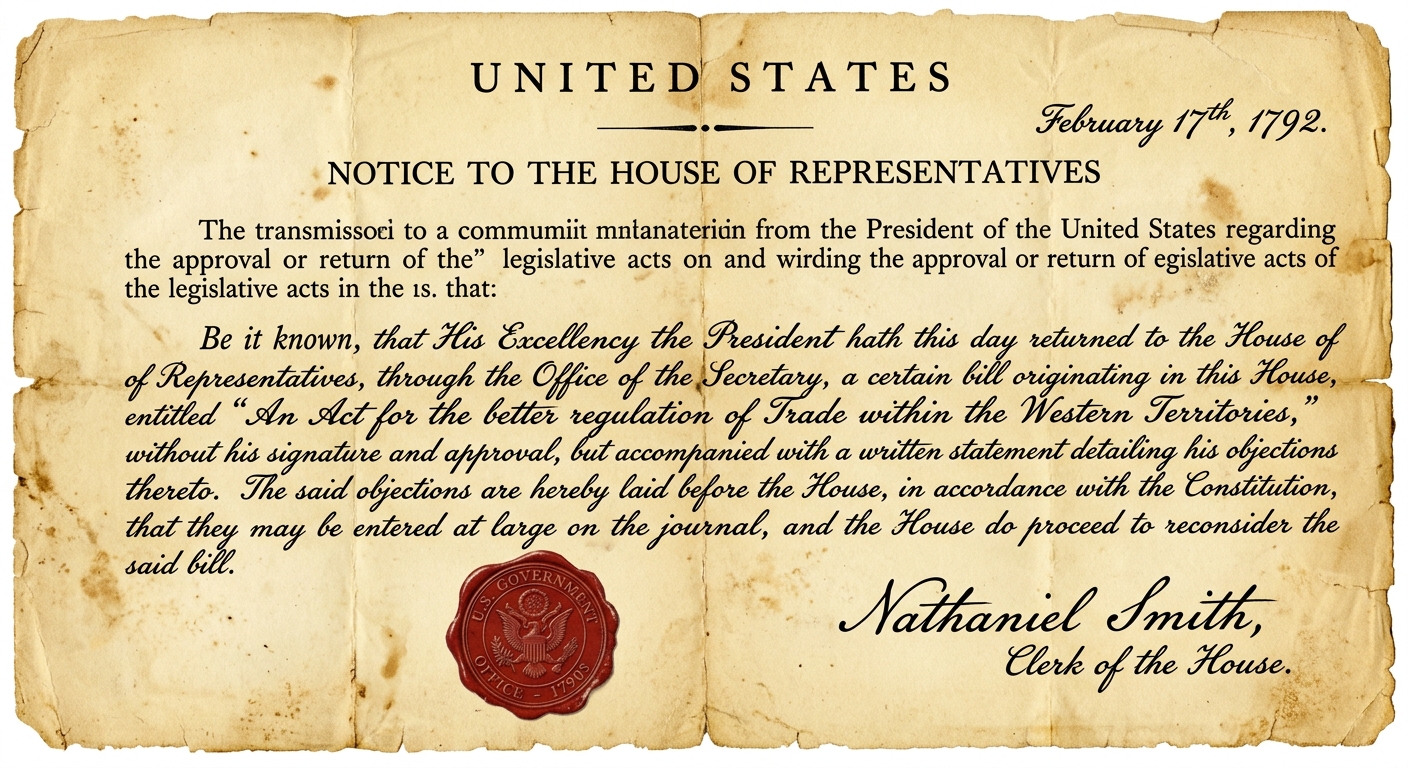
Notice of a Returned Bill

A scanned-looking 1790s-style notice to Congress that a bill was returned with objections, showing the veto process.

This reproduction resembles a notice sent to the U.S. House of Representatives in the 1790s. It reports that the President returned a bill with objections instead of signing it. Congress could reconsider the bill and attempt to override the President’s decision by vote.

Asemmisa {{asɛmmisaAhyɛnsode}}
6.

Which additional source would best help a historian confirm what happened to the bill after it was returned with objections?

Asemmisa {{asɛmmisaAhyɛnsode}}
7.

Based on the document and reading stimulus, what is the BEST description of the President’s action described?

Asemmisa {{asɛmmisaAhyɛnsode}}
8.

Describe one type of evidence from another branch of government that could be used to study how vetoes affected lawmaking, and explain what it could add. Write a well-formed paragraph.

Asemmisa {{asɛmmisaAhyɛnsode}}
9.

Using evidence from the document and reading stimulus, explain how this example illustrates checks and balances.

Write a well-formed paragraph.

Asemmisa {{asɛmmisaAhyɛnsode}}
10.

Which phrase from the reading stimulus best supports the claim that the Constitution created checks and balances between branches?

Historical Document:

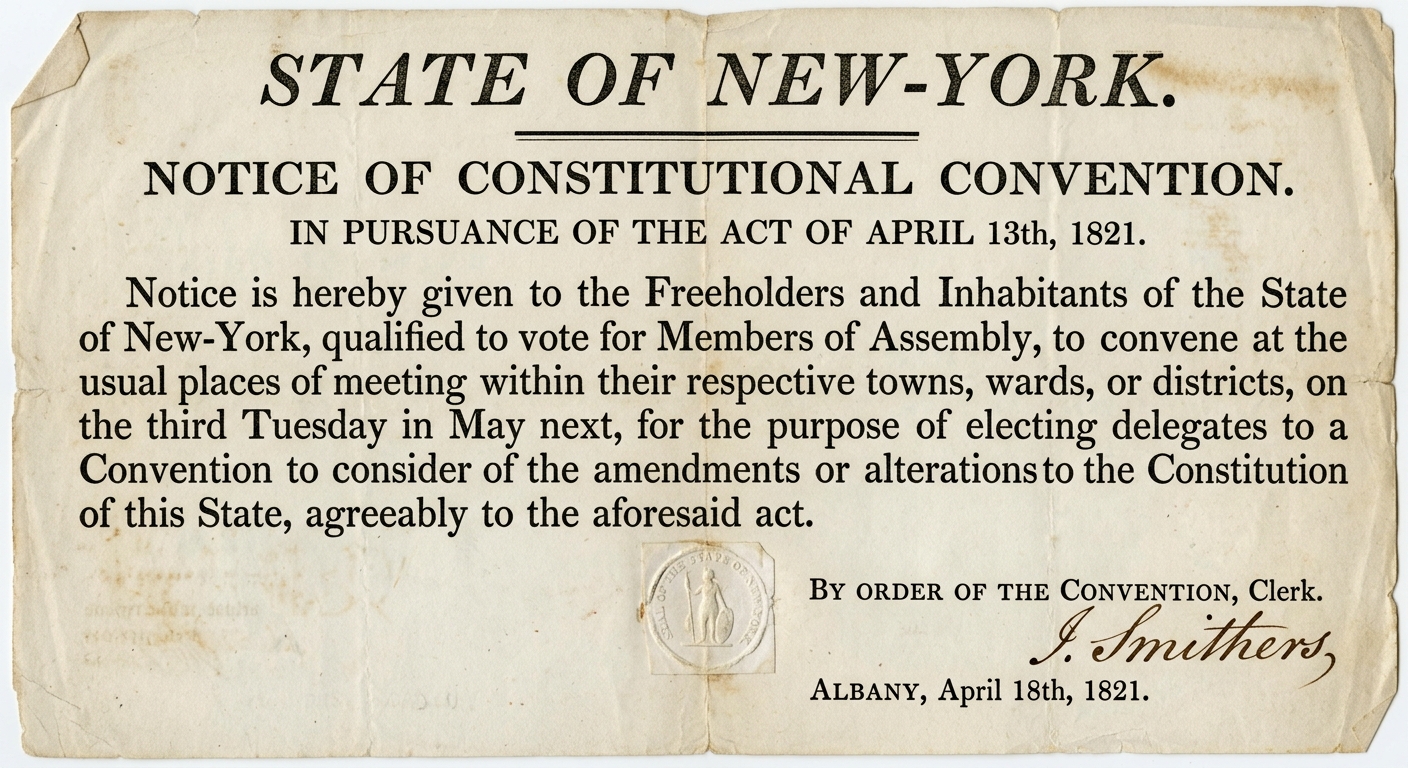
New York Election Notice

A scanned-looking 1821-style New York State notice about an election related to constitutional changes, with a seal and signature.

This reproduction resembles a New York State notice from 1821 announcing an election connected to revising the state constitution. In the early 1800s, New York expanded political participation by changing who could vote and how officials were chosen. The document reflects how constitutions can respond to change beyond formal amendments.

Asemmisa {{asɛmmisaAhyɛnsode}}
11.

Which piece of evidence in the document would be most useful for identifying when the event took place?

Asemmisa {{asɛmmisaAhyɛnsode}}
12.

Using evidence from the document and reading stimulus, explain one way this notice suggests the state constitution was responding to change.

Write a well-formed paragraph.

Asemmisa {{asɛmmisaAhyɛnsode}}
13.

Which additional source would best help a historian evaluate whether these constitutional changes made New York more democratic?

Asemmisa {{asɛmmisaAhyɛnsode}}
14.

Describe one limitation of using this notice alone to understand constitutional change in New York, and explain one additional piece of evidence you would gather to address that limitation.

Write a well-formed paragraph.

Asemmisa {{asɛmmisaAhyɛnsode}}
15.

Based on the reading stimulus, what is the BEST inference about why New York issued notices like this in the early 1800s?

Historical Document:

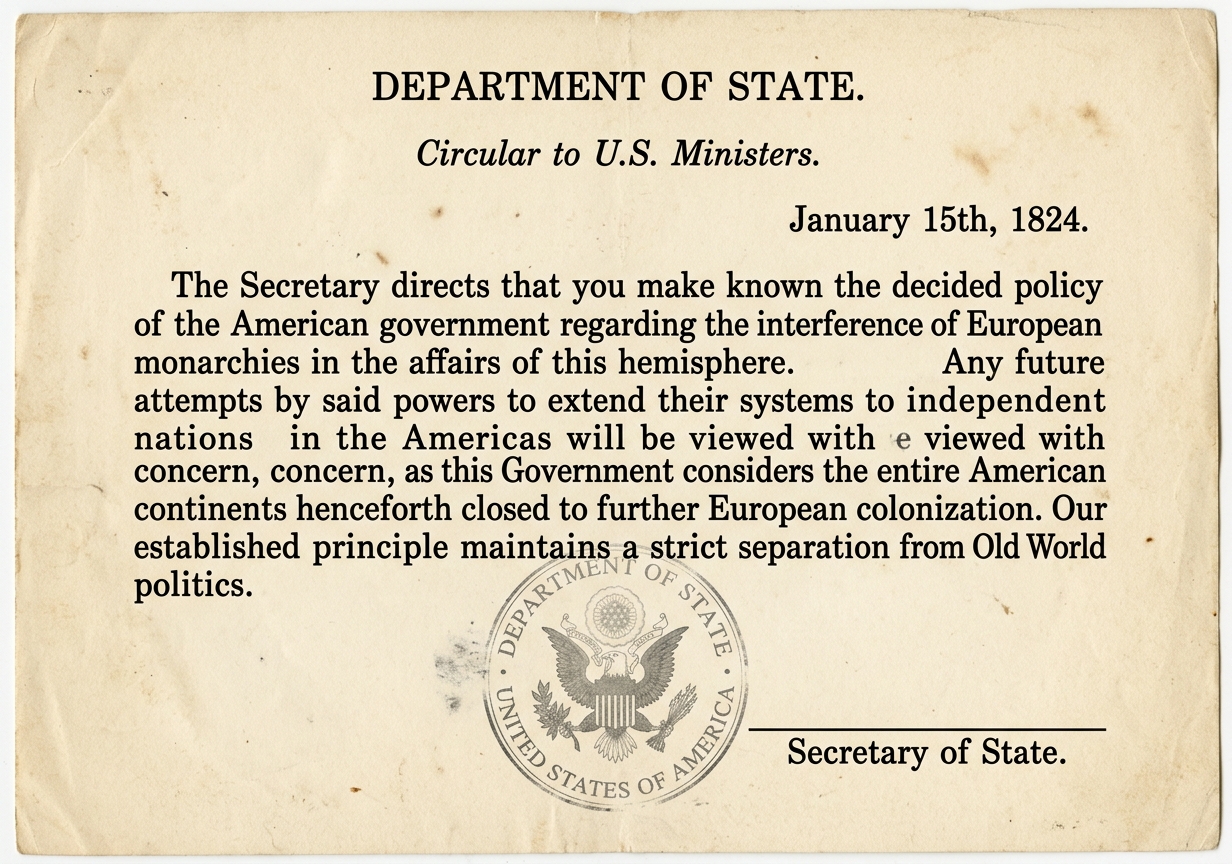
State Department Circular on the Western Hemisphere

A scanned-looking 1823-era U.S. State Department circular warning European powers not to interfere in the Western Hemisphere.

This reproduction resembles an 1823 State Department circular sent to U.S. diplomats soon after the Monroe Doctrine message. It warns that European powers should not interfere in the Western Hemisphere. U.S. leaders promoted isolationism from European conflicts while claiming a role in protecting the Americas.

Asemmisa {{asɛmmisaAhyɛnsode}}
16.

Which additional source would best help a historian evaluate how European governments responded to the policy described here?

Asemmisa {{asɛmmisaAhyɛnsode}}
17.

Based on the reading stimulus, what is the BEST inference about the U.S. goal described in this document?

Asemmisa {{asɛmmisaAhyɛnsode}}
18.

Describe one limitation of using this circular alone to understand U.S. foreign policy in the 1820s, and explain one additional piece of evidence you would gather to address that limitation.

Write a well-formed paragraph.

Asemmisa {{asɛmmisaAhyɛnsode}}
19.

Using evidence from the document and reading stimulus, explain one way this policy reflects both isolationism and a claim of influence in the Western Hemisphere. Write a well-formed paragraph.

Asemmisa {{asɛmmisaAhyɛnsode}}
20.

Which feature of the document is the strongest evidence that it was created for an official government audience?