Historical Document:
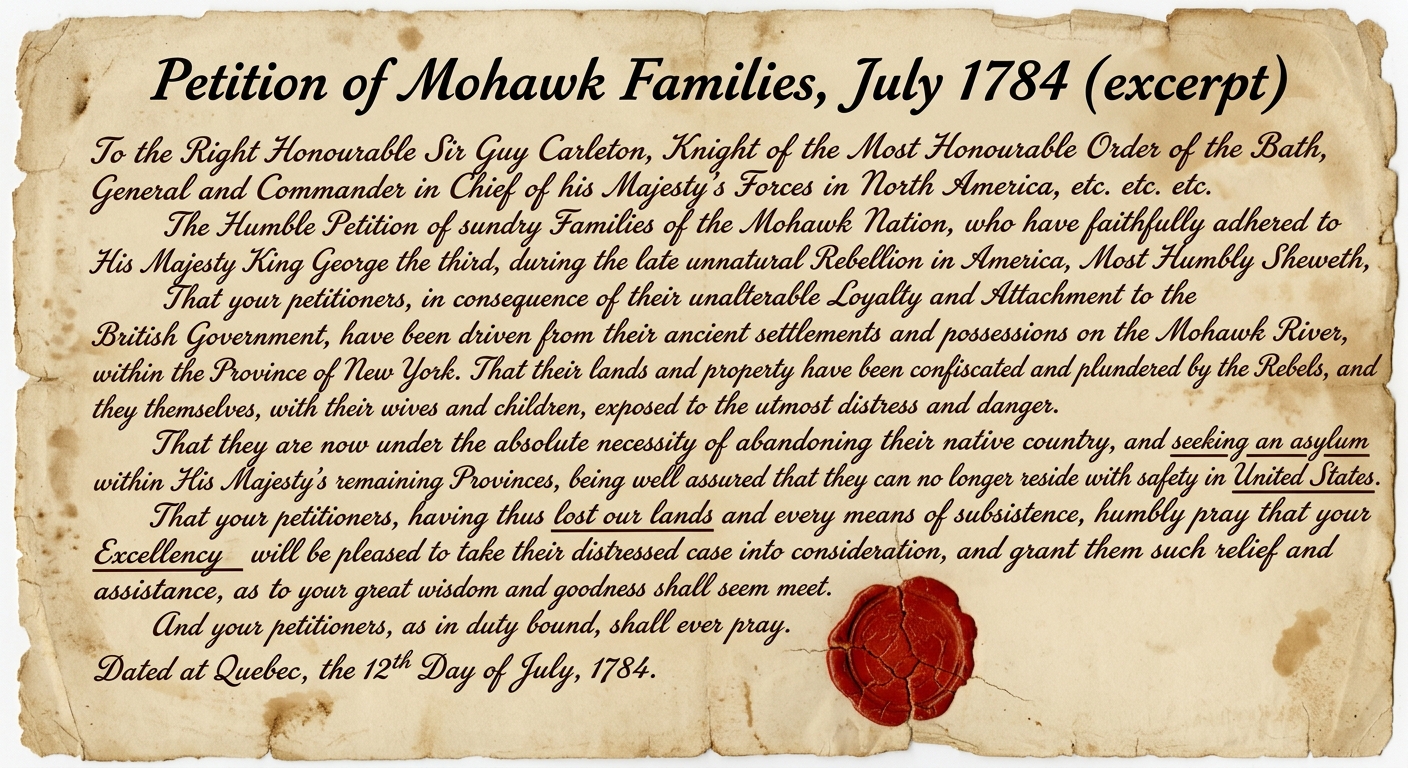
This excerpt is from a 1784 petition by Mohawk families who supported Britain in the American Revolution. They describe threats and land seizures after the war and ask British officials for protection and a place to resettle.
Use the historical document(s) and the short readings in the left panel to answer the associated questions.
Use the historical document(s) and the short readings in the left panel to answer the associated questions.
Historical Document:
This excerpt is from a 1784 petition by Mohawk families who supported Britain in the American Revolution. They describe threats and land seizures after the war and ask British officials for protection and a place to resettle.
Based on the petition, which outcome best matches what happened to some Native Americans who aligned with the British after the American Revolution?
Which phrase from the petition would be the BEST evidence that the authors felt forced to move, not simply willing to migrate?
Using evidence from the document, explain how the authors connect their wartime alliance with Britain to what happened to their land after the war.
Write a well-formed paragraph.
What limitation should a historian keep in mind when using this petition as evidence about post-Revolution experiences for Native Americans?
Identify one additional type of source (example: a map, treaty text, or land record) that could corroborate or challenge the petition’s claims.
Explain how it would help a historian. Write a well-formed paragraph.
Historical Document:
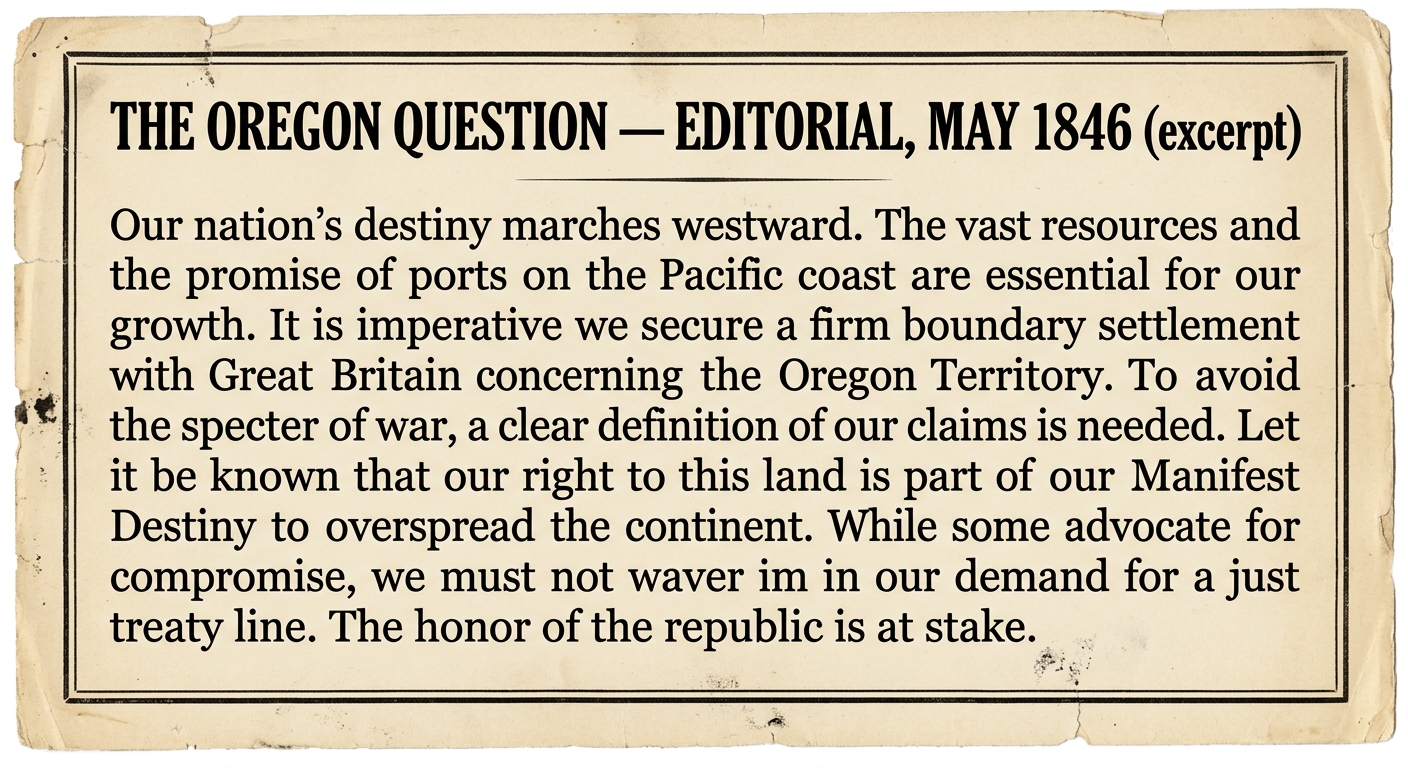
This excerpt is from an 1846 U.S. newspaper editorial about the Oregon boundary dispute with Great Britain. The author argues that westward expansion is necessary for resources and Pacific trade but warns that avoiding war requires a negotiated compromise over where the border should be.
Using evidence from the document, explain how the author connects westward expansion to both U.S. economic goals and the risk of conflict with a foreign nation.
Write a well-formed paragraph.
Which piece of evidence from the document would BEST support the conclusion that the author is promoting Manifest Destiny?
Identify one additional type of source that could help a historian evaluate whether the editorial’s claims were widely shared (example: another newspaper, a speech, a treaty, or a map).
Explain how it would help. Write a well-formed paragraph.
Which claim from the editorial is MOST directly supported by the author’s reasoning about resources and trade?
What does the author’s mention of a “compromise” or “treaty line” suggest about U.S. relations with Great Britain in 1846?
Historical Document:
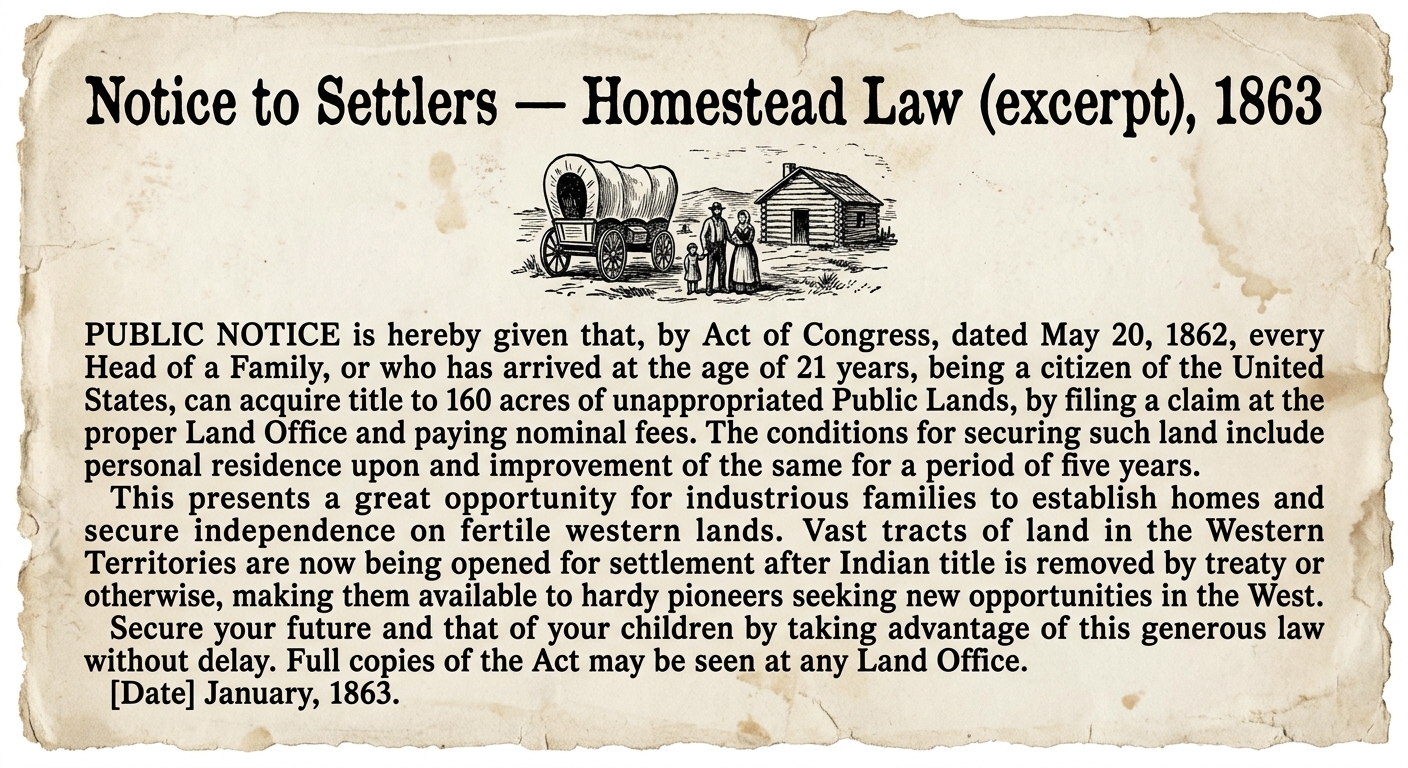
This excerpt is from an 1863 printed notice encouraging settlers to claim land under the Homestead Law. It promises opportunity for families willing to improve farmland. The notice also refers to land being opened for settlement only after Native title is removed.
Which statement from the document would BEST support the idea that westward expansion created opportunities for some groups?
Which evidence from the document would BEST support the idea that westward expansion harmed some groups?
What inference about the federal government’s role in westward expansion is BEST supported by this document?
Identify one additional type of source that could help a historian evaluate the effects of this policy on different groups (example: a treaty, a map, a diary, or a government report).
Explain how it would help.
Write a well-formed paragraph.
Using evidence from the document, explain how this policy could provide opportunity for some groups while harming others.
Write a well-formed paragraph.