Twa kɔ nsɛm atitiriw so
Log in
Sign up for FREE
arrow_back
Laabri

7.6 - Westward Expansion: - Practice B

star
star
star
star
star
Last updated about 1 month ago
15 Nsɛmmisa
Hyɛ no nsow a efi ɔkyerɛwfo no hɔ:

Use the historical document(s) and the short readings in the left panel to answer the associated questions.
Use the historical document(s) and the short readings in the left panel to answer the associated questions.
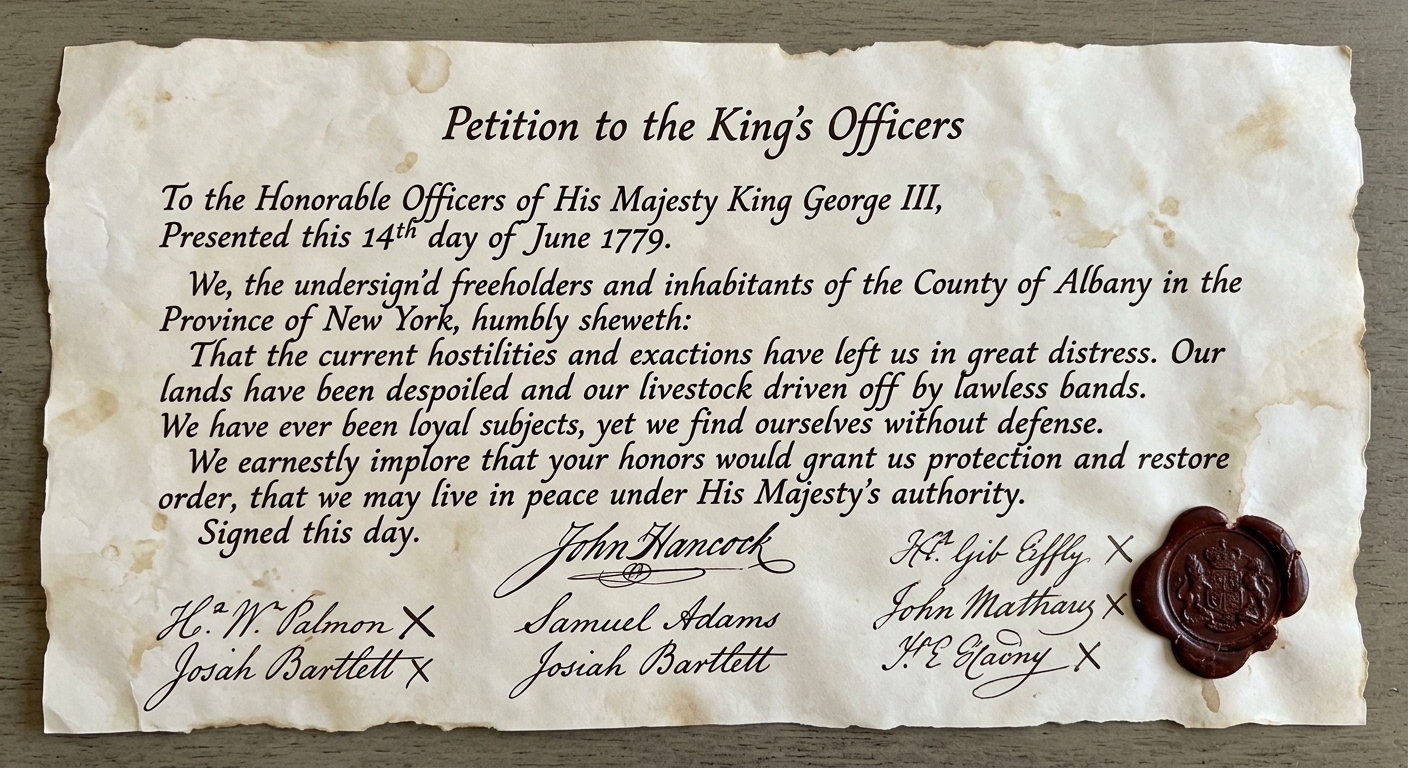
Fictional 1779 petition on aged parchment with cursive handwriting, signatures, and a red wax seal.
Ɛhia
1
7.6.a
DOK.SS.2
Ɛhia
1
7.6.a
DOK.SS.2
Ɛhia
1
7.6.a
DOK.SS.2
Ɛhia
1
7.6.a
DOK.SS.2
Ɛhia
1
7.6.a
DOK.SS.2
Ɛhia
1
7.6.b
DOK.SS.2
Ɛhia
1
7.6.b
DOK.SS.2
Ɛhia
1
7.6.b
DOK.SS.2
Ɛhia
1
7.6.b
DOK.SS.2
Ɛhia
1
7.6.b
DOK.SS.2
Ɛhia
1
7.6.c
DOK.SS.2
Ɛhia
1
7.6.c
DOK.SS.2
Ɛhia
1
7.6.c
DOK.SS.2
Ɛhia
1
7.6.c
DOK.SS.2
Ɛhia
1
7.6.c
DOK.SS.2

Historical Document:

Petition and Aftermath (1779–1784)

As the American Revolution neared its end, some Native American nations that had aligned with the British feared punishment and the loss of homelands. The petition below, dated 1779, asks British officials for protection. In the years after the war, land seizures and removals increased.

Fictional 1779 petition on aged parchment with cursive handwriting, signatures, and a red wax seal.

Asemmisa {{asɛmmisaAhyɛnsode}}
1.

Based on the reading and the petition’s request for protection, what is the most direct reason some Native American families would have relocated soon after the Revolution?

Asemmisa {{asɛmmisaAhyɛnsode}}
2.

Which event is most likely to have happened after the 1779 petition described in the reading?

Asemmisa {{asɛmmisaAhyɛnsode}}
3.

In one well-formed paragraph, distinguish between a short-term effect and a long-term effect of Native Americans aligning with the British during the Revolution.

Explain how each effect relates to chronological cause and effect.

Asemmisa {{asɛmmisaAhyɛnsode}}
4.

In one well-formed paragraph, explain how aligning with the British during the American Revolution could lead to land loss and forced movement afterward.

Use at least two details from the reading and/or the petition (such as the date, the request for protection, or concerns about land).

Asemmisa {{asɛmmisaAhyɛnsode}}
5.

Which statement best explains how the events from 1779 to the mid-1780s are connected chronologically?

Historical Document:

Boundary Debate and Compromise (1846)

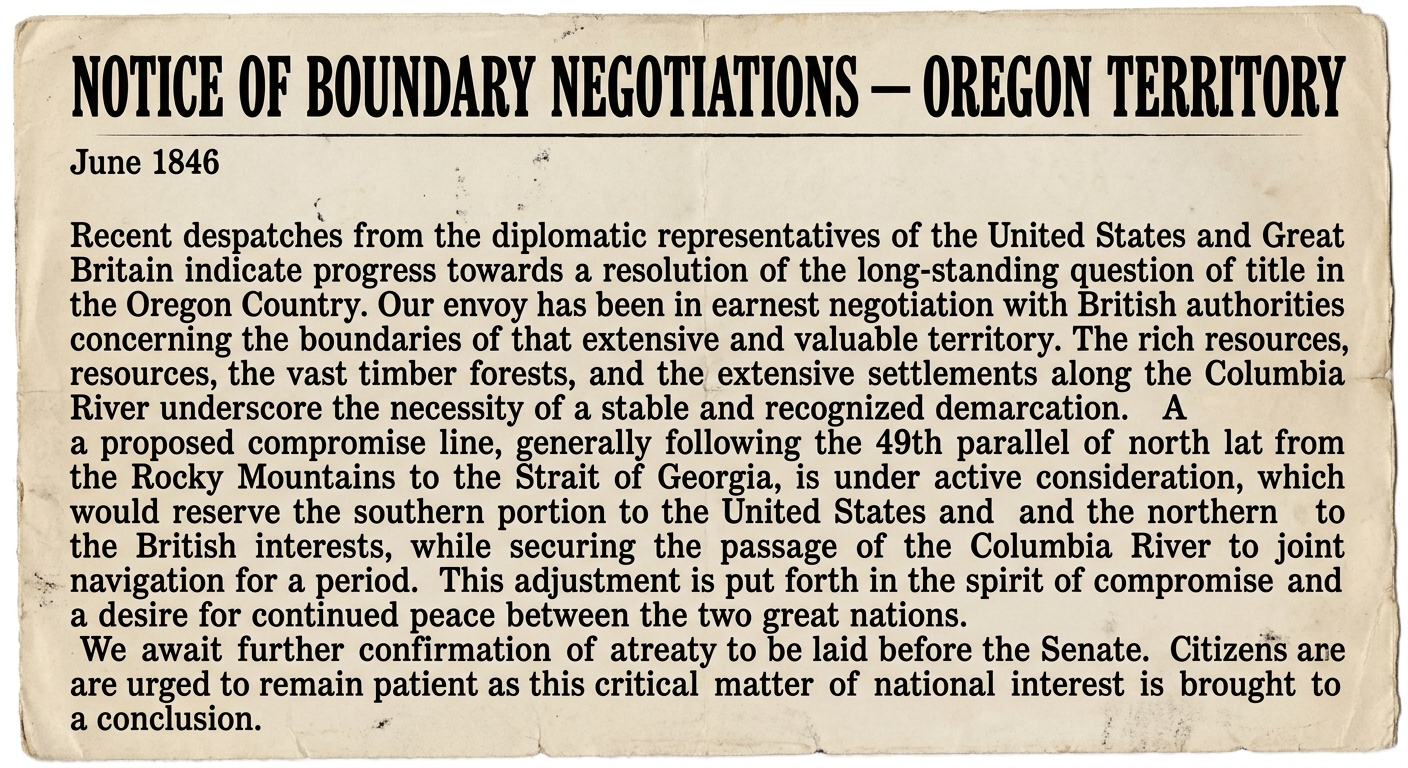
In the mid-1840s, U.S. expansion into the Oregon Country increased tensions with Great Britain. The printed notice below (June 1846) discusses settlement, resources, and a possible compromise border. Read it and use chronological reasoning to explain what developments led to it and what happened next.

Fictional 1846 printed notice about Oregon boundary negotiations between the United States and Great Britain.

Asemmisa {{asɛmmisaAhyɛnsode}}
6.

Which earlier development best explains why Oregon boundary negotiations became more urgent by the mid-1840s?

Asemmisa {{asɛmmisaAhyɛnsode}}
7.

In one well-formed paragraph, distinguish between a short-term effect and a long-term effect of reaching a border compromise like the one discussed in 1846.

Explain how each effect connects to the timeline of westward expansion.

Asemmisa {{asɛmmisaAhyɛnsode}}
8.

Which statement best describes the chronological relationship between beliefs such as Manifest Destiny and U.S. compromises with foreign nations in the 1800s?

Asemmisa {{asɛmmisaAhyɛnsode}}
9.

In one well-formed paragraph, explain how the June 1846 notice shows both conflict and compromise with a foreign nation during U.S. westward expansion.

Use two details from the reading/document (such as the date, settlement, resources, or a proposed boundary).

Asemmisa {{asɛmmisaAhyɛnsode}}
10.

A notice dated June 1846 discusses a compromise border in the Oregon Territory.

Which event is most likely to have happened after this notice?

Historical Document:

Opportunity and Harm on the Trail (1851)

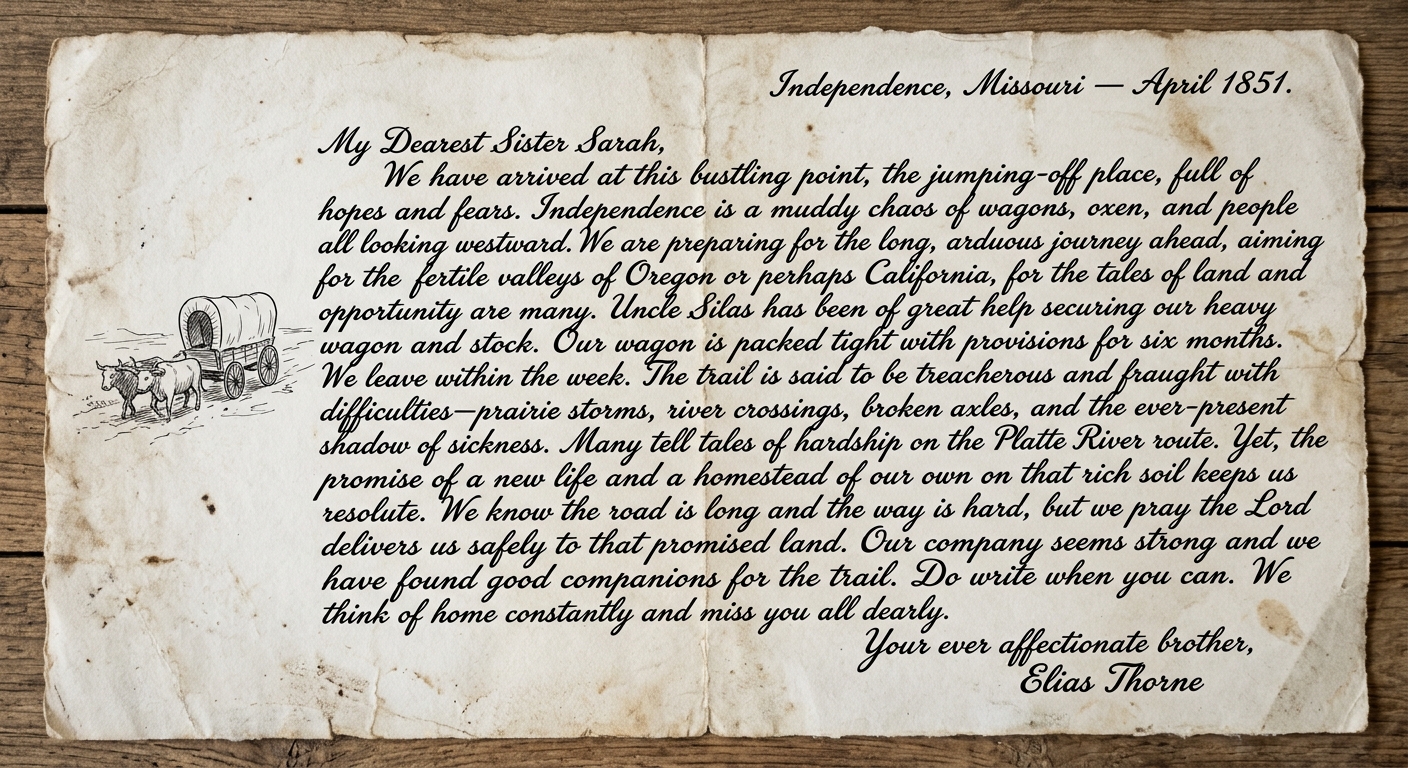
In the early 1850s, more U.S. families traveled west seeking land and new jobs. The letter below (April 1851) describes hopes for opportunity and the dangers of travel. Use chronological reasoning to explain what led to this movement and who benefited or was harmed afterward.

Fictional 1851 handwritten letter from a westward migrant describing opportunities and hardships on the trail.

Asemmisa {{asɛmmisaAhyɛnsode}}
11.

Which statement best explains, in chronological terms, how westward expansion could provide opportunities for some groups while harming others?

Asemmisa {{asɛmmisaAhyɛnsode}}
12.

Which outcome is most likely to have increased after many settlers followed journeys like the one described in 1851?

Asemmisa {{asɛmmisaAhyɛnsode}}
13.

In one well-formed paragraph, explain one way journeys like the one described in the 1851 letter created an opportunity for some people and one way it created harm for others.

Connect your explanation to the sequence of events (what led to migration and what happened afterward).

Asemmisa {{asɛmmisaAhyɛnsode}}
14.

The letter is dated April 1851. Which development is most likely to have happened before this letter and helped increase westward travel?

Asemmisa {{asɛmmisaAhyɛnsode}}
15.

In one well-formed paragraph, distinguish between a short-term effect and a long-term effect of increased westward travel in the early 1850s.

Explain how each effect connects to chronological cause and effect for different groups.