Twa kɔ nsɛm atitiriw so
Log in
Sign up for FREE
arrow_back
Laabri

7.8 - Nation Divided: - Practice B

star
star
star
star
star
Last updated about 1 month ago
25 Nsɛmmisa
Hyɛ no nsow a efi ɔkyerɛwfo no hɔ:

Use the historical document(s) and the short readings in the left panel to answer the associated questions.

Use the historical document(s) and the short readings in the left panel to answer the associated questions.

7.8.a
DOK.SS.2
7.8.b
DOK.SS.2
7.8.c
DOK.SS.2
7.8.d
DOK.SS.2
7.8.e
DOK.SS.2
Ɛhia
1
7.8.a
DOK.SS.2
Ɛhia
2
7.8.a
DOK.SS.2
Ɛhia
1
7.8.a
DOK.SS.2
Ɛhia
1
7.8.a
DOK.SS.2
Ɛhia
2
7.8.a
DOK.SS.2
Ɛhia
2
7.8.b
DOK.SS.2
Ɛhia
2
7.8.b
DOK.SS.2
Ɛhia
1
7.8.b
DOK.SS.2
Ɛhia
1
7.8.b
DOK.SS.2
Ɛhia
1
7.8.b
DOK.SS.2
Ɛhia
1
7.8.c
DOK.SS.2
Ɛhia
1
7.8.c
DOK.SS.2
Ɛhia
1
7.8.c
DOK.SS.2
Ɛhia
2
7.8.c
DOK.SS.2
Ɛhia
2
7.8.c
DOK.SS.2
Ɛhia
2
7.8.d
DOK.SS.2
Ɛhia
2
7.8.d
DOK.SS.2
Ɛhia
1
7.8.d
DOK.SS.2
Ɛhia
1
7.8.d
DOK.SS.2
Ɛhia
1
7.8.d
DOK.SS.2
Ɛhia
2
7.8.e
DOK.SS.2
Ɛhia
1
7.8.e
DOK.SS.2
Ɛhia
2
7.8.e
DOK.SS.2
Ɛhia
1
7.8.e
DOK.SS.2
Ɛhia
1
7.8.e
DOK.SS.2

Historical Document: Tariff Broadside (1842)

In the early 1840s, Congress debated raising tariffs to protect growing Northern factories after the Panic of 1837. Many Southern planters opposed higher duties because they relied on overseas trade. These disputes increased arguments over whether the federal government should control economic policy.
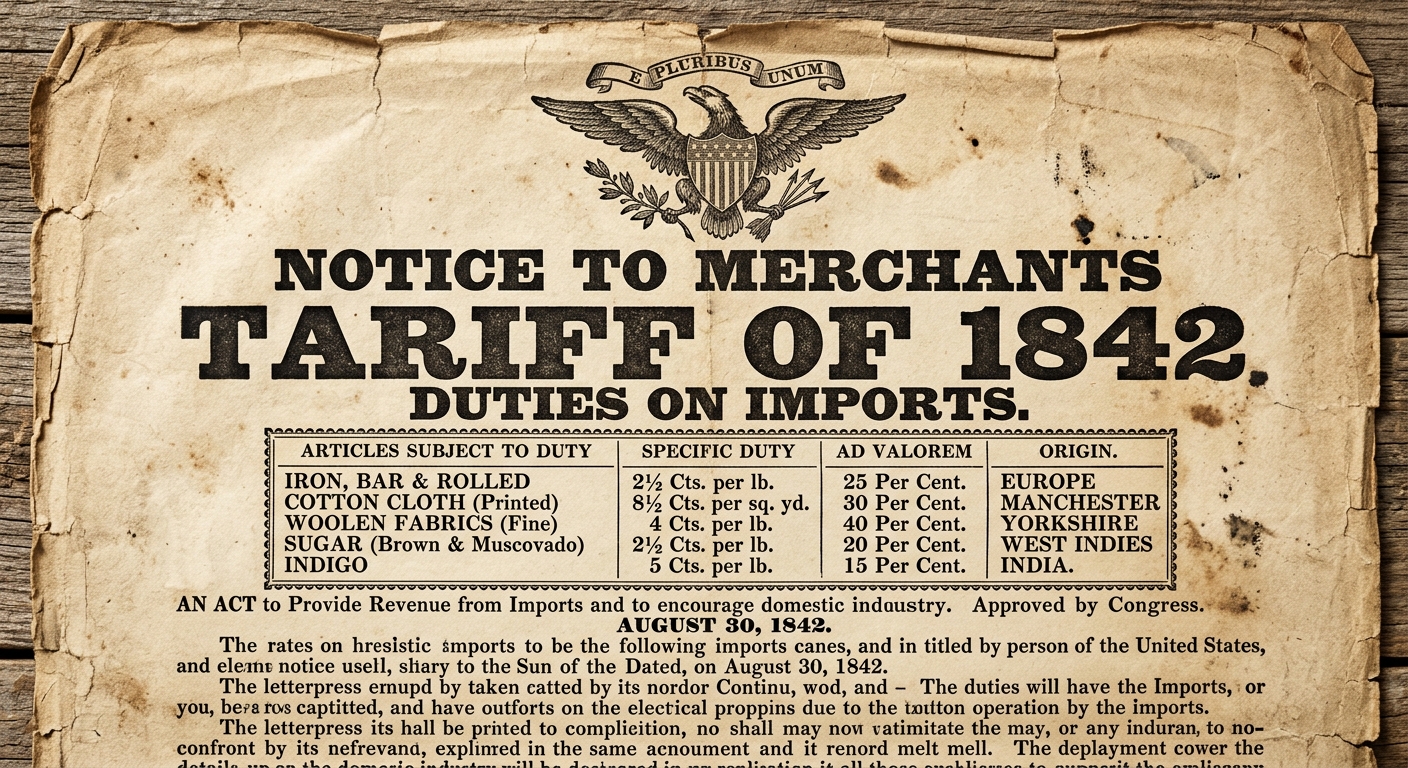
Sepia-toned 1840s broadside announcing a U.S. tariff with an eagle and a table of import duties.

Asemmisa {{asɛmmisaAhyɛnsode}}
1.

Which region’s leaders would most likely have supported the policy shown in the document first, based on the timeline and regional economies described?

Asemmisa {{asɛmmisaAhyɛnsode}}
2.

Identify two different regional economic interests described or implied by the document and reading (for example, manufacturing vs plantation exports).

Then explain how those differences helped create tensions between supporters of states’ rights and supporters of a stronger federal government.

Write one well-formed paragraph.

Asemmisa {{asɛmmisaAhyɛnsode}}
3.

Which conclusion best explains how repeated tariff disputes in the 1830s–1840s could influence later sectional tensions?

Asemmisa {{asɛmmisaAhyɛnsode}}
4.

Based on the stimulus, which earlier event is most directly connected to the tariff debate described?

Asemmisa {{asɛmmisaAhyɛnsode}}
5.

Use evidence from the stimulus to explain how early U.S. industrial growth could lead, over time, to constitutional disagreements about federal power.

Write a well-formed paragraph that makes at least one chronological connection (earlier event/condition → later argument).

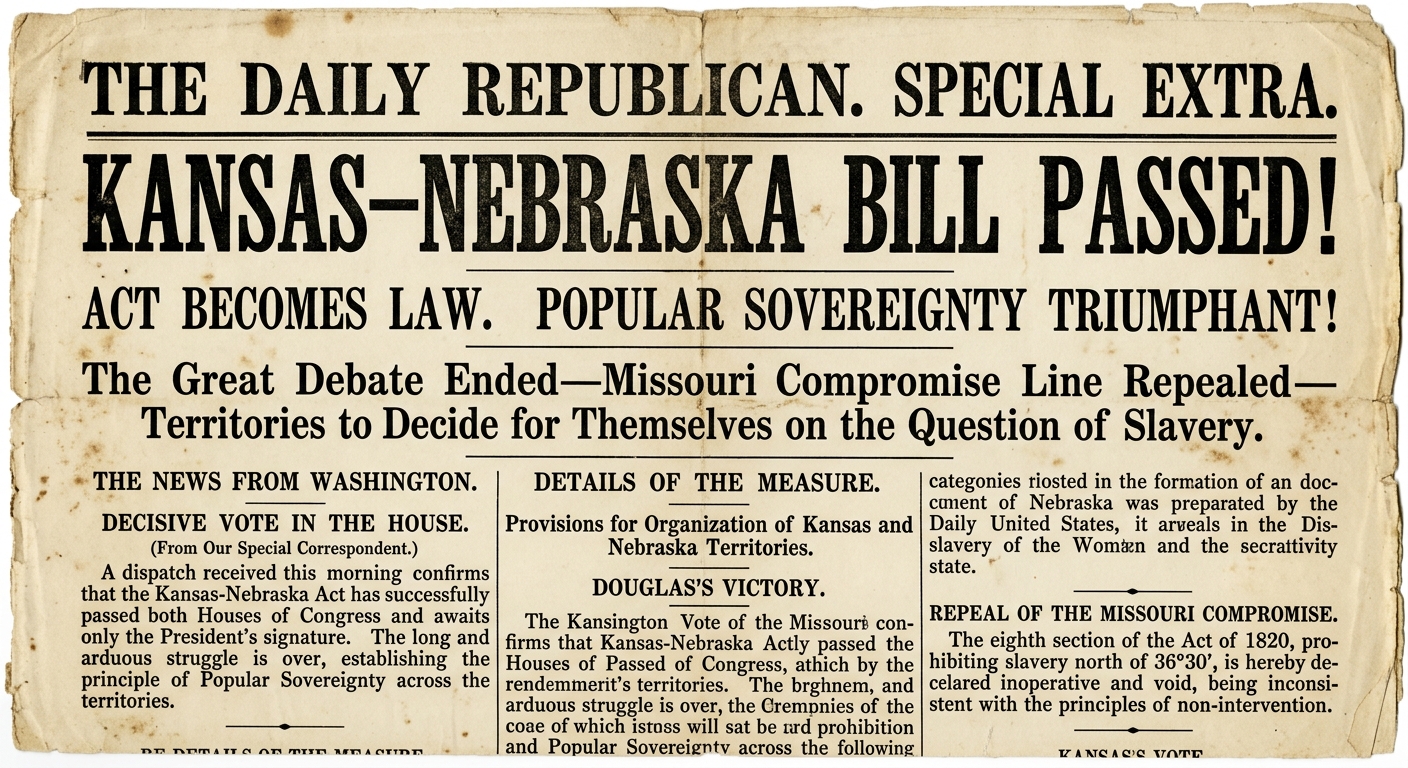
Historical Document: Newspaper Extra on the Kansas–Nebraska Act (1854)

After the Mexican–American War, new western lands raised the question of slavery’s expansion. Compromises in 1820 and 1850 tried to limit conflict. In 1854, the Kansas–Nebraska Act reopened the debate by allowing settlers to vote on slavery, increasing sectional tensions.

A black-and-white 1854 newspaper extra announcing the Kansas–Nebraska Act with bold headline and columns of text.

Asemmisa {{asɛmmisaAhyɛnsode}}
6.

Identify one immediate effect and one longer-term effect of reopening the slavery debate in the territories (as described in the stimulus).

Explain how the immediate effect could lead to the longer-term effect. Write one well-formed paragraph.

Asemmisa {{asɛmmisaAhyɛnsode}}
7.

Use evidence from the stimulus to explain how U.S. expansion in the decades before 1854 increased sectional tensions over slavery.

Write one well-formed paragraph that includes at least one chronological connection (earlier event/condition → later conflict).

Asemmisa {{asɛmmisaAhyɛnsode}}
8.

Which statement best explains, in chronological terms, why compromises became harder to achieve as the nation expanded westward?

Asemmisa {{asɛmmisaAhyɛnsode}}
9.

If the Kansas–Nebraska Act allowed settlers to vote on slavery, which later outcome is most consistent with the timeline and rising tensions described?

Asemmisa {{asɛmmisaAhyɛnsode}}
10.

Based on the reading stimulus, which earlier development most directly set the context for the 1854 debate shown in the document?

Historical Document: Election Broadside (1860)

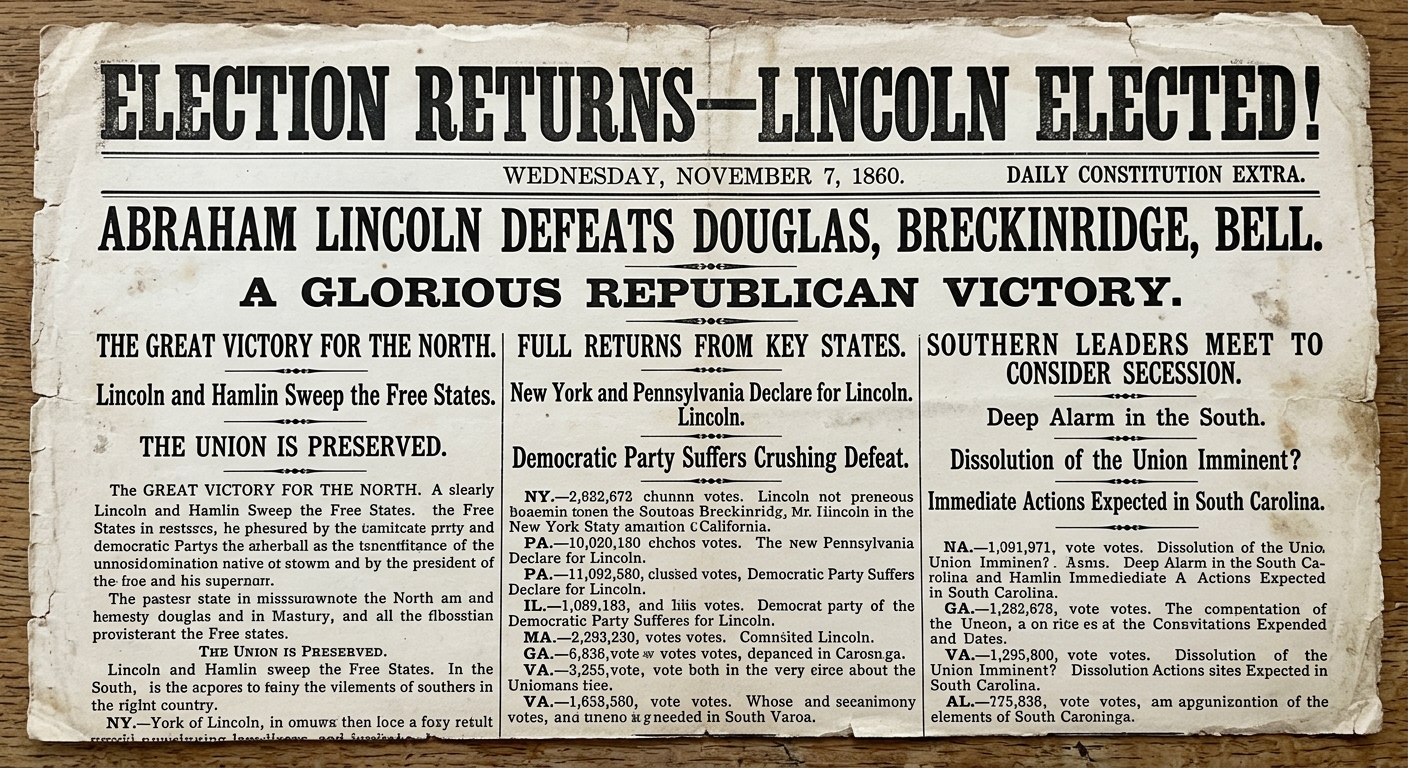
By 1860, years of conflict over slavery’s expansion and the failure of compromises had hardened sectional loyalties. When Abraham Lincoln, the Republican candidate, won the presidency, many Southern leaders viewed it as an immediate threat to slavery and states’ rights. Soon after, several Southern states moved toward secession.

A black-and-white 1860 election broadside announcing Lincoln’s victory with period text columns.

Asemmisa {{asɛmmisaAhyɛnsode}}
11.

Based on the stimulus, which event happened most directly after the development described?

Asemmisa {{asɛmmisaAhyɛnsode}}
12.

Which conclusion best matches the stimulus’s timeline about why perspectives on the causes of the Civil War varied by region?

Asemmisa {{asɛmmisaAhyɛnsode}}
13.

Which earlier pattern best helps explain why Lincoln’s election in 1860 became an immediate cause of secession for some Southern states?

Asemmisa {{asɛmmisaAhyɛnsode}}
14.

Using evidence from the stimulus, explain how an earlier condition (before 1860) contributed to Lincoln’s election becoming an immediate cause of secession.

Write one well-formed paragraph with a clear chronological connection (earlier condition → 1860 event → later action).

Asemmisa {{asɛmmisaAhyɛnsode}}
15.

The stimulus says perspectives on the causes of the Civil War varied by region. Identify one likely Southern perspective and one likely Northern perspective on why secession happened in 1860–1861.

Then explain how Lincoln’s election fits into both perspectives. Write one well-formed paragraph.

Historical Document:

War Department Bulletin on Antietam (1862)

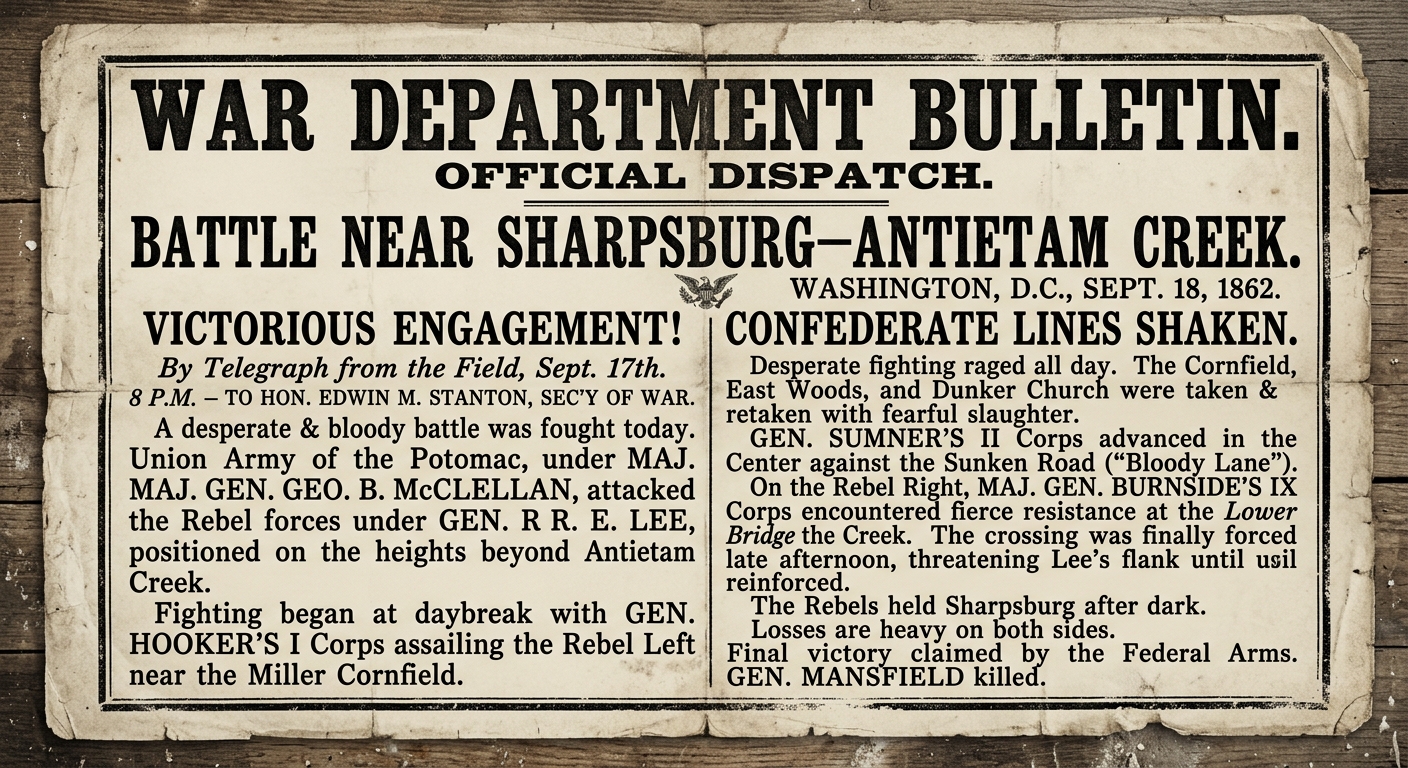
In September 1862, after months of major battles, Union and Confederate forces fought near Sharpsburg, Maryland, along Antietam Creek. The landscape shaped troop movements and the battle’s outcome. Soon after, Lincoln used the Union’s position to announce the Preliminary Emancipation Proclamation.

A Civil War–era War Department bulletin broadside reporting the 1862 Battle of Antietam near Antietam Creek.

Asemmisa {{asɛmmisaAhyɛnsode}}
16.

Use evidence from the stimulus to explain how the geography of a decisive battle could influence later political or military decisions.

Write one well-formed paragraph with a clear chronological connection (battle location/conditions → outcome → later decision).

Asemmisa {{asɛmmisaAhyɛnsode}}
17.

Identify one way strategic leadership and one way geography or technology could influence the course of the Civil War.

Then explain how those factors, over time, could affect the war’s outcome. Write one well-formed paragraph.

Asemmisa {{asɛmmisaAhyɛnsode}}
18.

Which feature named in the stimulus would have most directly shaped where soldiers could cross and advance during the battle?

Asemmisa {{asɛmmisaAhyɛnsode}}
19.

Based on the reading stimulus, which event happened most directly after the battle described?

Asemmisa {{asɛmmisaAhyɛnsode}}
20.

Which conclusion best explains how military success at a key moment could influence later war policies, according to the timeline in the stimulus?

Historical Document:

Freedmen’s Bureau Circular (1865)

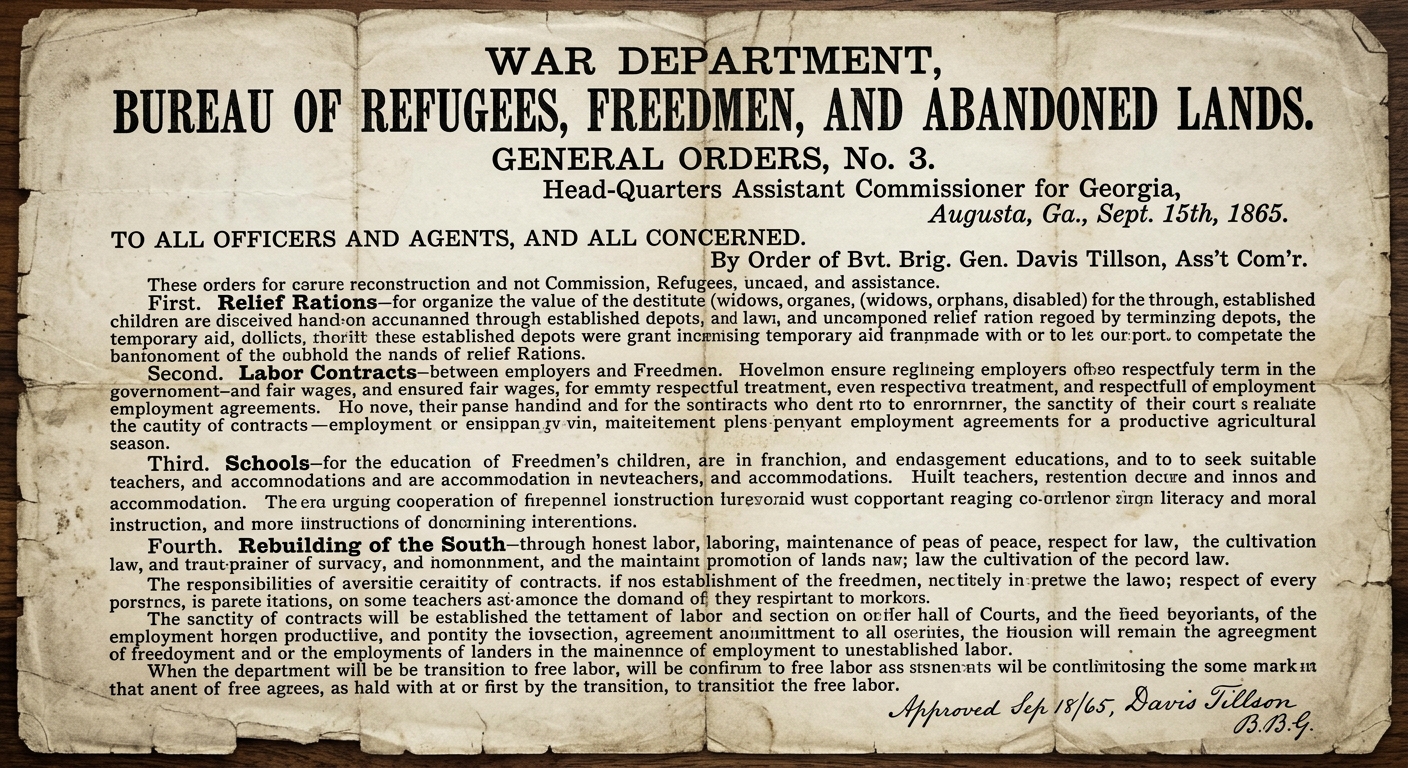
After 1865, the war left railroads and towns damaged, farms disrupted, and many families displaced. Federal and state governments faced decisions about rebuilding, providing relief, and restoring civil authority. This document reflects how the Civil War changed human lives, economic capacity, and governance during early Reconstruction.

An 1865 Freedmen’s Bureau government circular with an official header and paragraphs about relief and rebuilding.

Asemmisa {{asɛmmisaAhyɛnsode}}
21.

Use evidence from the stimulus to explain how the Civil War could reduce a region’s economic capacity and then create pressure for rebuilding efforts.

Write one well-formed paragraph with a chronological connection (war damage/disruption → economic effects → rebuilding needs).

Asemmisa {{asɛmmisaAhyɛnsode}}
22.

Which impact of the Civil War is most directly highlighted by the need for “relief” described in the stimulus?

Asemmisa {{asɛmmisaAhyɛnsode}}
23.

The stimulus describes decisions about rebuilding, providing relief, and restoring civil authority. Explain how the Civil War could change governance in the United States during early Reconstruction.

Write one well-formed paragraph with a chronological connection (wartime impact → postwar needs → changes in government roles).

Asemmisa {{asɛmmisaAhyɛnsode}}
24.

Which statement best explains, in chronological terms, how damage to railroads and towns could affect the postwar economy?

Asemmisa {{asɛmmisaAhyɛnsode}}
25.

Based on the stimulus’s timeline, which development is most directly connected to the document’s context?