Twa kɔ nsɛm atitiriw so
Log in
Sign up for FREE
arrow_back
Laabri

7.1 - Native Americans: - Practice C

star
star
star
star
star
Last updated about 1 month ago
5 Nsɛmmisa
Hyɛ no nsow a efi ɔkyerɛwfo no hɔ:

Use the historical document(s) and the short readings in the left panel to answer the associated questions.

Use the historical document(s) and the short readings in the left panel to answer the associated questions.

7.1.a
DOK.SS.2
Ɛhia
1
7.1.a
DOK.SS.2
Ɛhia
1
7.1.a
DOK.SS.2
Ɛhia
1
7.1.a
DOK.SS.2
Ɛhia
2
7.1.a
DOK.SS.2
Ɛhia
2
7.1.a
DOK.SS.2

Historical Document:
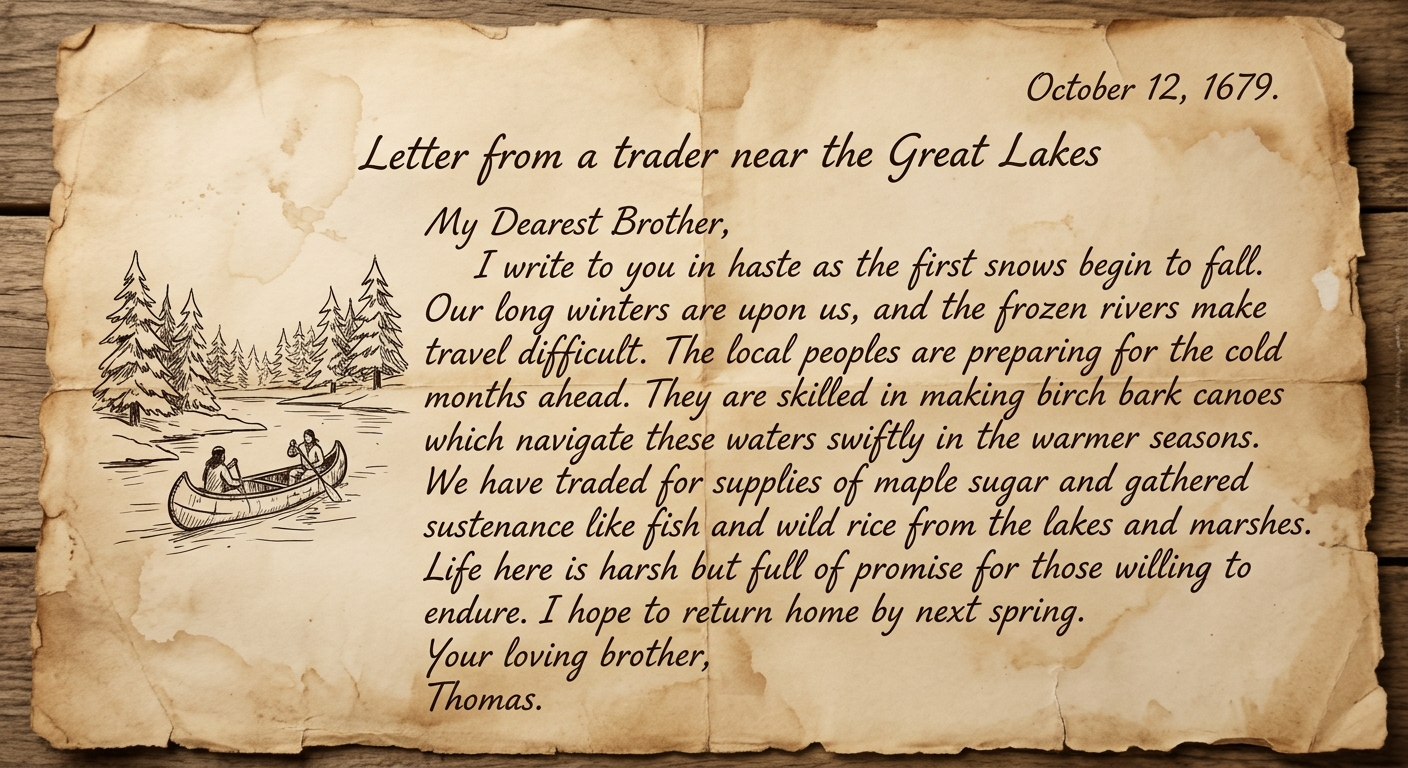
A sepia-toned, aged letter dated October 12, 1679, describing long winters, frozen rivers, birch bark canoes, and foods like fish, wild rice, and maple sugar, with a small sketch of a canoe and snowy trees.

This invented 1679 letter describes a Great Lakes community facing long winters and frozen rivers. It notes travel by birchbark canoe in warmer seasons and foods such as fish, wild rice, and maple sugar. Use it to compare how environment shaped regional lifeways.

Asemmisa {{asɛmmisaAhyɛnsode}}
1.

Which comparison BEST explains why “birchbark canoes” fit this region’s context?

Asemmisa {{asɛmmisaAhyɛnsode}}
2.

Compared with the Southern Colonies’ climate, the document suggests people in this region would be MORE likely to

Asemmisa {{asɛmmisaAhyɛnsode}}
3.

Which regional environment is MOST consistent with the document’s description?

Asemmisa {{asɛmmisaAhyɛnsode}}
4.

Using evidence from the reading, explain two ways the Great Lakes environment could influence how people got food and traveled.

Then compare ONE of those ways to a different region of North America (e.g., Southwest, Great Plains, Arctic).

Asemmisa {{asɛmmisaAhyɛnsode}}
5.

What does this document suggest about why different Native American cultures developed in different regions?

Use at least two specific details from the reading to support your explanation.