Use the historical document(s) and the short readings in the left panel to answer the associated questions.
After the American Revolution, some Native American groups and families who supported the British were treated as enemies by new state governments. Officials sometimes claimed their land could be taken and re-granted to settlers, forcing families to leave their homes and move west.
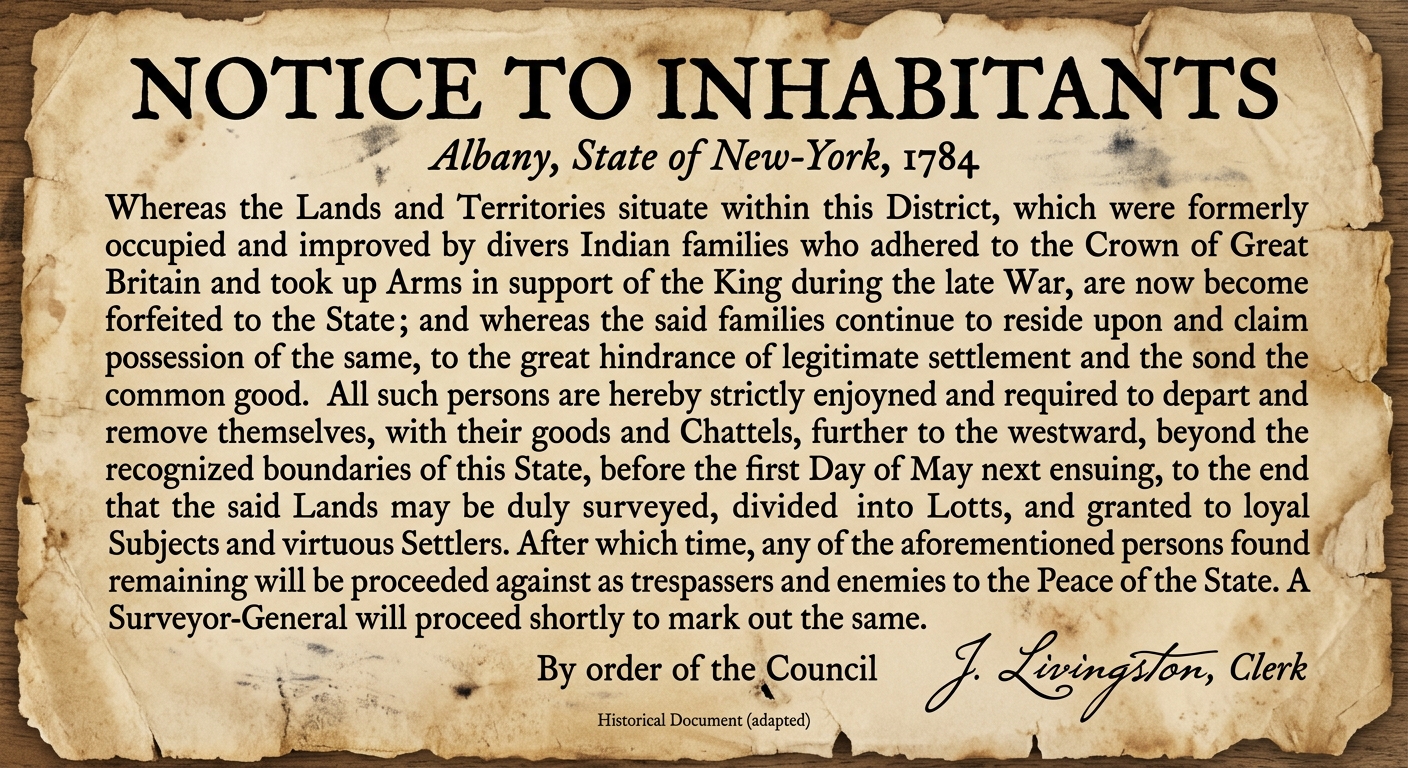
Based on the historical document and the reading stimulus, which group is MOST directly affected by this policy?
Which option BEST compares the likely perspective of the issuing government officials with the likely perspective of the Native families named in the document?
Which broader post–American Revolution development BEST helps explain why officials would issue a notice like this?
Use evidence from the document and the reading stimulus to explain how wartime alliances shaped postwar outcomes for some Native Americans.
In your paragraph, include:
(1) what the officials wanted and
(2) what the policy likely meant for the Native families.
Imagine a nearby Native nation tried to remain neutral during the Revolution or made agreements with American forces.
In one paragraph, explain two ways their postwar experience could have differed from the families described in the document.
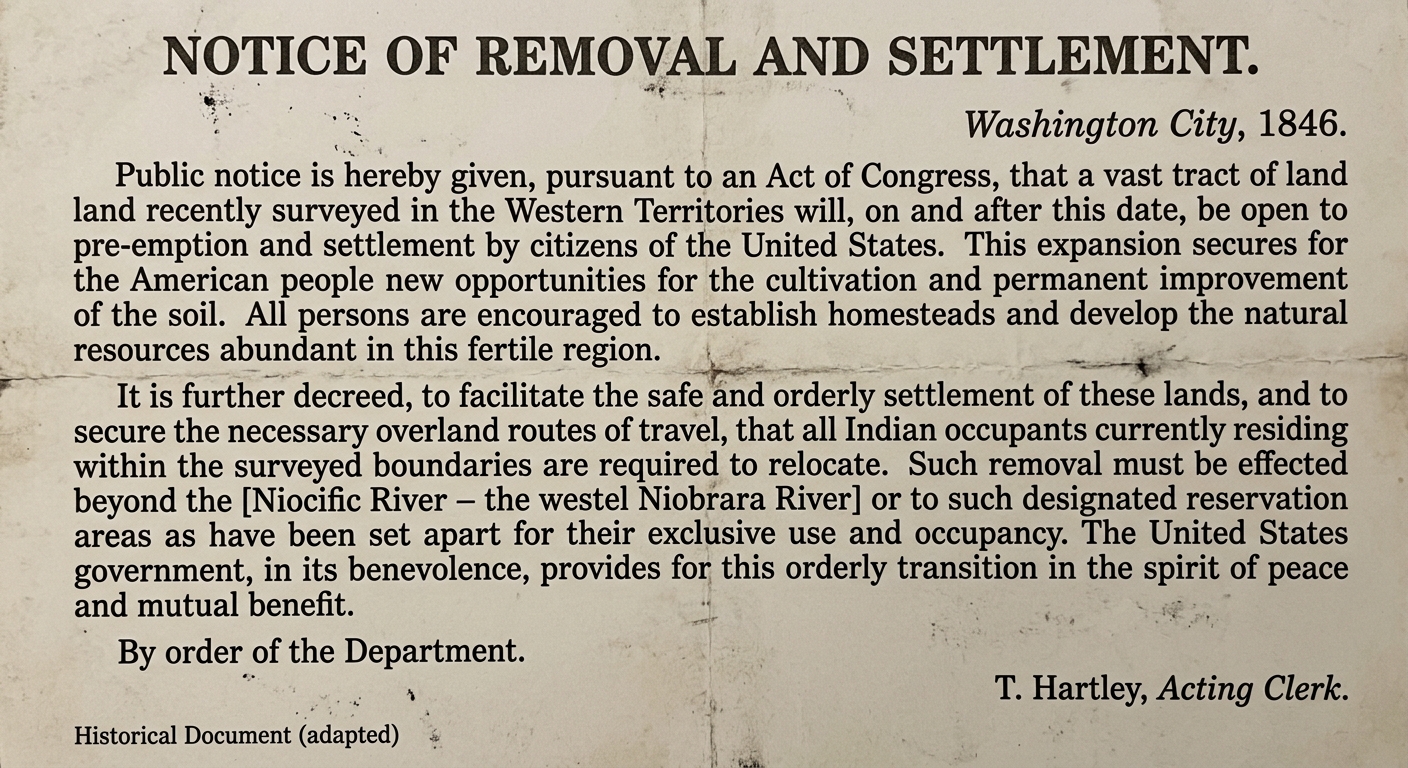
During the 1800s, many Americans believed the United States should expand westward. Government officials negotiated treaties and sometimes used force to open land for settlement and resources. These policies created conflicts with Native nations and led to removals and new boundaries.

Based on the historical document and the reading stimulus, which outcome is MOST directly connected to the policy described?
Which option BEST compares the likely perspective of U.S. officials issuing the notice with the likely perspective of the Native community affected?
Which idea BEST helps contextualize why U.S. leaders supported policies like the one shown in the document?
Use evidence from the document and the reading stimulus to explain how conflict and compromise with Native nations could occur at the same time during westward expansion.
In your paragraph, include:
(1) one reason U.S. officials supported expansion and
(2) one impact the policy would likely have on the Native community.
Imagine a different U.S. policy maker argued that expansion should happen more slowly through negotiation rather than removal.
In one paragraph, compare how that approach might change:
(1) relationships with Native nations and
(2) the speed of settlement, using the document as your reference point.
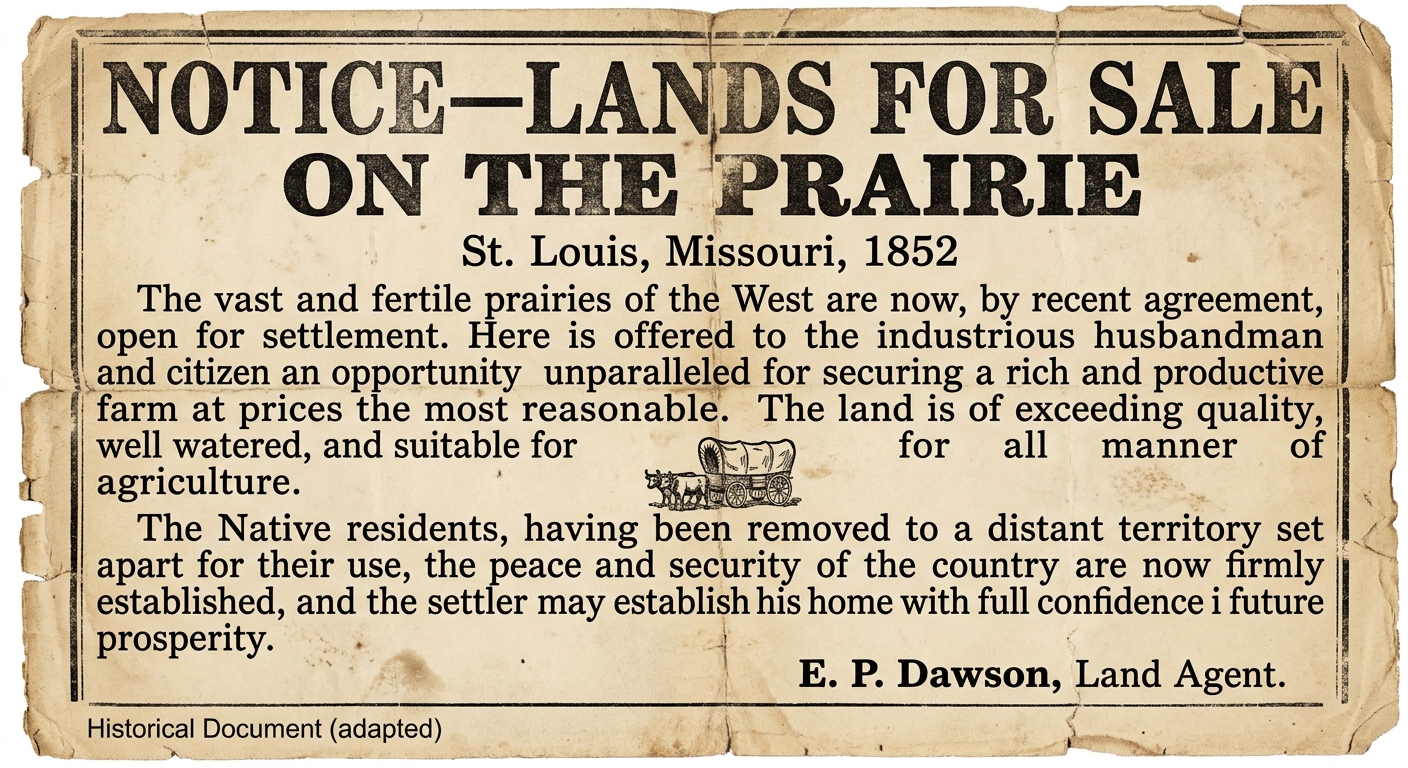
Westward expansion created new chances for some Americans to buy land, start farms, and build businesses. At the same time, many Native nations were pushed off their homelands through treaties and force. Expansion often reshaped communities in unequal ways.

Based on the historical document and the reading stimulus, which statement BEST identifies an opportunity created by westward expansion AND a harm caused by it?
Which option BEST compares how the land agent in the document would likely describe westward expansion with how a Native family mentioned indirectly in the document might describe it?
Which additional source would BEST help contextualize the claims in the land sale notice by showing how expansion affected Native people?
Use evidence from the document and the reading stimulus to explain how westward expansion could create opportunities for some groups while harming others.
In your paragraph, include:
(1) one opportunity and
(2) one harm shown or implied by the sources.
Imagine two families living near the land described—one settler family considering buying the land and one Native family being told to leave.
In one paragraph, compare how each family might describe the same policy, using evidence from the document and the reading stimulus.