Twa kɔ nsɛm atitiriw so
Log in
Sign up for FREE
arrow_back
Laabri

7.7 - Reform Movements: - Practice D

star
star
star
star
star
Last updated about 1 month ago
20 Nsɛmmisa
Hyɛ no nsow a efi ɔkyerɛwfo no hɔ:

Use the historical document(s) and the short readings in the left panel to answer the associated questions.

Use the historical document(s) and the short readings in the left panel to answer the associated questions.

Ɛhia
1
7.7.a
DOK.SS.2
Ɛhia
1
7.7.a
DOK.SS.2
Ɛhia
1
7.7.a
DOK.SS.2
Ɛhia
2
7.7.a
DOK.SS.2
Ɛhia
2
7.7.a
DOK.SS.2
Ɛhia
1
7.7.b
DOK.SS.2
Ɛhia
1
7.7.b
DOK.SS.2
Ɛhia
1
7.7.b
DOK.SS.2
Ɛhia
2
7.7.b
DOK.SS.2
Ɛhia
2
7.7.b
DOK.SS.2
Ɛhia
1
7.7.c
DOK.SS.2
Ɛhia
1
7.7.c
DOK.SS.2
Ɛhia
1
7.7.c
DOK.SS.2
Ɛhia
2
7.7.c
DOK.SS.2
Ɛhia
2
7.7.c
DOK.SS.2
Ɛhia
1
7.7.d
DOK.SS.2
Ɛhia
1
7.7.d
DOK.SS.2
Ɛhia
1
7.7.d
DOK.SS.2
Ɛhia
2
7.7.d
DOK.SS.2
Ɛhia
2
7.7.d
DOK.SS.2

Document A (Broadside): Camp Meeting Notice, Upstate New York, 1832

Camp meetings spread revival ideas across New York during the Second Great Awakening. This notice highlights how waterways and roads shaped participation. The Erie Canal connected towns, carried travelers, and helped reform-minded preachers reach new communities. Use the document to analyze location, movement, and regional connections.
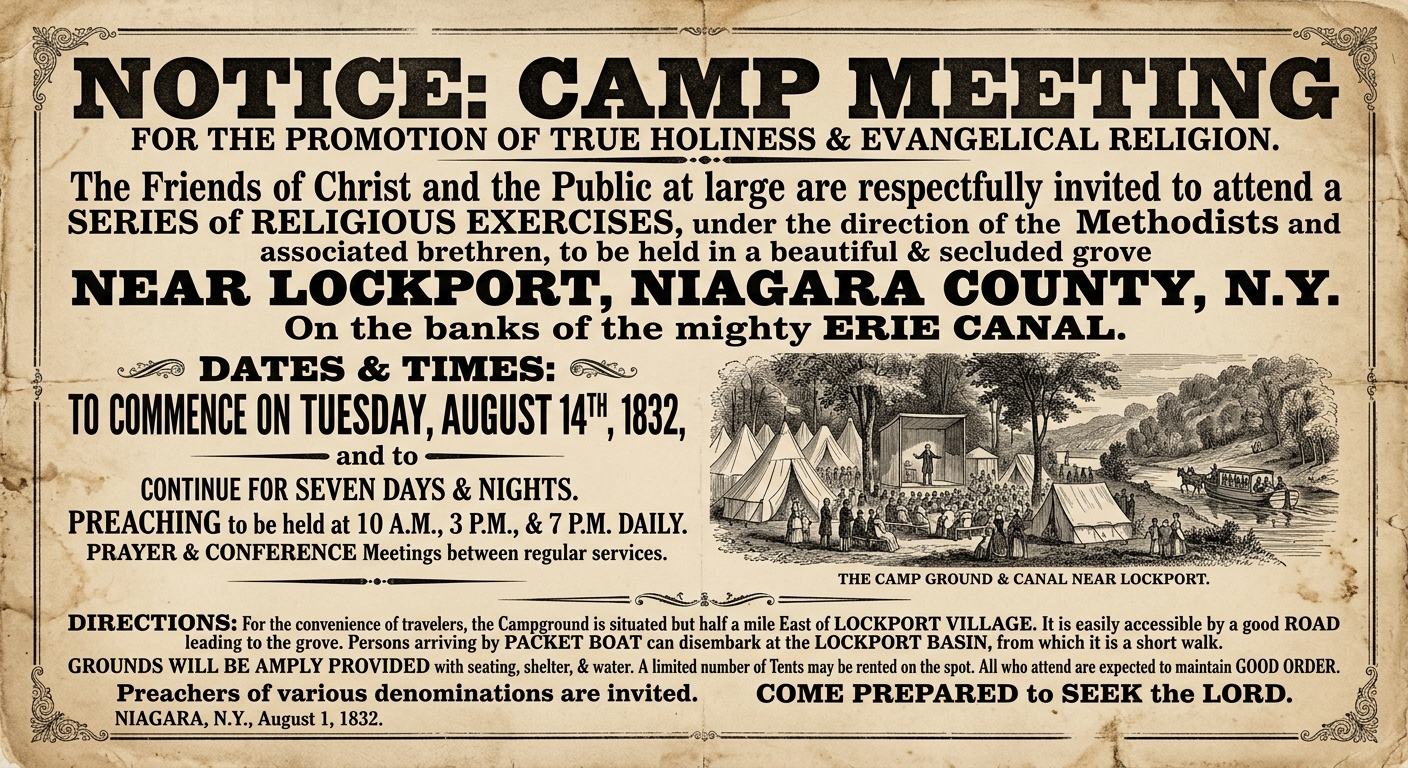
Sepia-style 1830s broadside titled “Notice: Camp Meeting,” announcing a camp meeting near the Erie Canal with dates, location, and travel directions; includes a small sketch of tents and a canal boat.

Asemmisa {{asɛmmisaAhyɛnsode}}
1.

Based on Document A, which geographic feature most directly helped people from different towns reach the camp meeting site?

Asemmisa {{asɛmmisaAhyɛnsode}}
2.

Which inference about the Second Great Awakening in New York is best supported by the travel directions in Document A?

Asemmisa {{asɛmmisaAhyɛnsode}}
3.

Document A describes how to travel to the meeting by canal and then by road. Which conclusion best connects this to reform movements in New York?

Asemmisa {{asɛmmisaAhyɛnsode}}
4.

Using evidence from Document A, explain one way geography (location and transportation routes) could increase attendance at a camp meeting in New York during the Second Great Awakening and help reform ideas spread.

Write a well-formed paragraph.

Asemmisa {{asɛmmisaAhyɛnsode}}
5.

Document A is one piece of evidence. What additional geographic information (for example, a map feature, distance data, or regional comparison) would help you evaluate how widely this camp meeting might draw participants?

Explain why that information matters in 2–3 sentences.

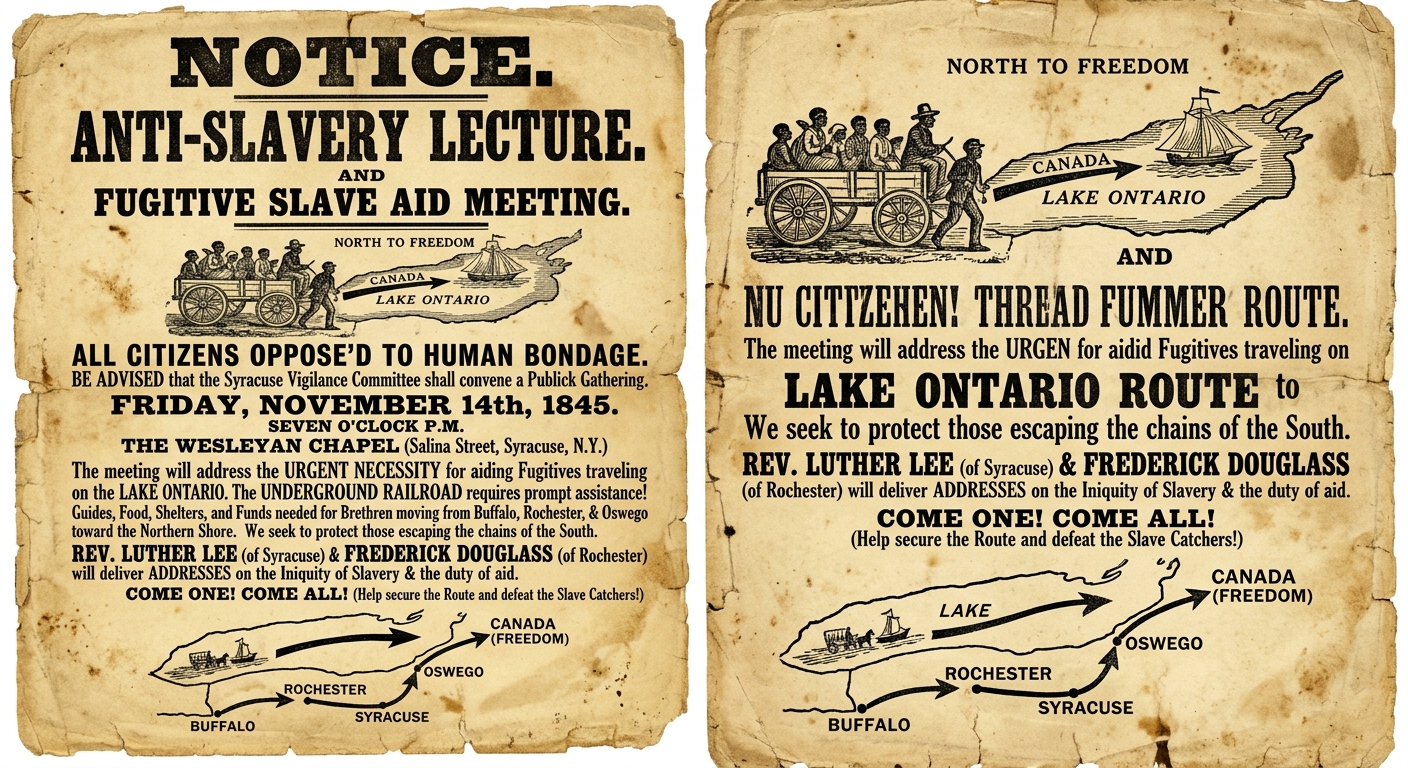
Document B (Handbill): Anti-Slavery Aid Meeting, Western New York, 1848

This handbill advertises a public meeting to raise support for people escaping slavery. It highlights routes through Erie Canal towns and roads leading north toward Lake Ontario and Canada. Use the document to analyze how geography shaped abolitionist organizing and enslaved resistance.

Sepia-toned 1840s anti-slavery handbill announcing a meeting in upstate New York with travel directions along Erie Canal towns and a route arrow pointing north toward Canada, with a small woodcut-style illustration.

Asemmisa {{asɛmmisaAhyɛnsode}}
6.

Based on Document B, which geographic direction offered the most direct path to freedom for many people escaping slavery from western New York?

Asemmisa {{asɛmmisaAhyɛnsode}}
7.

Which inference about abolitionist organizing is best supported by the place names and directions in Document B?

Asemmisa {{asɛmmisaAhyɛnsode}}
8.

How could the Erie Canal and nearby roads (referenced in Document B) have supported enslaved people’s resistance to slavery?

Asemmisa {{asɛmmisaAhyɛnsode}}
9.

Using evidence from Document B, explain one way geographic features or transportation networks in New York could help the abolitionist movement assist freedom seekers and resist slavery.

Write a well-formed paragraph.

Asemmisa {{asɛmmisaAhyɛnsode}}
10.

What additional geographic evidence (map details, distances, terrain, or border enforcement information) would help you evaluate how effective the routes implied in Document B might be?

Explain why in 2–3 sentences.

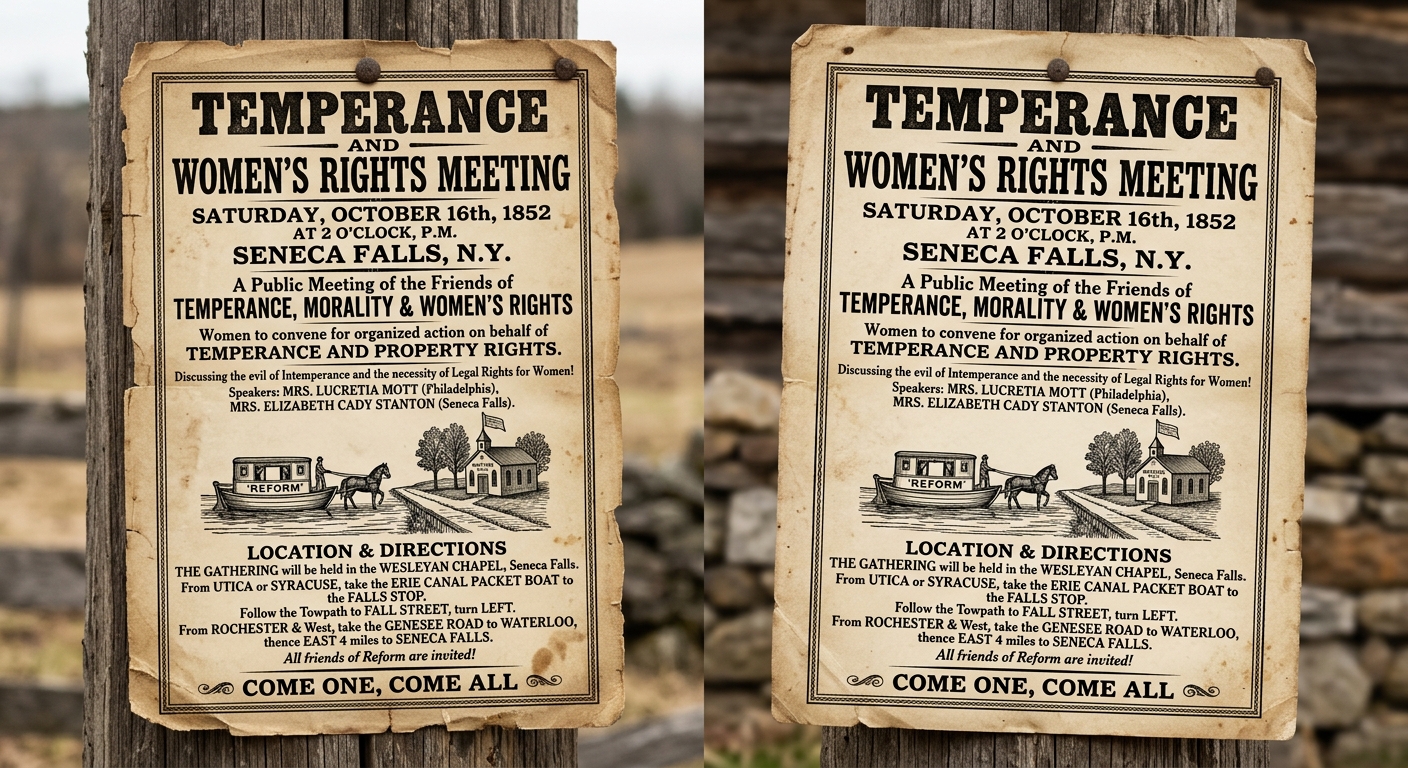
Document C (Circular): Temperance & Women’s Rights Meeting, Upstate New York, 1851

This circular announces a public meeting where women organize for temperance and women’s rights. It lists nearby towns and gives travel directions using Erie Canal packet stops and connecting roads. Use the document to analyze how transportation networks supported reform organizing and attendance.

Sepia-toned 1850s broadside titled “Temperance and Women’s Rights Meeting,” with a small woodcut of a canal boat and meeting hall and travel directions along the Erie Canal between upstate New York towns.

Asemmisa {{asɛmmisaAhyɛnsode}}
11.

Based on Document C, which transportation route would most directly connect people from multiple canal towns to the meeting location?

Asemmisa {{asɛmmisaAhyɛnsode}}
12.

Which inference about women-led reform movements in New York is best supported by the location terms and travel directions in Document C?

Asemmisa {{asɛmmisaAhyɛnsode}}
13.

Which conclusion best connects the travel information in Document C to the spread of reform ideas in the 1800s?

Asemmisa {{asɛmmisaAhyɛnsode}}
14.

Using evidence from Document C, explain one way geography (location and transportation routes) could increase attendance at women-led reform meetings in New York and support organizing for women’s rights or temperance.

Write a well-formed paragraph.

Asemmisa {{asɛmmisaAhyɛnsode}}
15.

Document C is one piece of evidence. What additional geographic information (map features, distances, travel time, or regional comparisons) would help you evaluate how widely this meeting might draw participants?

Explain why in 2–3 sentences.

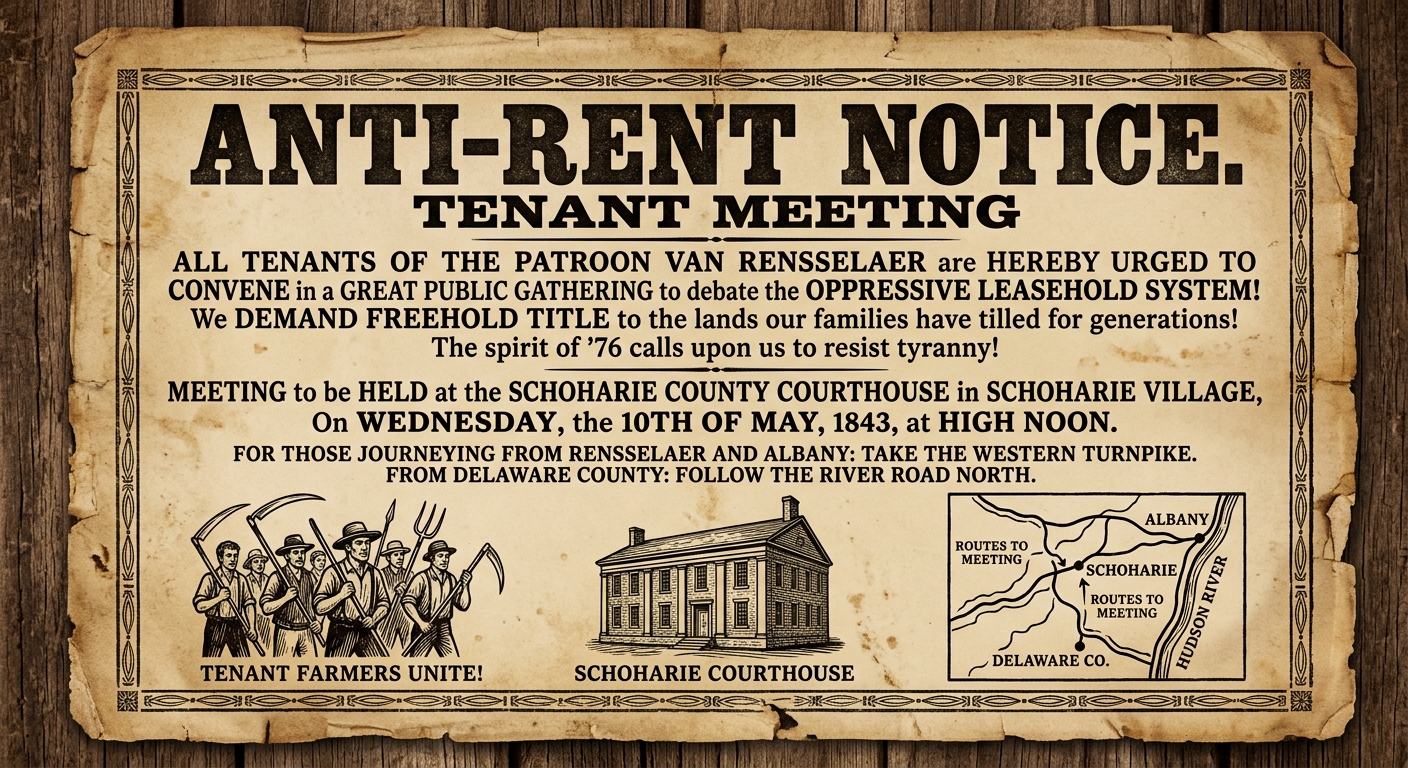
Document D (Broadside): Anti-Rent Tenant Meeting Notice, New York, 1845

This broadside calls tenant farmers to a public meeting to protest the patroon land system. It lists nearby counties and gives directions using river-valley roads and market towns. Use the document to analyze how regional geography shaped organizing, travel, and protest in the Anti-Rent movement.

Asemmisa {{asɛmmisaAhyɛnsode}}
16.

Based on Document D, which type of location would most likely help tenant farmers from different areas attend the Anti-Rent meeting?

Asemmisa {{asɛmmisaAhyɛnsode}}
17.

Which inference about the Anti-Rent movement is best supported by the counties and travel directions listed in Document D?

Asemmisa {{asɛmmisaAhyɛnsode}}
18.

How would river valleys and main road networks in the region most likely affect Anti-Rent organizing described in Document D?

Asemmisa {{asɛmmisaAhyɛnsode}}
19.

Using evidence from Document D, explain one way regional geography (counties, roads, river valleys, or market towns) could help tenant farmers organize protests in the Anti-Rent movement.

Write a well-formed paragraph.

Asemmisa {{asɛmmisaAhyɛnsode}}
20.

Document D is one piece of evidence. What additional geographic information (for example, a county map, distances/travel times, or a comparison to another region of New York) would help you evaluate how widely the Anti-Rent movement could spread?

Explain why in 2–3 sentences.