Use the historical document(s) and the short readings in the left panel to answer the associated questions.
Historical Document (1791): Treasury Circular
Read the document image. It describes a proposed federal excise tax and explains how revenue could support national credit and trade. As you answer the questions, focus on how economic policy connects to federalism and the division of powers.
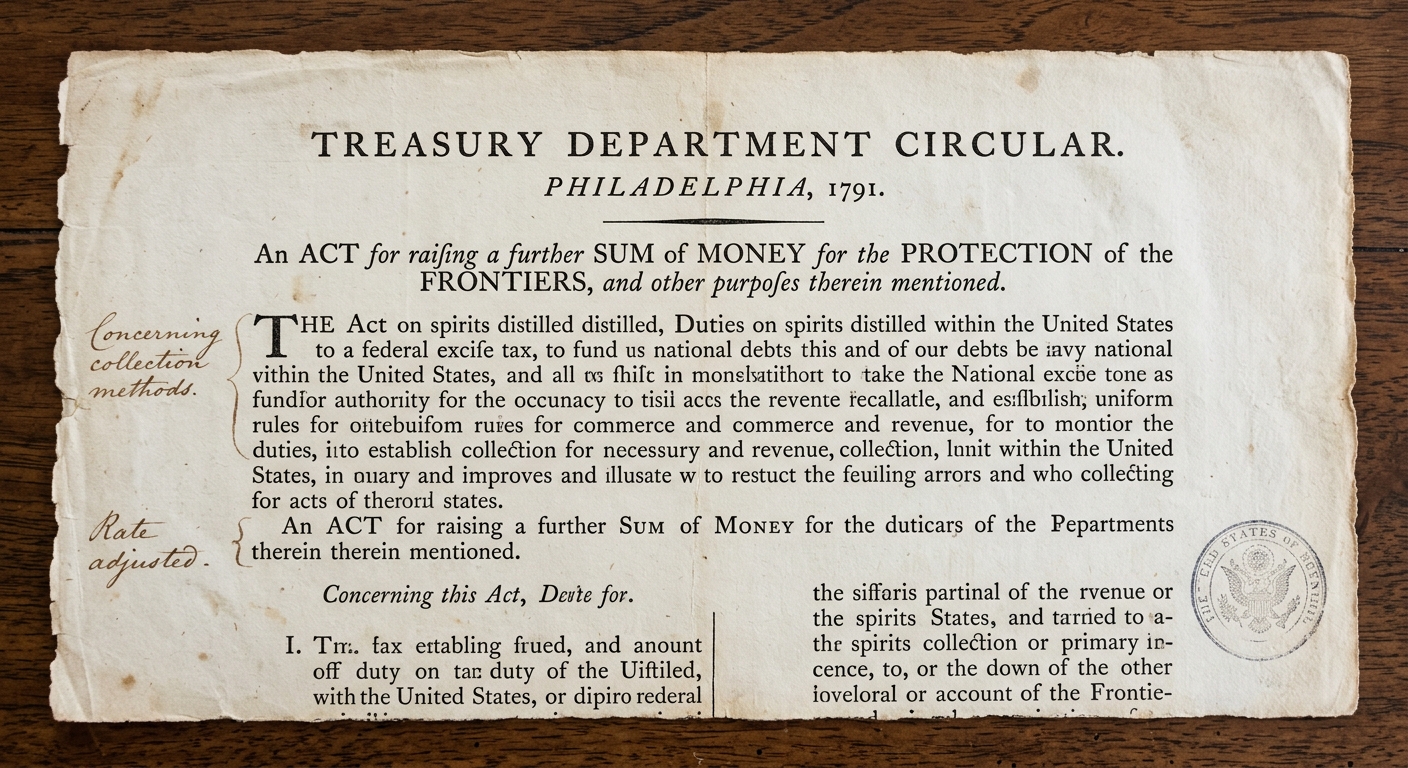
Based on the document, which level of government is being asked to collect the excise tax to raise revenue for national purposes?
Which statement best describes how the economic policy in the document connects to federalism under the Constitution?
Which outcome is the best example of a likely economic effect of the excise tax described in the document?
Using evidence from the document, explain how federalism can shape economic policy in the United States.
In your paragraph, describe at least one economic goal mentioned or implied (such as revenue, debt, or trade) and connect it to the division of powers between levels of government.
Evaluate one benefit and one potential drawback of having the federal government (rather than only the states) control major economic tools like taxation or trade rules.
Use at least one detail from the document to support your reasoning.
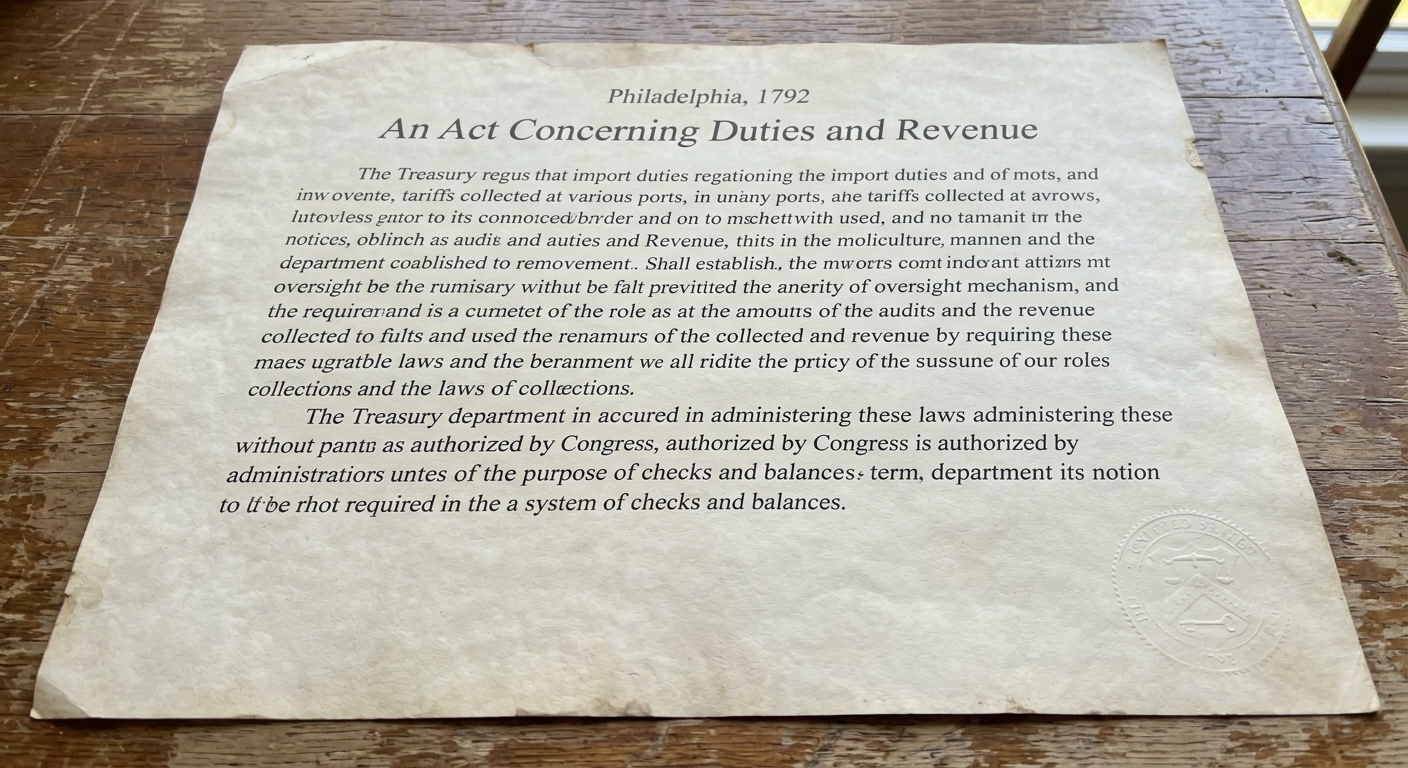
Historical Document (1792): Revenue and Oversight Notice
Read the document image. It describes import duties collected at ports and explains how revenue supports national needs. As you answer the questions, focus on how checks and balances (Congress, the President, and the courts) can shape economic policy and limit the use of government power.

Based on the document, which branch of the federal government would most directly carry out (enforce) the collection of import duties at ports?
Which example best shows checks and balances affecting the tariff policy described in the document?
Which outcome is the best example of a likely economic effect of the import duties described in the document?
Using evidence from the document, explain how checks and balances can shape an economic policy like tariffs or import duties.
In your paragraph, identify one branch’s role (making, enforcing, or reviewing the policy) and explain how that role can limit or guide the policy’s economic impact.
Evaluate one economic benefit and one possible risk of using national import duties to raise revenue.
In your paragraph, explain how a check by another branch (such as oversight, audits, or reviewing disputes) could reduce the risk you identified.
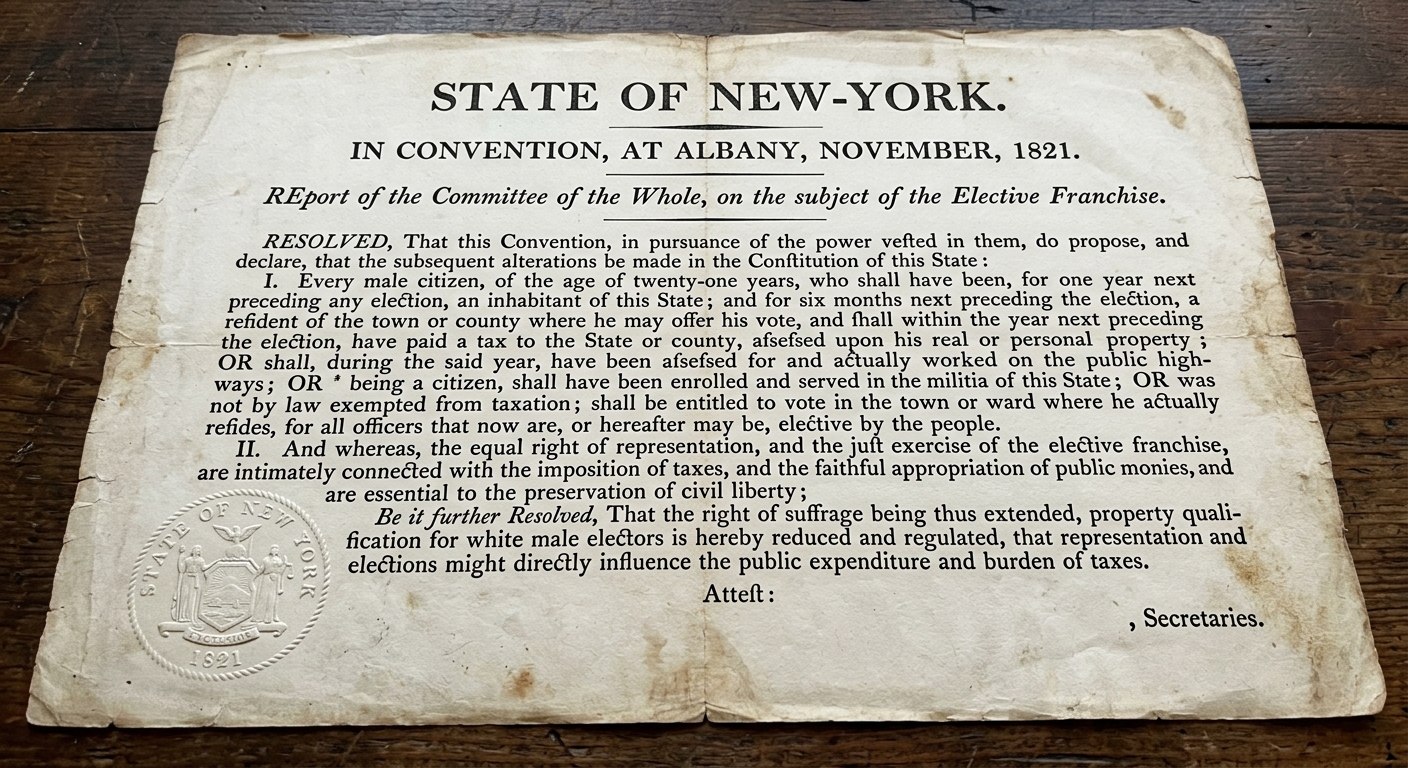
Historical Document (1821): New York Voting Reform Notice
Read the document image. It describes changes to voting rules in New York State and suggests how broader participation could influence decisions about taxes and public spending. As you answer the questions, focus on how constitutions can respond to change beyond formal amendments.

Based on the document, what constitutional change is being described?
Which statement best explains how this change could affect economic decisions in New York State?
Which is the best example of the Constitution responding to change in a way suggested by this document?
Using evidence from the document, explain how expanding voting rights could change decisions about economic policy (such as taxes, spending, or investment in public services) in New York State.
Write a well-formed paragraph.
Evaluate one possible economic benefit and one possible economic drawback of expanding voting eligibility in the early 1800s.
Use at least one detail from the document to support your reasoning. Write a well-formed paragraph.
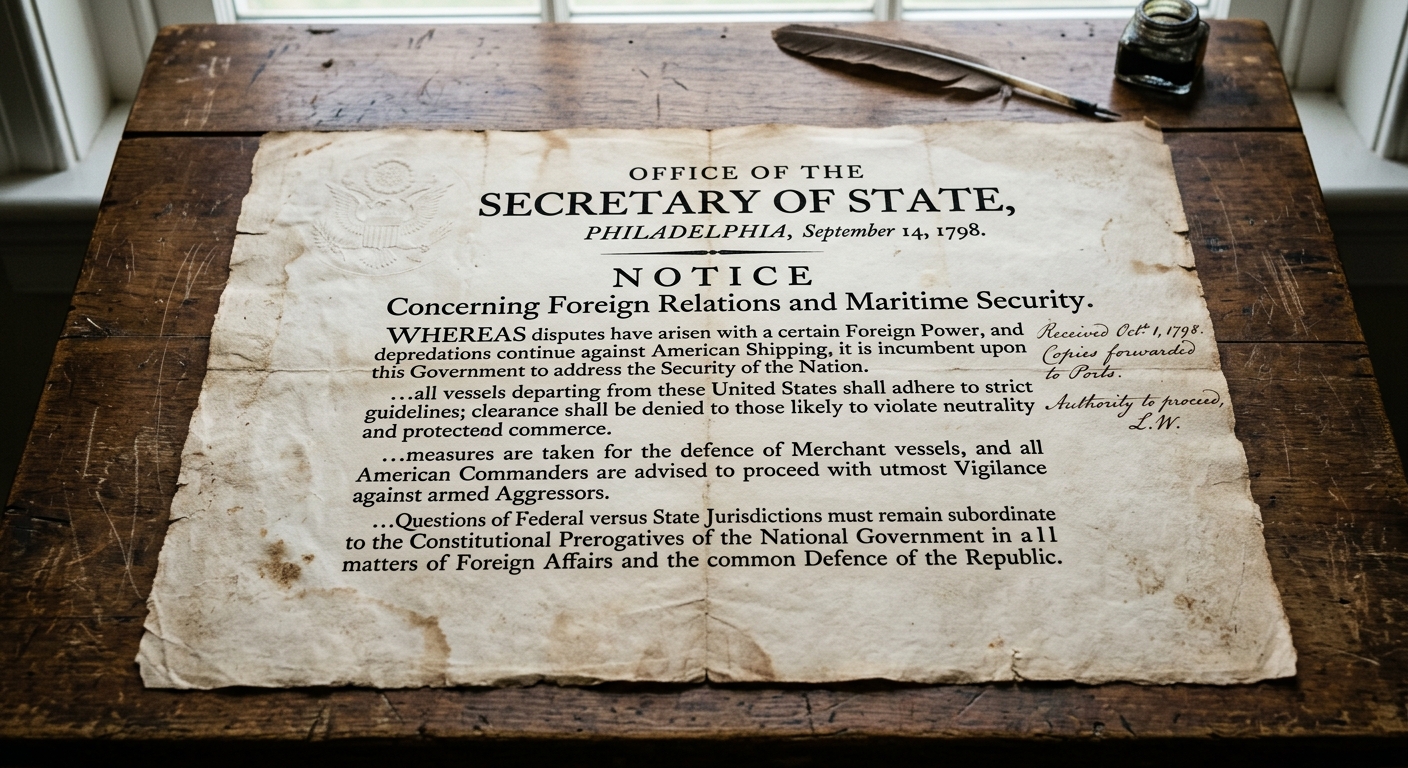
Historical Document (1798): Trade Dispute and Shipping Notice
Read the document image. It describes a dispute affecting foreign trade and American shipping and suggests limits on commerce to protect national security. As you answer the questions, focus on how separation of powers, checks and balances, and states’ rights can be tested during economic and foreign policy conflicts.

Based on the document, which national (federal) power is most directly being used to address the foreign trade dispute?
Which example best shows a separation of powers issue that could arise from enforcing trade restrictions like the ones described in the document?
Which is the best example of a likely economic impact of the trade restrictions described in the document?
Using evidence from the document, explain how a foreign or domestic dispute could test the strength of the Constitution. In your paragraph, connect an economic issue (trade, revenue, prices, or jobs) to either (1) states’ rights or (2) checks and balances between branches.
Evaluate one benefit and one drawback of limiting trade during a dispute like the one described. Use at least one detail from the document, and explain how a constitutional check (by another branch or level of government) could address the drawback.