Use the historical document(s) and the short readings in the left panel to answer the associated questions.
Use this reproduction of a historical-style broadside from 1784 to study how land was treated as a market commodity after the Revolution. Notice how the document links land sales, government revenue, and the forced movement of Native American allies of Britain.
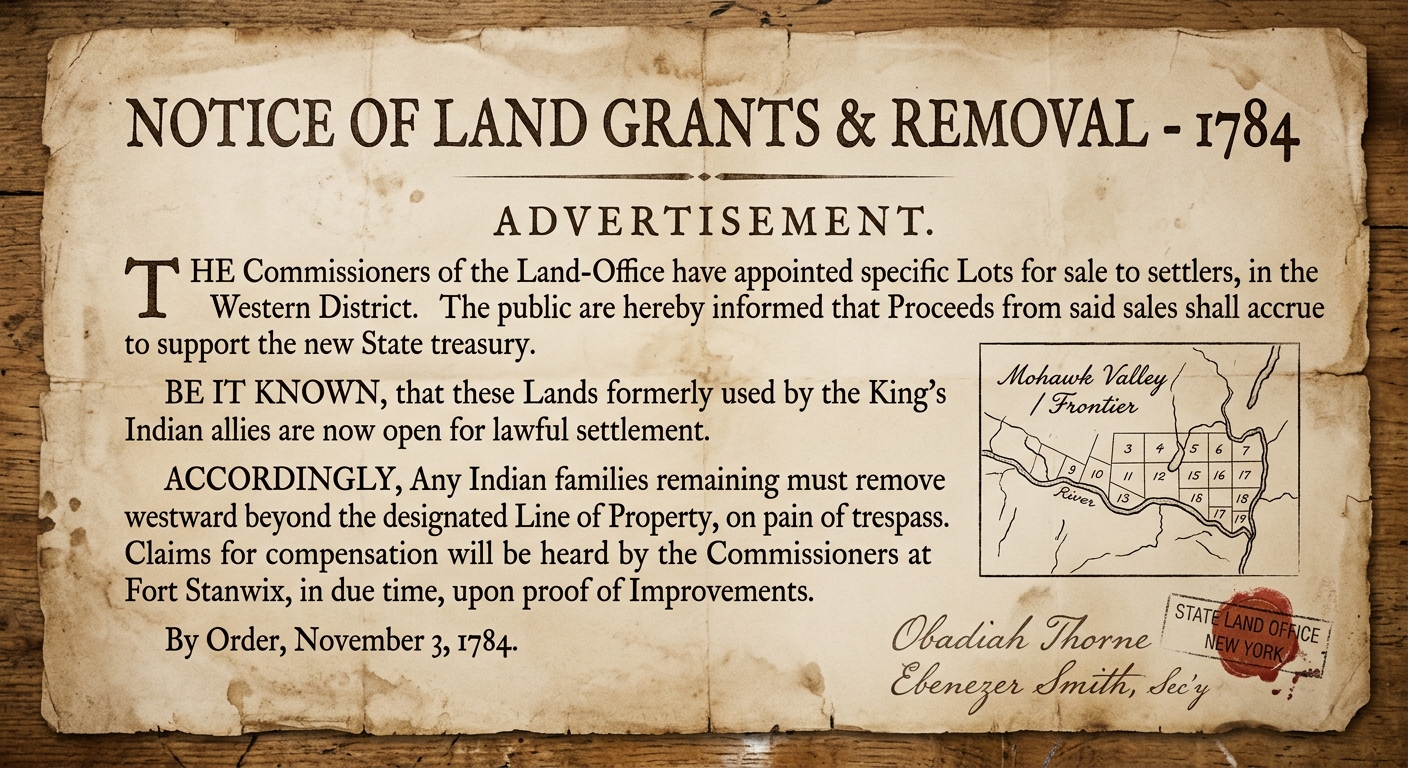
Which statement BEST explains the economic goal of the broadside?
Based on the document, what is the MOST likely economic impact on Native American communities forced to remove westward?
Which group is MOST directly positioned to gain economically from the policy described in the document?
Explain how economic decisions after the American Revolution could lead to Native Americans who aligned with Britain losing land and being forced to move.
Use at least TWO pieces of evidence from the document image in your answer.
Describe ONE economic benefit and ONE economic cost of the policy in the document.
In each case, name the group affected (for example, the state government, settlers/land buyers, or Native American allies of Britain) and explain why.
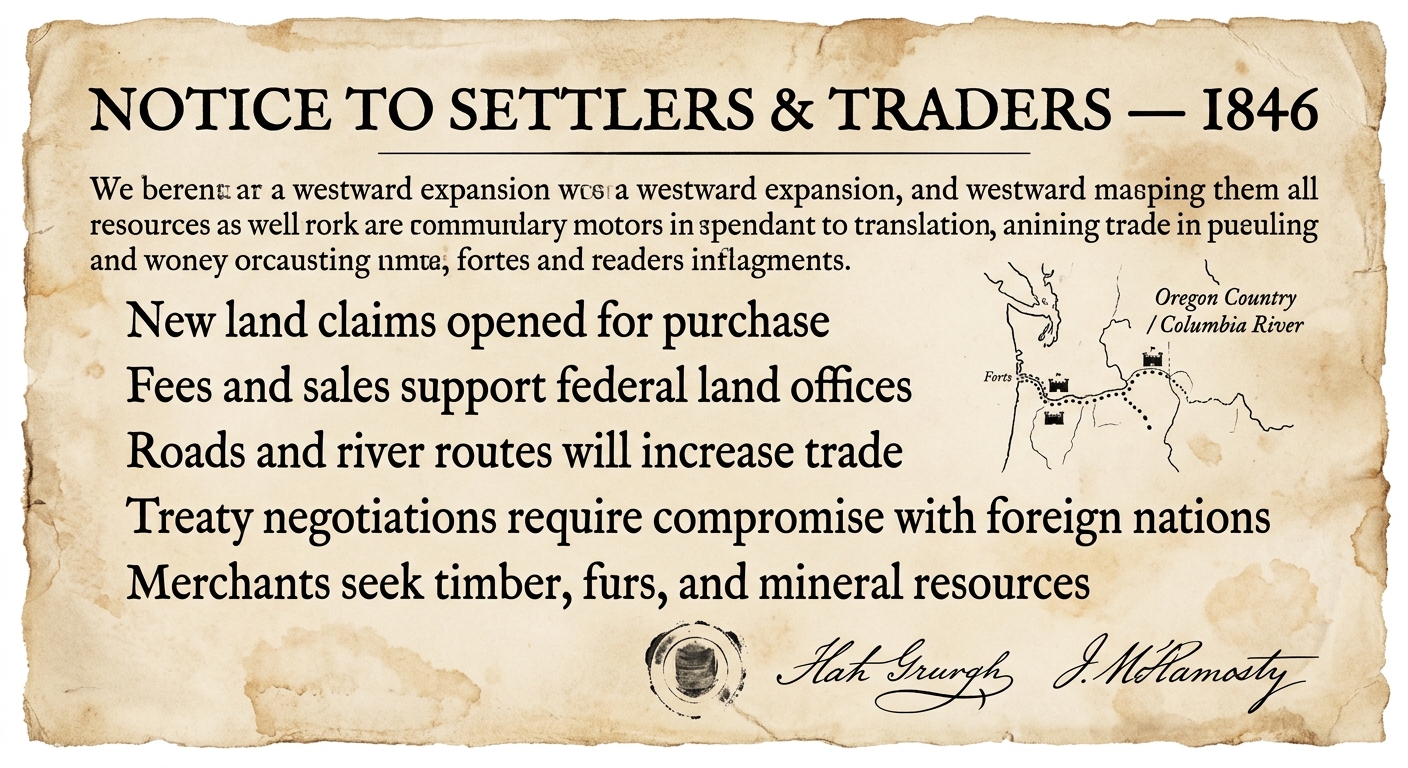
Use this reproduction of a historical-style broadside from 1846 to examine how westward expansion connected land, resources, and trade to government policy. Notice how the document links land purchases and fees to federal revenue, and how treaty negotiations and transportation routes shape economic opportunities.

Which statement BEST explains how the broadside connects westward expansion to government revenue?
Based on the document, which economic motive is MOST emphasized for people moving west?
Which inference BEST explains why the broadside mentions treaty negotiations and compromise with foreign nations?
Explain how American beliefs and the need for resources could encourage westward expansion and settlement during the 1800s.
Use at least TWO pieces of evidence from the document image in your answer.
Describe ONE economic benefit and ONE economic cost of the policies suggested in the document (such as land sales, building routes, or treaty negotiations).
In each case, name the group affected and explain why.
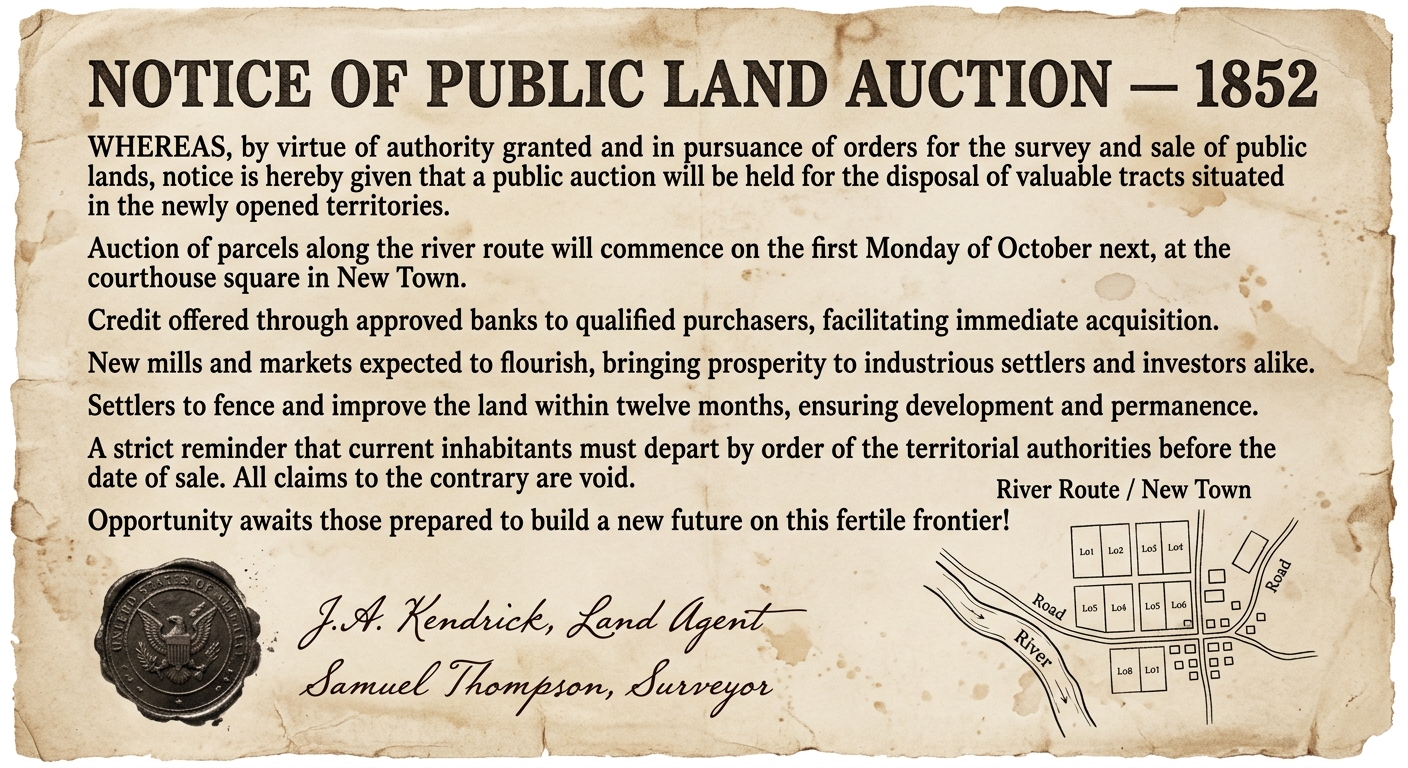
Use this reproduction of a historical-style broadside from 1852 to analyze how westward expansion created economic opportunities for some groups while harming others. Notice how the notice promotes credit, markets, and infrastructure, while also ordering current inhabitants to leave the land.

Which detail from the document BEST shows an economic opportunity created by westward expansion?
Based on the document, which group is MOST likely to benefit economically in the short term from the policy described?
Which inference BEST explains how the document suggests westward expansion could harm some groups economically?
Explain how the document shows westward expansion providing an economic opportunity for one group while harming another group.
Use at least TWO pieces of evidence from the document image in your answer.
Describe ONE economic benefit and ONE economic cost connected to the broadside’s policy.
In each case, name the group affected and explain why, using evidence from the document.