Use the historical document(s) and the short readings in the left panel to answer the associated questions.
Use the historical document(s) and the short readings in the left panel to answer the associated questions.

During the Second Great Awakening, many reformers argued that personal behavior affected the economy. Temperance supporters claimed that reducing alcohol use would raise productivity, strengthen family finances, and lower social costs such as poverty and dependence on public aid.
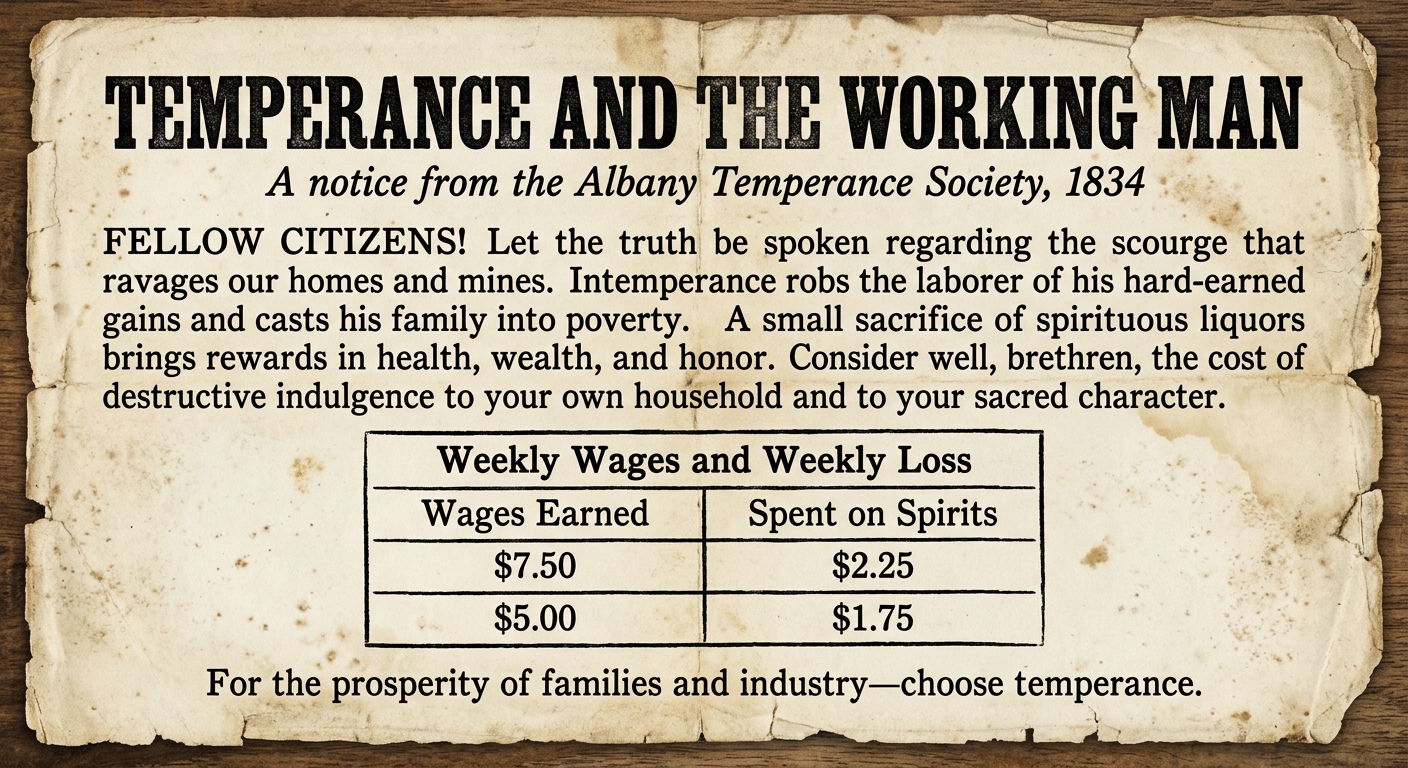
Which conclusion about incentives is most supported by the broadside’s message?
Which economic reasoning best explains why temperance reformers linked alcohol use to poverty?
Explain one way temperance reformers argued alcohol use affected the economy.
Include one specific piece of evidence from the document (a phrase or the table).
Evaluate a possible tradeoff of temperance reform efforts for different groups (workers, employers, tavern owners, or local governments).
Use the document/reading to support your reasoning.
In the document’s wage-and-spending table, the money “spent on spirits” is best described as which type of economic cost for a household?
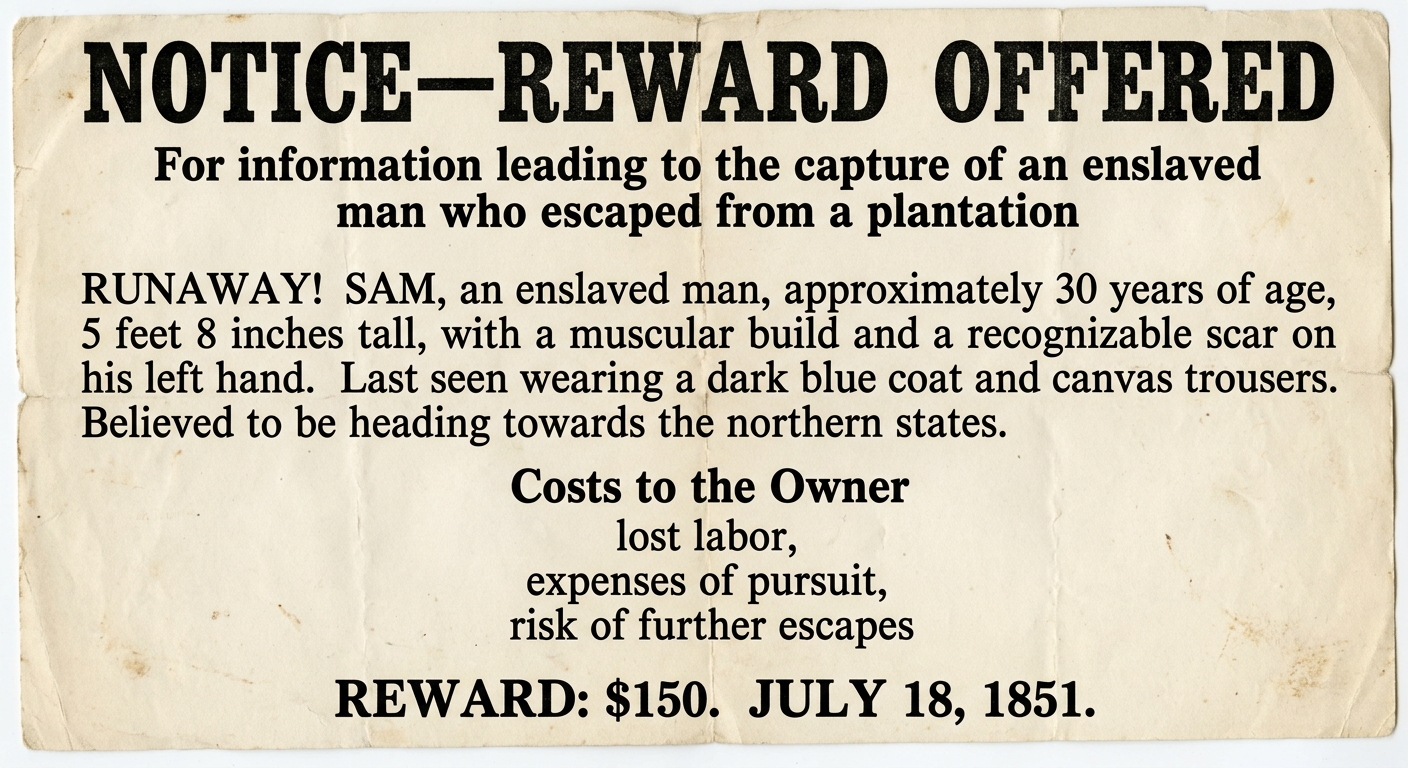
Enslaved African Americans resisted slavery in many ways, including escape. Reward notices show how slaveholders treated people as property and calculated the financial impact of resistance. Such documents also reveal how the costs of pursuit and lost labor shaped decisions in the slave economy.
Which cost would a slaveholder most likely consider an added short-term expense caused by an escape?
Evaluate a possible economic tradeoff created by reward notices for different groups (slaveholders, local officials, paid captors, or free Black communities).
Use the document/reading to support your reasoning.
Which inference about incentives is best supported by the reward notice and the short reading?
Explain one way enslaved people’s resistance could affect the economics of slavery. Include one specific piece of evidence from the document.
Which detail from the document most directly shows that enslaved people were treated as economic property within a market system?
In the mid-1800s, many women joined reform movements and pushed for greater economic rights. Supporters argued that allowing women to control property and keep wages would increase family stability and fairness in the economy by changing who could legally own, earn, and sign contracts.
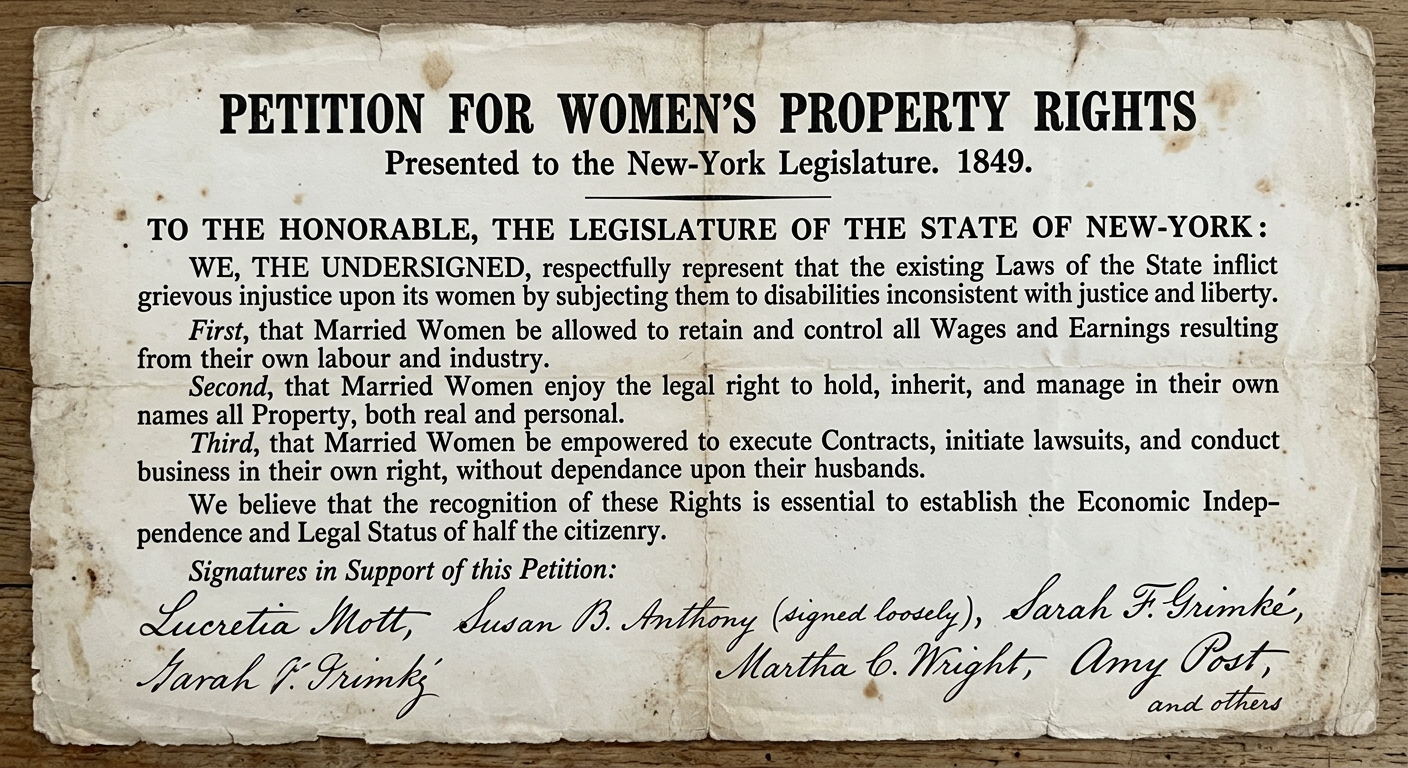
Explain one way women’s property and wage rights could affect the economy.
Include one specific piece of evidence (a phrase from the petition).
Which idea from economics is best illustrated by the petition’s argument that women should control their own wages?
What economic change are petitioners most directly requesting?
Evaluate one possible tradeoff of expanding women’s economic rights for different groups (married women, husbands, employers, or lenders).
Use the document/reading to support your reasoning.
Which outcome is the most likely economic effect for some families if women could legally sign contracts and own property?
In the 1840s, New York tenant farmers in the Anti-Rent movement protested long-term leases that required high rents and payments in crops or labor. They argued the manorial land system limited farmers’ profits and security and that fairer leases would strengthen local economies.
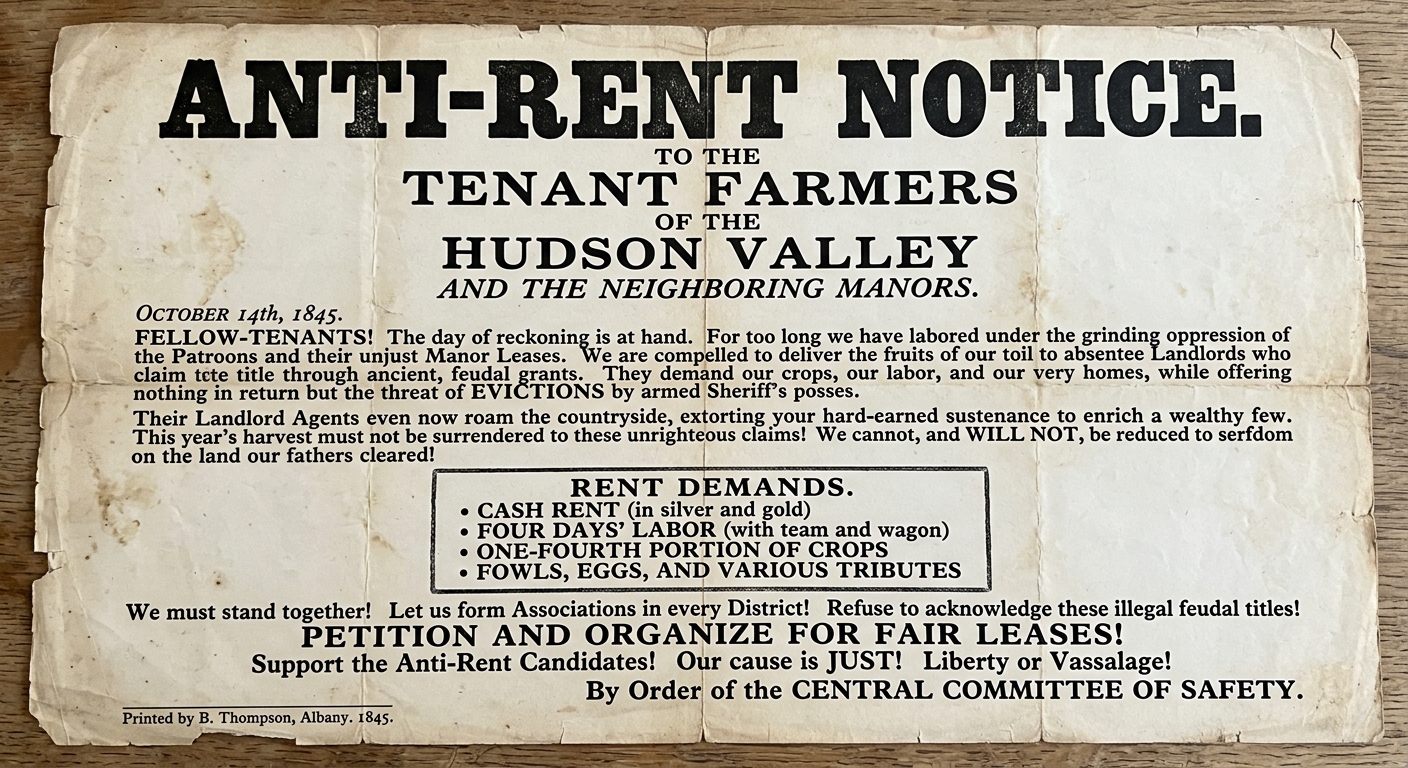
Which economic problem are Anti-Rent supporters most directly criticizing?
Explain one way the Anti-Rent movement connected land leasing to farmers’ economic well-being.
Include one specific piece of evidence from the document.
Evaluate a possible economic tradeoff of Anti-Rent protests for different groups (tenant farmers, landlords, local merchants, or county governments).
Use the document/reading to support your reasoning.
In the document’s "Rent Demands" box, payments in crops or labor are best described as which type of economic exchange?
Which inference about incentives is most supported by the document’s discussion of evictions and high rents?