Use the historical document(s) and the short readings in the left panel to answer the associated questions.
Read the historical document below. It is a land agreement from the late 1600s between English settlers and Native leaders. As you read, notice words about boundaries, ownership, and who may use the land. Use specific evidence from the document to answer the questions.
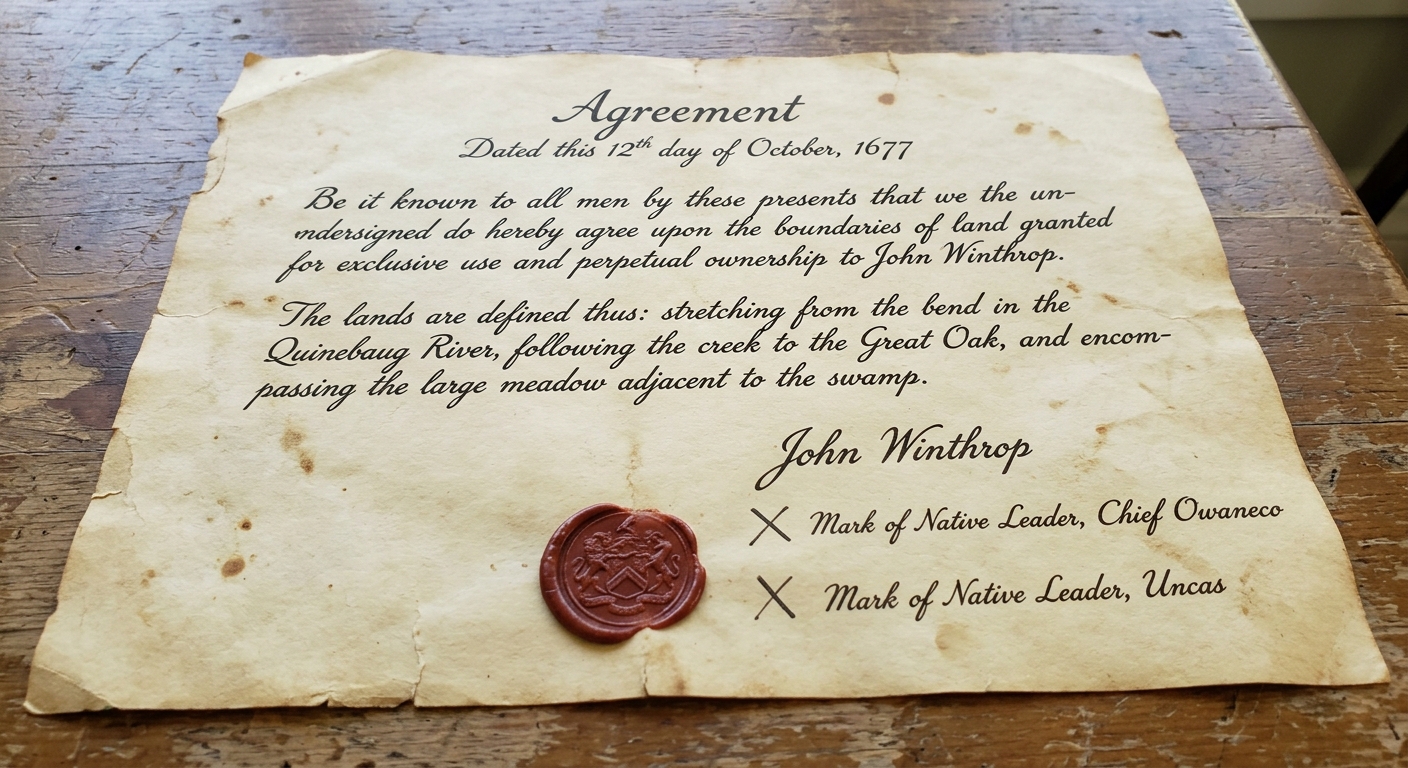
Which claim is BEST supported by evidence in the document?
Based on the document’s terms, which outcome is MOST likely for nearby Native communities over time?
Which detail from the document would be the STRONGEST evidence that the writers valued permanent, exclusive ownership?
Choose one line or feature of the document (for example, the boundary description, the words about use, or the signatures/marks).
Explain how an English settler and a Native leader might interpret it differently.
Support your answer with evidence from the document.
Explain how differing ideas about land ownership could lead to conflict between English settlers and Native communities.
Use at least two specific details from the document as evidence.
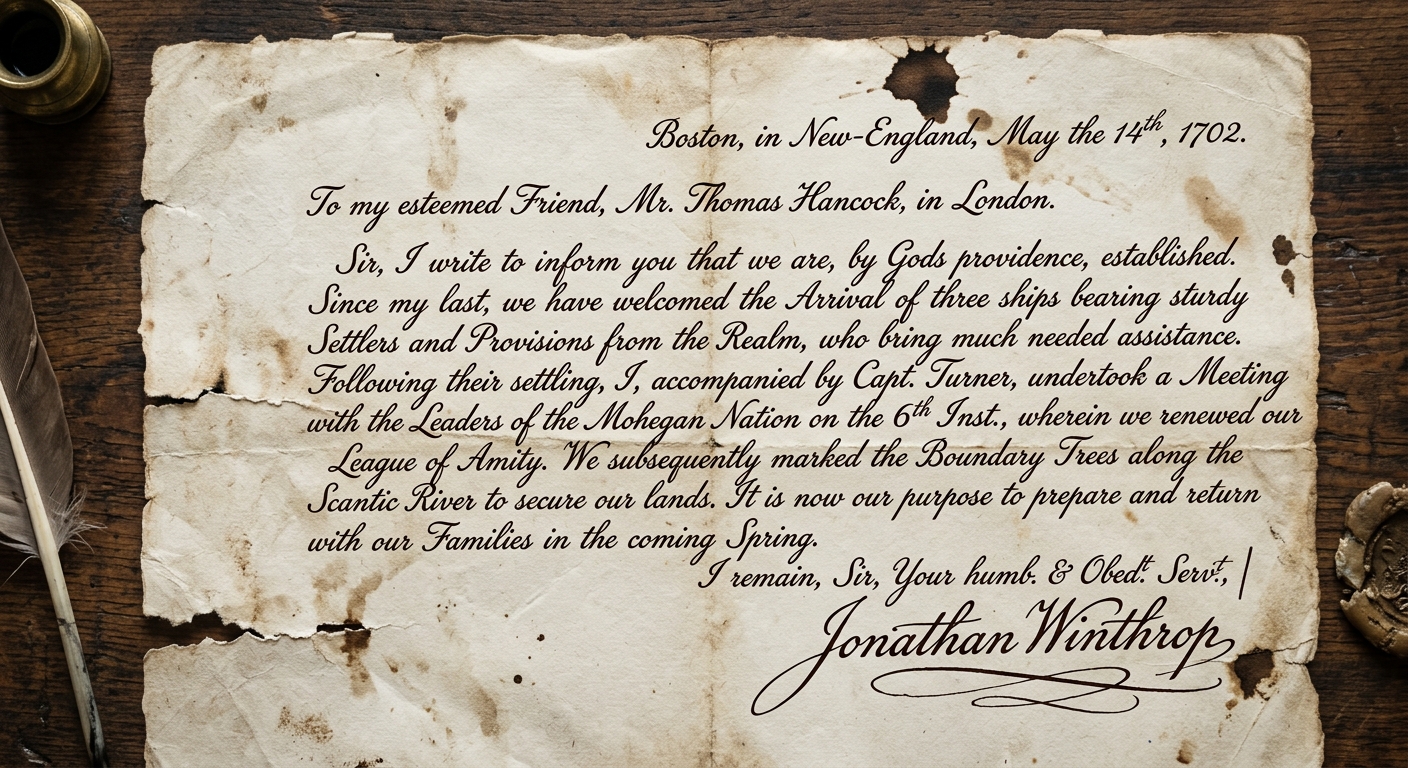
Read the dated letter below. It describes a sequence of events between settlers and Native leaders, including meetings and marking land boundaries. As you read, identify what happened first, next, and last. Use evidence from the document to answer the questions.
Which conclusion about settler–Native relations is MOST supported by the letter’s timeline?
Using evidence from the letter, explain how the order of events could help explain why conflict might develop later. Write a well-formed paragraph.
Which phrase or detail from the letter is the BEST evidence that the boundary-marking happened after the meeting?
Which sequence is MOST consistent with the order of events described in the letter?
Identify two time-order clues in the letter (such as date words like “first,” “after,” or “then”).
Explain how each clue helps you place events in chronological order.
Write a well-formed paragraph.
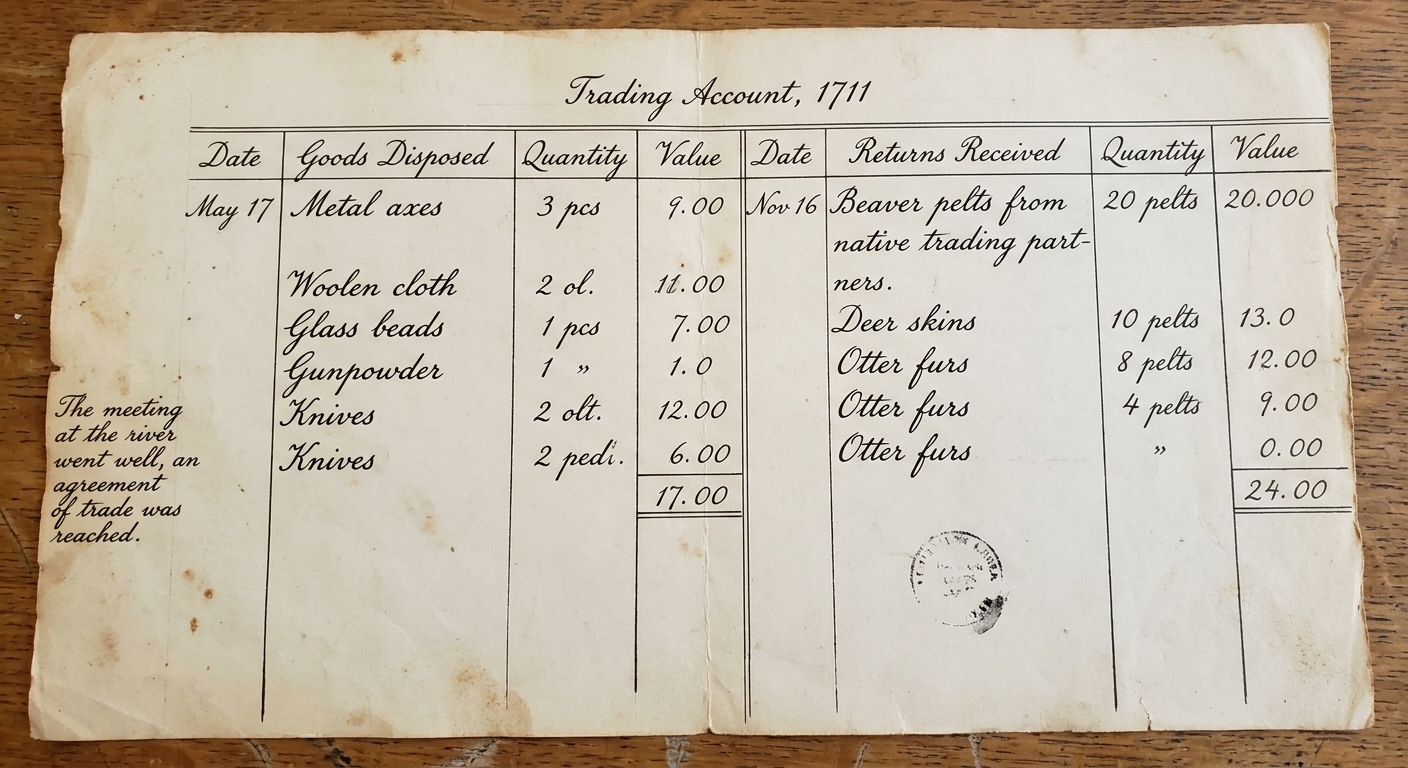
Read the historical document below. It is a colonial-era trading account that records an exchange between European traders and Native trading partners. As you study the listed goods and notes, compare what each side likely valued and place the exchange in the context of changing relationships in early America.

Which conclusion is BEST supported by the items listed in the trading account?
Which piece of evidence from the document is MOST useful for comparing what the European trader and the Native trading partners wanted from the exchange?
Explain how an exchange like the one shown could connect to later land loss for Native communities.
Use at least two details from the document as evidence.
Using evidence from the trading account, compare what each group likely valued in this exchange.
Then explain one way this kind of exchange could affect relationships between Europeans and Native communities over time.
Placing this document in historical context, which broader development is it MOST connected to?
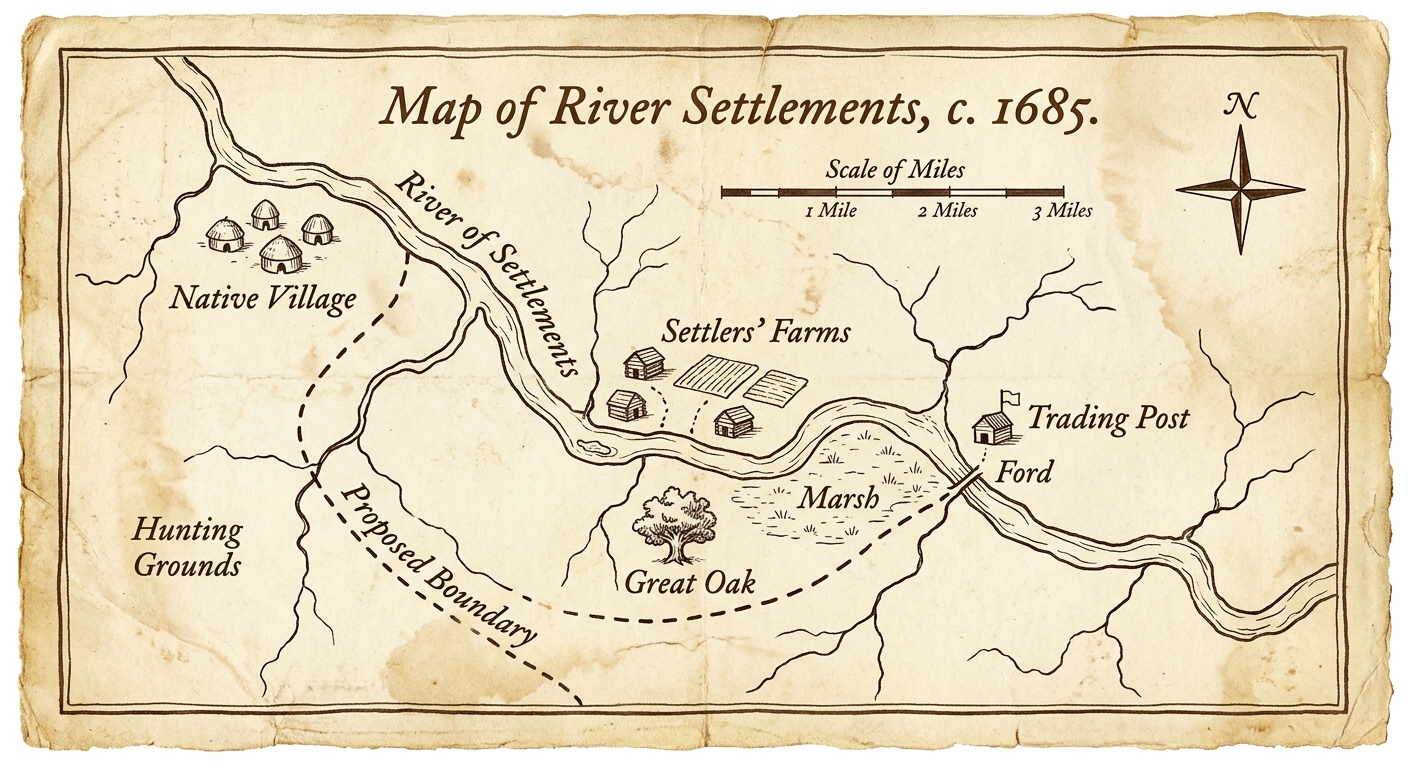
Read the historical map below. It shows a river, a proposed boundary, and the locations of a Native village and nearby settler farms in the late 1600s. Use the map’s geographic features (river, marsh, ford, and distance) to explain how land use and conflict could develop over time.

Which geographic detail on the map is MOST useful for explaining why the proposed boundary could limit Native access to resources?
Which inference about settlement patterns is BEST supported by the map?
Based on the map, which location is MOST likely to become a point of repeated contact between settlers and Native people?
Use evidence from the map to explain how the river and the proposed boundary could affect land use for both settlers and Native communities.
Write a well-formed paragraph.
Explain how geography (such as waterways and natural landmarks) could shape European–Native interactions in this region.
Use at least two specific map details as evidence.
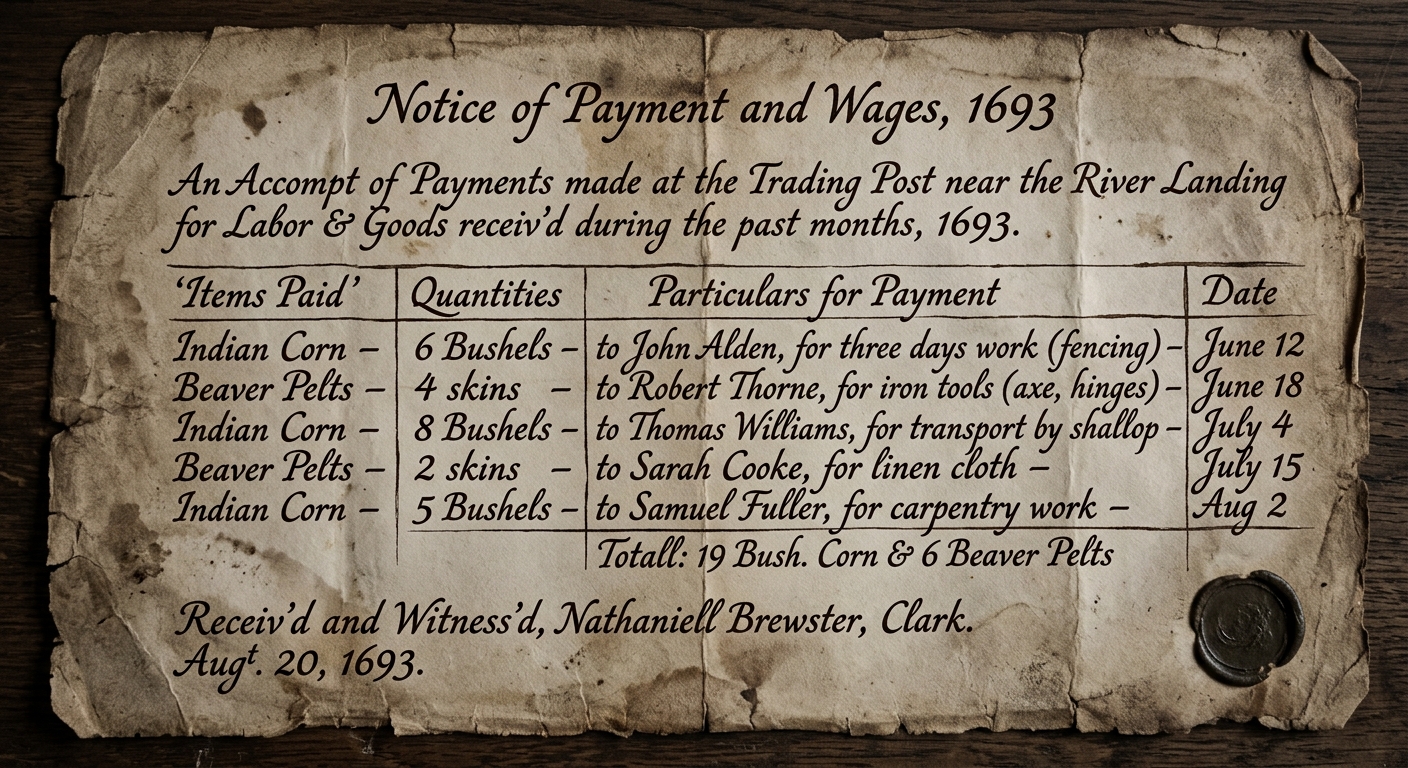
Read the historical document below. It is a colonial-era payment notice from the late 1600s that lists wages and prices using goods (such as corn and furs) instead of coins. Use the evidence to explain how trade and resources shaped economic relationships between Europeans and Native communities.

Placing this document in historical context, which broader development is it MOST connected to?
Using evidence from the notice, explain how an economy based on barter (trading goods for goods) could affect relationships between Europeans and Native communities.
Write a well-formed paragraph.
Which evidence from the document is MOST useful for explaining how local resources shaped economic decisions?
Which conclusion about the colonial economy is BEST supported by the payment notice?
Compare how the economic values shown in the notice might differ between a European trader and a nearby Native community.
Use at least two specific details from the document as evidence.