Use the historical document(s) and the short readings in the left panel to answer the associated questions.

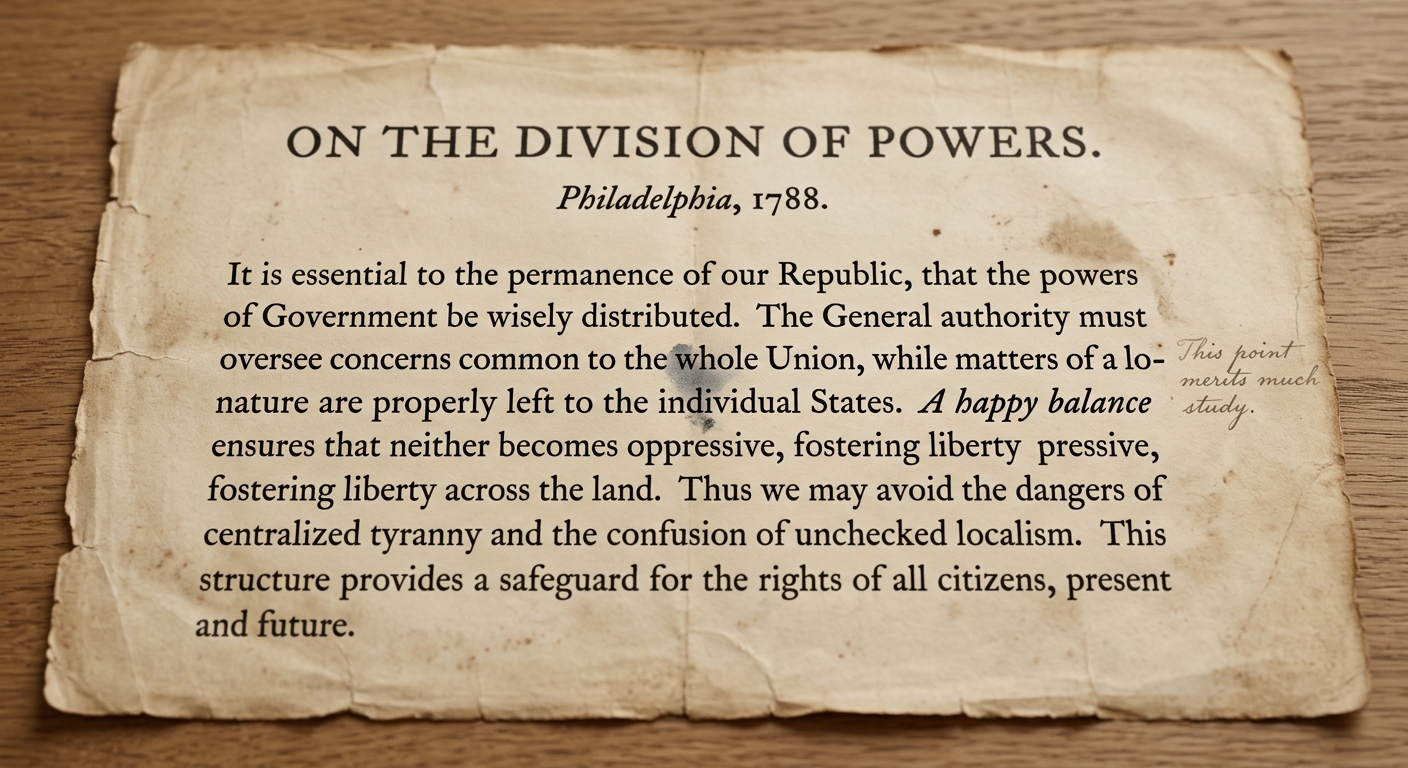
During the debates over ratifying the Constitution, Americans argued about how to prevent tyranny and still govern effectively. This pamphlet (1788) explains how powers would be divided between the national government and state or local governments in a federalist system.
Explain how the pamphlet’s author describes the relationship between the national government and state/local governments.
Use at least two pieces of evidence from the pamphlet and/or the reading.
Based on the pamphlet and the reading, which statement is best supported about why power is divided in a federalist system?
Describe one power that might be shared (or overlap) between federal and state governments, and explain how federalism helps address concerns about the power of the federal government.
Support your answer with evidence from the document and/or reading.
Which example best fits a power that would most likely be handled by a state or local government in a federalist system?
Which phrase from the pamphlet is the best evidence for the idea that different levels of government can both have responsibilities at the same time?

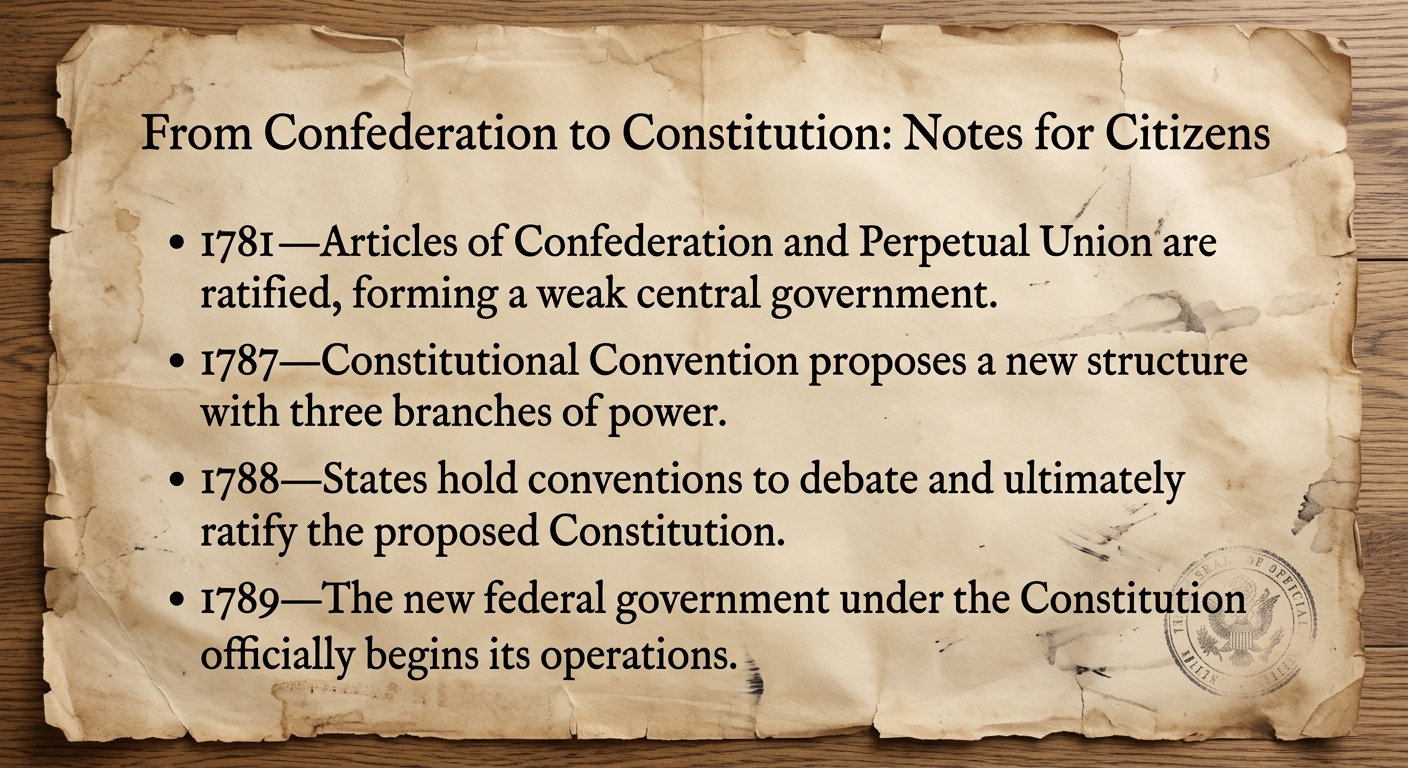
After the American Revolution, leaders debated how to fix problems under the Articles of Confederation. This broadside summarizes major steps from 1781 to 1789 as Americans created a new federal system that shared power between national and state governments.
Explain how the document shows change over time in how power was organized between 1781 and 1789.
Use at least two specific dated entries as evidence.
Which sequence best matches the order of events shown in the document?
According to the document’s timeline, which event happened first?
Which conclusion is best supported by the timeline about why Americans moved from the Articles of Confederation to the Constitution?
Using evidence from the document and the reading, explain how the new federal system addressed earlier problems while still limiting the power of the national government.

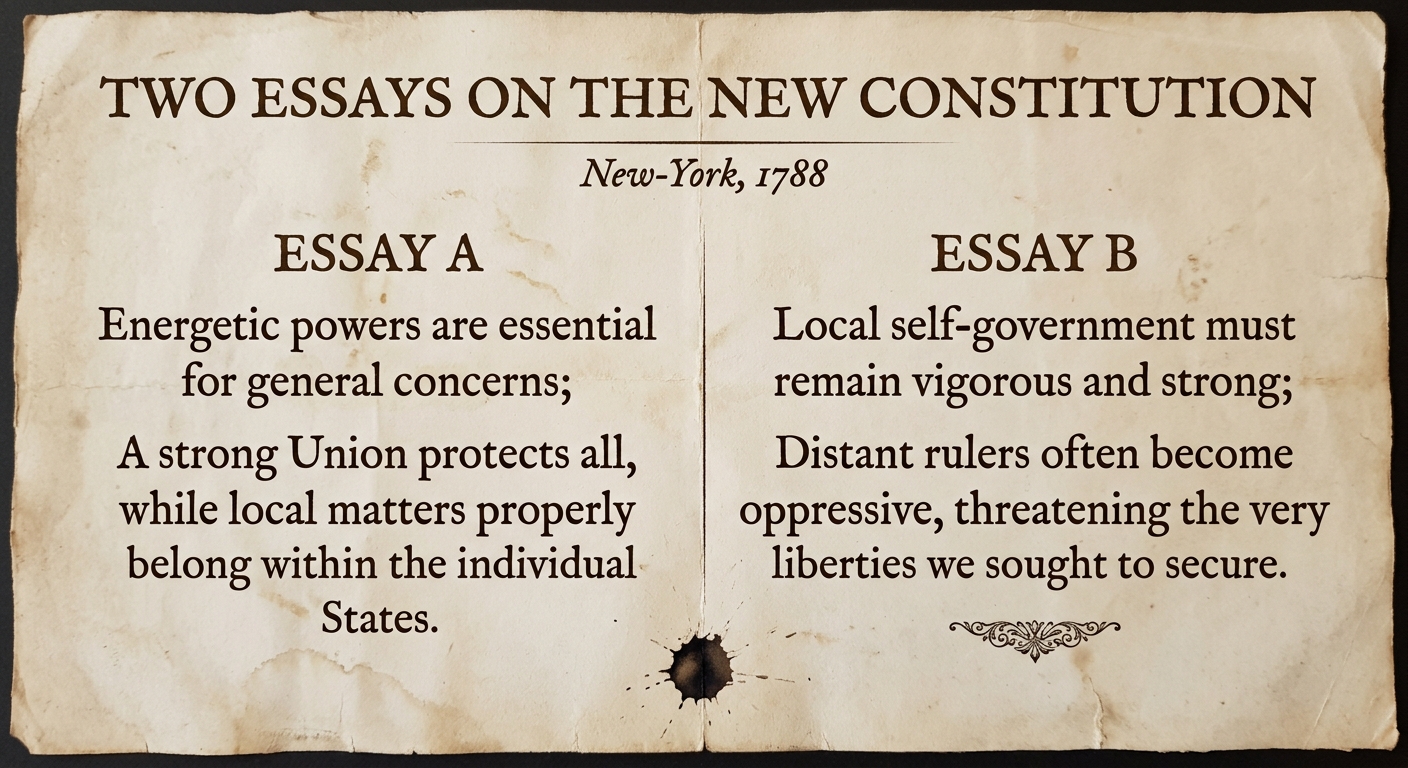
In 1788, Americans debated whether to ratify the Constitution after problems under the Articles of Confederation. Supporters and critics often agreed that power should be limited, but disagreed about how to divide responsibilities between national and state governments.
Which statement best compares Essay A and Essay B about how power should be divided in a federalist system?
Using evidence from the document and the reading, explain how the debate in these essays reflects concerns from the period after the Articles of Confederation.
Which contextual detail best helps explain why both essays focus on limiting power while still creating an effective government?
Which line from Essay B is the best evidence for the idea that state or local governments should keep significant authority?
Compare the main claim of Essay A and Essay B about federalism.
Use one piece of evidence from each essay to support your comparison.

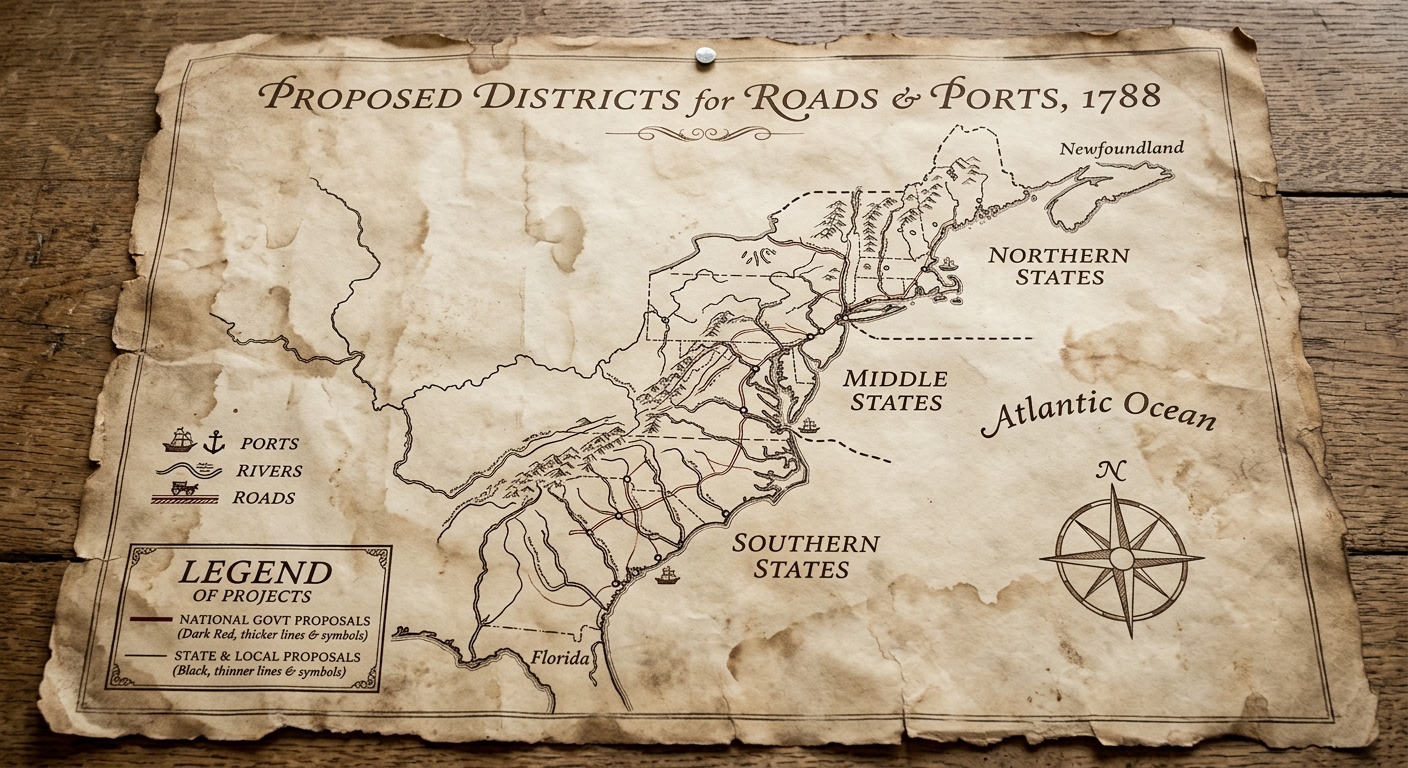
In the late 1780s, Americans argued about who should plan improvements like roads, ports, and river navigation. Supporters of federalism said some projects required national coordination, while others should stay under state or local control. Use the map’s regions and legend as evidence.
Based on the map and reading, which statement best explains why some transportation projects were argued to need national (federal) involvement?
Which example best fits a project that would most likely remain mainly state or local in a federalist system, based on the map’s idea of “local” needs?
Compare one way the map suggests national coordination could help (federal role) and one way it suggests local decision-making could help (state/local role).
Use at least two pieces of evidence from the map/legend and reading.
Which inference is best supported by the map’s regions (Northern, Middle, Southern) about why debates over federal power could vary by place?
Using evidence from the map and reading, explain how geographic features (ports, rivers, distances between regions) could shape arguments for shared power in a federalist system.

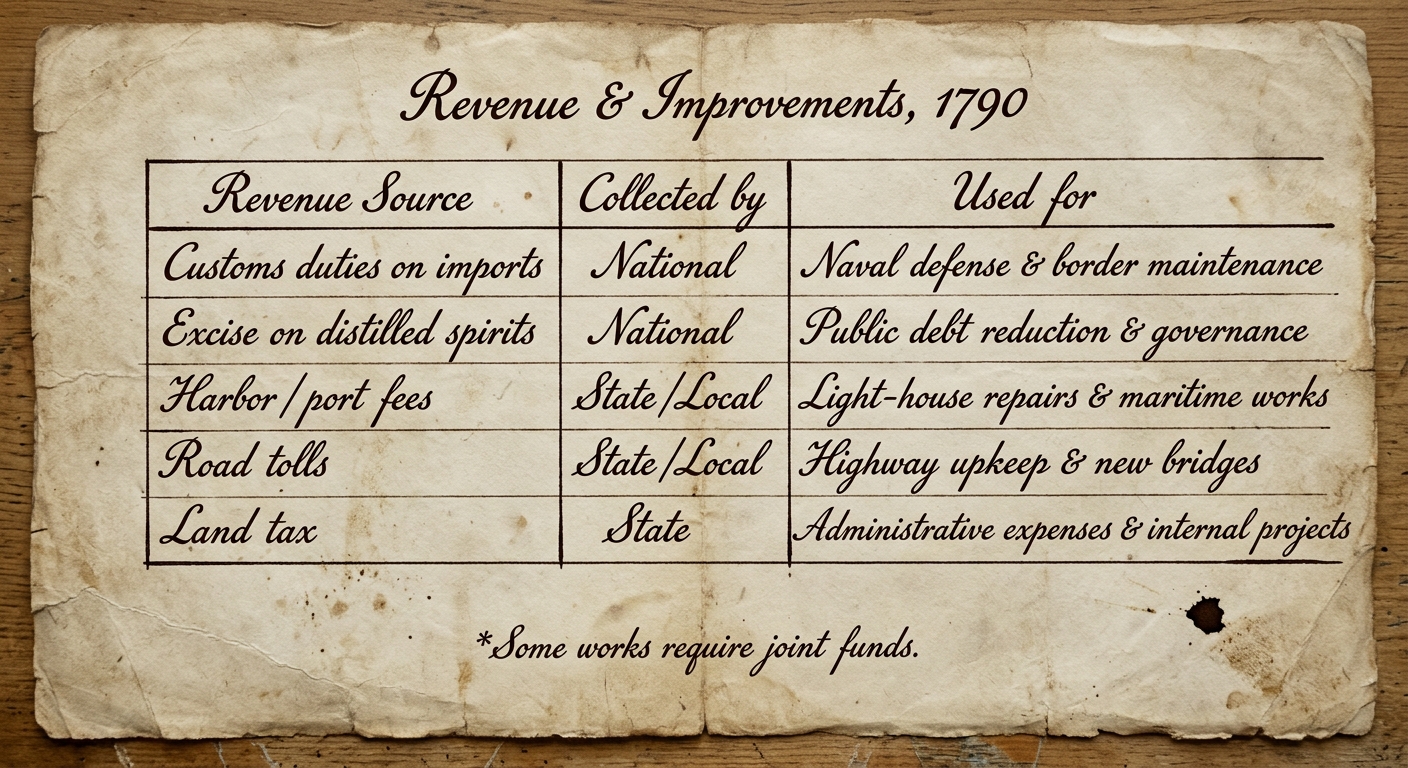
In the early United States, leaders debated how to fund government and improve the economy. This 1790 ledger lists revenue sources and which level of government collected them. Federalists argued some economic policies needed national coordination, while others should remain state or local decisions. Use the document as evidence.
Compare one advantage of national control and one advantage of state/local control over an economic activity shown in the ledger (taxes, trade-related fees, or transportation improvements).
Support your comparison with evidence from the document and reading.
Which policy choice would most likely require cooperation between national and state/local governments, based on the ledger’s note that some works require joint funds?
Which conclusion is best supported by the document about why federalism mattered for the early U.S. economy?
Based on the ledger, which revenue source is most clearly shown as being collected by the national (federal) government?
Explain how the ledger shows different economic responsibilities for different levels of government in a federalist system.
Use at least two pieces of evidence from the ledger.