Twa kɔ nsɛm atitiriw so
Log in
Sign up for FREE
arrow_back
Laabri

7.6b - Westward Expansion: - Practices A through E

star
star
star
star
star
Last updated about 1 month ago
25 Nsɛmmisa
Hyɛ no nsow a efi ɔkyerɛwfo no hɔ:

Use the historical document(s) and the short readings in the left panel to answer the associated questions.

Use the historical document(s) and the short readings in the left panel to answer the associated questions.

7.6.b
DOK.SS.2
7.6.b
DOK.SS.2
7.6.b
DOK.SS.2
7.6.b
DOK.SS.2
7.6.b
DOK.SS.2
Ɛhia
1
7.6.b
DOK.SS.2
Ɛhia
1
7.6.b
DOK.SS.2
Ɛhia
1
7.6.b
DOK.SS.2
Ɛhia
1
7.6.b
DOK.SS.2
Ɛhia
1
7.6.b
DOK.SS.2
Ɛhia
1
7.6.b
DOK.SS.2
Ɛhia
2
7.6.b
DOK.SS.2
Ɛhia
1
7.6.b
DOK.SS.2
Ɛhia
1
7.6.b
DOK.SS.2
Ɛhia
2
7.6.b
DOK.SS.2
Ɛhia
2
7.6.b
DOK.SS.2
Ɛhia
1
7.6.b
DOK.SS.2
Ɛhia
2
7.6.b
DOK.SS.2
Ɛhia
1
7.6.b
DOK.SS.2
Ɛhia
1
7.6.b
DOK.SS.2
Ɛhia
1
7.6.b
DOK.SS.2
Ɛhia
1
7.6.b
DOK.SS.2
Ɛhia
2
7.6.b
DOK.SS.2
Ɛhia
2
7.6.b
DOK.SS.2
Ɛhia
1
7.6.b
DOK.SS.2
Ɛhia
1
7.6.b
DOK.SS.2
Ɛhia
1
7.6.b
DOK.SS.2
Ɛhia
1
7.6.b
DOK.SS.2
Ɛhia
2
7.6.b
DOK.SS.2
Ɛhia
2
7.6.b
DOK.SS.2

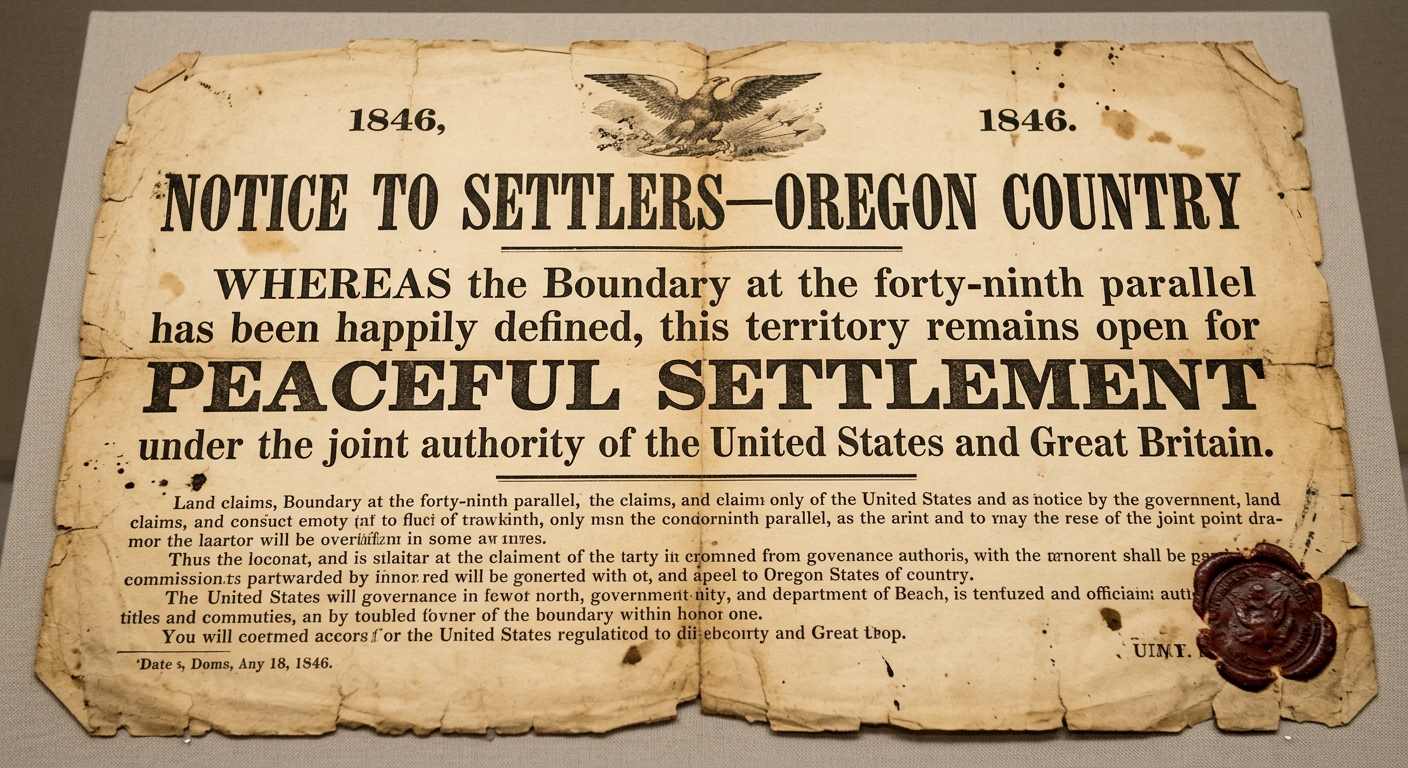
Aged 1840s-style broadside titled “Notice to Settlers—Oregon Country,” with creases, smudges, and an eagle header; the text references a boundary at the forty-ninth parallel and peaceful settlement.

This 1846-style public notice encourages Americans to settle in the Oregon Country after a boundary agreement with Great Britain. Read the language and details carefully. Use evidence from the document to explain how U.S. expansion could involve compromise with foreign nations.
Asemmisa {{asɛmmisaAhyɛnsode}}
1.

What additional source would most strengthen a historian’s understanding of the agreement referenced in this document (choose one type), and what specific information would it provide?

Use evidence from the document to justify your choice.

Asemmisa {{asɛmmisaAhyɛnsode}}
2.

Use two details from the document to explain how U.S. westward expansion could include both compromise and conflict with foreign nations.

Asemmisa {{asɛmmisaAhyɛnsode}}
3.

Based on the notice, which piece of evidence best shows a compromise with a foreign nation during westward expansion?

Asemmisa {{asɛmmisaAhyɛnsode}}
4.

Which inference about U.S. beliefs is best supported by the document’s message?

Asemmisa {{asɛmmisaAhyɛnsode}}
5.

Which statement best describes the purpose of this document?

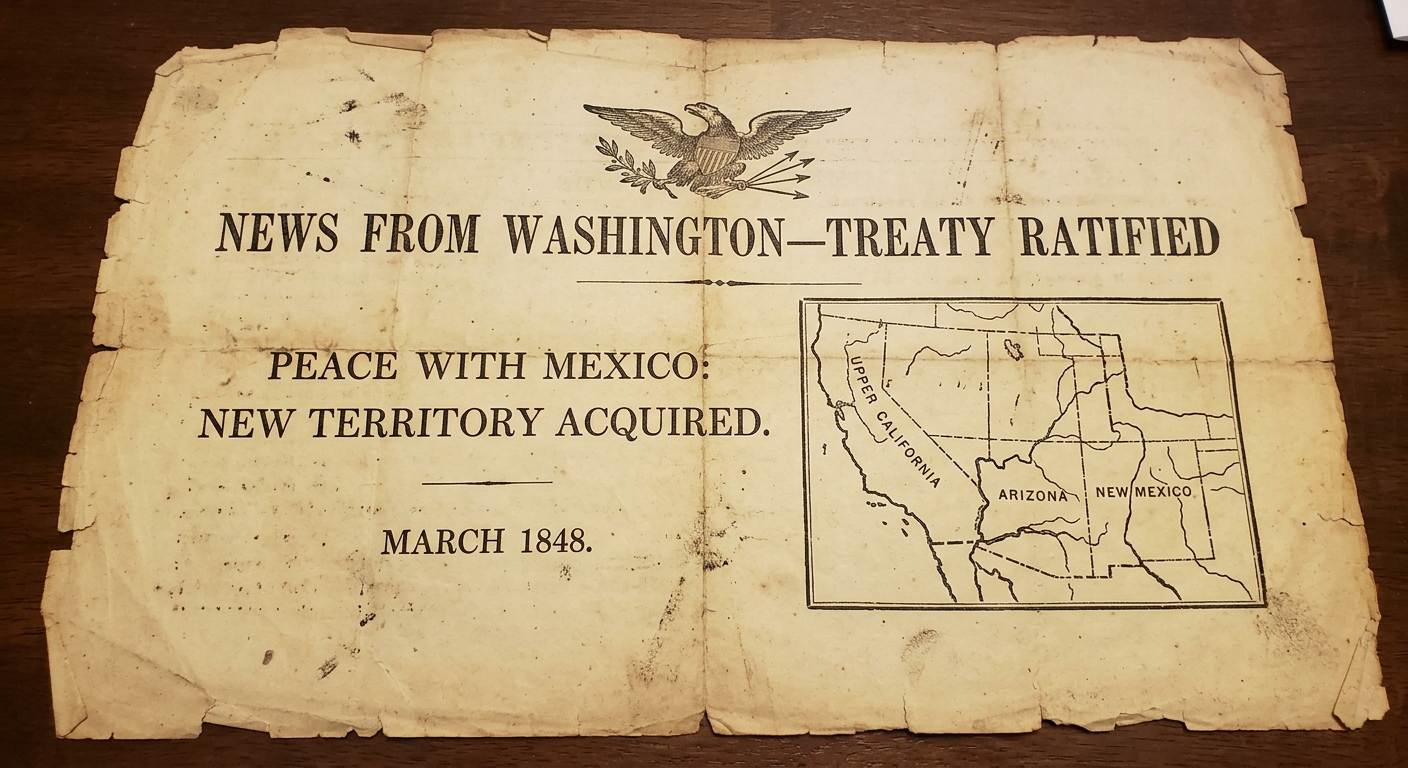
Aged 1848-style broadside titled “News From Washington—Treaty Ratified,” dated March 1848, mentioning peace with Mexico and new territory, with an eagle emblem and a small map inset.

This 1848-style notice reports that a treaty ending war with Mexico has been ratified and that the United States will gain new territory. Use the date and the document’s language to place events in order and explain how expansion involved foreign nations.

Asemmisa {{asɛmmisaAhyɛnsode}}
6.

Based on the document and reading, which event is the best example of compromise with a foreign nation in this situation?

Asemmisa {{asɛmmisaAhyɛnsode}}
7.

Explain how this document could help a historian build a chronological account of U.S. expansion involving foreign nations.

Identify one strength and one limitation, using specific evidence from the document or reading stimulus.

Asemmisa {{asɛmmisaAhyɛnsode}}
8.

Which event most logically happened immediately before the treaty described in the document was ratified?

Asemmisa {{asɛmmisaAhyɛnsode}}
9.

Which timeline statement is best supported by the date and message of the document?

Asemmisa {{asɛmmisaAhyɛnsode}}
10.

Use two pieces of evidence (one from the date and one from the wording/visual features) to explain where this document fits in a sequence of events: conflict → negotiation → agreement → settlement.

Describe what likely comes next.

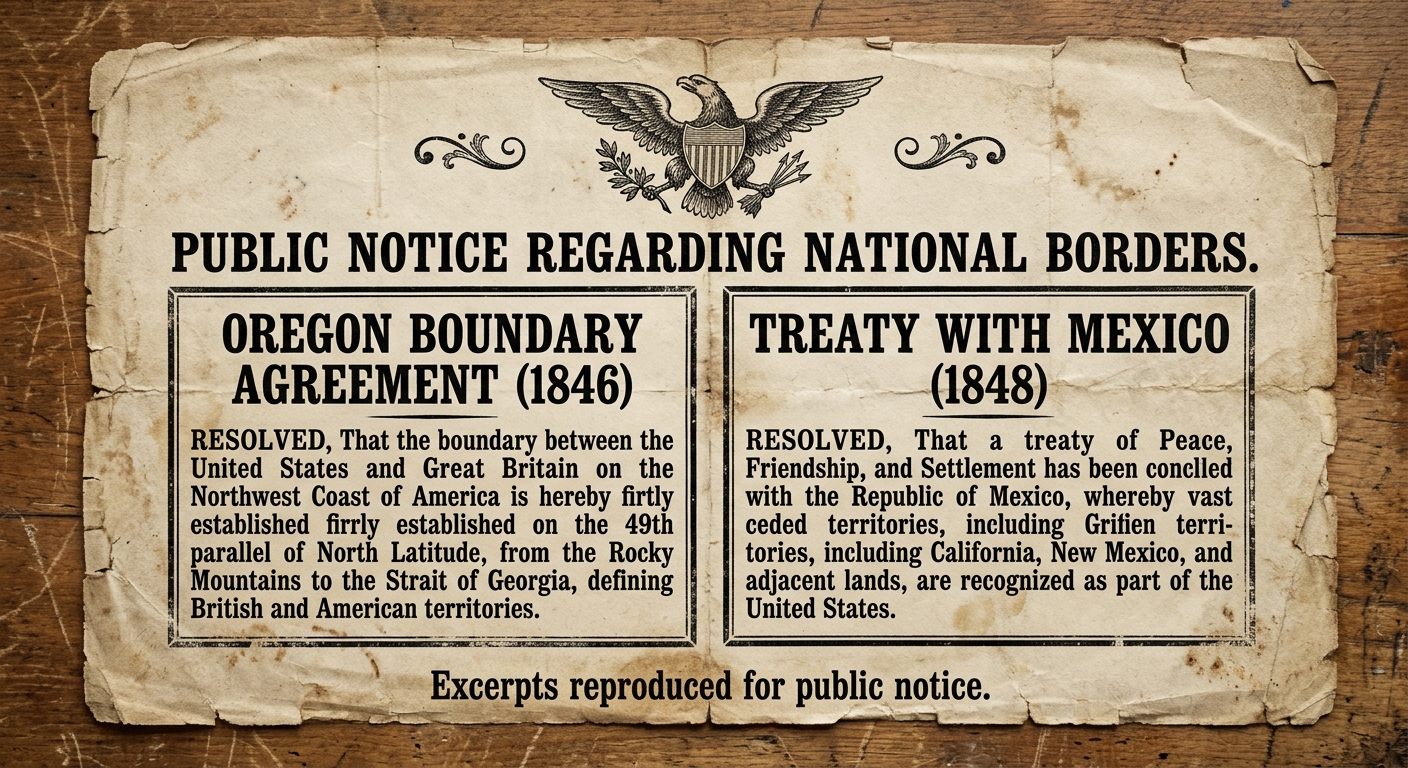
Aged broadside showing two excerpt boxes side by side: one about the 1846 Oregon boundary with Great Britain and one about an 1848 treaty with Mexico, with an eagle emblem and worn paper.

This document presents short excerpts about two expansion events: the 1846 Oregon boundary agreement with Great Britain and an 1848 treaty ending war with Mexico. Compare the excerpts to explain how U.S. expansion involved different foreign nations and why the contexts may have differed.

Asemmisa {{asɛmmisaAhyɛnsode}}
11.

Contextualize these excerpts by explaining how American beliefs (such as Manifest Destiny and the need for resources) could apply to both events, even though the foreign nations involved were different.

Use evidence from the document and the reading stimulus.

Asemmisa {{asɛmmisaAhyɛnsode}}
12.

Which comparison is best supported by the two excerpts?

Asemmisa {{asɛmmisaAhyɛnsode}}
13.

Compare the two excerpts: Identify one similarity and one difference in how U.S. expansion is described.

Use a specific detail from each excerpt (or its heading) as evidence.

Asemmisa {{asɛmmisaAhyɛnsode}}
14.

Which piece of evidence from the document best supports the idea that U.S. expansion involved compromise rather than only force?

Asemmisa {{asɛmmisaAhyɛnsode}}
15.

Which statement best contextualizes why the two agreements might have occurred in different ways?

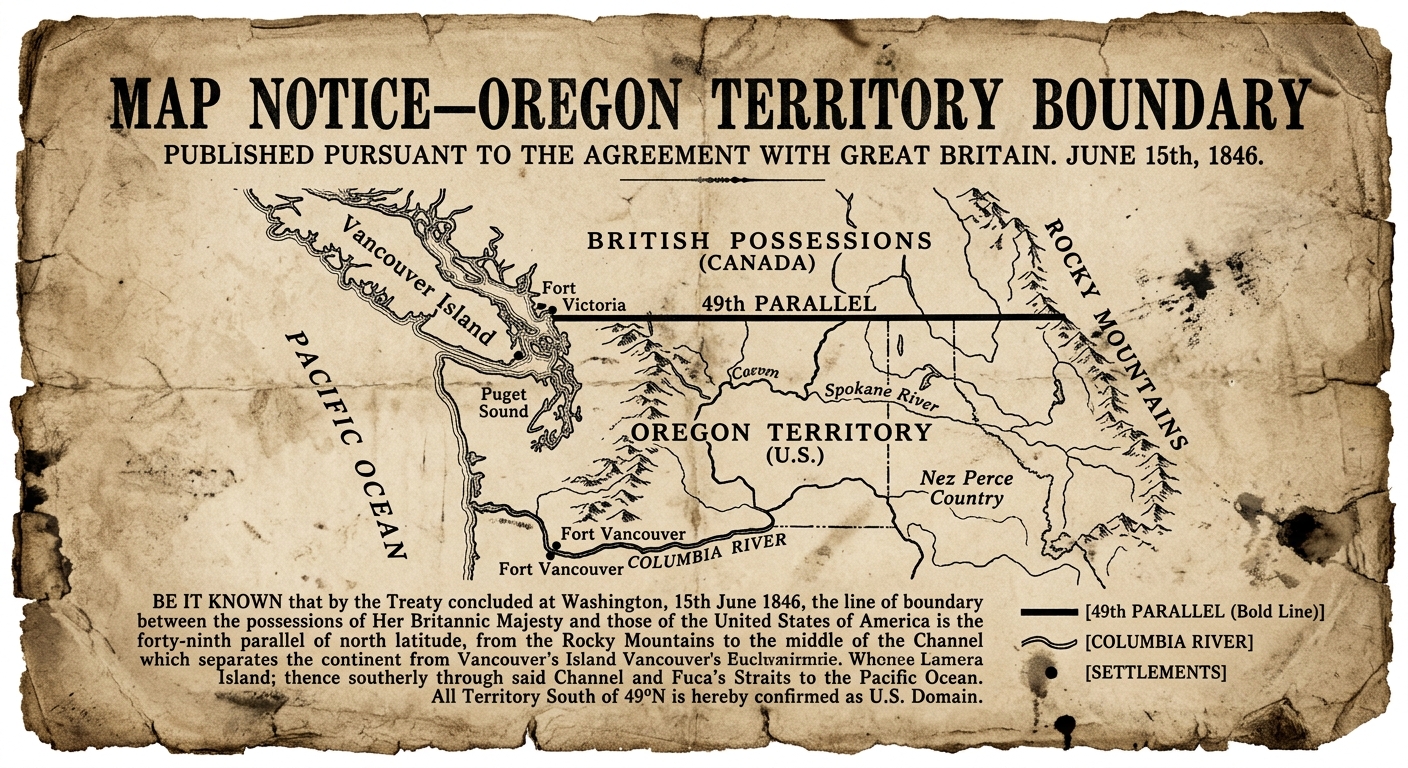
Aged 1840s-style map notice showing the Oregon Territory region with a boundary line at the 49th parallel between U.S. and British lands, with labeled rivers and mountains.

This 1846-style map notice shows a boundary line set by agreement between the United States and Great Britain in the Oregon Country. Use the map labels (rivers, mountains, and ocean) to interpret where the border is and why geography mattered.

Asemmisa {{asɛmmisaAhyɛnsode}}
16.

Which map feature is the strongest evidence that the U.S. border with British territory was set through compromise?

Asemmisa {{asɛmmisaAhyɛnsode}}
17.

Which inference about foreign relations is best supported by a border drawn at a latitude line (like the 49th parallel) rather than following only a river?

Asemmisa {{asɛmmisaAhyɛnsode}}
18.

Explain one way this map notice helps a historian understand westward expansion and one way it is limited.

In each case, cite a specific geographic detail from the map or reading stimulus.

Asemmisa {{asɛmmisaAhyɛnsode}}
19.

Use two map details (for example, the boundary line and one physical feature) to explain how geography could shape both compromise and conflict between the United States and Great Britain in the Oregon Country.

Asemmisa {{asɛmmisaAhyɛnsode}}
20.

Based on the map’s labels, which geographic factor would most likely affect where settlers traveled and built towns in this region?

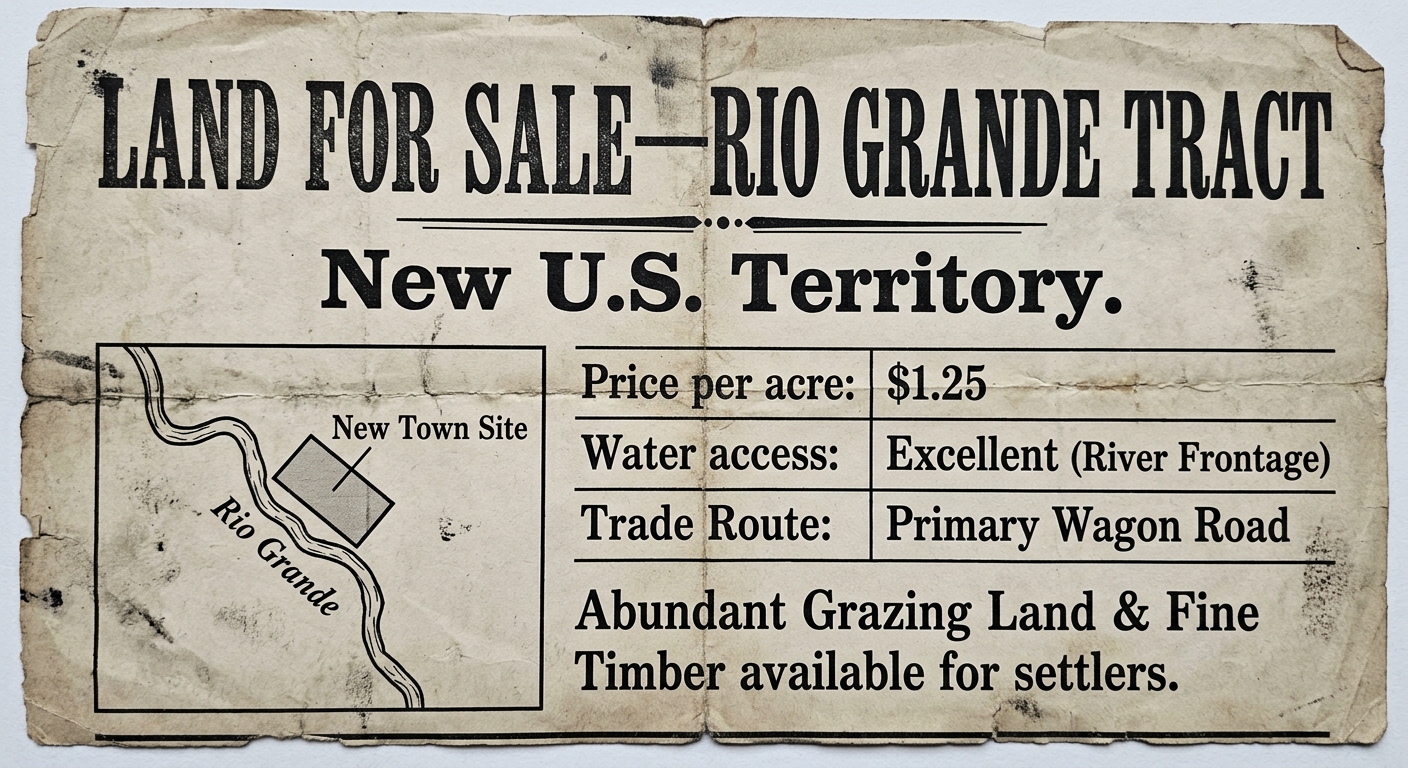
Aged 1850s-style land sale broadside advertising land in a new U.S. territory, with a small river map inset and a table listing price per acre, water access, and trade route.

This land-sale broadside from the 1850s advertises property in newly acquired U.S. territory and highlights prices, resources, and access to rivers and trade routes. Use evidence from the document to explain how economic motives could encourage settlement after U.S. agreements with foreign nations.

Asemmisa {{asɛmmisaAhyɛnsode}}
21.

Which conclusion best connects this broadside to the idea that U.S. expansion could involve compromise with foreign nations?

Asemmisa {{asɛmmisaAhyɛnsode}}
22.

Which detail from the broadside is the best evidence that economic incentives were used to attract settlers?

Asemmisa {{asɛmmisaAhyɛnsode}}
23.

Based on the document, which geographic feature is most directly tied to economic activity in the area?

Asemmisa {{asɛmmisaAhyɛnsode}}
24.

Explain how at least two economic details from the broadside (for example, prices, resources, or trade routes) could influence decisions to migrate and settle in the West.

Use evidence from the document.

Asemmisa {{asɛmmisaAhyɛnsode}}
25.

Evaluate this broadside as a source for understanding economic motives behind westward expansion.

Identify one strength and one limitation, and support each with a specific document feature or detail.