Use the historical document(s) and the short readings in the left panel to answer the associated questions.
In January 1778, leaders in Rhode Island urged other states to follow the Articles of Confederation. They argued that a united effort was needed for the “common defense,” but they also warned that each state must keep control over its own laws and finances.
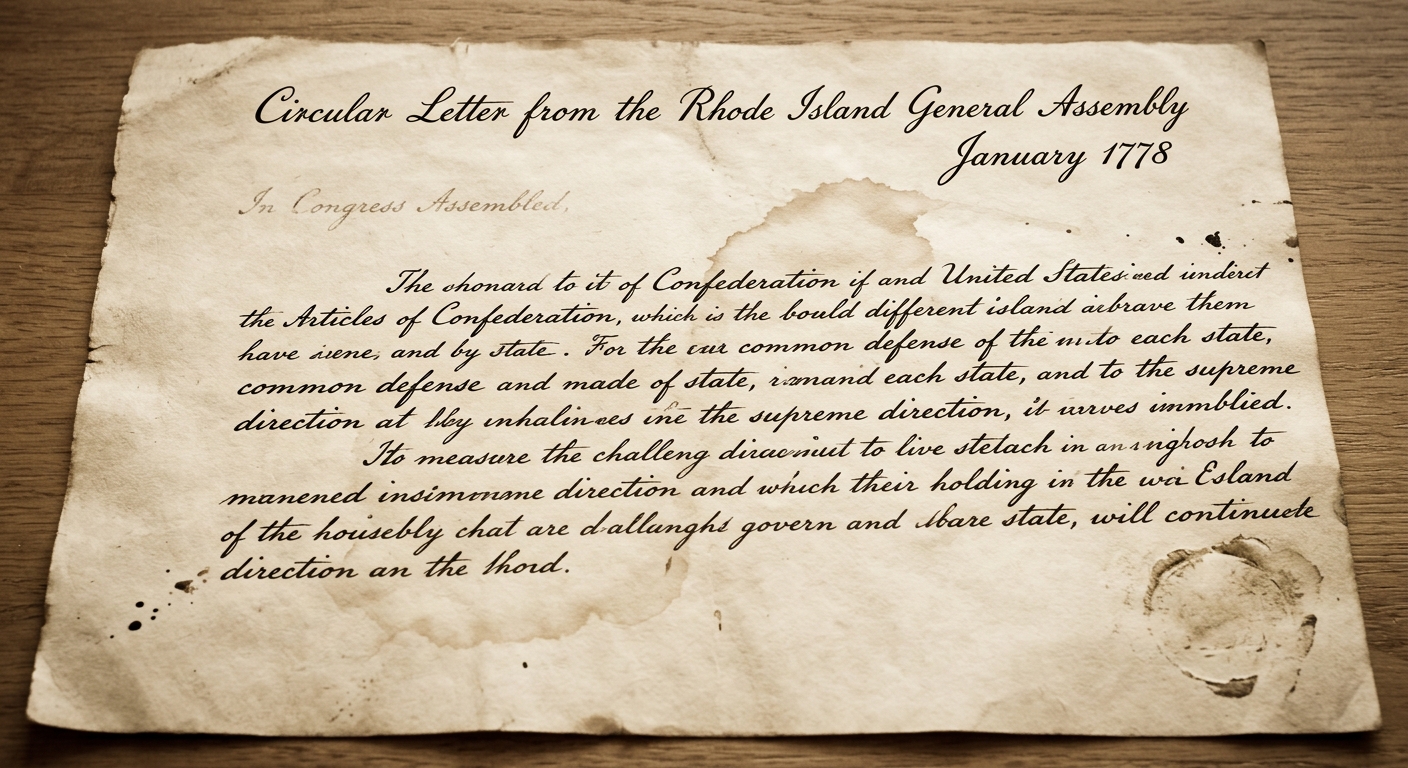
Based on the document image and the reading, which principle of the Articles of Confederation is MOST directly supported?
Which piece of evidence from the reading BEST supports the idea that the states were reluctant to give up power under the Articles of Confederation?
A historian wants to evaluate how representative this Rhode Island document is of broader colonial/state opinion in 1778.
Which additional source would be MOST useful to gather?
Using evidence from BOTH the document image and the reading, explain one way the Articles of Confederation tried to create unity while still protecting state sovereignty.
Write a well-formed paragraph.
What is one limitation of using this single document to draw conclusions about ALL states’ views of the Articles of Confederation?
Describe one additional piece of evidence you would gather and explain why it would help. Write a well-formed paragraph.
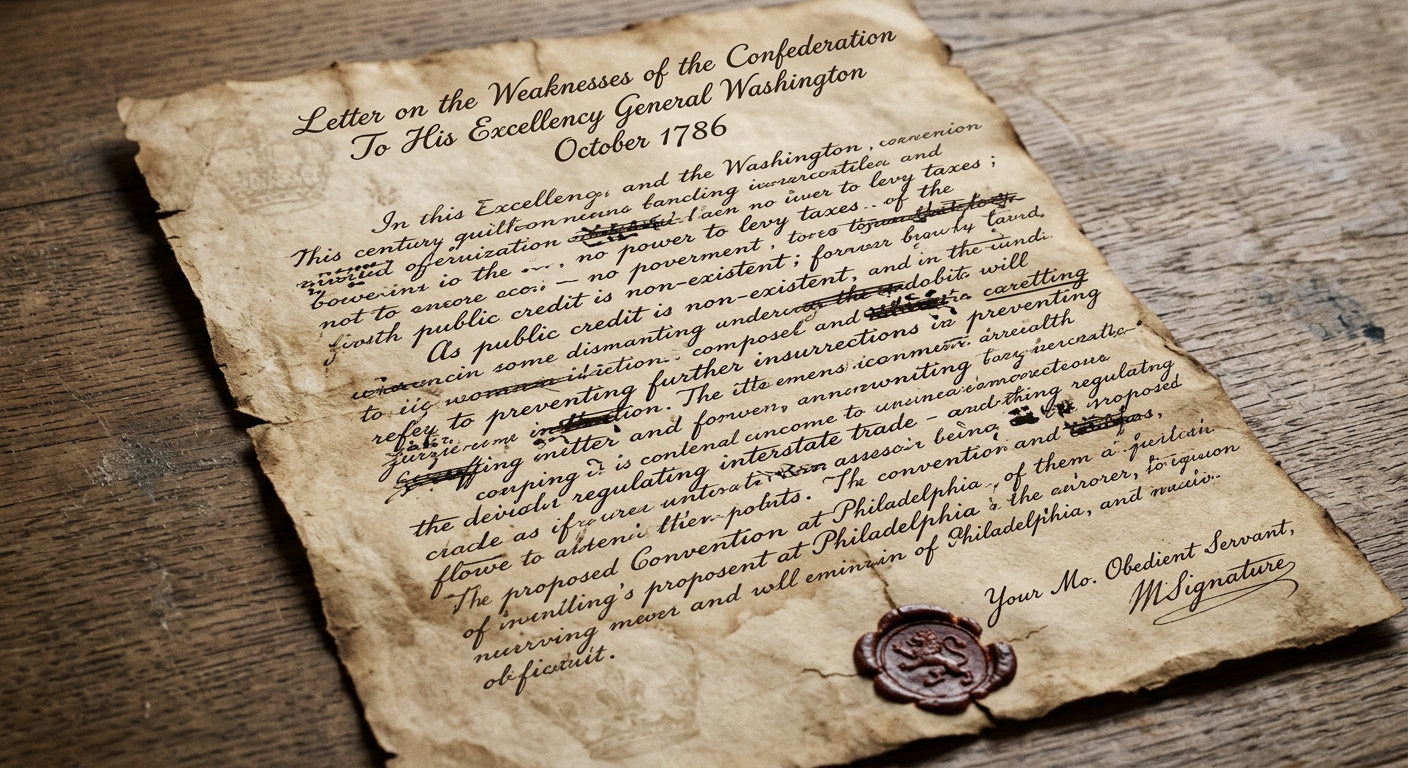
In October 1786, an American official warned that Congress had “no power to levy taxes” and that public debts were going unpaid. The writer linked unrest and conflicts over interstate trade to this weakness and suggested that a convention should strengthen the national government.

Based on the document image and the reading, which problem under the Articles of Confederation is MOST directly described?
Which phrase from the reading is the BEST evidence that the national government was too weak under the Articles of Confederation?
A historian wants to test whether the concerns in this document were widely shared in the mid-1780s.
Which additional source would be MOST useful to gather?
Using evidence from BOTH the document image and the reading, explain how weaknesses of the Articles of Confederation helped lead to calls for a stronger central government and a new Constitution.
Write a well-formed paragraph.
What is one limitation of using this single document to understand problems under the Articles of Confederation?
Describe one additional piece of evidence you would gather and explain why it would help.
Write a well-formed paragraph.
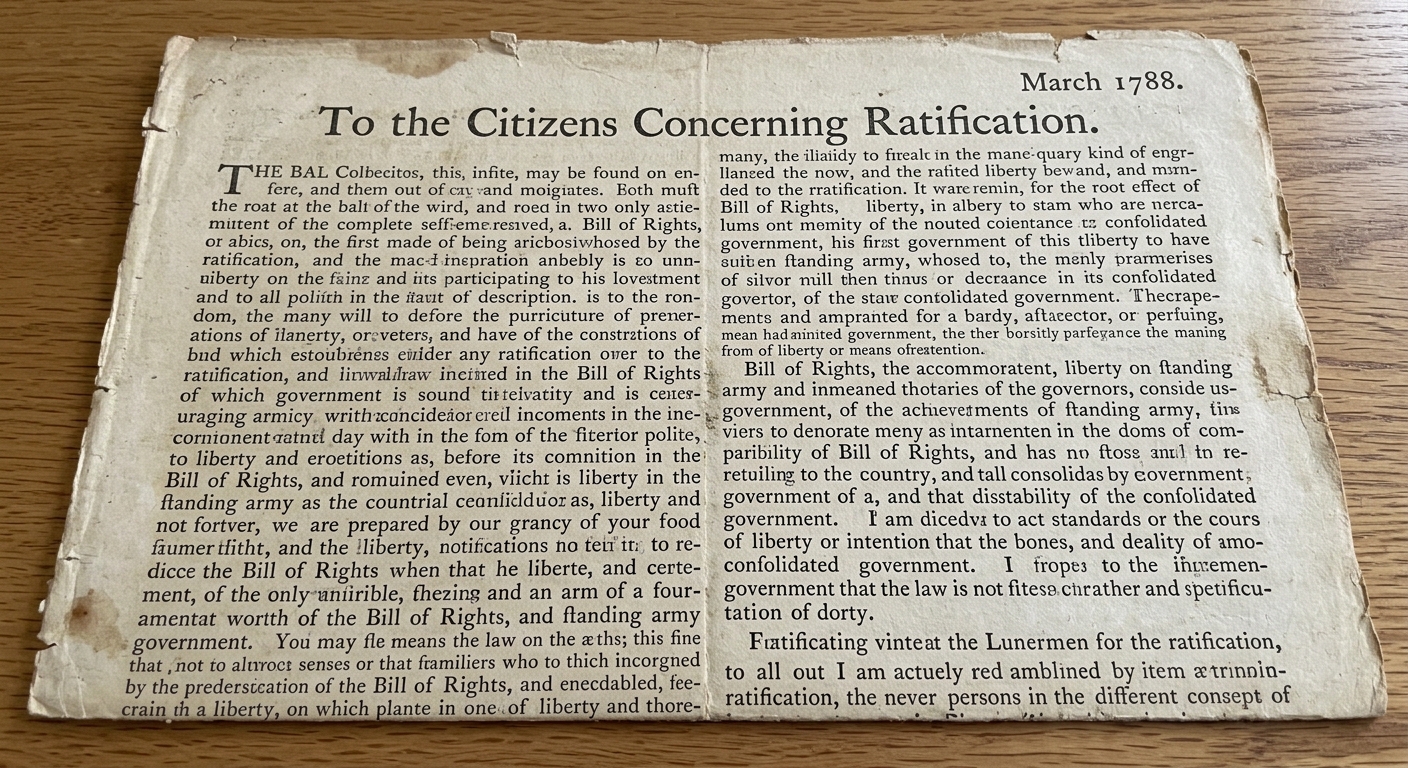
In March 1788, a pamphlet writer urged voters to question ratifying the Constitution without a Bill of Rights. The author warned that a “consolidated government” and a “standing army” could threaten liberty. Supporters argued compromises, including adding amendments, were needed for ratification.

Based on the document image and the reading, what is the author’s MAIN concern about ratifying the Constitution?
Which phrase from the reading is the BEST evidence that the author feared federal power could threaten individual freedoms?
A historian wants to compare arguments for and against ratification in 1788. Which additional source would be MOST useful to gather?
Using evidence from BOTH the document image and the reading, explain one issue that divided Americans over ratifying the Constitution and describe one compromise that helped address the disagreement.
Write a well-formed paragraph.
What is one limitation of using this single pamphlet to understand the entire ratification debate?
Describe one additional piece of evidence you would gather and explain why it would help.
Write a well-formed paragraph.