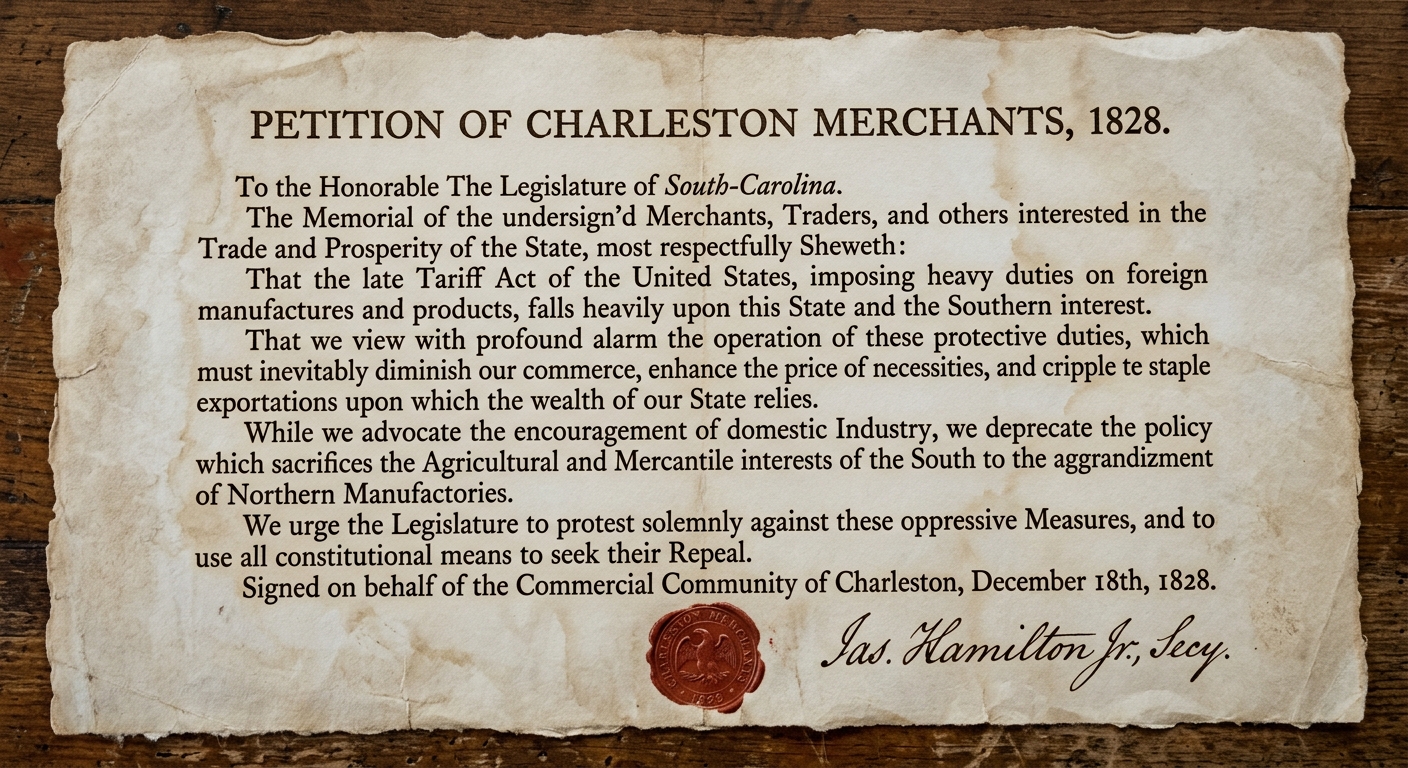
Read the excerpt below from an 1828 petition written by merchants in Charleston, South Carolina. They argue that a federal tariff hurts their region’s economy and urge state leaders to respond. Use the document as evidence to answer the questions.
Use the historical document(s) and the short readings in the left panel to answer the associated questions.
Use the historical document(s) and the short readings in the left panel to answer the associated questions.
Read the excerpt below from an 1828 petition written by merchants in Charleston, South Carolina. They argue that a federal tariff hurts their region’s economy and urge state leaders to respond. Use the document as evidence to answer the questions.
Based on the document, what is the petitioners’ main purpose?
Which regional point of view is most consistent with the petition’s argument about the tariff?
Using evidence from the petition, explain one way tariffs could increase tension between supporters of states’ rights and supporters of a strong federal government.
Which claim is best supported by the petition as evidence about early U.S. industrialization?
What additional source would best help you evaluate whether this petition represents most people in South Carolina in 1828? Explain why.
Read the excerpt below from 1854 public meeting resolutions written as Congress debated organizing Kansas and Nebraska. The writers argue that allowing slavery to spread into new territories will deepen sectional conflict. Use evidence from the document to answer the questions.

Based on the document, what is the authors’ most likely purpose?
What additional primary source from 1854–1856 would best help you evaluate whether these resolutions reflect a broad regional opinion? Explain why.
Which inference about sectional tensions is best supported by the resolutions?
Which issue is the main focus of the resolutions?
Identify one phrase or idea from the resolutions that shows the authors’ point of view about slavery in the territories.
Then explain what that evidence suggests about their concerns.
Read the excerpt below from a secession ordinance written shortly after the 1860 presidential election. The writers argue that the election of a Republican president threatened their region’s rights and interests. Use the document as evidence to answer the questions.
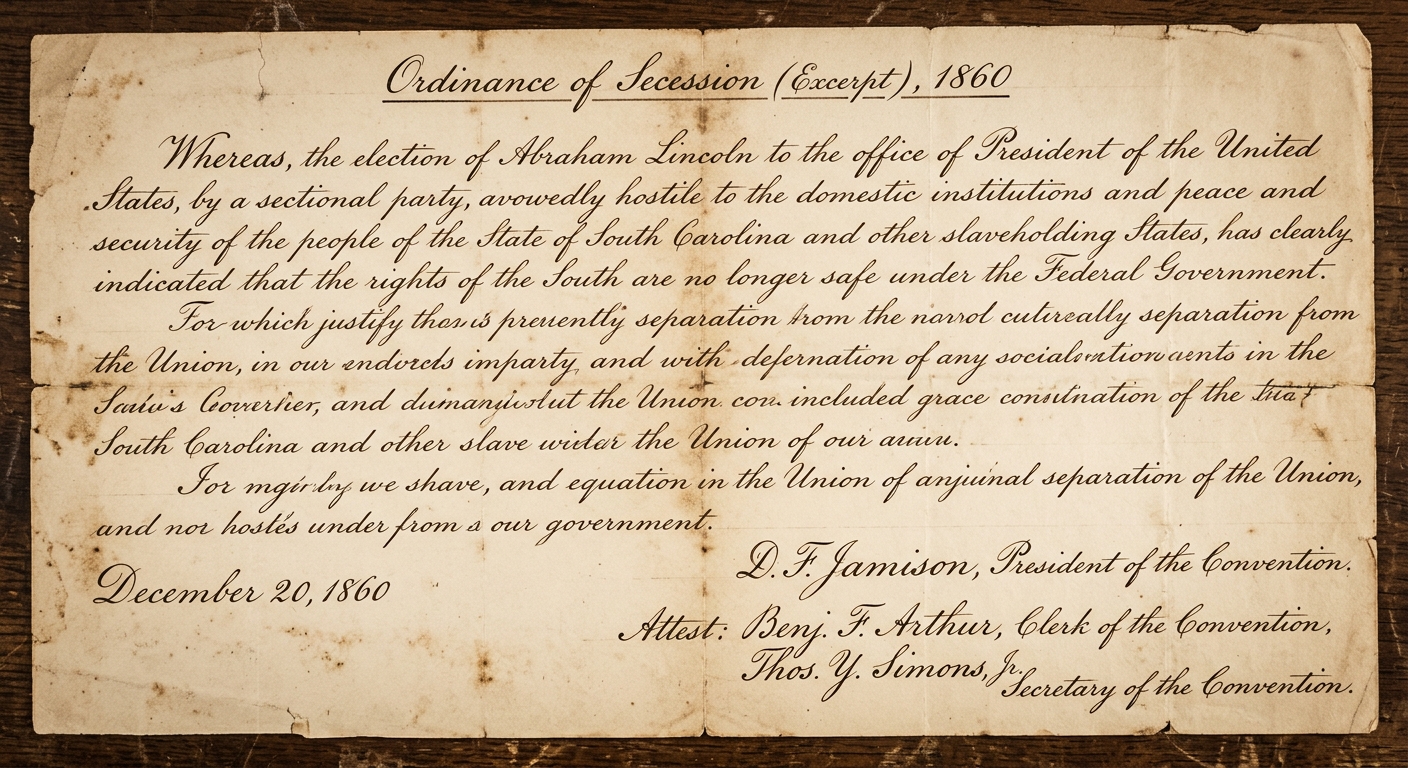
Based on the document, what is the authors’ main purpose?
Which immediate cause of secession is most clearly referenced in the excerpt?
Identify one phrase or idea from the excerpt that shows the authors’ perspective on the 1860 election.
Then explain how that evidence helps explain why they supported secession.
Which statement is the best inference about regional perspectives based on this document?
What additional source would best help you compare how different regions explained secession in 1860–1861?
Explain why that source would help.
Read the excerpt below from a July 1863 Civil War dispatch written just after the Battle of Gettysburg. The writer explains how geography shaped troop movements and decisions during the campaign. Use evidence from the document to answer the questions.
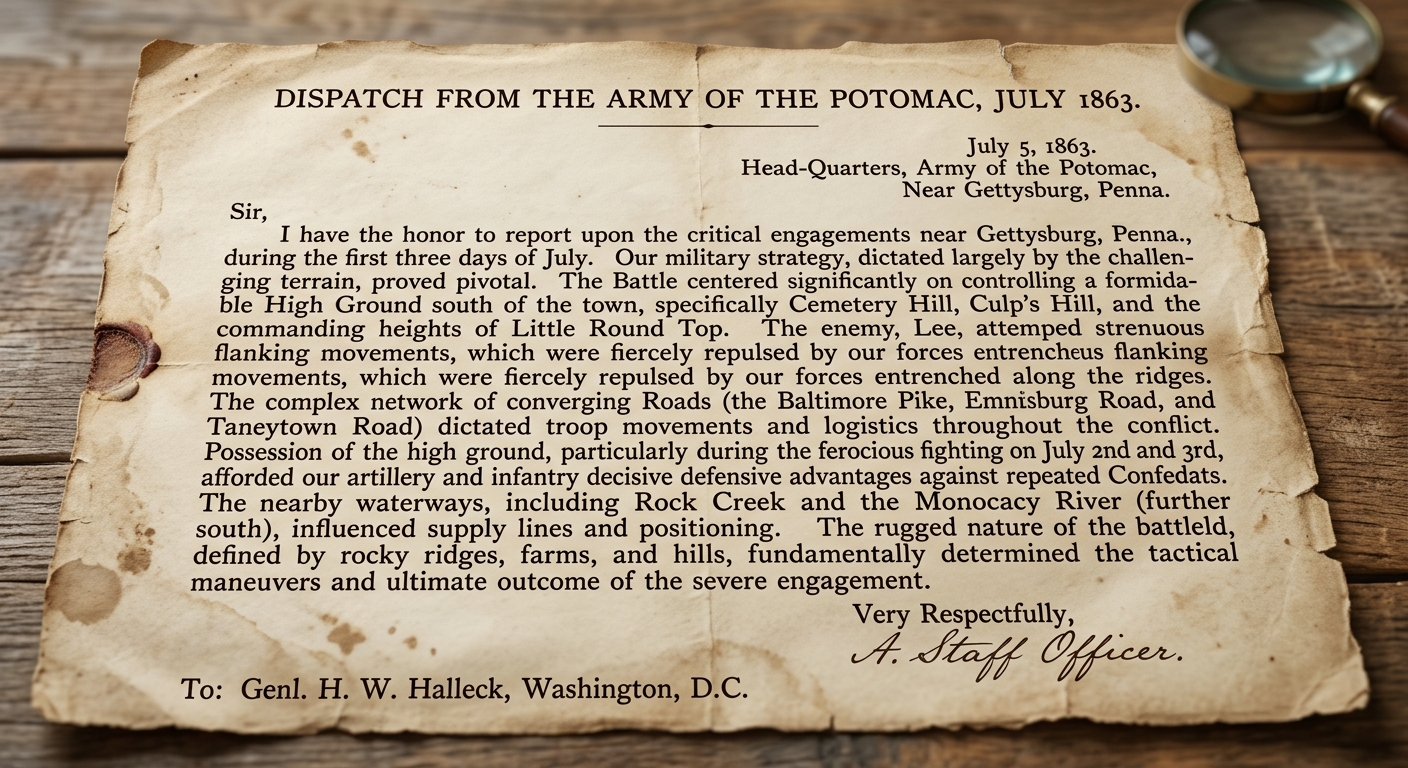
Which detail from the dispatch best shows that geography influenced military strategy?
Identify one phrase or idea from the dispatch that suggests a strategic decision.
Then explain how the document shows the relationship between geography and that decision.
What additional primary source would best help you evaluate whether this dispatch gives a complete picture of the battle’s strategy and outcome?
Explain why.
Which conclusion is best supported by the document about the course of the Civil War?
Based on the dispatch, which inference is most reasonable about why roads and rivers mattered in the campaign?
Read the excerpt below from a March 1865 letter written near the end of the Civil War. The writer describes how the war affected daily life, property, and local authority. Use evidence from the document to answer the questions.

Which impact of the Civil War is most directly described in the letter?
Which inference about governance is most supported by the letter’s description of “local authority” during the war?
Which piece of evidence from the letter would best support the conclusion that the war reduced economic capacity in the region?
What additional primary source would best help you corroborate the letter’s claims about damage and shortages?
Explain why that source would help.
Identify two details from the letter that show how the Civil War affected human lives or physical infrastructure.
Then explain what those details suggest about conditions in the community.