Use the historical document(s) and the short readings in the left panel to answer the associated questions.
Historical Document:
British Wartime Notice (1760)
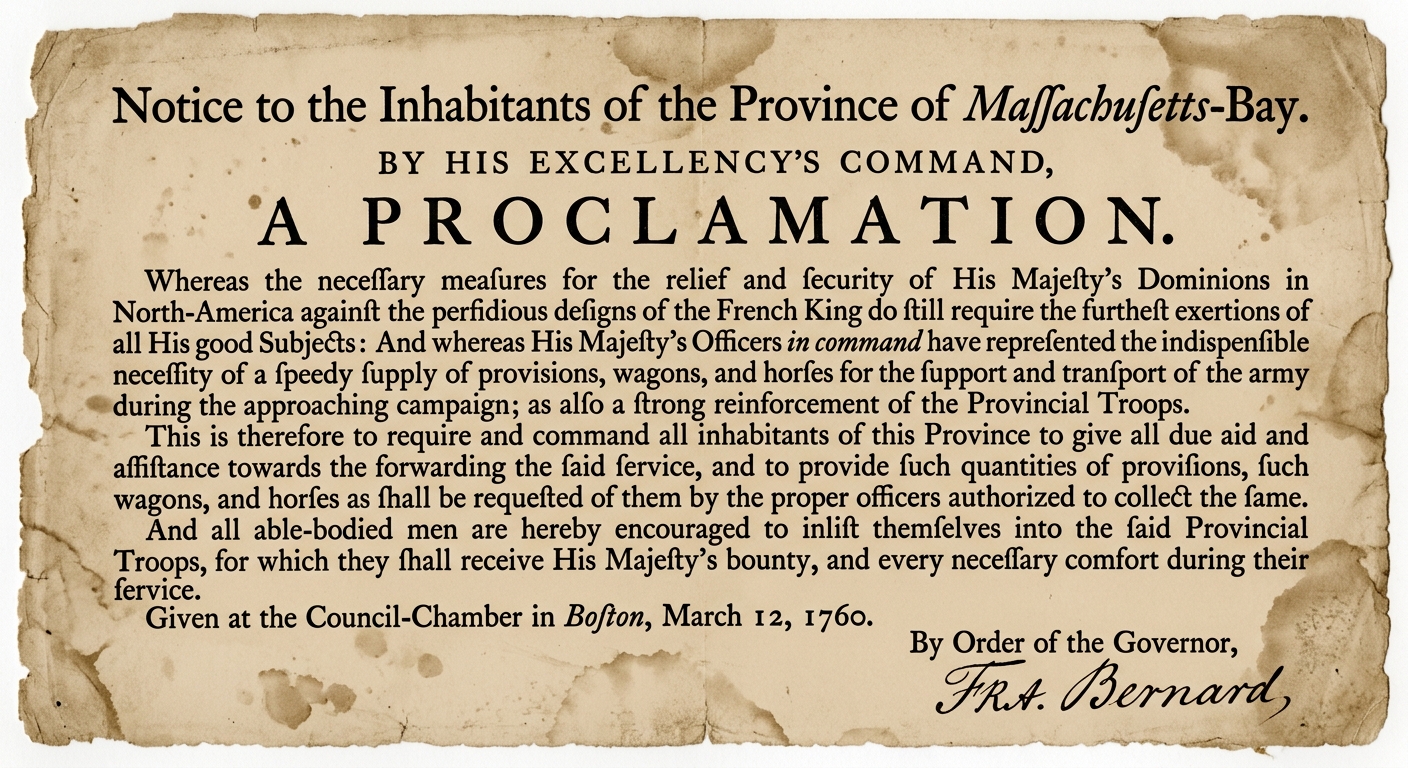
In 1760, British officials asked several colonies to provide food, wagons, and men for the final campaigns against France in North America. After the fighting ended, Britain expected colonists to help pay for defense and follow stricter rules—expectations that many colonists resisted.
Which event is most likely to have happened before the notice dated March 12, 1760?
Based on the document and reading, what is the most likely next action Britain took after the war ended to manage the costs of defending North America?
Which sequence best explains, in chronological order, how French–British conflict in North America could change the relationship between the colonies and Great Britain?
Name one immediate effect and one longer-term effect of the French–British conflict on the colonies’ relationship with Great Britain.
Use the document/reading to support your answer.
Using evidence from the document and reading, explain how the conflict with France could lead Britain to change what it expected from the colonies after the war. Write 2–4 sentences.
Historical Document:
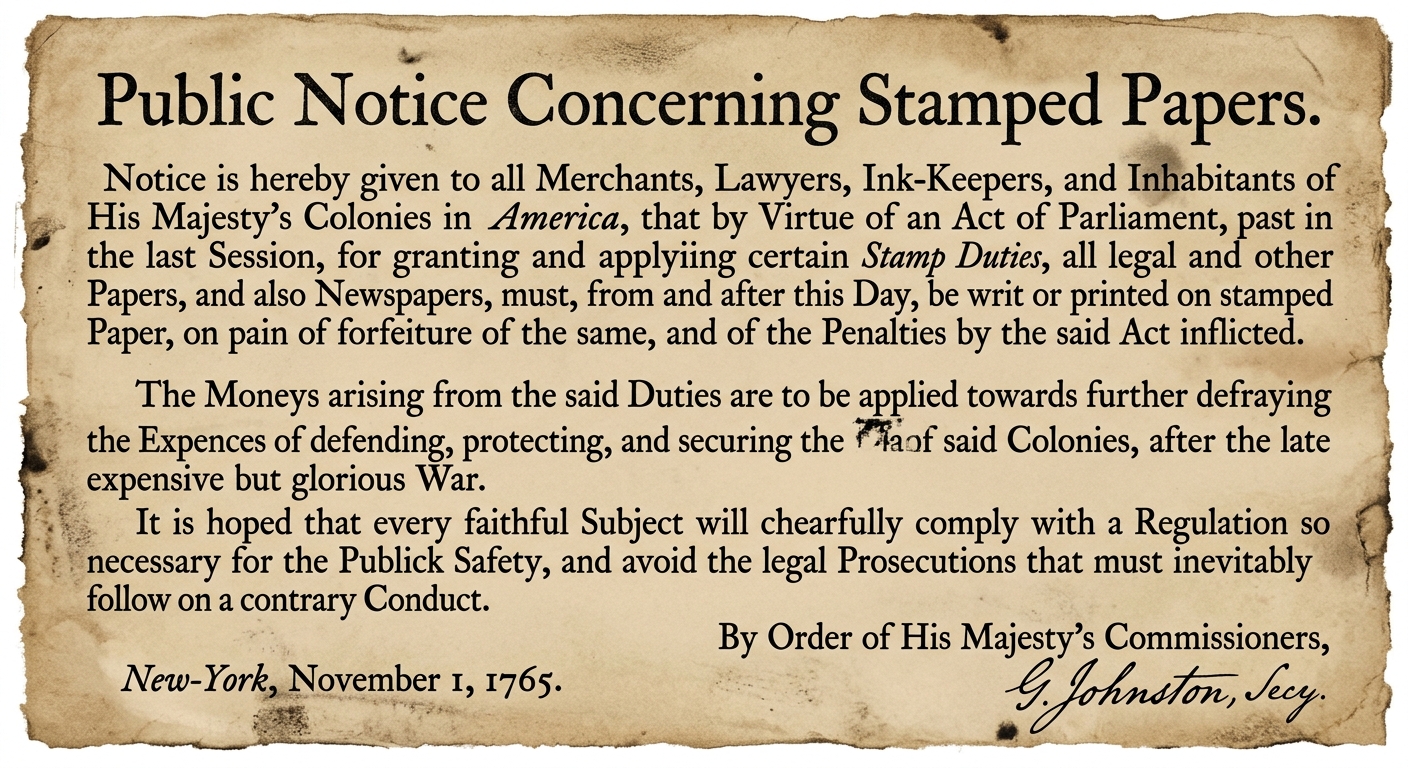
Public Notice on Stamped Papers (1765)

In 1765, British officials announced that many papers—newspapers, licenses, and court forms—must use stamped paper that cost money. Britain said the duty would help pay for defense after the recent war. Many colonists protested the policy and some refused to comply.
Which event is most likely to have happened just before the notice dated November 1, 1765?
Using evidence from the document and reading, explain one colonial response to the policy and why it happened. Write 2–4 sentences.
Based on the document and reading, which British goal most directly explains the new stamp duty?
Which sequence best shows a likely chronological chain of events connected to the policy in the document?
Name one immediate effect and one longer-term effect of Britain’s postwar tax and enforcement policies on the colonies.
Use the document/reading to support your answer.
Historical Document:
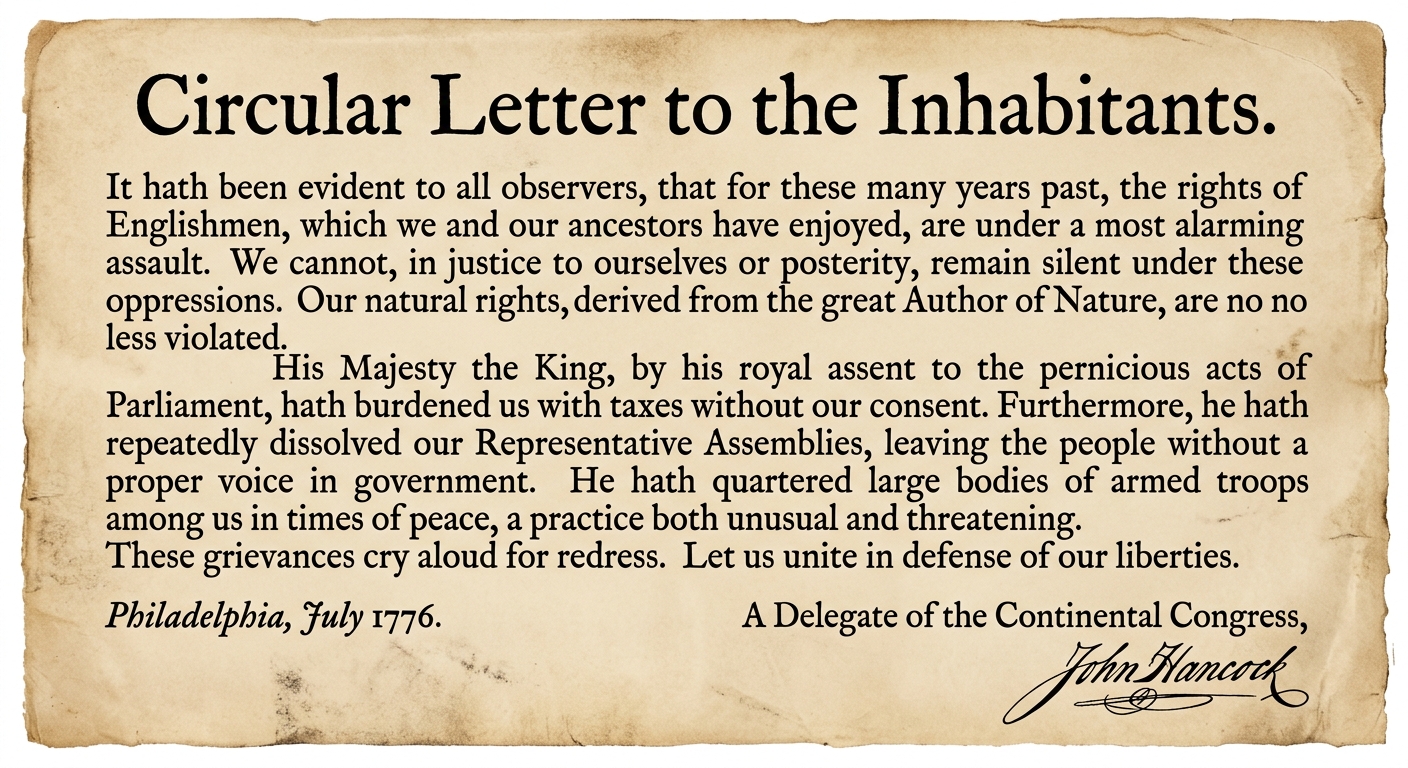
Colonial Grievances Broadside (1776)

In 1776, some colonial leaders argued that people had natural rights and the rights of Englishmen. They listed grievances against British policies, such as taxes without consent, limits on colonial assemblies, and keeping troops in the colonies. These arguments helped justify breaking political ties with Britain.
Which sequence best shows a likely chronological chain that connects Enlightenment ideas to the decision to declare independence?
Based on the document and reading, which idea best explains why colonial leaders listed grievances in 1776?
Using evidence from the document and reading, explain how Enlightenment ideas and the rights of Englishmen could influence colonial leaders to outline grievances in 1776. Write 2–4 sentences.
Name one immediate effect and one longer-term effect of publishing grievances like those described in 1776. Use the document/reading to support your answer.
Which event is most likely to have happened just before the broadside dated July 1776?
Historical Document:
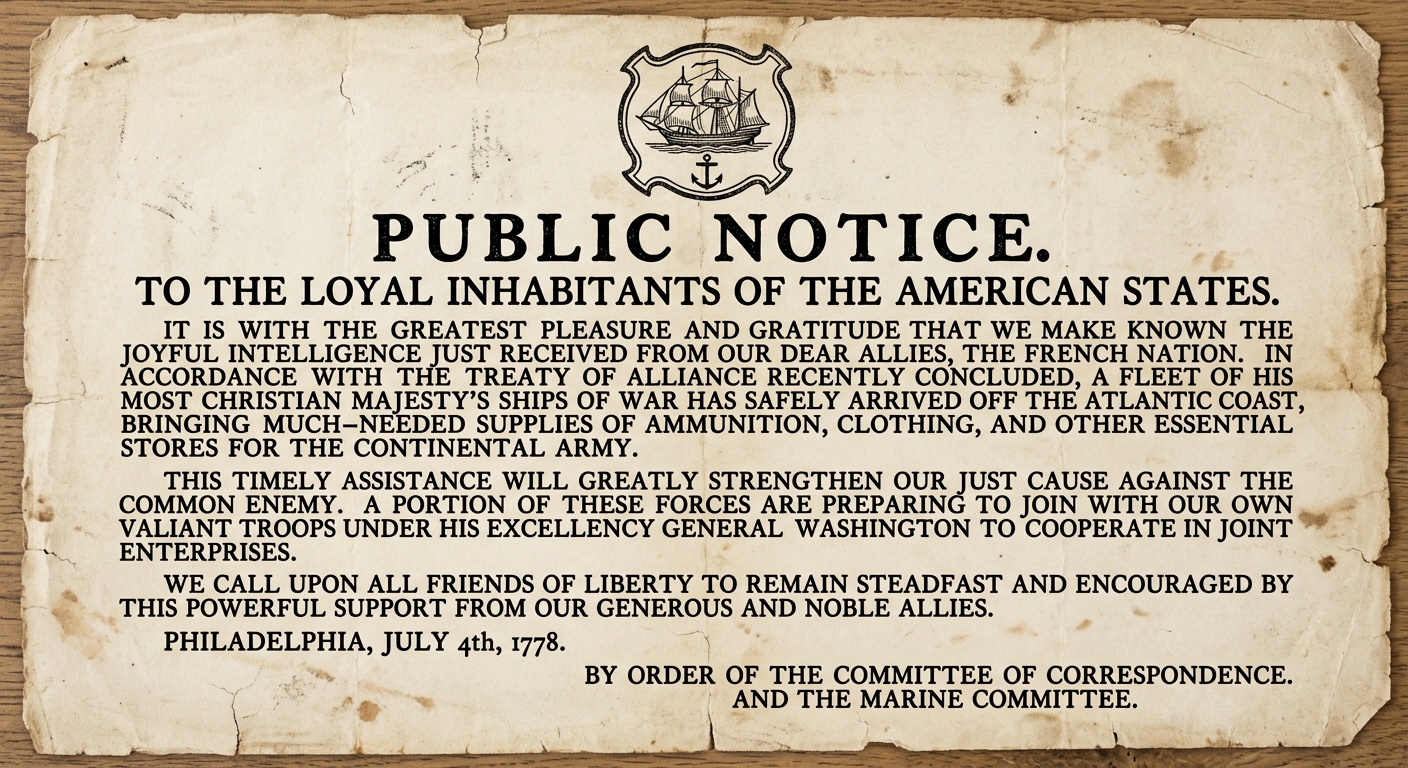
Public Notice of French Aid (1778)

In 1778, colonial leaders announced that France would send ships, supplies, and soldiers to support the American cause. They urged communities to coordinate ports and roads for faster movement of materials. The notice suggests foreign aid and geography could shape later military campaigns.
Explain how the Treaty of Paris (1783) fits into the chronological story suggested by the 1778 notice.
Use the idea of foreign aid and later military outcomes. Write 2–4 sentences.
Which event is most likely to have happened just before the notice dated 1778?
Which sequence best shows a chronological chain connecting foreign aid to the war’s outcome?
Based on the document and reading, which development is the most likely to happen next as a result of French aid?
Using evidence from the document/reading, explain one way French aid could influence American military strategy or the geography of the war. Write 2–4 sentences.