Use the historical document(s) and the short readings in the left panel to answer the associated questions.

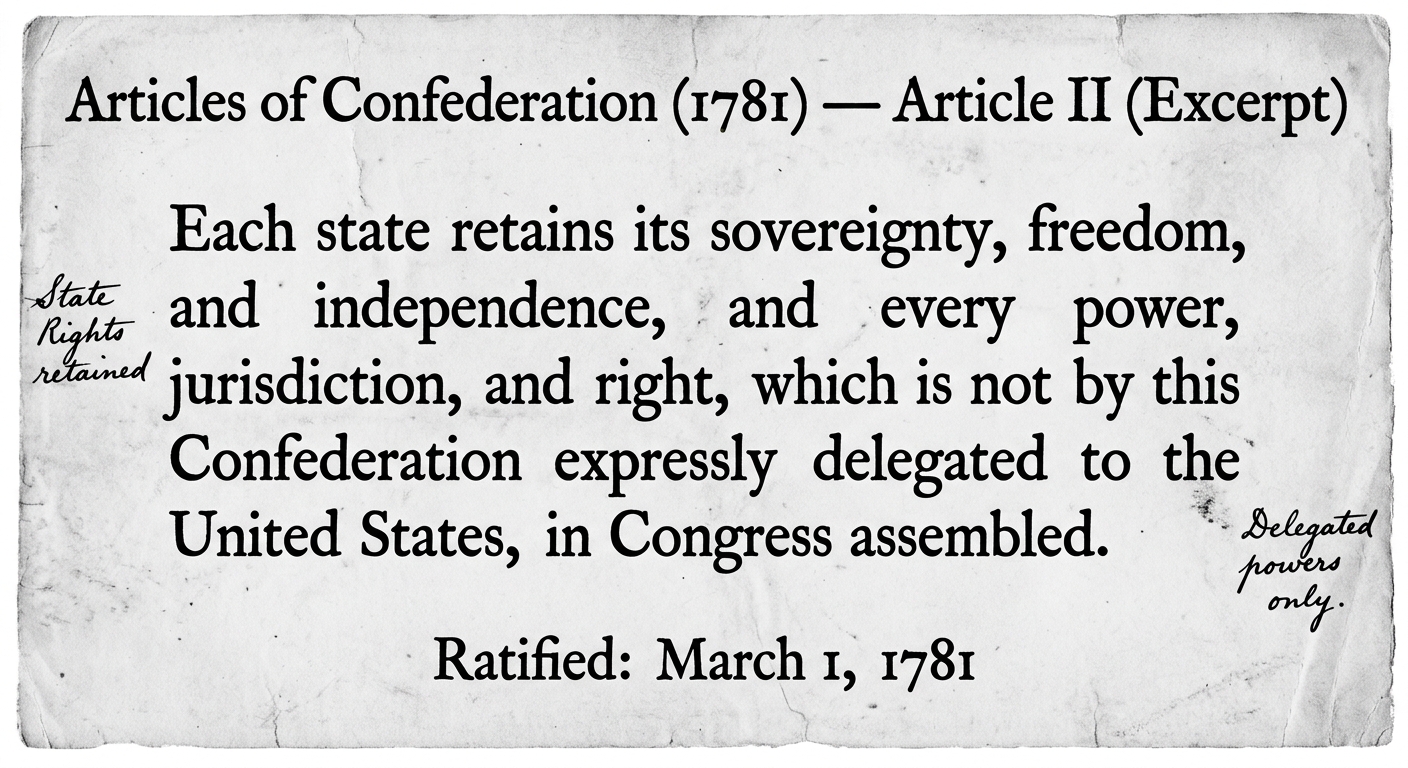
This excerpt from the Articles of Confederation (ratified in 1781) emphasizes that states keep most powers unless they are clearly given to Congress. In the years after independence, many leaders argued this system was too weak to solve problems shared by all states.
Using evidence from the excerpt, explain how the Articles of Confederation could make it difficult for the states to solve a problem that affects all of them.
Your answer should describe a likely result in the years after 1781.
Which statement BEST explains how this excerpt helps set the context for later debates about unity among the states?
Which event happened AFTER the document shown and BEST fits as a response to the weakness suggested by the excerpt?
Place this document in a brief timeline.
Identify one major development that came BEFORE it and one that came AFTER it, and explain how the ideas in the excerpt connect the three events.
Based on the excerpt, which problem is the Articles of Confederation MOST likely to create as events unfold after 1781?

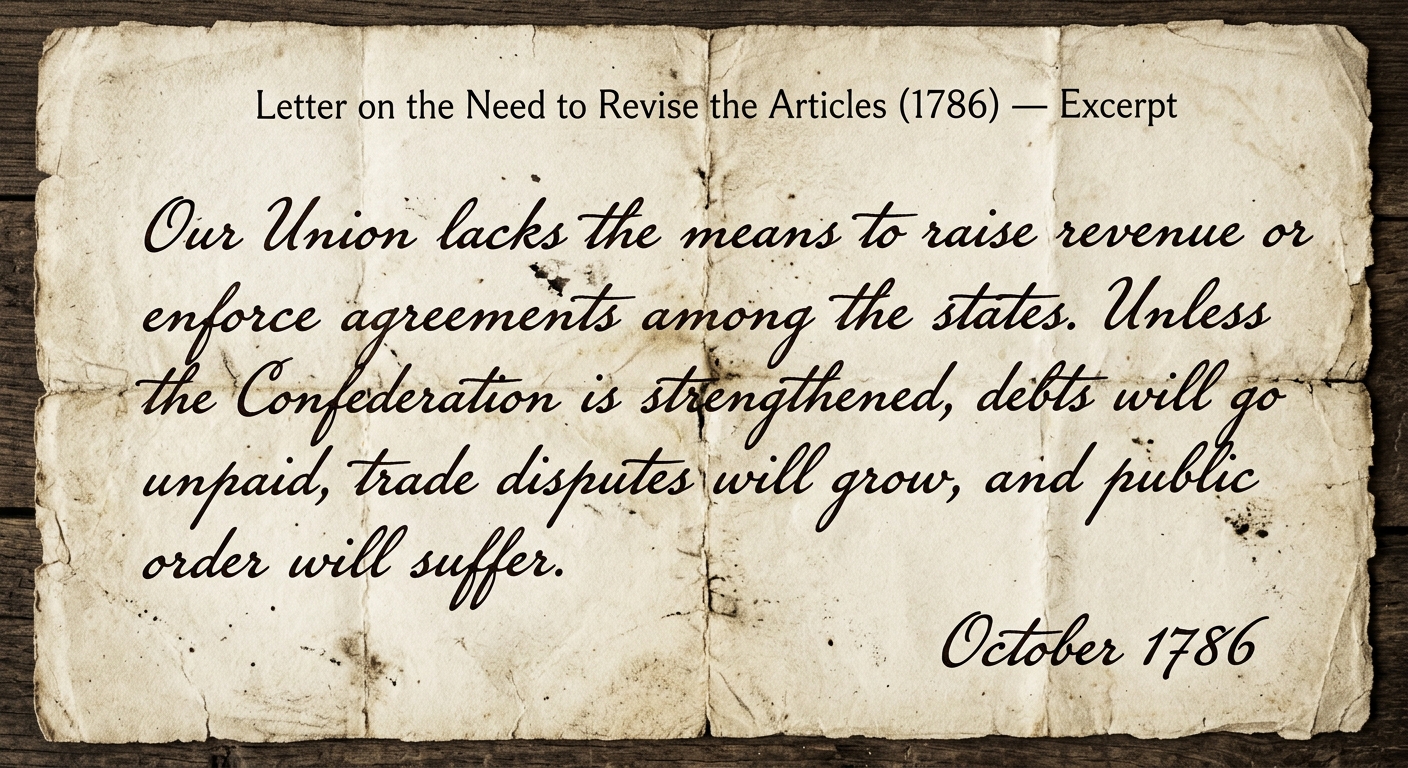
This 1786 letter describes problems that appeared under the Articles of Confederation, including weak national finances and conflicts between states. Complaints like these helped convince leaders to meet and revise the government. The next year, delegates gathered to create a new constitution.
Using evidence from the letter, explain one cause-and-effect relationship between a weakness of the Articles of Confederation and the decision to hold a convention to revise the government.
Include dates or time clues (such as “after 1781” or “in 1787”) in your explanation.
Which event MOST logically comes NEXT in a timeline after this 1786 letter?
Place the letter’s concerns into a brief timeline: identify one earlier development that made these 1786 problems likely and one later development that attempted to address them.
Explain how the concerns in the letter connect all three events.
How does the letter’s argument BEST connect to the shift from the Articles of Confederation to the Constitution?
According to the letter, which challenge under the Articles of Confederation is described MOST directly?

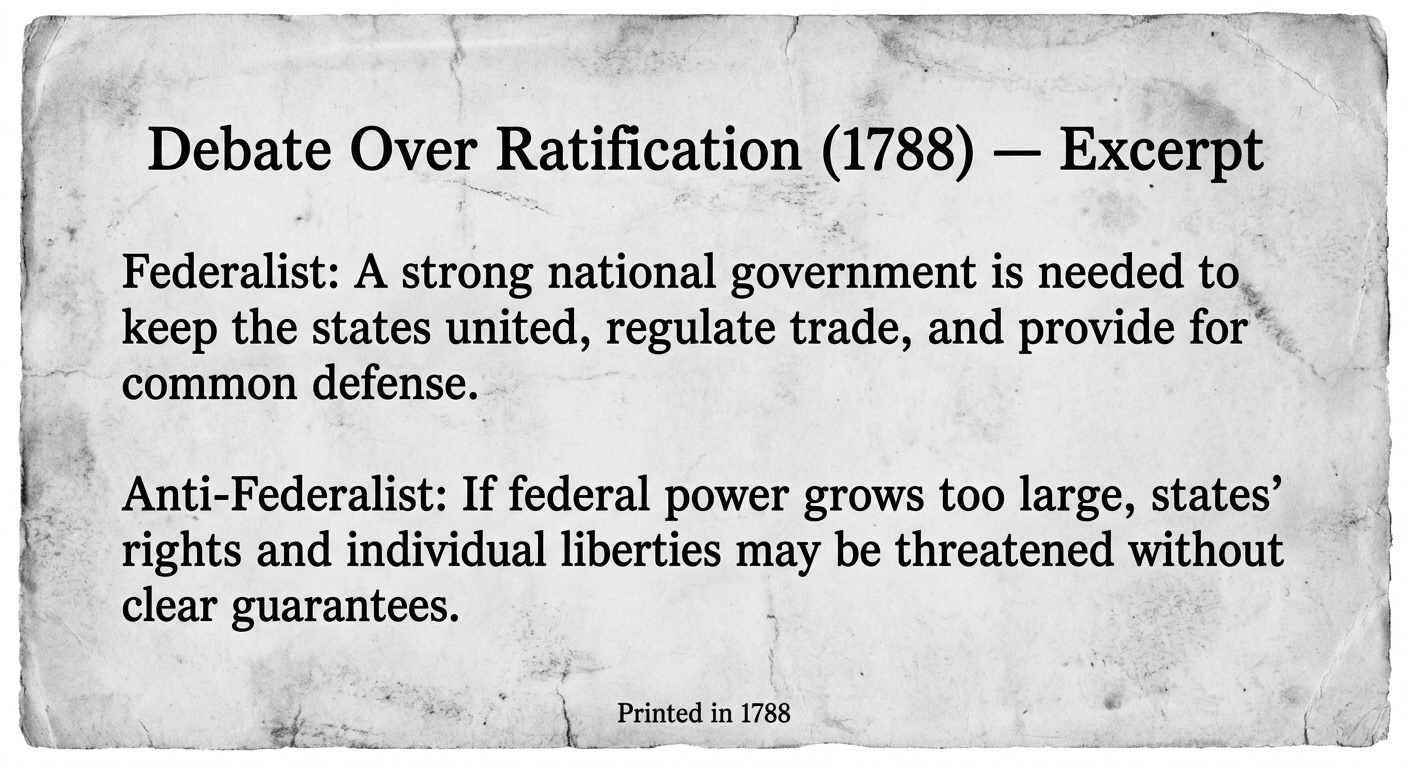
By 1787–1788, many Americans debated whether to replace the Articles of Confederation with the Constitution. Supporters argued a stronger central government was necessary to solve national problems. Opponents worried federal power could threaten states’ rights and individual freedoms unless limits were clearly stated.
Which claim BEST reflects the Anti-Federalist concern shown in the excerpt?
Using evidence from the excerpt, explain one reason supporters of the Constitution wanted a stronger central government and one reason opponents wanted limits on federal power.
Include a time clue (such as “after 1781” or “in 1788”) in your response.
Place the excerpt in a brief timeline: identify one development that happened BEFORE this debate and one development that happened AFTER it.
Explain how disagreements about federal power and individual freedoms connect all three events.
Which event MOST logically comes NEXT in a timeline after debates like the one in the excerpt (1788)?
Which earlier condition BEST helps explain why the Federalist argument in the excerpt became persuasive by 1787–1788?