Twa kɔ nsɛm atitiriw so
Log in
Sign up for FREE
arrow_back
Laabri

7.5 - The Constitution in Practice: - Practice B

star
star
star
star
star
Last updated about 1 month ago
20 Nsɛmmisa
Hyɛ no nsow a efi ɔkyerɛwfo no hɔ:

Use the historical document(s) and the short readings in the left panel to answer the associated questions.

Use the historical document(s) and the short readings in the left panel to answer the associated questions.

Ɛhia
1
7.5.a
DOK.SS.2
Ɛhia
1
7.5.a
DOK.SS.2
Ɛhia
1
7.5.a
DOK.SS.2
Ɛhia
2
7.5.a
DOK.SS.2
Ɛhia
2
7.5.a
DOK.SS.2
Ɛhia
1
7.5.b
DOK.SS.2
Ɛhia
1
7.5.b
DOK.SS.2
Ɛhia
1
7.5.b
DOK.SS.2
Ɛhia
2
7.5.b
DOK.SS.2
Ɛhia
2
7.5.b
DOK.SS.2
Ɛhia
1
7.5.c
DOK.SS.2
Ɛhia
1
7.5.c
DOK.SS.2
Ɛhia
1
7.5.c
DOK.SS.2
Ɛhia
2
7.5.c
DOK.SS.2
Ɛhia
2
7.5.c
DOK.SS.2
Ɛhia
1
7.5.d
DOK.SS.2
Ɛhia
1
7.5.d
DOK.SS.2
Ɛhia
1
7.5.d
DOK.SS.2
Ɛhia
2
7.5.d
DOK.SS.2
Ɛhia
2
7.5.d
DOK.SS.2

In early 1788, Americans debated whether to ratify the new Constitution written in 1787. Supporters argued that the national government would have only enumerated powers, while other powers would remain with the states. Such arguments responded to problems under the Articles of Confederation.
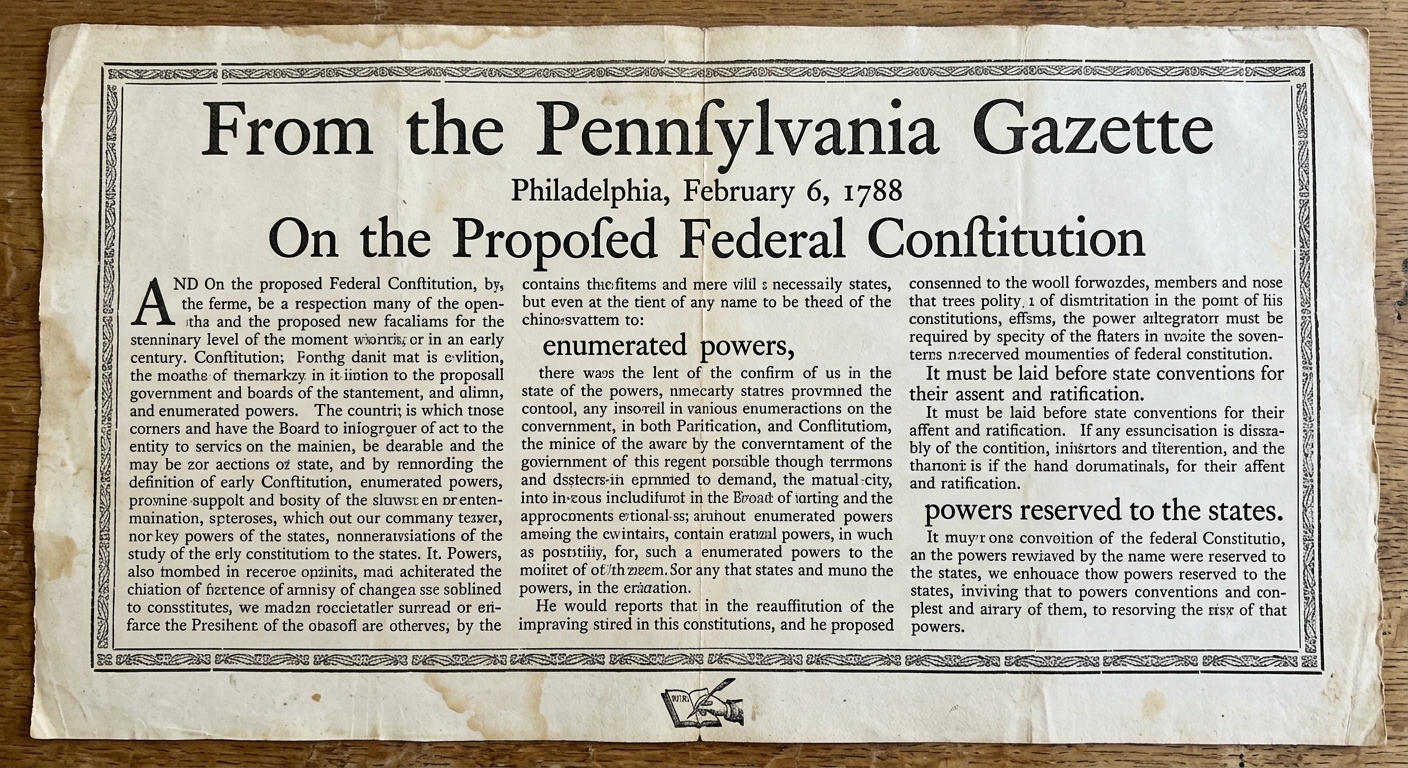
A parchment-style newspaper broadside dated February 6, 1788, titled “On the Proposed Federal Constitution,” discussing enumerated federal powers and powers reserved to the states during ratification debates.

Asemmisa {{asɛmmisaAhyɛnsode}}
1.

Which earlier problem best helps explain why a February 1788 writer would emphasize “enumerated powers” and “powers reserved to the states” when arguing for ratification?

Asemmisa {{asɛmmisaAhyɛnsode}}
2.

The February 1788 document would MOST directly come after which event?

Asemmisa {{asɛmmisaAhyɛnsode}}
3.

In the ratification timeline, a February 1788 argument about “reserved” state powers would MOST likely be aimed at

Asemmisa {{asɛmmisaAhyɛnsode}}
4.

Using evidence from the historical document and the reading stimulus, explain why federalism (shared powers) became an important argument during ratification.

In your paragraph, describe one earlier problem or event and explain one later step people might demand if they still worried about federal power.

Asemmisa {{asɛmmisaAhyɛnsode}}
5.

Explain how the Constitution’s federalist system shares power between the federal, state, and local governments.

Then describe how that division of power could influence what happened after ratification in one policy area (such as education, elections, or public safety).

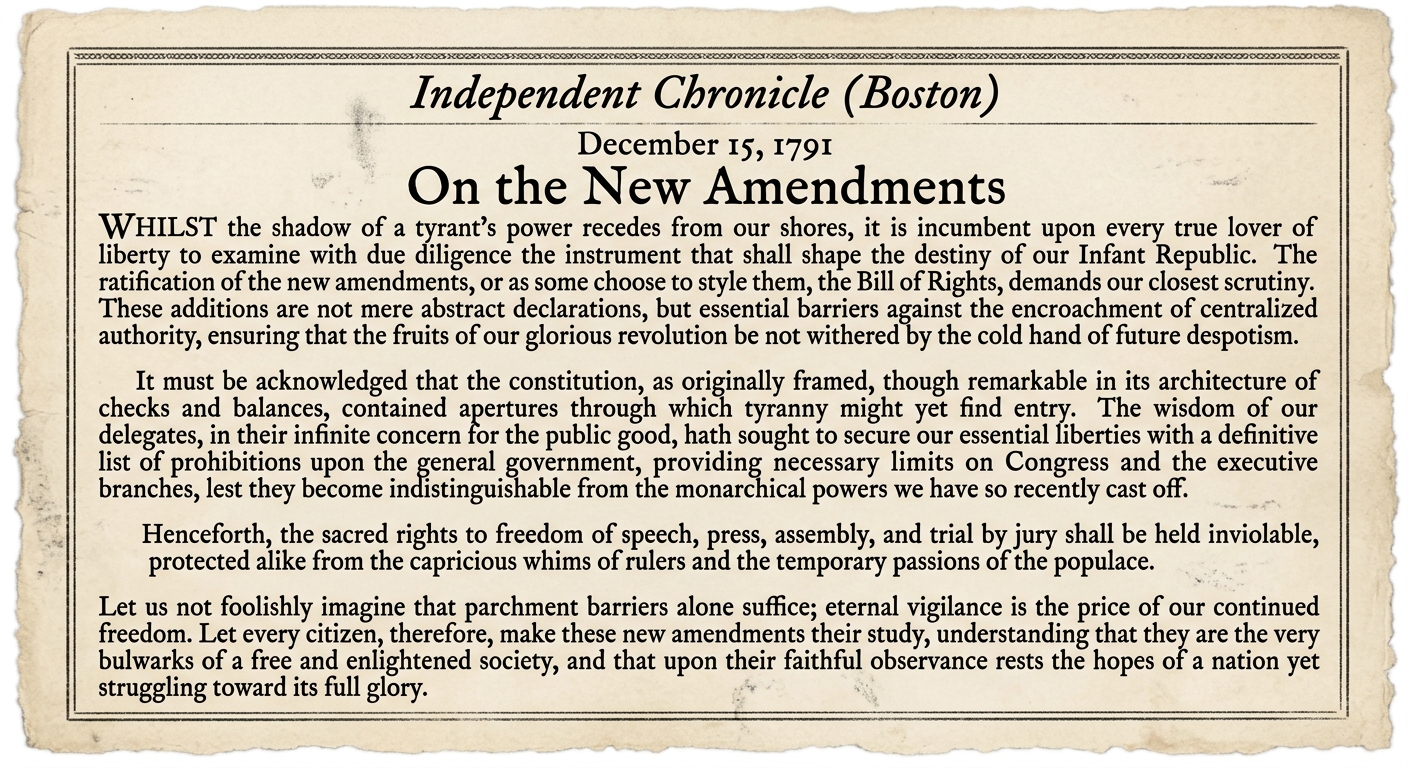
By 1791, the Constitution had been ratified, but many Americans still worried about federal power. Congress proposed amendments that became known as the Bill of Rights. These changes clarified individual rights and fit into a system of checks and balances among the branches of government.

A pamphlet-style page dated December 15, 1791, titled “On the New Amendments,” referencing the Bill of Rights, checks and balances, and limits on government power.

Asemmisa {{asɛmmisaAhyɛnsode}}
6.

A December 1791 document about “new amendments” would MOST directly respond to which earlier concern during the ratification debates (1787–1788)?

Asemmisa {{asɛmmisaAhyɛnsode}}
7.

This December 1791 document would MOST directly come after which event?

Asemmisa {{asɛmmisaAhyɛnsode}}
8.

In the early national timeline, a pamphlet praising “checks and balances” and the Bill of Rights would MOST likely be trying to influence

Asemmisa {{asɛmmisaAhyɛnsode}}
9.

Using evidence from the historical document and the reading stimulus, explain how the Bill of Rights fit into the Constitution’s system of checks and balances.

In your paragraph, describe one earlier concern that led to amendments and explain one later effect those amendments could have on government actions.

Asemmisa {{asɛmmisaAhyɛnsode}}
10.

Explain, in chronological order, how debates from 1787–1788 could lead to the 1791 Bill of Rights.

In your paragraph, include one reason people wanted amendments and one example of a right that could limit a branch of government.

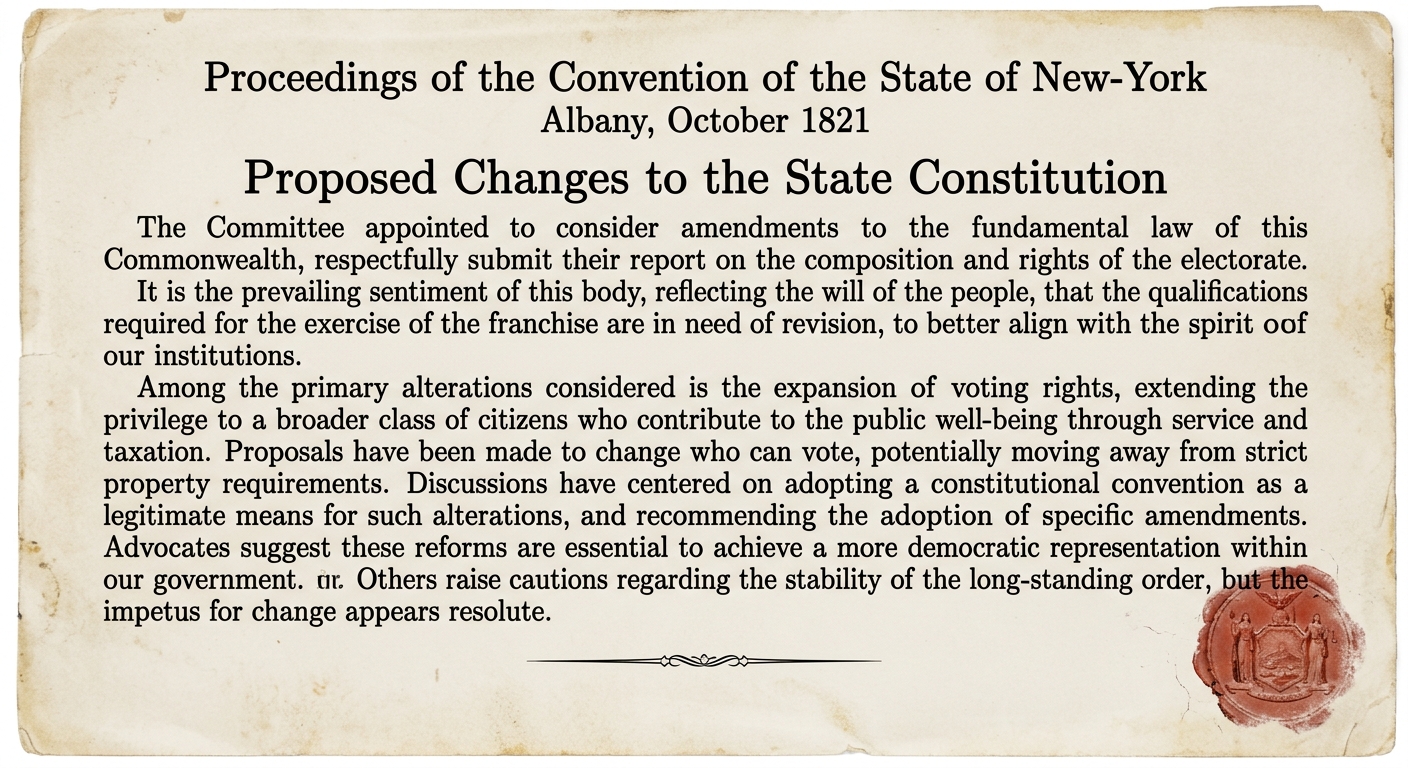
After the U.S. Constitution was adopted, states also revised their own constitutions. In New York, early 19th-century changes made the state government more democratic. These reforms used formal processes like conventions and amendments to adjust voting rules and the structure of government over time.

A printed excerpt dated October 1821 titled “Proposed Changes to the State Constitution,” describing planned reforms to make New York’s government more democratic through constitutional change.

Asemmisa {{asɛmmisaAhyɛnsode}}
11.

Which earlier development BEST explains why New York leaders in 1821 would discuss changing their state constitution through a formal process?

Asemmisa {{asɛmmisaAhyɛnsode}}
12.

An October 1821 document about revising New York’s constitution would MOST directly come after which event?

Asemmisa {{asɛmmisaAhyɛnsode}}
13.

In the early 1800s timeline, a proposal to expand voting rights in New York would MOST likely be aimed at influencing

Asemmisa {{asɛmmisaAhyɛnsode}}
14.

Using evidence from the historical document and reading stimulus, explain how the New York State Constitution could change over time.

In your paragraph, describe one formal method of change and explain one reason early 19th-century reformers wanted a “more democratic” system.

Asemmisa {{asɛmmisaAhyɛnsode}}
15.

Explain, in chronological order, how concerns about representation and participation could lead from the original New York State Constitution to reforms in the early 1800s.

In your paragraph, include one change reformers might support and one effect that change could have on elections or lawmaking.

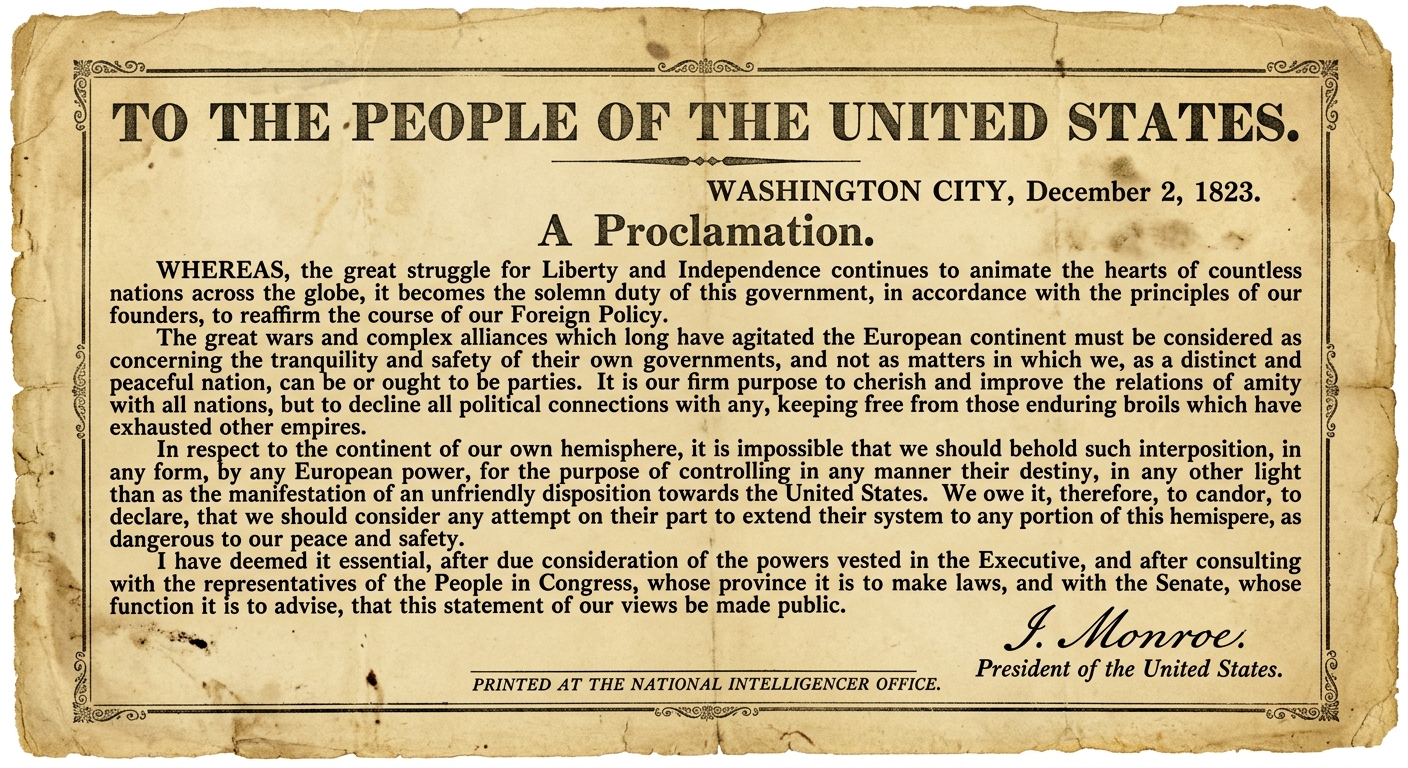
After independence, the United States faced foreign and domestic disputes that tested the Constitution. In the 1820s, leaders debated how to avoid European conflicts while protecting the Western Hemisphere. A public statement from this era could show how separation of powers and states’ rights shaped foreign policy decisions.

An aged-parchment broadside dated December 2, 1823, warning European powers against interfering in the Western Hemisphere and stating the United States will avoid European wars.

Asemmisa {{asɛmmisaAhyɛnsode}}
16.

Which earlier event BEST helps explain why a U.S. leader in 1823 might warn European powers against interfering in the Western Hemisphere?

Asemmisa {{asɛmmisaAhyɛnsode}}
17.

A proclamation dated December 1823 would MOST directly come after which event?

Asemmisa {{asɛmmisaAhyɛnsode}}
18.

In the 1820s timeline, a statement urging the United States to avoid European wars while protecting the Western Hemisphere would MOST likely be aimed at influencing

Asemmisa {{asɛmmisaAhyɛnsode}}
19.

Using evidence from the historical document and the reading stimulus, explain how foreign policy disputes could test the Constitution’s separation of powers.

In your paragraph, describe one role of Congress and one role of the president that could shape the policy described in the document.

Asemmisa {{asɛmmisaAhyɛnsode}}
20.

Explain, in chronological order, how earlier events after independence could lead to an 1823 policy warning European powers.

In your paragraph, include one earlier conflict or concern and one reason leaders might still prefer isolation from European wars.