Twa kɔ nsɛm atitiriw so
Log in
Sign up for FREE
arrow_back
Laabri

7.7 - Reform Movements: - Practice B

star
star
star
star
star
Last updated about 1 month ago
20 Nsɛmmisa
Hyɛ no nsow a efi ɔkyerɛwfo no hɔ:

Use the historical document(s) and the short readings in the left panel to answer the associated questions.

Use the historical document(s) and the short readings in the left panel to answer the associated questions.

7.7.a
DOK.SS.2
7.7.b
DOK.SS.2
7.7.d
DOK.SS.2
Ɛhia
1
7.7.a
DOK.SS.2
Ɛhia
1
7.7.a
DOK.SS.2
Ɛhia
1
7.7.a
DOK.SS.2
Ɛhia
1
7.7.a
DOK.SS.2
Ɛhia
1
7.7.a
DOK.SS.2
Ɛhia
1
7.7.b
DOK.SS.2
Ɛhia
1
7.7.b
DOK.SS.2
Ɛhia
1
7.7.b
DOK.SS.2
Ɛhia
1
7.7.b
DOK.SS.2
Ɛhia
1
7.7.b
DOK.SS.2
Ɛhia
1
7.7.c
DOK.SS.2
Ɛhia
1
7.7.c
DOK.SS.2
Ɛhia
1
7.7.c
DOK.SS.2
Ɛhia
1
7.7.c
DOK.SS.2
Ɛhia
1
7.7.c
DOK.SS.2
Ɛhia
1
7.7.d
DOK.SS.2
Ɛhia
1
7.7.d
DOK.SS.2
Ɛhia
1
7.7.d
DOK.SS.2
Ɛhia
1
7.7.d
DOK.SS.2
Ɛhia
1
7.7.d
DOK.SS.2

During the 1830s and 1840s, revival preaching in the Second Great Awakening encouraged many Americans to “perfect” society. Reformers organized voluntary societies, gathered signatures, and circulated printed appeals. Read the pledge below and consider what it suggests about reform goals and timing.
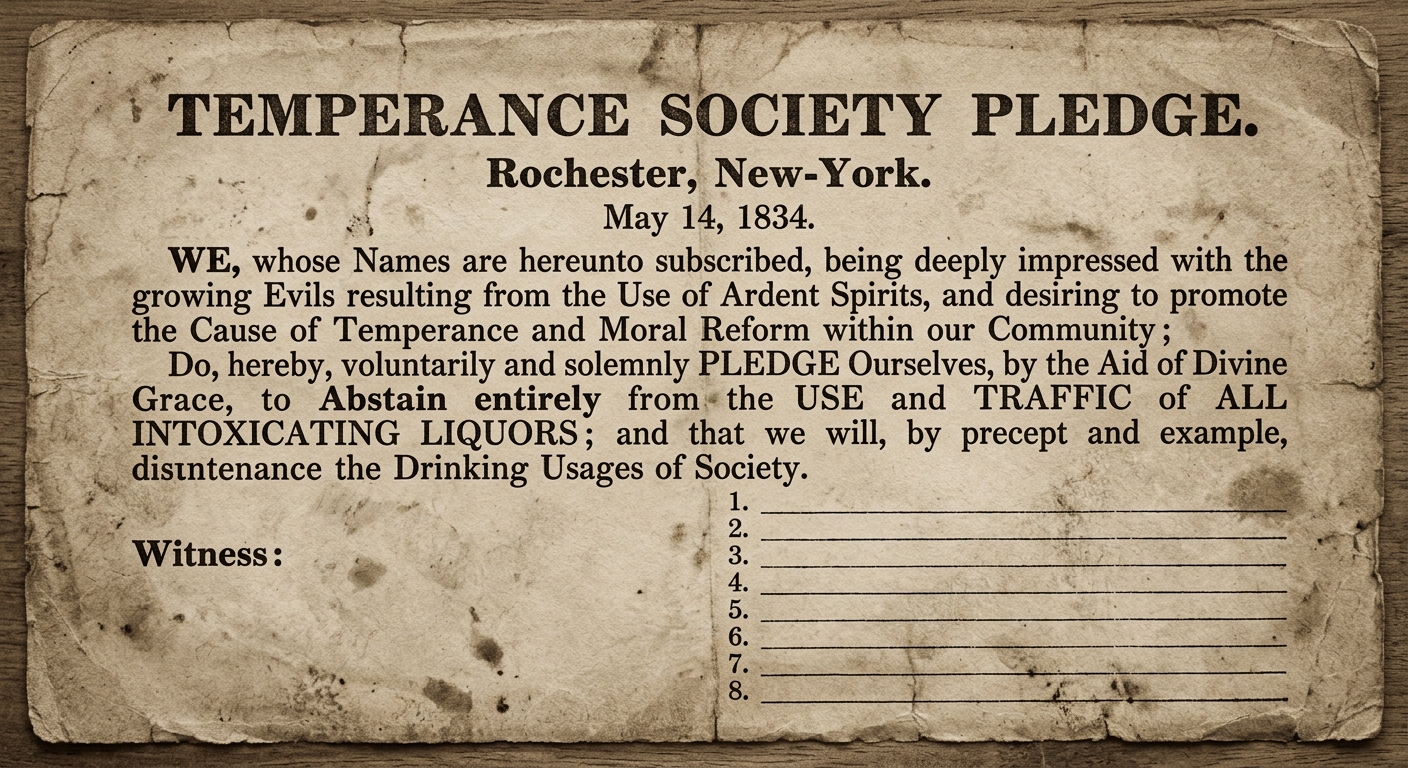
Sepia broadside titled “Temperance Society Pledge,” dated May 14, 1834, Rochester, New York, with a short abstinence pledge and blank lines for signatures.

Asemmisa {{asɛmmisaAhyɛnsode}}
1.

Which earlier development best helps explain why appeals like this pledge gained support in the decades just before 1834?

Asemmisa {{asɛmmisaAhyɛnsode}}
2.

Describe one short-term effect and one longer-term effect that reform movements like temperance could have after 1834.

Make sure your answer clearly shows the order in time.

Asemmisa {{asɛmmisaAhyɛnsode}}
3.

After people signed a pledge like this, which action would most likely happen next as reform efforts expanded?

Asemmisa {{asɛmmisaAhyɛnsode}}
4.

Explain how the pledge reflects a shift from religious revival ideas to organized reform.

Use at least two details from the reading and/or document, and use chronological language (for example, “earlier,” “by the 1830s,” or “later”).

Asemmisa {{asɛmmisaAhyɛnsode}}
5.

Based on the date and content of the pledge, this document most directly fits within which period of U.S. history?

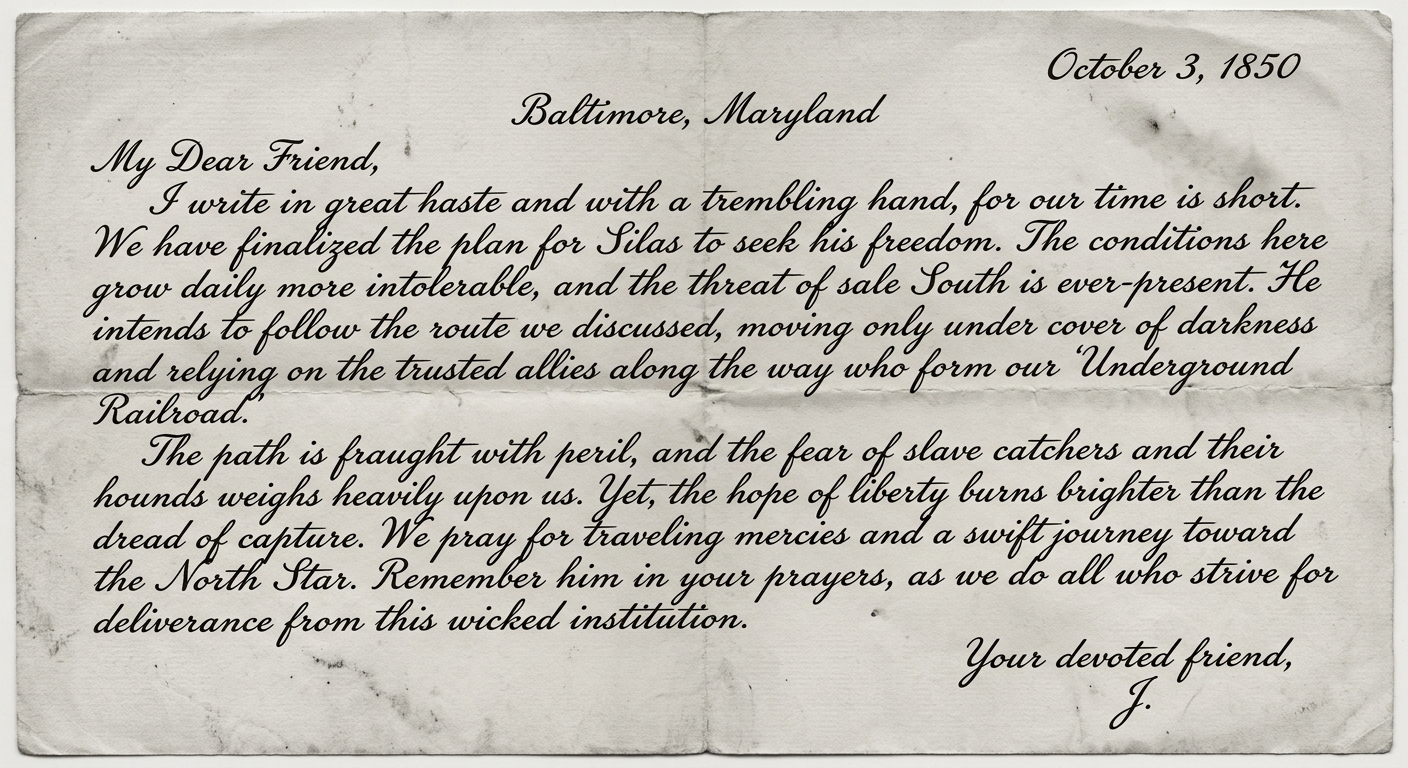
In the late 1840s and 1850s, enslaved African Americans resisted slavery in many ways, including escaping, forming networks, and sharing information. Abolitionists also spread printed appeals to build support. Read the letter excerpt below and consider what it reveals about resistance and timing.

Grayscale facsimile of a handwritten letter dated October 3, 1850, describing an enslaved person’s plan to escape and resist slavery with help from allies.

Asemmisa {{asɛmmisaAhyɛnsode}}
6.

Based on the date and content of the letter, this document most directly fits within which period of U.S. history?

Asemmisa {{asɛmmisaAhyɛnsode}}
7.

Which earlier development best helps explain why escape networks like the one described in the letter became more active around 1850?

Asemmisa {{asɛmmisaAhyɛnsode}}
8.

Describe one short-term effect and one longer-term effect that acts of resistance like escape could have after 1850.

Make sure your answer clearly shows the order in time.

Asemmisa {{asɛmmisaAhyɛnsode}}
9.

Explain how the letter shows resistance to slavery and why its timing matters.

Use at least two details from the reading and/or document, and use chronological language (for example, “earlier,” “by 1850,” or “later”).

Asemmisa {{asɛmmisaAhyɛnsode}}
10.

After a letter like this was written, which action would most likely happen next if the escape plan moved forward?

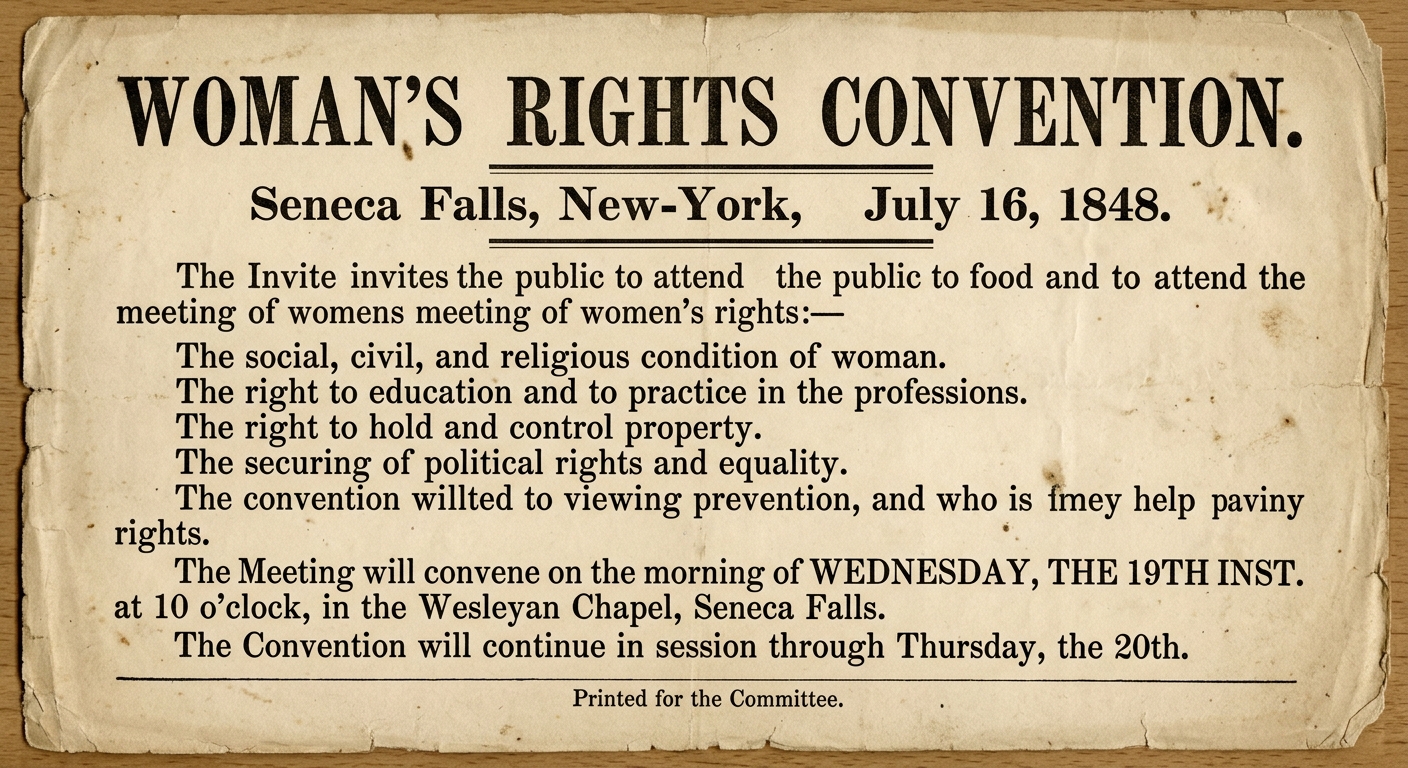
By the 1840s, many women who had organized in abolition and temperance also began pushing for women’s rights. They used meetings, petitions, and printed announcements to spread ideas. Read the handbill below and consider what it suggests about reform goals and how they developed over time.

Sepia handbill titled “Woman’s Rights Convention,” dated July 16, 1848, Seneca Falls, New York, inviting the public to a meeting about women’s rights.

Asemmisa {{asɛmmisaAhyɛnsode}}
11.

Which earlier development best helps explain why organizers in 1848 could quickly publicize a meeting like this one?

Asemmisa {{asɛmmisaAhyɛnsode}}
12.

Explain how the handbill reflects continuity and change in reform strategies over time.

Use at least two details from the reading and/or document, and use chronological language (for example, “earlier,” “by the 1840s,” or “later”).

Asemmisa {{asɛmmisaAhyɛnsode}}
13.

Describe one short-term effect and one longer-term effect that organizing for women’s rights after 1848 could have. Make sure your answer clearly shows the order in time.

Asemmisa {{asɛmmisaAhyɛnsode}}
14.

After a meeting announced by this handbill, which outcome would most likely happen next as the movement developed?

Asemmisa {{asɛmmisaAhyɛnsode}}
15.

Based on the date and purpose of the handbill, this document most directly fits within which period of U.S. history?

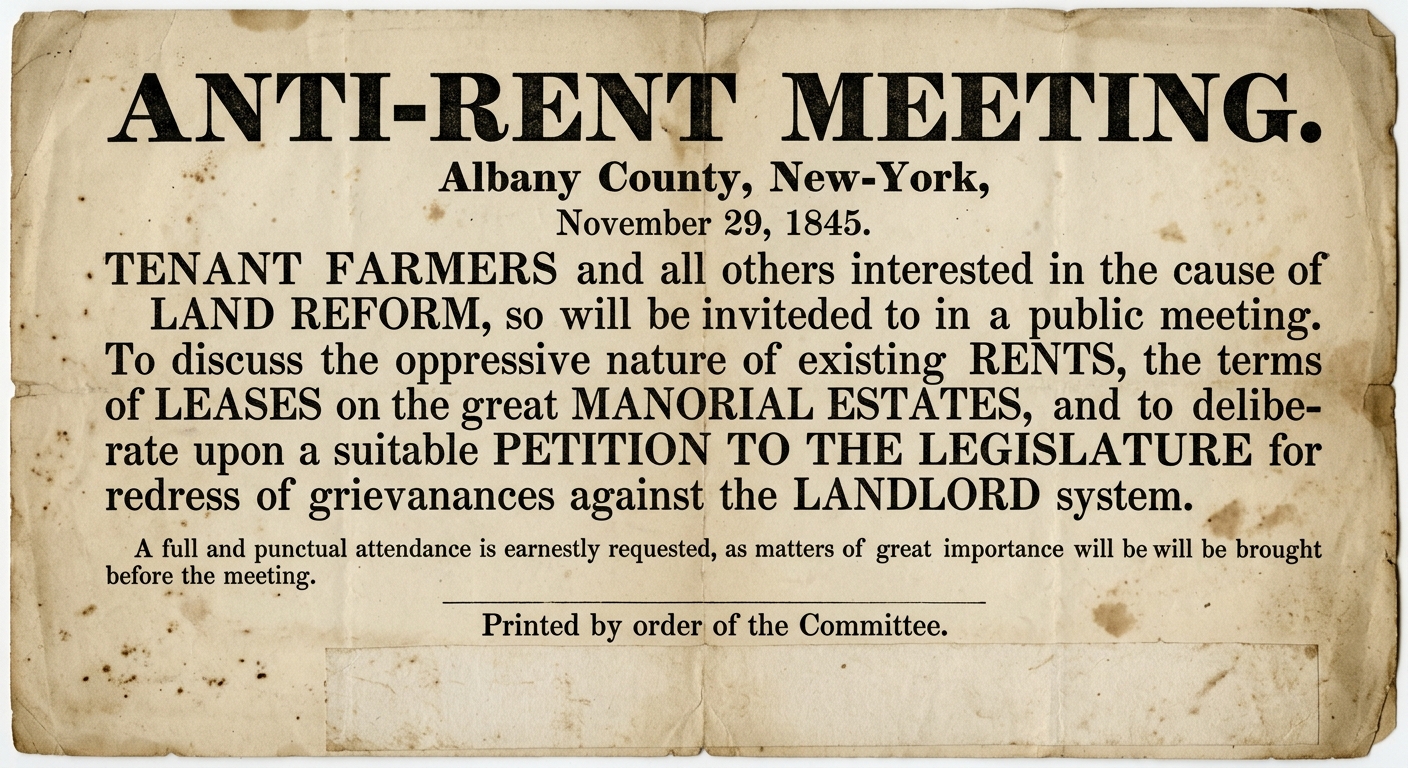
In the 1840s, some tenant farmers in New York State protested long-term lease systems on large manorial estates. They organized meetings, circulated printed notices, and petitioned for change. Read the broadside below and consider what it reveals about protest goals and timing.

Sepia broadside titled “Anti-Rent Meeting,” dated November 29, 1845, inviting tenant farmers in New York to meet about rents and petitioning for change.

Asemmisa {{asɛmmisaAhyɛnsode}}
16.

After a public meeting like the one announced, which action would most likely happen next as the Anti-Rent movement expanded?

Asemmisa {{asɛmmisaAhyɛnsode}}
17.

Describe one short-term effect and one longer-term effect that Anti-Rent protests after 1845 could have.

Make sure your answer clearly shows the order in time.

Asemmisa {{asɛmmisaAhyɛnsode}}
18.

Based on the date and purpose of the broadside, this document most directly fits within which period of U.S. history?

Asemmisa {{asɛmmisaAhyɛnsode}}
19.

Which earlier condition best helps explain why tenant farmers would organize an Anti-Rent meeting by 1845?

Asemmisa {{asɛmmisaAhyɛnsode}}
20.

Explain how the broadside shows a shift from long-standing landownership practices to organized protest.

Use at least two details from the reading and/or document, and use chronological language (for example, “earlier,” “by the 1840s,” or “later”).