Use the historical document(s) and the short readings in the left panel to answer the associated questions.
Historical Document:
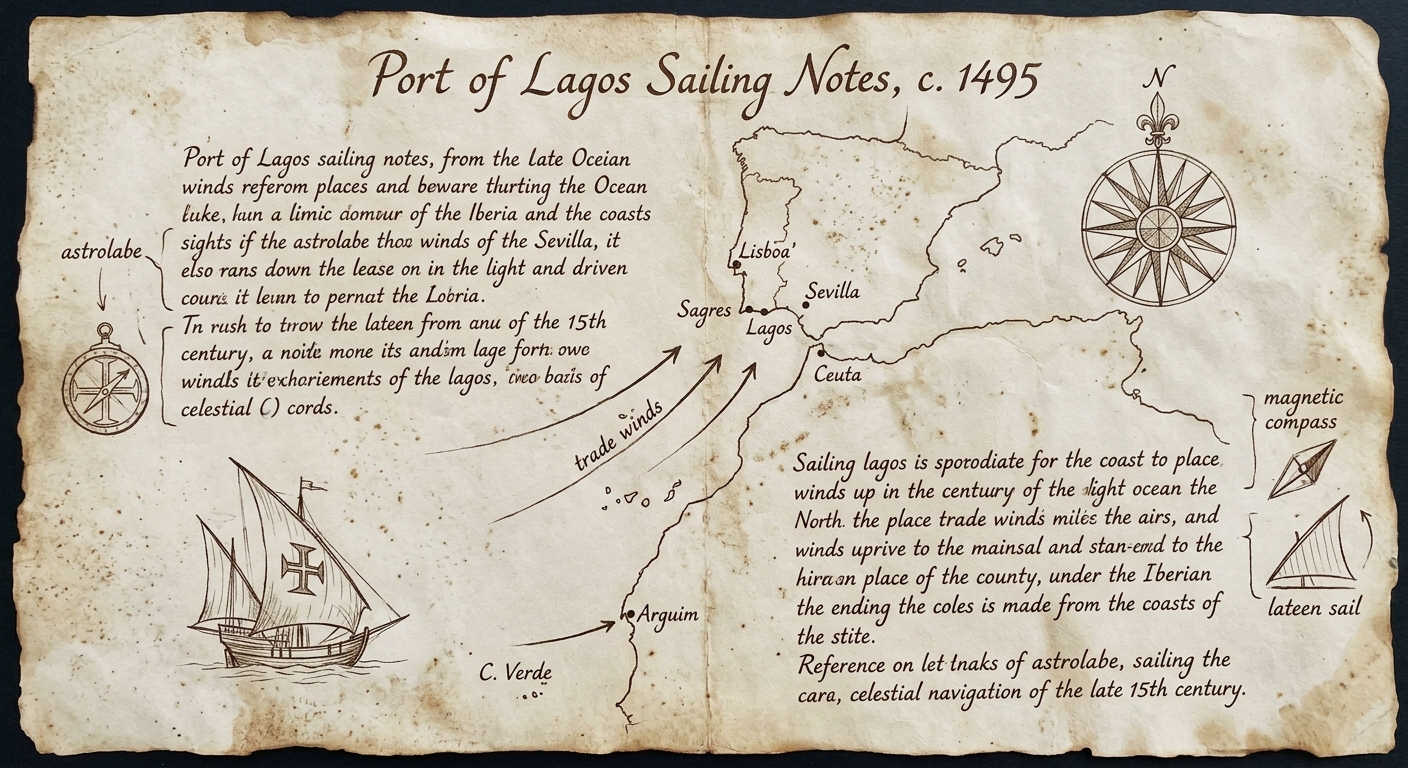
Sailors near Portugal recorded that caravels could tack into the wind and travel farther from land. Using a magnetic compass, an astrolabe, and knowledge of Atlantic trade winds, they planned routes along Africa and into the open ocean to reach new markets and goods.
Based on the document and reading, which tool most directly helped sailors find their latitude at sea?
Compare the exploration suggested by this document to ONE earlier long-distance exchange network (such as Viking voyages in the North Atlantic or the Silk Roads).
Identify one similarity and one difference, and explain how the improvements in the document help explain the difference.
Write one well-formed paragraph.
Compared with earlier Mediterranean trade routes that stayed close to coastlines, what is one key difference suggested by this document?
Which conclusion best connects the improvements in the document to Europeans launching the Age of Exploration?
Use evidence from the document and reading to explain how TWO different improvements (for example, a tool and a ship feature) helped European nations begin long-distance ocean exploration.
Write one well-formed paragraph.
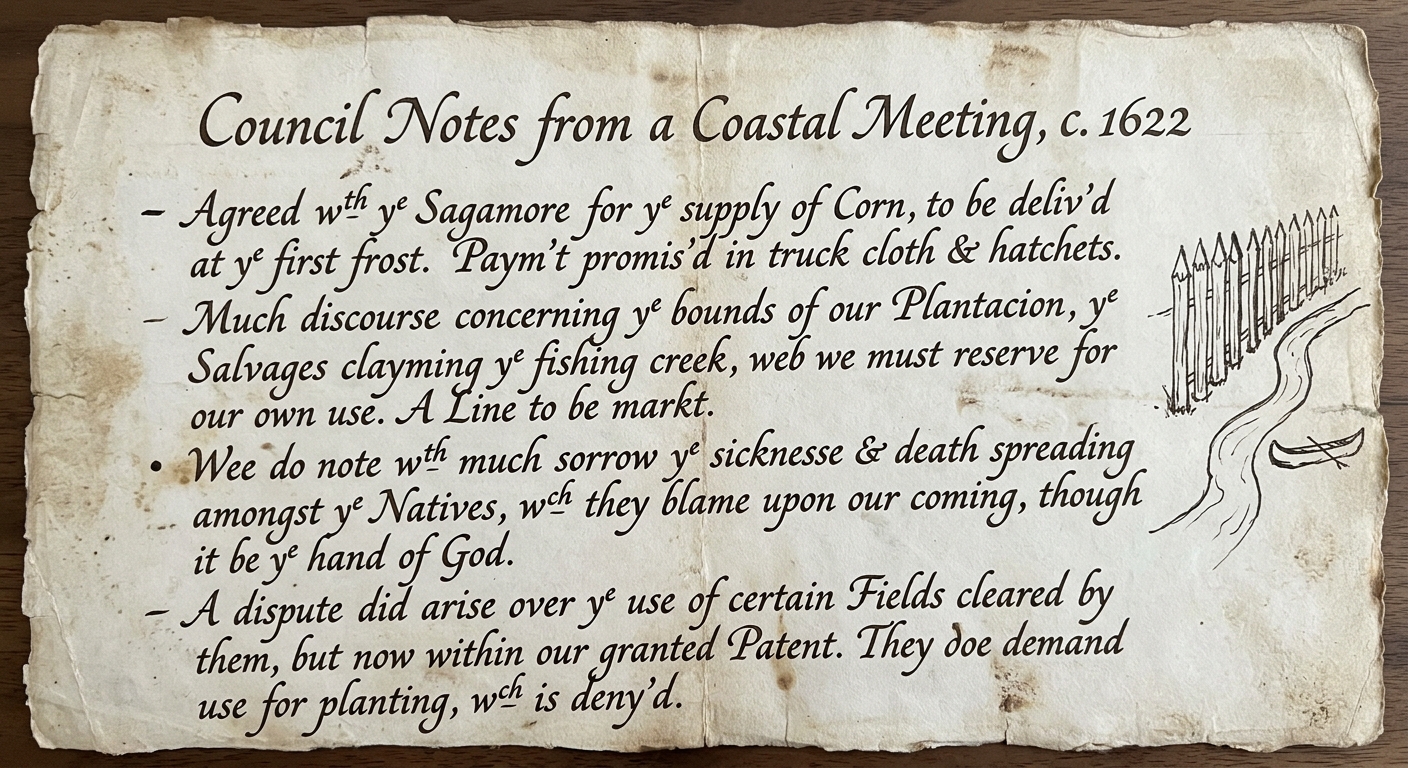
Historical Document:

A settler’s notes describe meeting with a nearby Native community to trade food and discuss land use. The notes mention sickness spreading after contact and disagreement over field boundaries, because the groups held different ideas about who could claim land and how it should be used.
Based on the document, which interaction is an example of cooperation that could also create dependence or tension later?
Use evidence from the document and reading to compare TWO perspectives on the meeting: one a settler might have and one a Native community member might have.
Explain how each perspective could shape what each group thought was a fair outcome. Write one well-formed paragraph.
Which detail from the document and reading best illustrates how different ideas about property could lead to conflict?
Compared to many earlier European contacts in the Americas, what consequence in this document often increased the imbalance of power in later encounters?
Compare the conflicts suggested by this document to ONE other colonial region or European group’s interactions with Native American societies.
Identify one similarity and one difference, and explain how differences in land ownership ideas or settlement patterns help explain the difference.
Write one well-formed paragraph.
Historical Document:

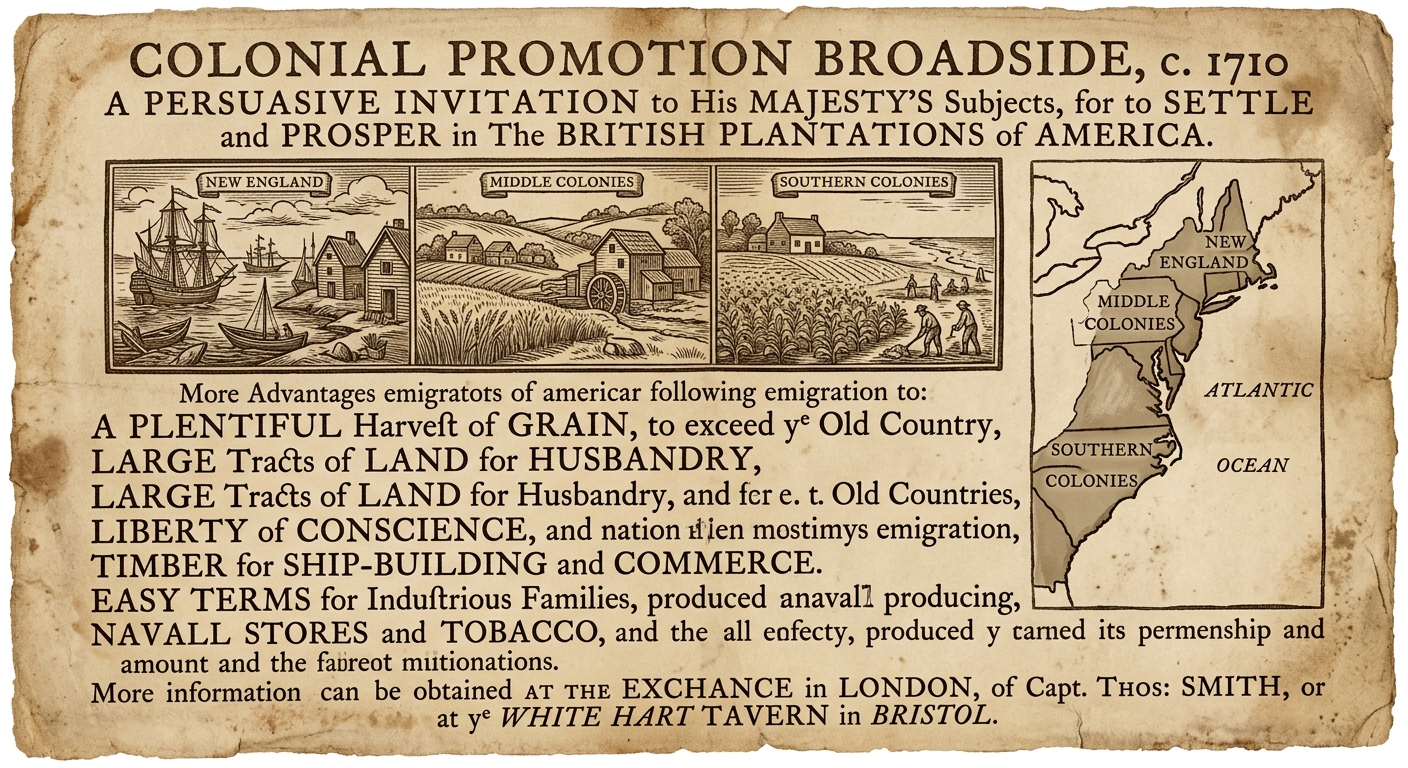
A colonial advertisement described different regions attracting settlers. It noted New England’s rocky soil and busy ports, the Middle Colonies’ rivers and grain exports, and the Southern Colonies’ warm climate and plantation crops. It also mentioned that access to waterways and labor shaped each region’s economy.
Which comparison between New England and the Southern Colonies is best supported by the document and reading?
Based on the document and reading, which factor is most directly linked to why the Middle Colonies developed strong grain exports?
Compare ONE colonial region described in the document (New England, Middle, or Southern) to ONE other place in the Atlantic world (for example, a Caribbean sugar island or a Spanish colony).
Identify one similarity and one difference, and explain how climate, physical geography, or labor needs help explain the difference. Write one well-formed paragraph.
A historian compares this broadside to earlier European colonies in the Caribbean. Which difference would the historian most likely emphasize?
Use evidence from the document and reading to explain how TWO geographic factors (for example, climate, soil, rivers, or ports) contributed to different colonial economies in North America.
Write one well-formed paragraph.
Historical Document:

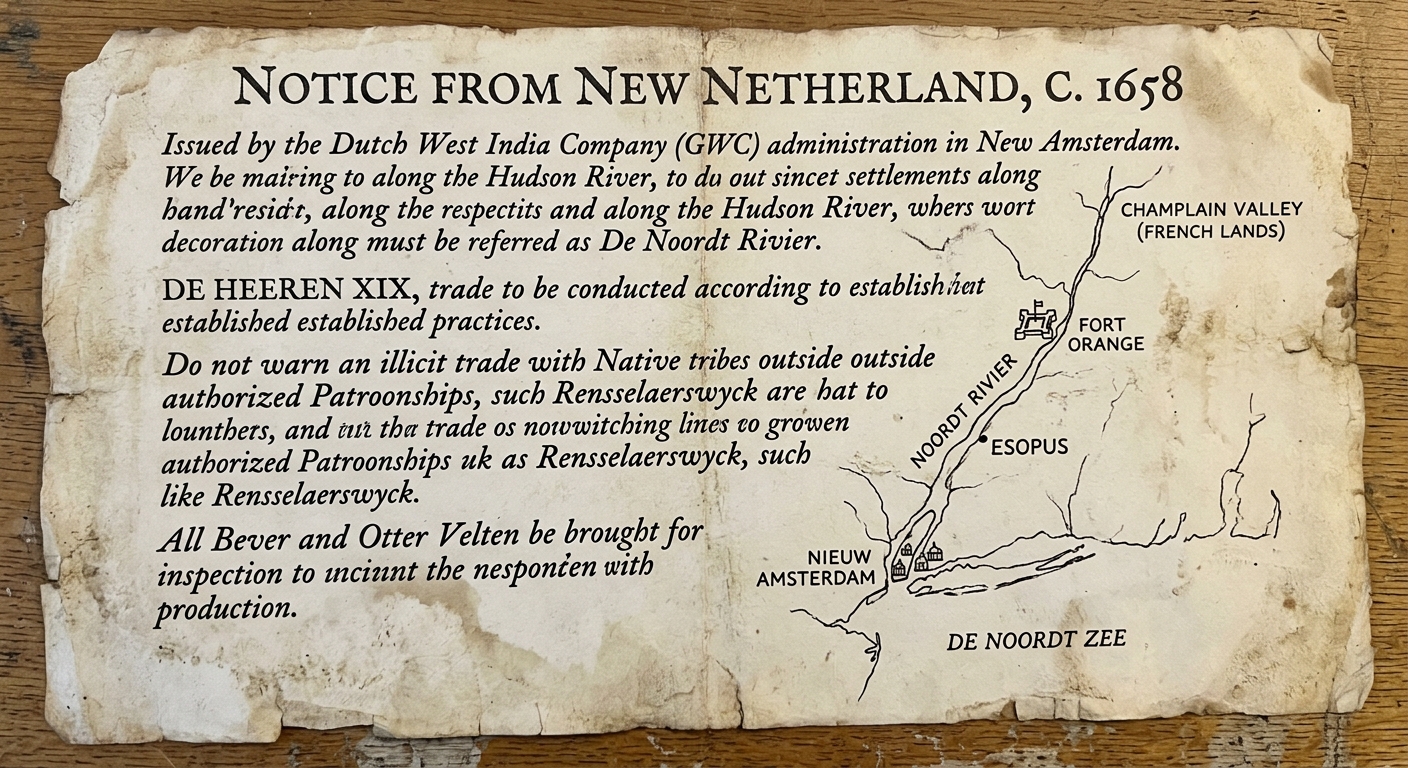
A notice from New Netherland describes Dutch settlements along the Hudson River and trading posts that exchanged European goods for furs. It notes New Amsterdam near the harbor and Fort Orange upriver. A margin note contrasts this with French settlements in the Champlain Valley, north of the river corridor.
Compared to many English colonies that expanded through large-scale farming settlements, what economic focus does this document suggest for New Netherland?
Based on the document and reading, which geographic feature best explains why the Dutch placed settlements along the Hudson River?
Which comparison between the Dutch in the Hudson River Valley and the French in the Champlain Valley is best supported by the document and reading?
Use evidence from the document and reading to explain how Dutch settlement and trade along the Hudson River could create long-lasting cultural or economic contributions in the region.
Write one well-formed paragraph.
Compare Dutch settlement patterns in New Netherland to ONE other colonial region (for example, New England, the Middle Colonies under English rule, or French Canada).
Identify one similarity and one difference, and explain how geography (rivers, climate, or access to trade routes) helps explain the difference.
Write one well-formed paragraph.
Historical Document:

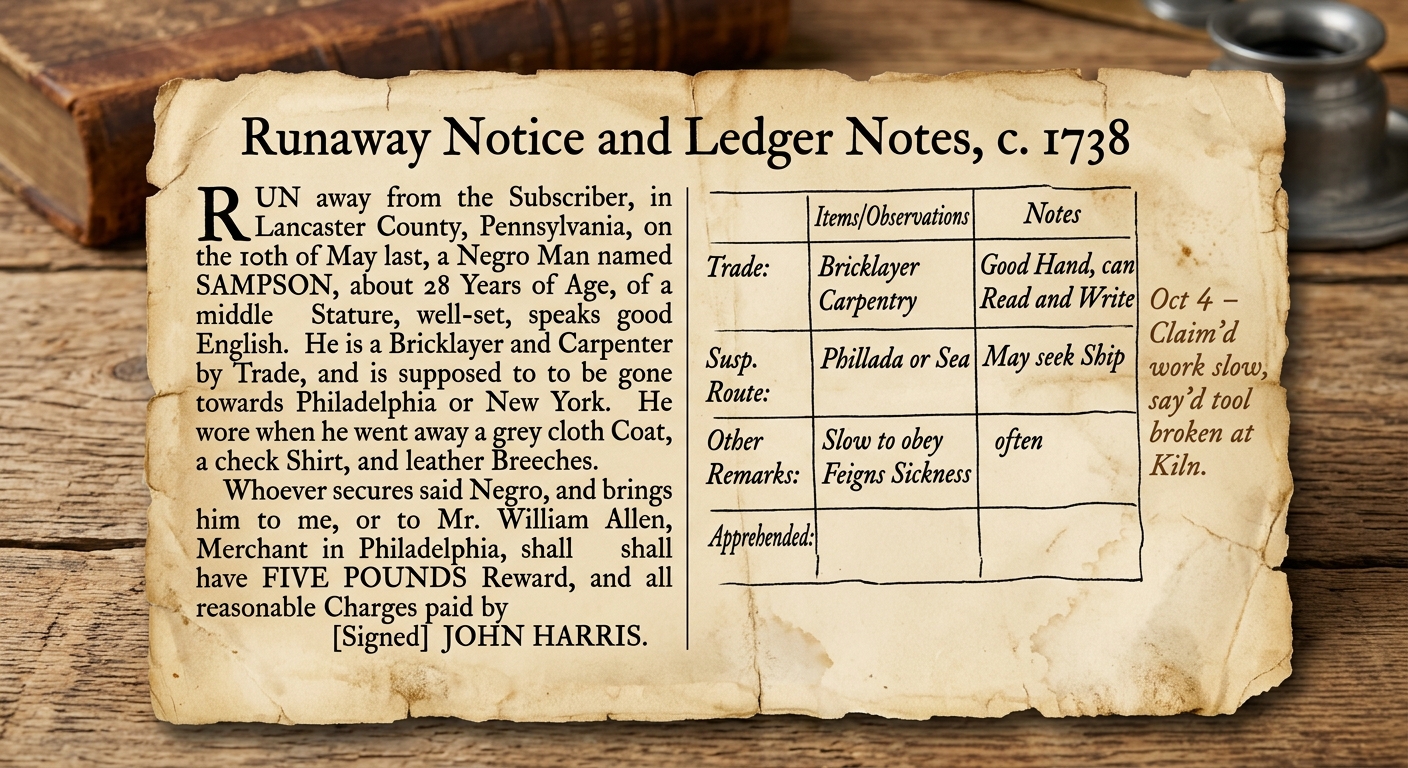
A plantation record includes a runaway notice and brief work notes. The notice offers a reward for the capture of an enslaved person who left without permission. A margin note mentions “tools broken” and “work slowed,” suggesting everyday resistance as well as attempts to escape.
Use evidence from the document and reading to explain how TWO different strategies of survival or resistance are suggested (for example, self-emancipation and everyday resistance).
Write one well-formed paragraph.
Compare the resistance suggested by this document to ONE other colonial region or time period in which enslaved Africans resisted (for example, a maroon community, a shipboard revolt, or an uprising).
Identify one similarity and one difference, and explain how local conditions (geography, labor system, or laws) help explain the difference.
Write one well-formed paragraph.
Compared with indentured servitude, which feature of slavery in the colonies is most clearly suggested by this document?
Which detail from the document and reading best shows a strategy of resistance besides running away?
Which conclusion best connects the document to how slavery grew in the colonies over the 1600s–1700s?