Use the historical document(s) and the short readings in the left panel to answer the associated questions.
Historical Document: British Notice, 1764
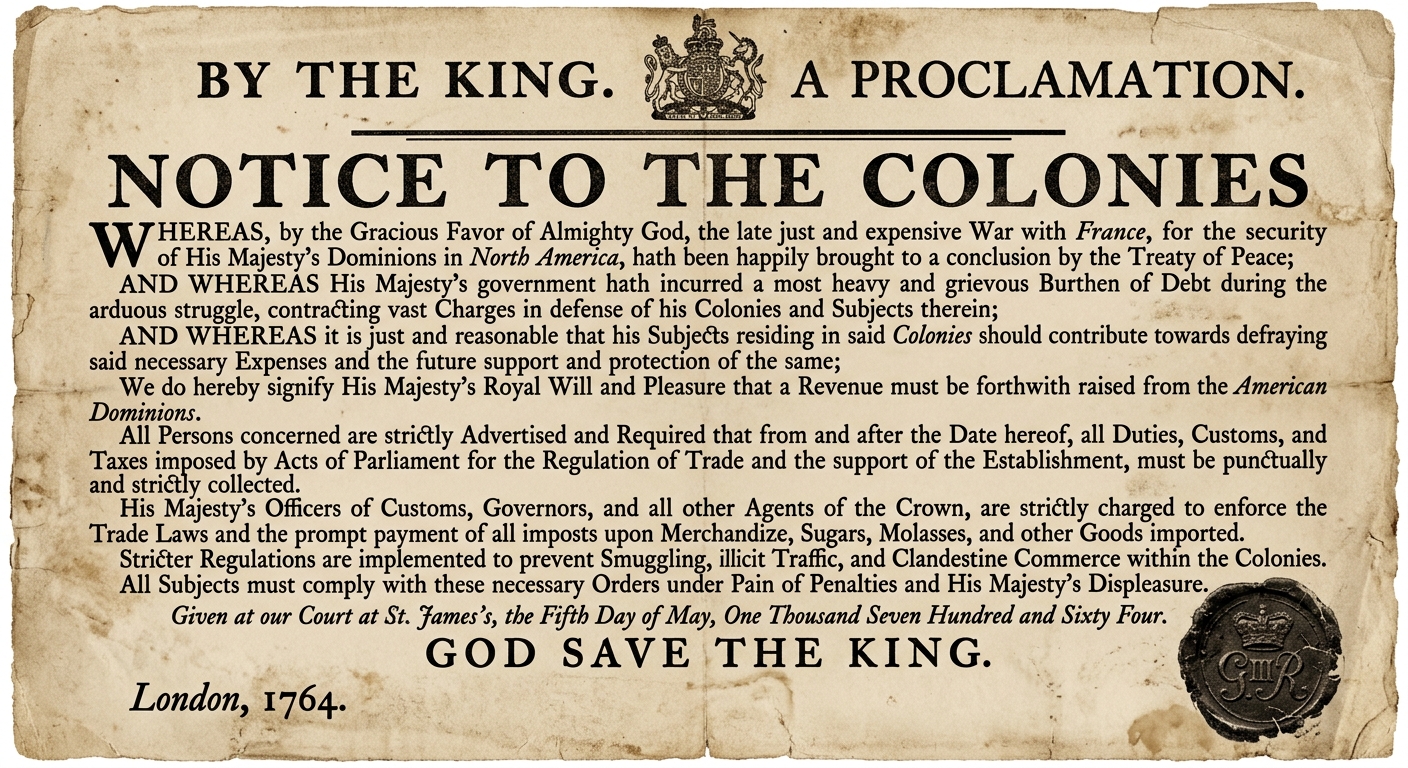
After Britain’s costly war with France in North America, officials argued the colonies should help pay for defense and administration. Parliament tightened enforcement of trade rules and created new duties. Many colonists compared this to earlier, looser oversight and saw it as a change.
Based on the document and the reading stimulus, which change in the relationship between Great Britain and the colonies is BEST supported?
Which earlier conflict provides the most direct context for the revenue and enforcement policies described in the 1764 document?
Compare two perspectives about the 1764 policies:
(1) a British official and
(2) a colonial merchant.
Explain why each perspective would differ, using evidence from the sources. Write one paragraph.
Using evidence from both the document and the reading stimulus, explain how conflicts between France and Great Britain in the 17th–18th centuries altered the relationship between the colonies and Great Britain.
Write one well-formed paragraph.
Which comparison BEST explains why some colonists might view the 1764 policies differently than British officials did?
Historical Document:
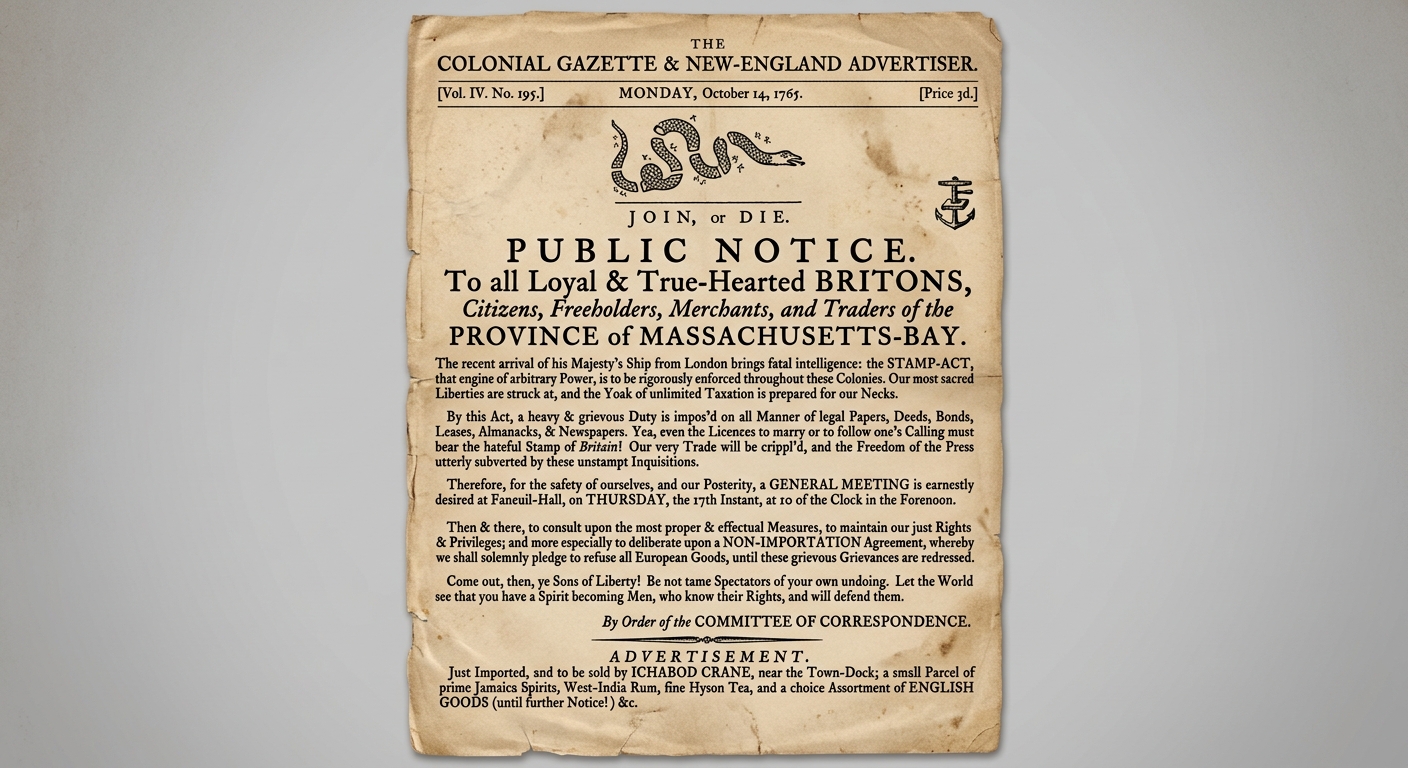
Colonial Newspaper Notice, 1765

After the French and Indian War, Parliament passed new policies to raise money and tighten control in the colonies. Measures like the Stamp Act affected everyday business. Colonial responses varied—petitions, public protests, and boycotts—because many colonists believed taxes required their consent.
Based on the facsimile, which British policy is the BEST match for what the notice is describing?
Which colonial response to British policies is BEST supported by the document?
Using evidence from both the document and the reading stimulus, explain how British political and economic policies after the French and Indian War triggered varied colonial responses.
Write one well-formed paragraph.
Which comparison BEST contextualizes the disagreement shown in the sources?
Compare two colonial perspectives on the policies in the sources:
(1) a printer or merchant in a port city and
(2) a small farmer inland.
Explain how each might respond and why, using evidence from the sources.
Write one paragraph.
Historical Document:
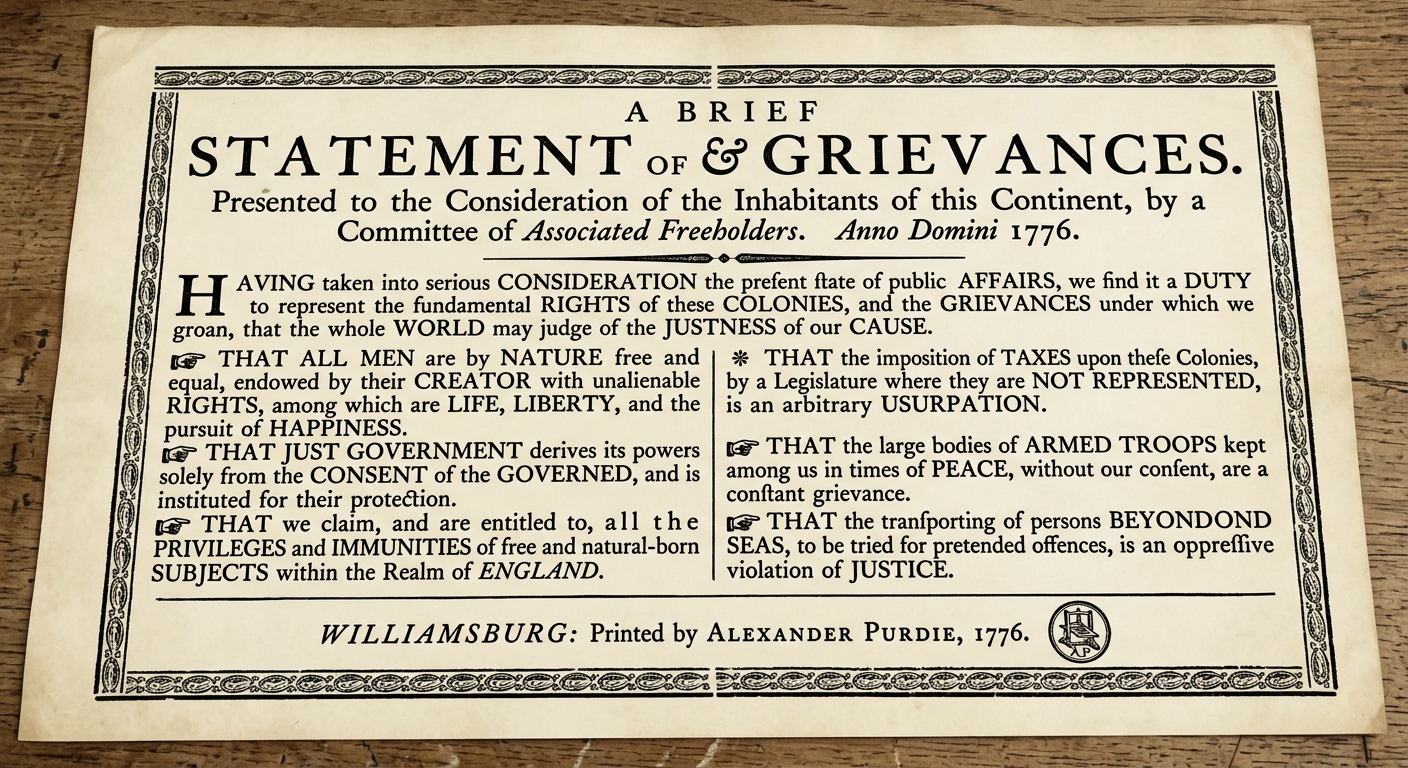
A Brief Statement of Rights & Grievances, 1776

As conflict with Britain grew, some colonial leaders argued that government should protect natural rights and depend on the consent of the governed. They also claimed traditional rights as Englishmen. These ideas shaped complaints about taxes, enforcement, and military actions that later appeared in the Declaration of Independence.
Compare two perspectives on the broadside’s argument:
(1) a colonial patriot leader and
(2) a loyalist merchant.
Explain why each might agree or disagree, using evidence from the broadside and/or the reading stimulus.
Write one paragraph.
Which comparison BEST shows how the broadside uses BOTH Enlightenment ideas and rights as Englishmen to criticize British policy?
Which Enlightenment idea is MOST clearly reflected in the broadside’s argument?
Based on the broadside, which grievance against British actions is BEST supported?
Using evidence from both the broadside and the reading stimulus, explain how Enlightenment ideas and colonists’ rights as Englishmen shaped the grievances colonial leaders later expressed in the Declaration of Independence.
Write one well-formed paragraph.
Historical Document:
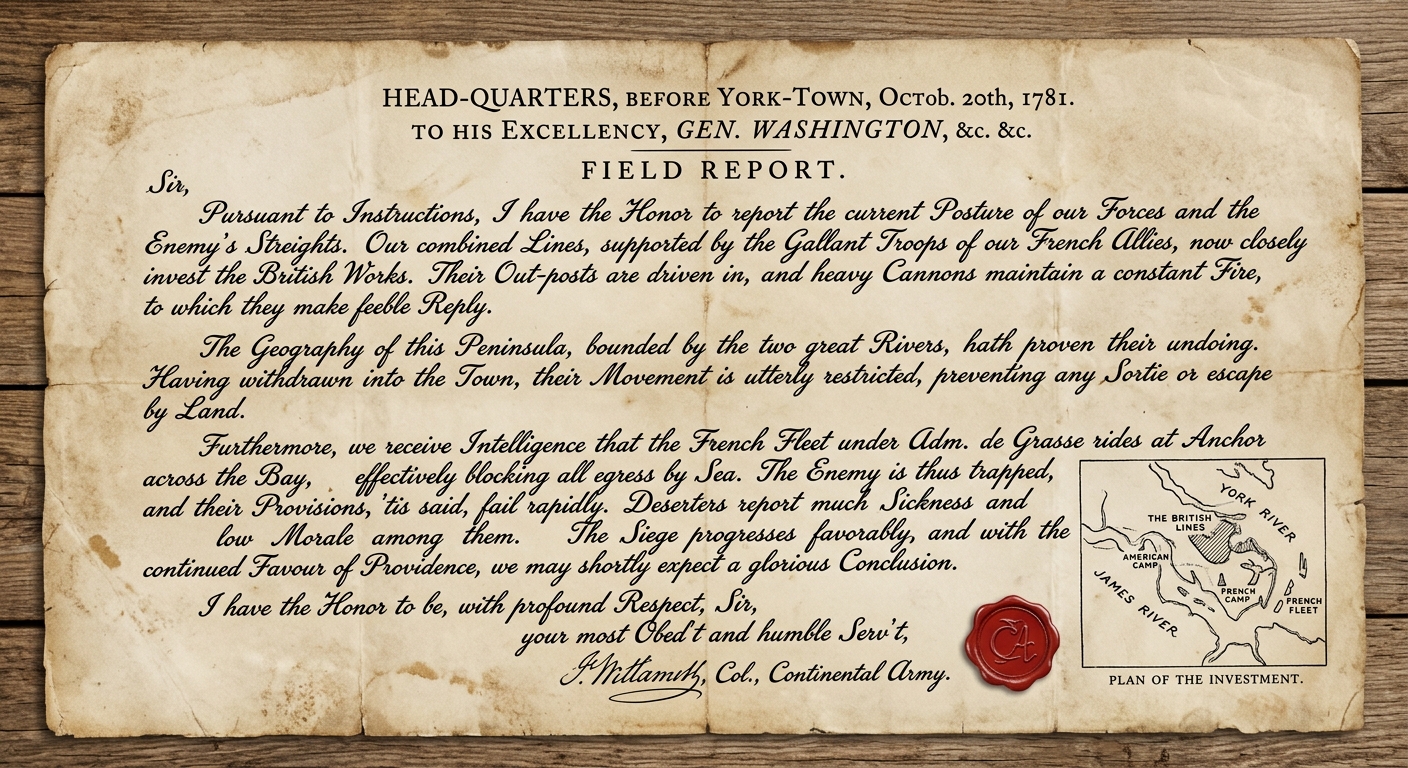
Continental Field Report, October 1781

The American victory depended on more than battlefield bravery. Leaders used military strategy and took advantage of geography. Native American nations made different choices about which side to support. Aid from other nations helped the Americans, and the Treaty of Paris (1783) later set the peace terms.
Which outside nation’s aid is MOST clearly connected to the outcome described in the document?
Based on the document, which detail BEST shows how geographic considerations influenced the military situation?
Compare two perspectives on the war described in the sources:
(1) a Continental officer and
(2) a leader of a Native American nation deciding whether to support Britain, the Americans, or remain neutral.
Explain why each perspective might differ, using evidence from the sources.
Write one paragraph.
Which comparison BEST explains why a British commander and a Continental officer might evaluate the situation in the document differently?
Using evidence from both the document and the reading stimulus, explain how military strategy, geography, and aid from other nations influenced the outcome of the American Revolution.
Write one well-formed paragraph.