Twa kɔ nsɛm atitiriw so
Log in
Sign up for FREE
arrow_back
Laabri

7.4 - Historical Development of the Constitution: - Practice C

star
star
star
star
star
Last updated about 1 month ago
15 Nsɛmmisa
Hyɛ no nsow a efi ɔkyerɛwfo no hɔ:

Use the historical document(s) and the short readings in the left panel to answer the associated questions.

Use the historical document(s) and the short readings in the left panel to answer the associated questions.

7.4.a
DOK.SS.2
7.4.b
DOK.SS.2
7.4.c
DOK.SS.2
Ɛhia
1
7.4.a
DOK.SS.2
Ɛhia
1
7.4.a
DOK.SS.2
Ɛhia
2
7.4.a
DOK.SS.2
Ɛhia
2
7.4.a
DOK.SS.2
Ɛhia
1
7.4.a
DOK.SS.2
Ɛhia
1
7.4.b
DOK.SS.2
Ɛhia
1
7.4.b
DOK.SS.2
Ɛhia
1
7.4.b
DOK.SS.2
Ɛhia
2
7.4.b
DOK.SS.2
Ɛhia
2
7.4.b
DOK.SS.2
Ɛhia
2
7.4.c
DOK.SS.2
Ɛhia
1
7.4.c
DOK.SS.2
Ɛhia
1
7.4.c
DOK.SS.2
Ɛhia
1
7.4.c
DOK.SS.2
Ɛhia
2
7.4.c
DOK.SS.2

Historical Document:
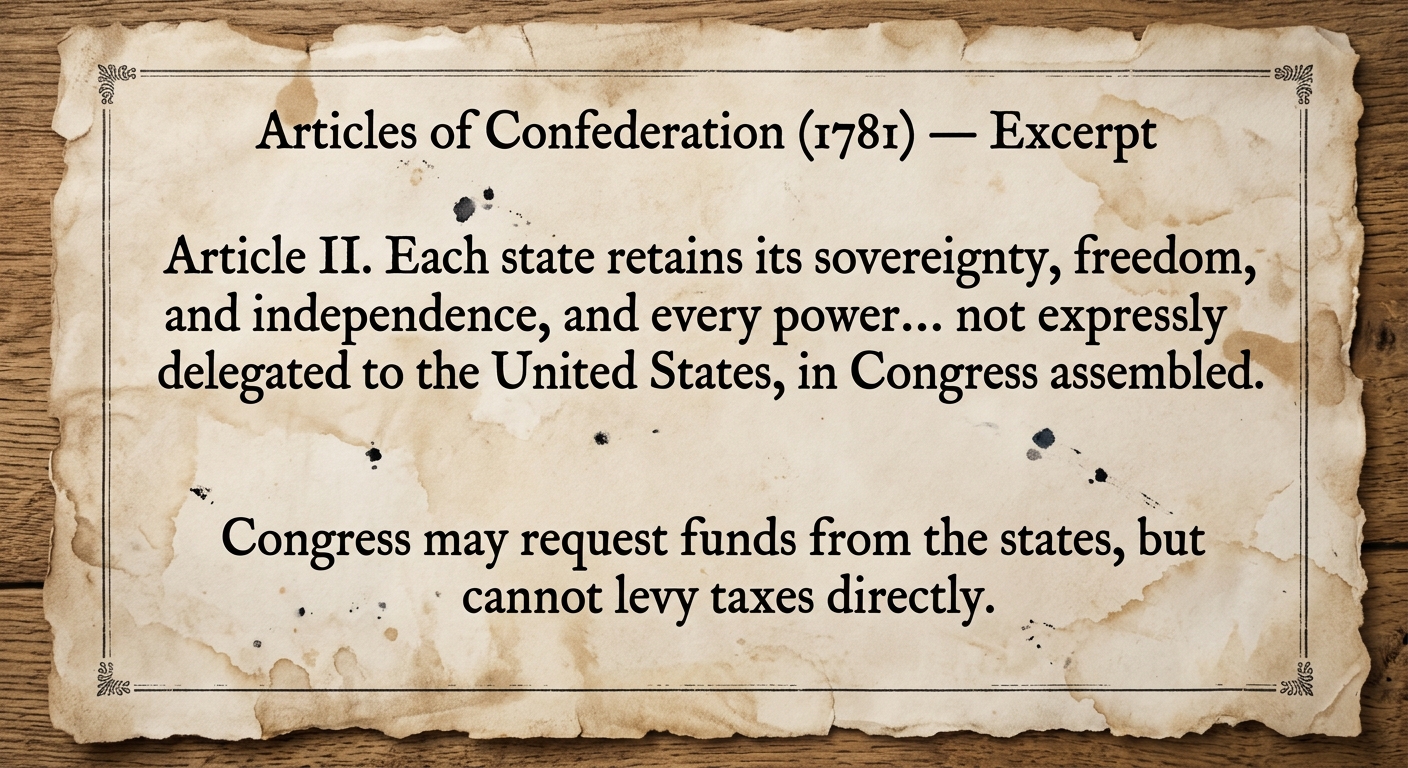
A parchment-style facsimile titled “Articles of Confederation (1781) — Excerpt,” stating that each state retains sovereignty and that Congress cannot levy taxes directly.

After independence, the states created the Articles of Confederation. This excerpt shows that most power stayed with the states, while Congress depended on state cooperation for money. These limits made it difficult to solve national problems and keep the states united.
Asemmisa {{asɛmmisaAhyɛnsode}}
1.

Compared with the Articles of Confederation, which power did the U.S. Constitution give the national government that addresses the problem described in the document?

Asemmisa {{asɛmmisaAhyɛnsode}}
2.

Which post–American Revolution problem is most directly explained by the limits described in the document?

Asemmisa {{asɛmmisaAhyɛnsode}}
3.

Describe one way different economic or regional interests among the states could have made cooperation difficult under the Articles of Confederation.

Use the document to support your answer, and explain how federalism was meant to address this tension.

Asemmisa {{asɛmmisaAhyɛnsode}}
4.

Explain how the document and reading suggest a challenge to unity under the Articles of Confederation.

Then compare this with one way the Constitution’s federal system tried to create unity while still allowing states to keep some power.

Asemmisa {{asɛmmisaAhyɛnsode}}
5.

Which idea from the document best shows how the Articles of Confederation treated the states?

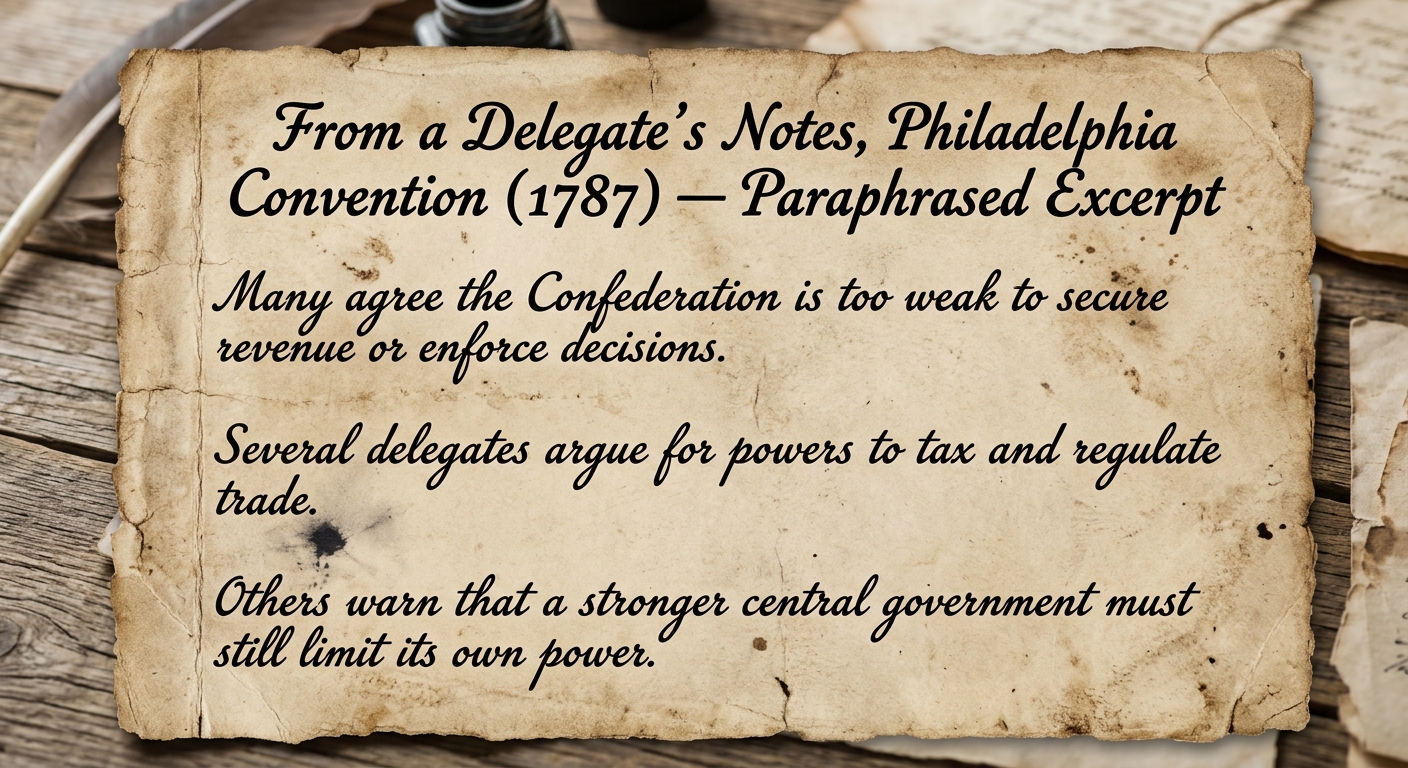
Historical Document:

A parchment-style facsimile titled “From a Delegate’s Notes, Philadelphia Convention (1787) — Paraphrased Excerpt,” describing debates about strengthening the national government while limiting its power.

By 1787, many leaders believed the Articles of Confederation could not solve national problems. At the Philadelphia Convention, delegates debated how to strengthen the national government—especially raising money and enforcing laws—while still protecting state authority and preventing abuse of federal power.

Asemmisa {{asɛmmisaAhyɛnsode}}
6.

The notes mention delegates wanting a stronger national government but also limits on its power. Which idea best fits that goal in the Constitution?

Asemmisa {{asɛmmisaAhyɛnsode}}
7.

Which problem under the Articles of Confederation is most directly suggested by the delegate’s notes?

Asemmisa {{asɛmmisaAhyɛnsode}}
8.

Which Constitution power best addresses the weakness described in the notes?

Asemmisa {{asɛmmisaAhyɛnsode}}
9.

Describe one reason delegates might have disagreed about strengthening the national government in 1787.

Use evidence from the document or reading, and explain how federalism tried to balance national power with state power.

Asemmisa {{asɛmmisaAhyɛnsode}}
10.

Explain how the notes provide context for why a convention was held to revise the Articles of Confederation.

Then compare one weakness in the Articles to one way the Constitution created a stronger central government.

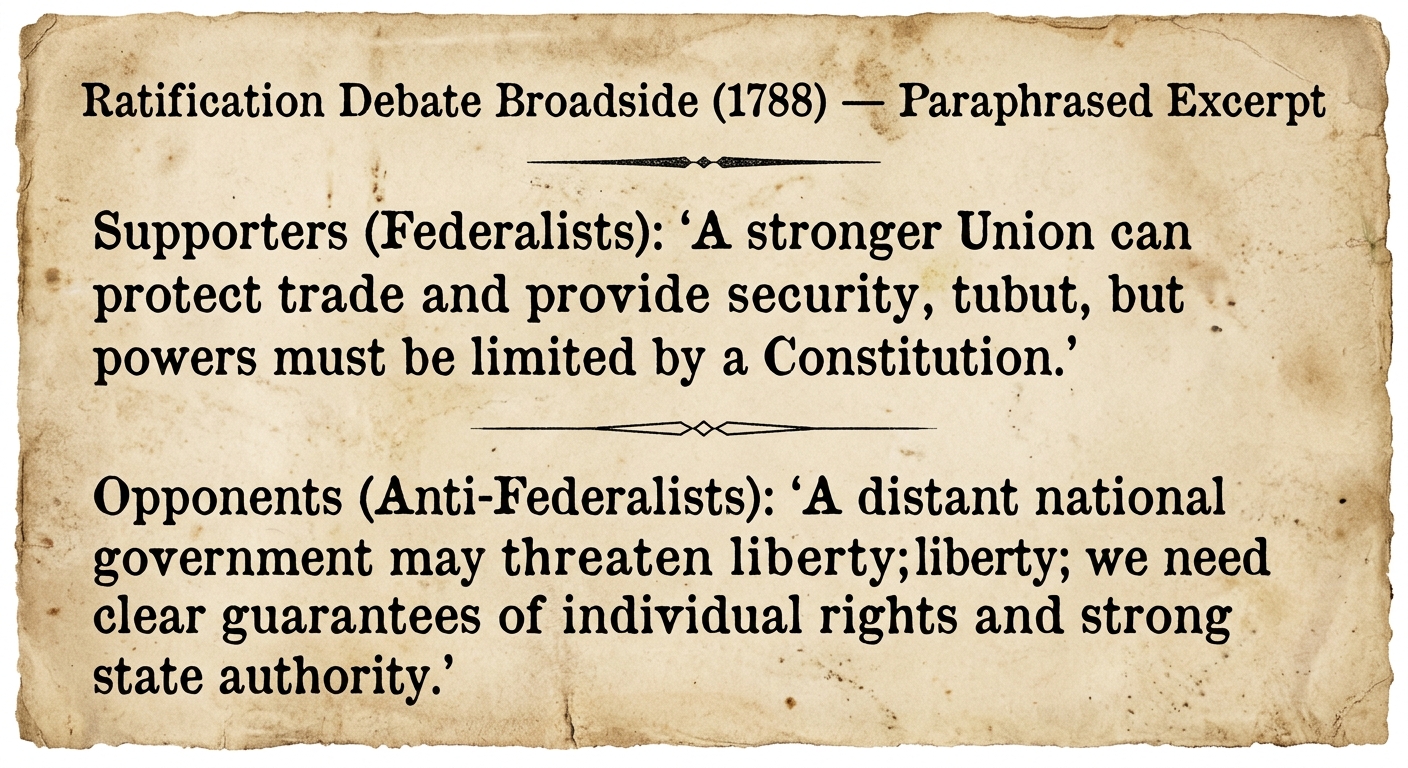
Historical Document:

A parchment-style broadside titled “Ratification Debate Broadside (1788) — Paraphrased Excerpt,” showing Federalist and Anti-Federalist arguments about federal power, states’ rights, and individual liberties.

As Americans debated the new Constitution, some wanted a stronger national government to solve shared problems. Others feared federal power could endanger liberties and states’ authority. These disagreements led to compromises, including promises to add protections for individual rights.

Asemmisa {{asɛmmisaAhyɛnsode}}
11.

Explain how the document shows two different perspectives on federal power during ratification.

Then compare these perspectives to one compromise that helped the Constitution gain support.

Asemmisa {{asɛmmisaAhyɛnsode}}
12.

Which concern is most directly expressed by the opponents (Anti-Federalists) in the document?

Asemmisa {{asɛmmisaAhyɛnsode}}
13.

Which constitutional feature best reflects the compromise suggested in the reading between stronger federal power and protecting freedoms?

Asemmisa {{asɛmmisaAhyɛnsode}}
14.

Compared with the Articles of Confederation, which goal from the Federalists’ section is most connected to creating a stronger central government?

Asemmisa {{asɛmmisaAhyɛnsode}}
15.

Describe one reason supporters and opponents might disagree about states’ rights in 1788.

Use evidence from the document, and explain how the Constitution attempted to balance state authority with federal authority.