Use the historical document(s) and the short readings in the left panel to answer the associated questions.
Historical Document:
Federalism and Divided Powers (1788)
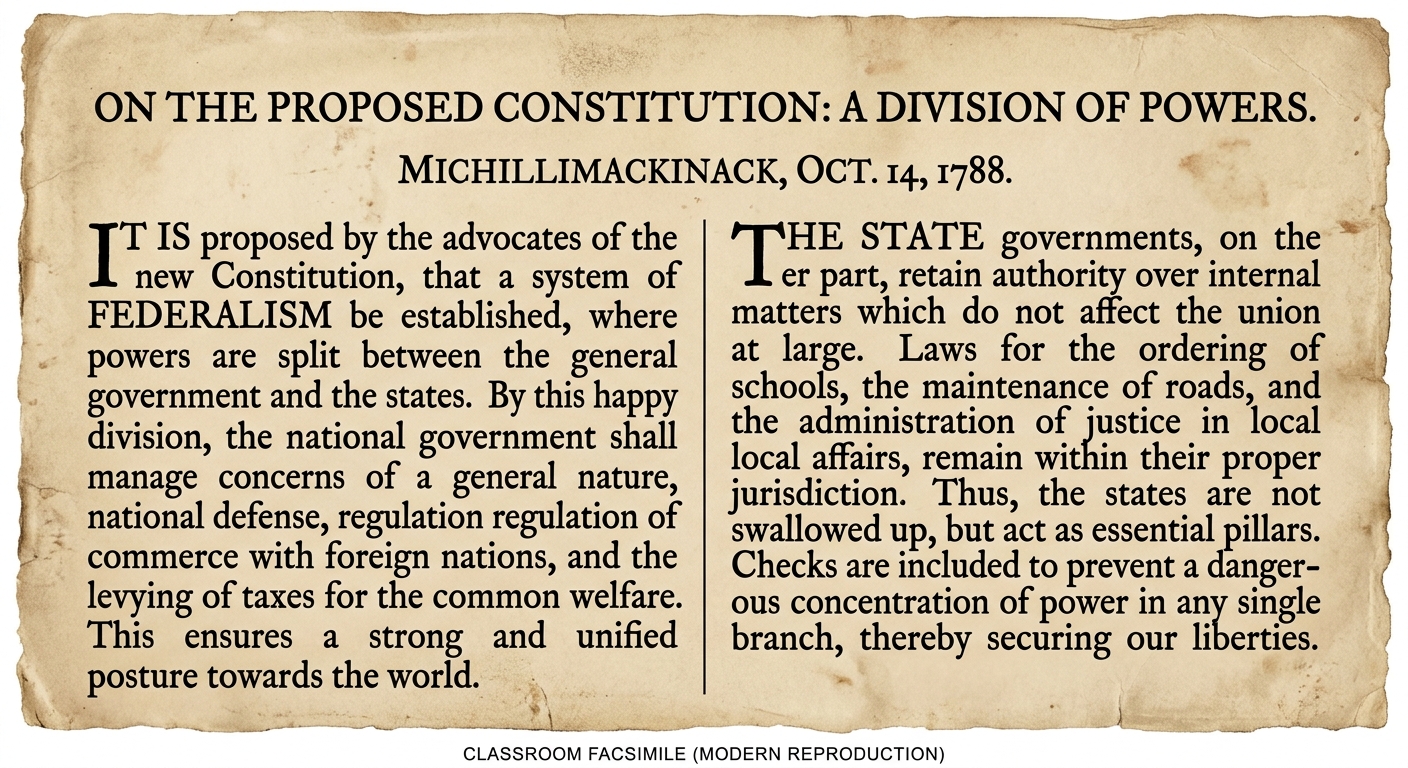
This facsimile argues that the new Constitution divides power to prevent tyranny. It claims the national government should handle shared needs like defense and raising revenue, while states keep authority over many local matters. The writer says separate levels can check one another.
Which earlier problem provides the MOST relevant historical context for why the author might argue that the national government needs power to raise revenue?
Which comparison BEST matches the document’s viewpoint when compared to a typical Anti-Federalist concern?
Based on the document’s argument, which government level is the BEST match for setting rules for public schools within a state?
Using evidence from the document, compare its explanation of shared power to another U.S. example of federalism (historical or modern). Identify two similarities and one difference.
Explain how the federalist system described in the document could address fears of a too-powerful central government.
Use at least one specific idea from the document in your explanation.
Historical Document:
Checks, Balances, and the Bill of Rights (1791)

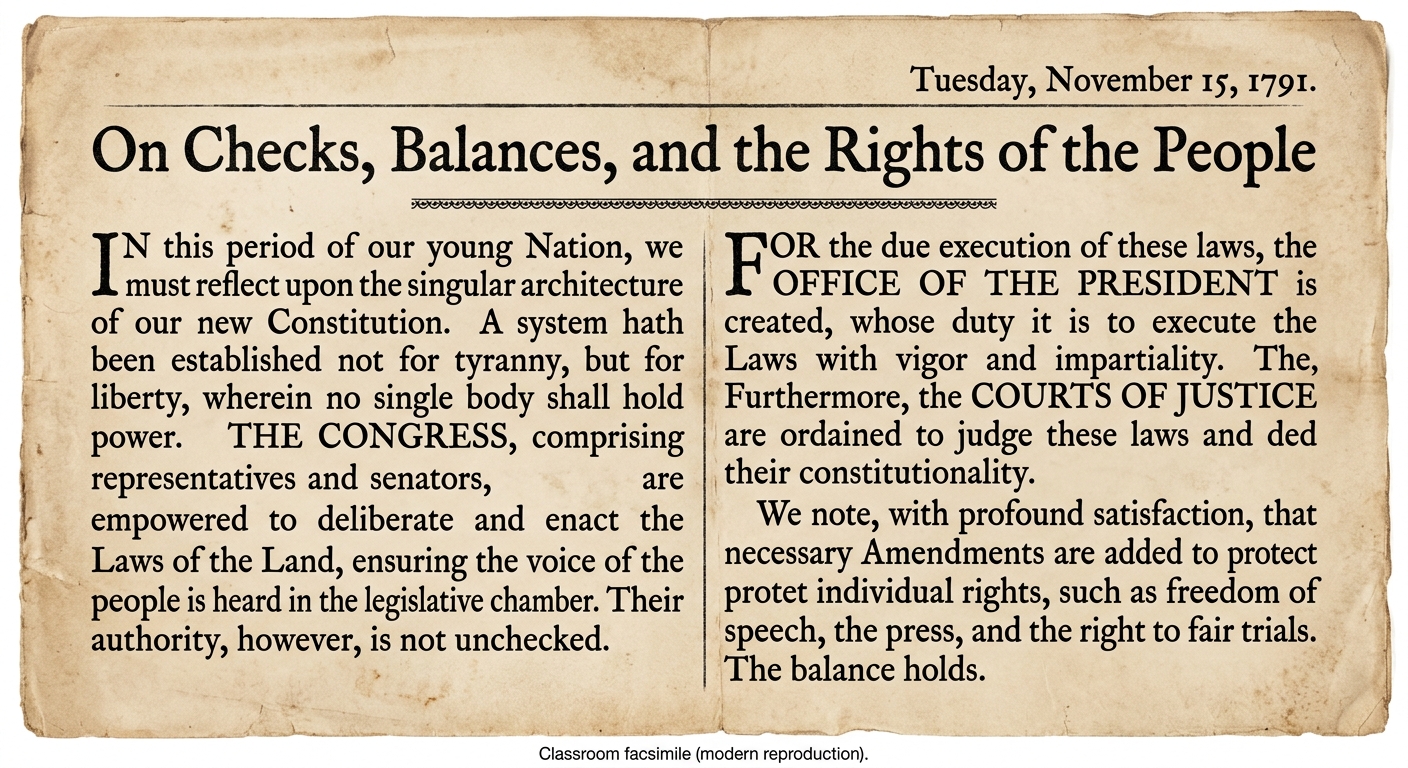
This facsimile claims the Constitution prevents any one branch from becoming too powerful. It explains that Congress makes laws, the President carries them out, and courts judge whether laws fit the Constitution. It also notes amendments were added to protect citizens’ rights.
Which option BEST fits the document’s idea of individual rights addressed by the Bill of Rights?
Which comparison BEST connects the document’s claim about checks and balances to a common Anti-Federalist worry?
Based on the document, which example BEST shows one branch checking another?
Using evidence from the document, compare its description of checks and balances to another U.S. example (historical or modern) where branches limit each other.
Identify two similarities and one difference.
Explain how the Bill of Rights and checks and balances work together to limit government power.
Use at least one specific idea from the document in your explanation.
Historical Document:
Revising the New York State Constitution (1821)

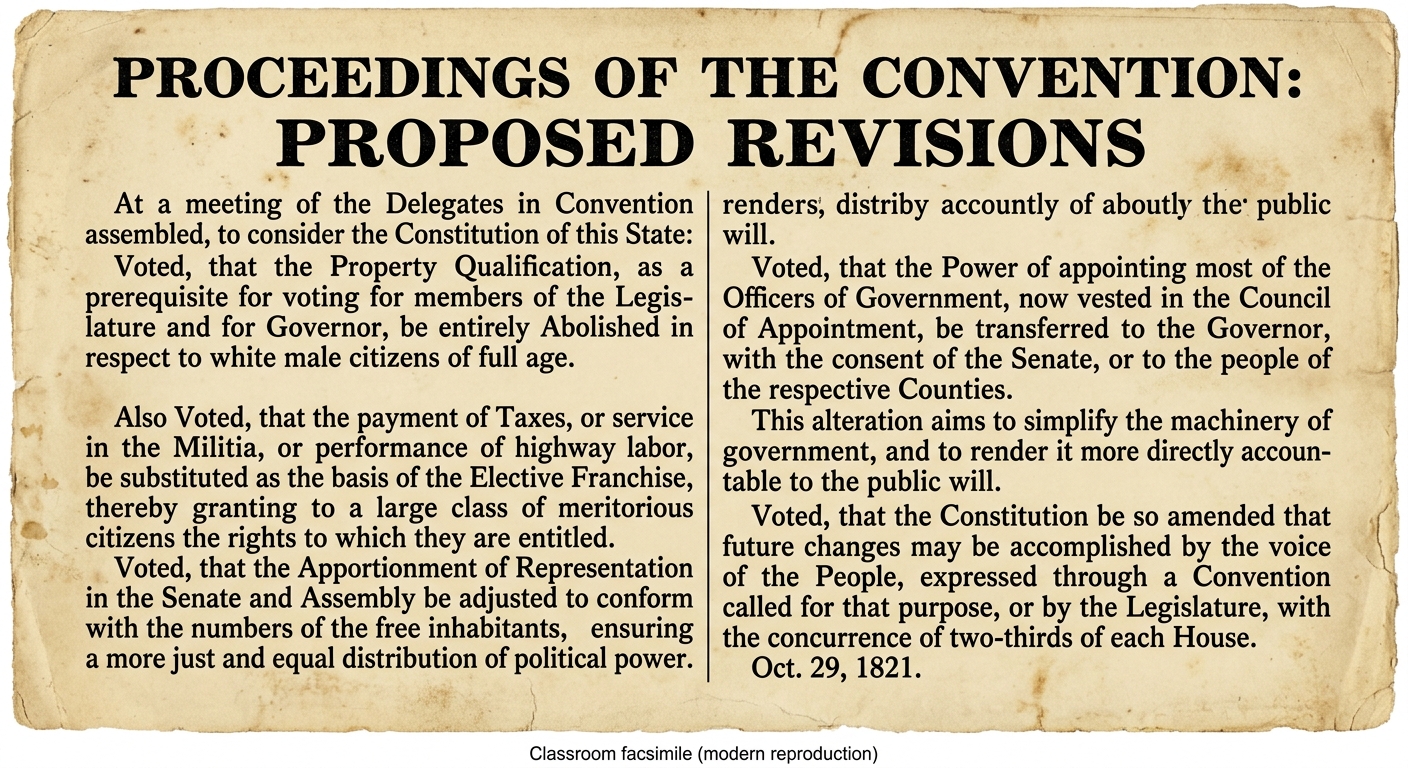
This facsimile describes debates in New York about revising its state constitution in the early 1800s. It suggests changing rules to make government more democratic, such as expanding who can vote and updating representation. It also implies constitutions can be changed through formal amendments.
Which comparison BEST connects the document’s idea of constitutional change to the U.S. Constitution?
Which change is MOST consistent with the document’s description of making the New York State Constitution “more democratic” in the early 1800s?
Which historical development provides the BEST context for why New York might have debated expanding voting rights in the early 1800s?
Explain how the document suggests the New York State Constitution became “more democratic.”
Use at least one specific idea from the document and connect it to the idea that constitutions can change over time.
Using evidence from the document, compare how New York’s constitution could respond to change (early 1800s) with another example of constitutional change in U.S. history (state or federal).
Identify two similarities and one difference.
Historical Document:
Foreign and Domestic Disputes Test the Constitution (1823)

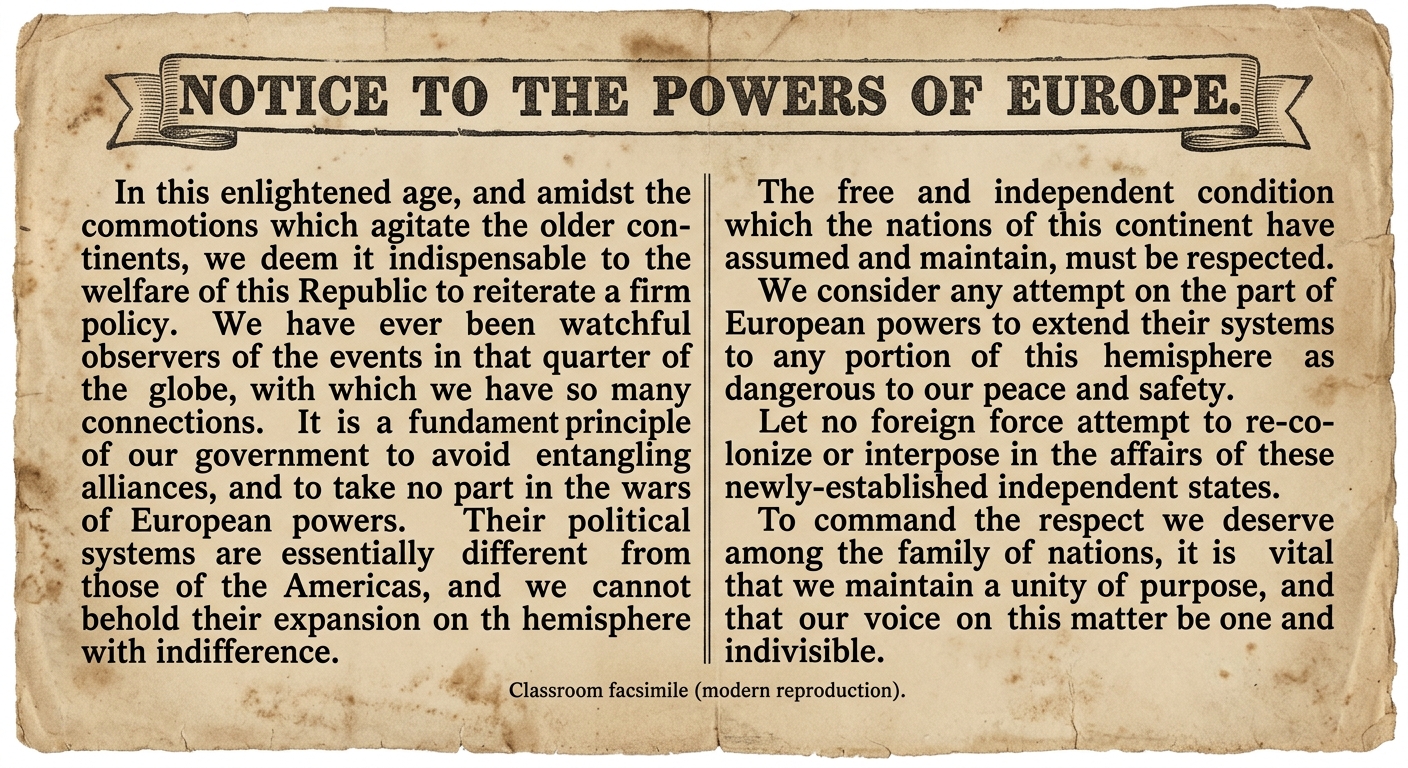
This facsimile argues the United States should avoid becoming involved in European conflicts but must also protect the Western Hemisphere from European interference. It suggests national leaders should speak with one voice in foreign affairs, while Americans debate how far federal power should reach.
Using evidence from the document, compare its view of isolationism with another U.S. example (historical or modern) where the United States tried to avoid certain conflicts but still protect its interests.
Identify two similarities and one difference.
Which historical context BEST helps explain why Americans might have supported avoiding European conflicts while protecting the Western Hemisphere?
Which comparison BEST connects the document’s idea of “speaking with one voice” to the Constitution’s separation of powers?
Based on the document’s viewpoint, which responsibility is the BEST example of a national (federal) power being used in foreign affairs?
Explain how a foreign policy dispute like the one described could test the Constitution’s system of checks and balances or debates over states’ rights.
Use at least one specific idea from the document in your explanation.