Use the historical document(s) and the short readings in the left panel to answer the associated questions.
Historical Document:
Temperance Broadside (Utica, New York, 1832)
In the 1830s, reformers in New York published printed announcements to persuade neighbors to join moral reform efforts. This broadside invites community members to a temperance meeting and urges them to pledge abstinence from alcohol. Many reform movements grew from religious revival ideas of the Second Great Awakening.
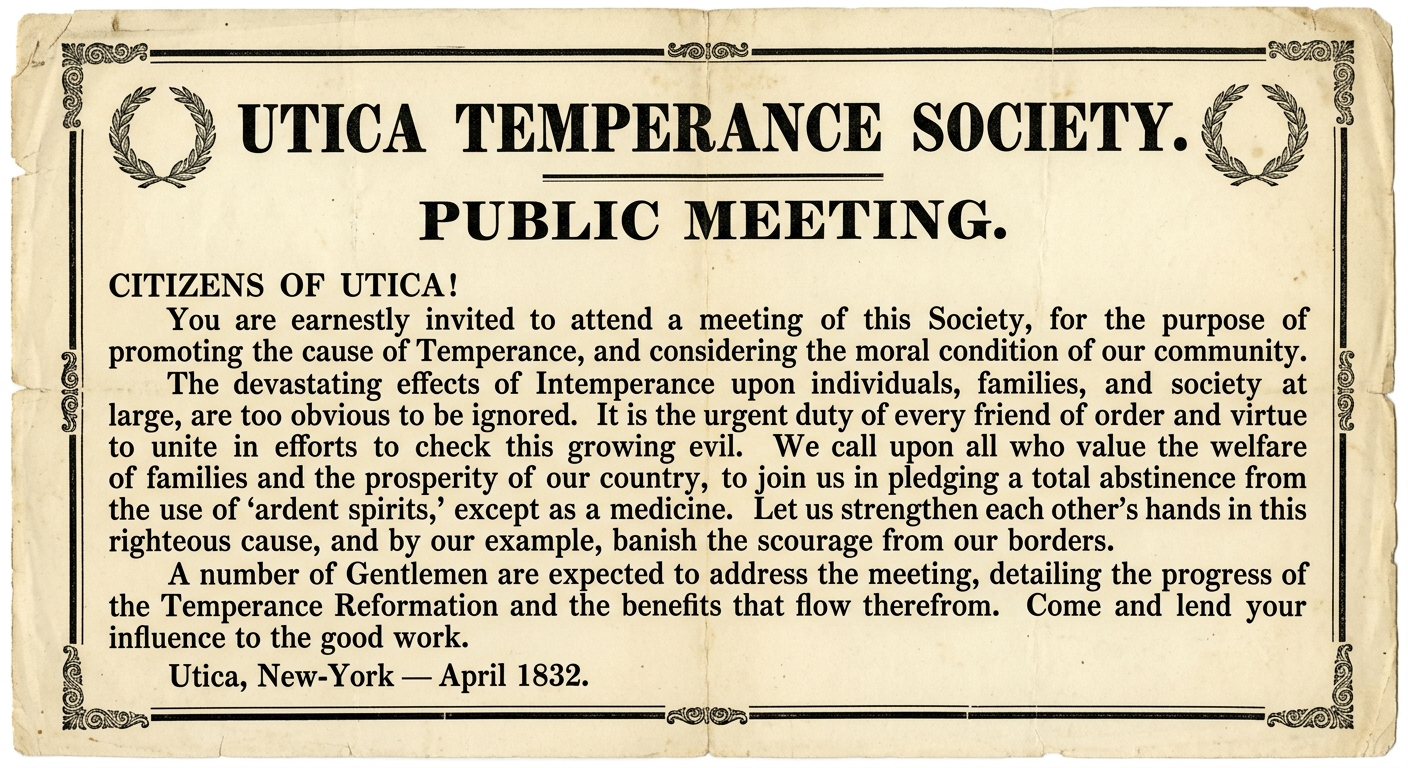
Based on the document and the reading, what is the most likely purpose of this broadside?
Compare the temperance movement shown in the document to one other reform movement connected to the Second Great Awakening (for example, abolition, women’s rights, or education reform).
In a well-formed paragraph, explain one similarity and one difference in goals or methods.
Which broader historical development best helps explain why reform messages like this spread in New York in the early 1800s?
Using the document and the reading, explain how ideas from the Second Great Awakening could lead people to take action in their communities.
Write a well-formed paragraph that includes one detail from the document and connects it to one reform outcome.
Which comparison best shows how this temperance document fits into reform movements inspired by the Second Great Awakening?
Historical Document:
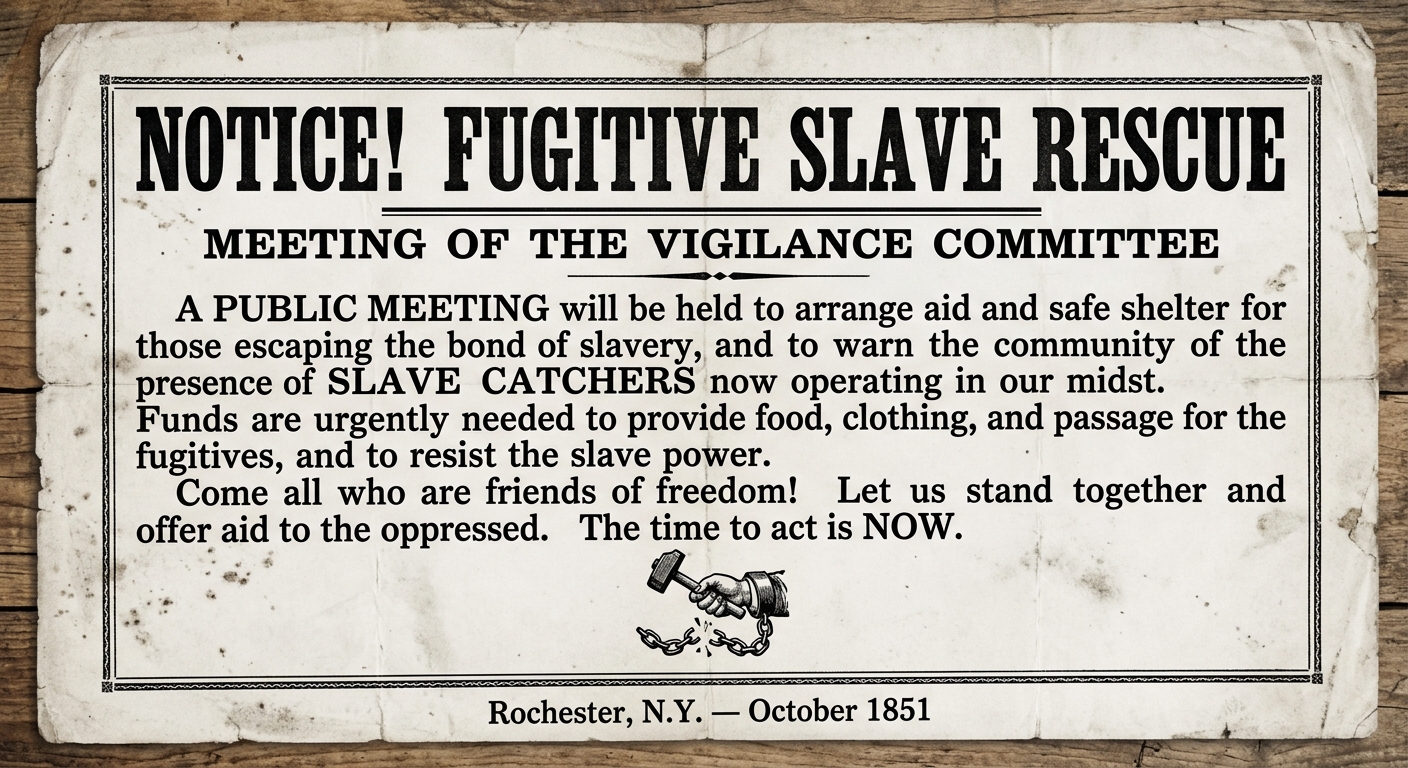
Abolitionist Broadside (Rochester, New York, 1851)
In the early 1850s, abolitionists in New York used broadsides to organize meetings and raise support for people escaping slavery. This notice calls on community members to provide money, shelter, and warnings about slave catchers. It reflects both resistance by enslaved people and organized abolitionist efforts.

Which historical context best explains why abolitionists in New York would warn about “slave catchers” in the 1850s?
Which comparison best shows how this broadside connects enslaved people’s resistance to the work of the abolitionist movement?
Based on the document and the reading, what is the most likely purpose of this broadside?
Using the document and the reading, explain how abolitionist organizing could increase resistance to slavery.
Write a well-formed paragraph that includes one detail from the broadside and connects it to one impact on slavery or public opinion.
Compare the action shown in this document to one other way enslaved African Americans resisted slavery in the 1800s (for example, work slowdowns, maintaining family/community, learning to read, sabotage, or rebellion).
In a well-formed paragraph, explain one similarity and one difference in methods or risks.
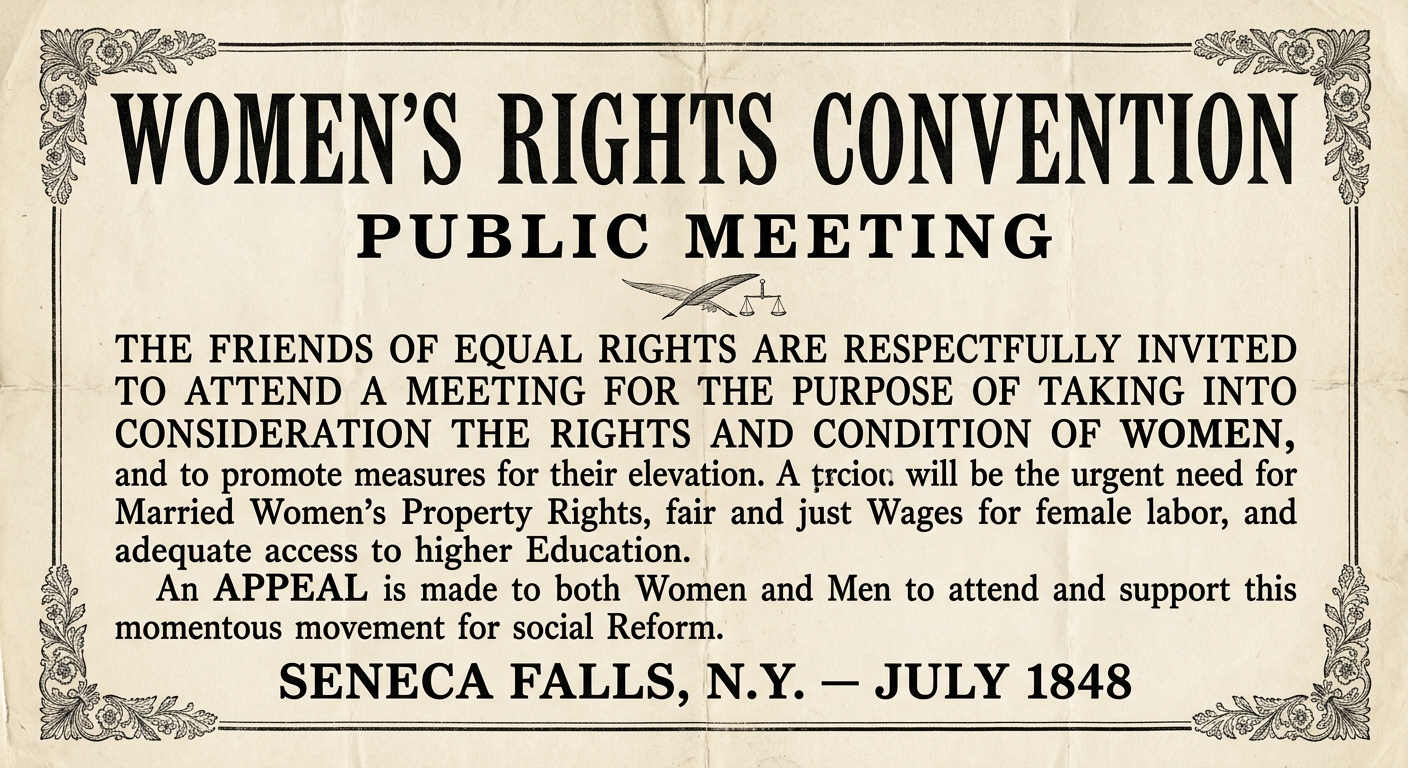
Historical Document:
Women’s Rights Convention Broadside (Seneca Falls, New York, 1848)
In the 1840s, reformers in New York posted announcements inviting the public to meetings about women’s rights. This broadside calls community members to discuss married women’s property rights, fair wages, and education. Many women who joined temperance and abolition also organized to seek political equality.

Based on the document and the reading, what is the most likely purpose of this broadside?
Which broader historical development best helps explain why women increasingly organized for rights in the 1800s?
Which comparison best shows how this women’s rights broadside fits into other reform movements of the mid-1800s?
Using the document and the reading, explain how participation in other reform movements could lead women to organize for their own rights.
Write a well-formed paragraph that includes one detail from the document and connects it to one reform outcome.
Compare the reform goals suggested by this broadside to one other reform movement of the era (for example, abolition or temperance).
In a well-formed paragraph, explain one similarity and one difference in goals or methods.
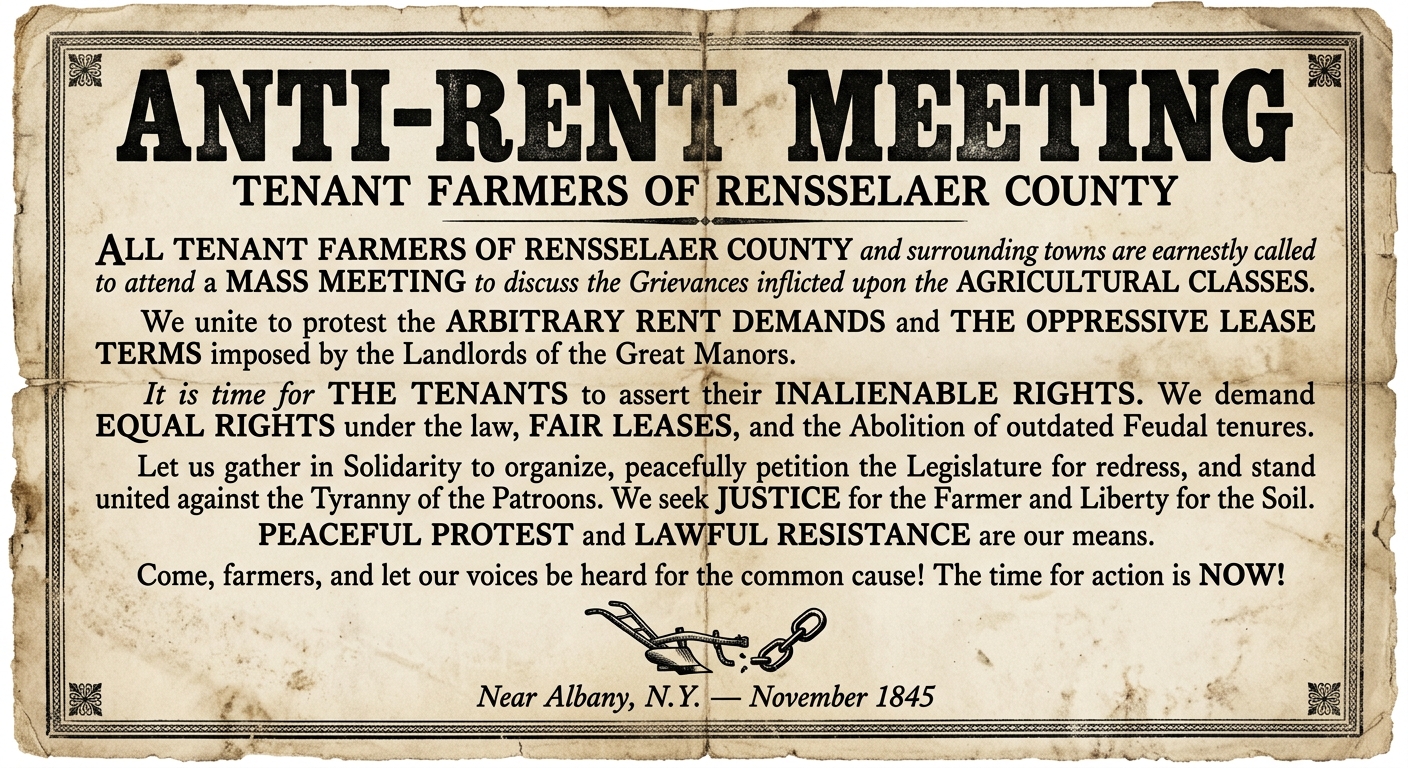
Historical Document:
Anti-Rent Movement Broadside (Near Albany, New York, 1845)
In the 1840s, some New York tenant farmers protested the patroon landownership system, arguing that lease terms and rent demands were unfair. This broadside announces an Anti-Rent meeting and urges farmers to organize, petition, and resist paying certain rents. It shows how economic grievances shaped reform in New York.

Based on the document and the reading, what is the most likely purpose of this broadside?
Which comparison best shows how the Anti-Rent movement fits into other reform movements in New York during the early-to-mid 1800s?
Compare the Anti-Rent movement shown in the document to one other reform movement in New York during the early-to-mid 1800s (for example, temperance, abolition, or women’s rights).
In a well-formed paragraph, explain one similarity and one difference in goals or methods.
Which historical context best helps explain why the Anti-Rent movement developed in New York State in the 1840s?
Using the document and the reading, explain how economic conditions and landownership systems can lead people to take action.
Write a well-formed paragraph that includes one detail from the document and connects it to one possible outcome for government or society.