Use the historical document(s) and the short readings in the left panel to answer the associated questions.
Historical Document:
Petition of Mill Operatives, Lowell, Massachusetts (1845)
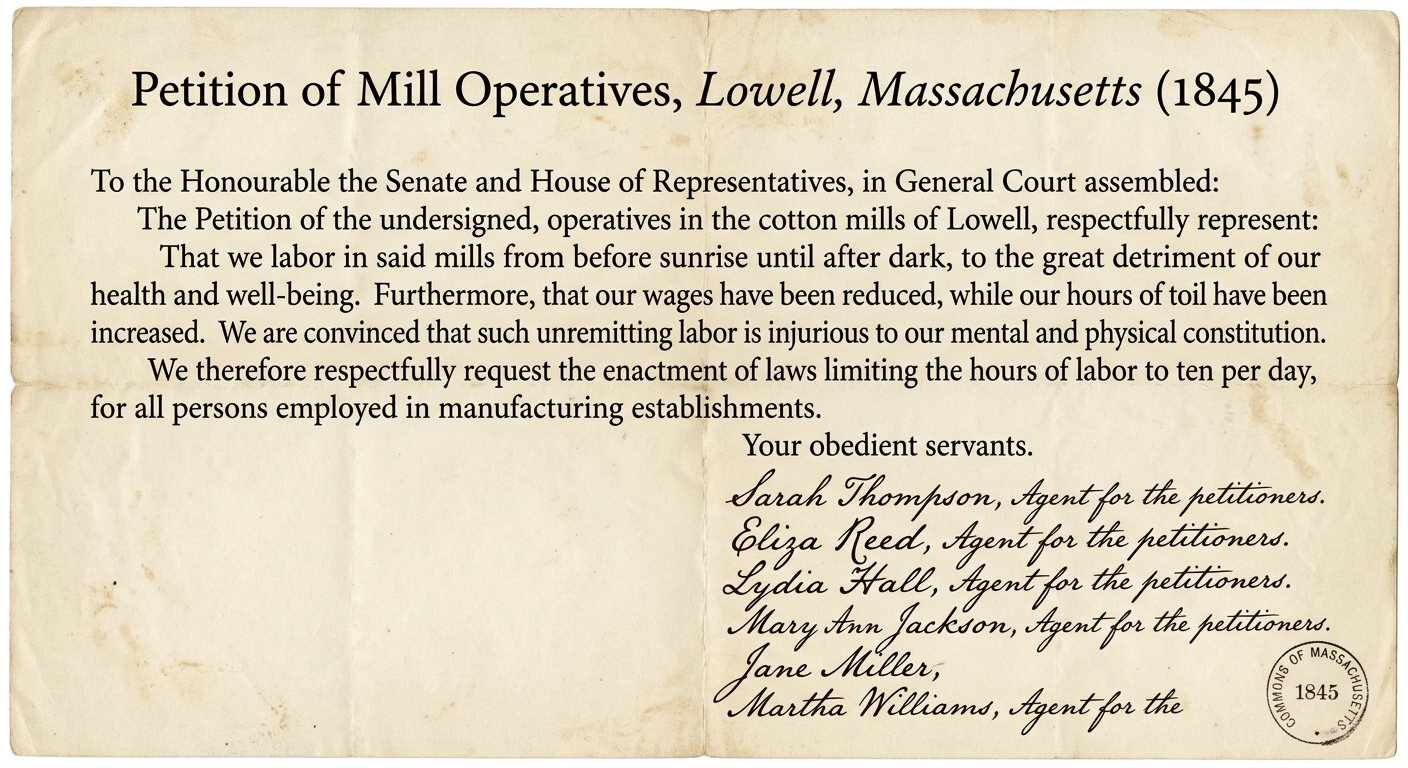
In the 1840s, textile factories expanded rapidly in New England. Wage workers—often young women—petitioned state lawmakers about long hours and pay cuts. Their demands show how industrialization shaped regional life differently and raised questions about whether government should regulate the economy.
Based on the document and the reading, this petition is most closely connected to which regional economy in the early United States?
Which comparison best explains how this petition reflects a difference between New England and the South during early industrialization?
The petition’s request for laws limiting work hours is most directly connected to which constitutional debate in the early United States?
Compare this petition to a likely concern of western farmers in the same period.
In one paragraph, describe one similarity and one difference, and support your comparison with at least one detail from the document or reading.
Explain how the petition and reading show that early U.S. industrialization affected regions differently. In your paragraph, connect those regional differences to tensions over government power (states’ rights vs. a stronger federal role).
Use at least one piece of evidence from the document or reading.
Historical Document:
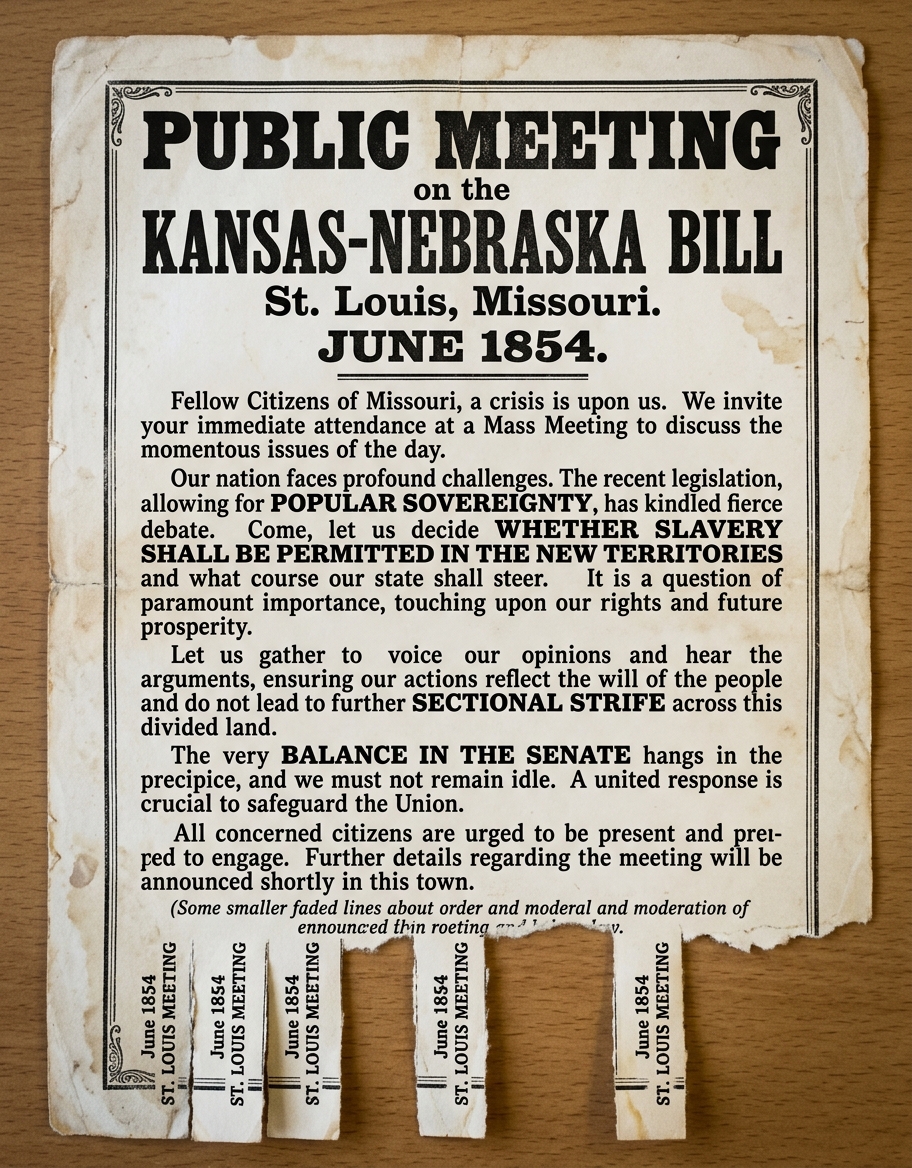
Public Meeting on the Kansas–Nebraska Bill (June 1854)

As the United States expanded west, leaders argued over whether slavery would be allowed in new territories. The Kansas–Nebraska Act proposed popular sovereignty—letting settlers vote on slavery. This sparked violence and deepened sectional tension, showing that compromises were increasingly difficult to maintain.
Using the broadside and the reading, explain how westward expansion increased sectional tensions over slavery. Include at least one specific detail from the document or reading in your paragraph.
Which issue is most directly being debated in this broadside?
Which comparison best fits the conflict hinted at in the broadside about sectional tension and political balance?
Which earlier development provides the best context for why debates like this grew more intense in the 1850s?
Compare the debate shown in this broadside to an earlier attempt to resolve sectional conflict (such as the Missouri Compromise or the Compromise of 1850).
In one paragraph, describe one similarity and one difference, and explain how repeated compromises could still end in failure.
Historical Document:
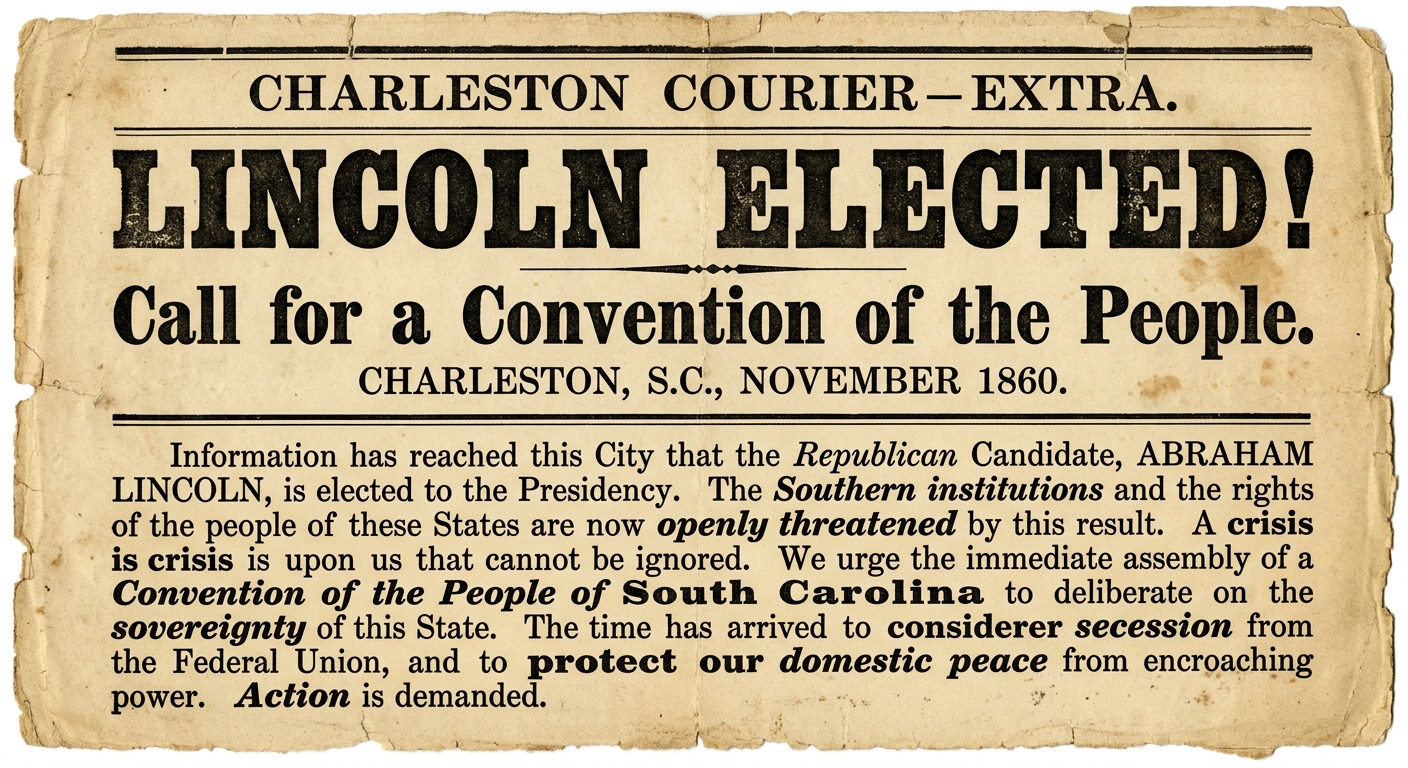
Newspaper Extra on Lincoln’s Election (November 1860)

In 1860, Abraham Lincoln, a Republican, won the presidency without winning Southern electoral votes. Many white Southerners argued his election threatened slavery and their political power, while many Northerners emphasized stopping slavery’s spread or preserving the Union. Regional perspectives shaped explanations for secession.
Based on the document and the reading, which immediate event is most directly connected to the call for secession discussed here?
Which earlier development provides the best context for why Lincoln’s election could trigger immediate secession in some Southern states?
Using the document and the reading, explain how perspective (region and interests) shaped the way people explained secession in 1860–1861.
In one paragraph, include one detail from the document and describe one contrasting viewpoint from another region.
Compare this document’s argument to a Northern argument that the top priority was preserving the Union.
In one paragraph, describe one similarity and one difference, and explain why historians often debate multiple causes of the Civil War.
Which comparison best explains how different regions could interpret the causes of the Civil War differently in 1860–1861?
Historical Document:
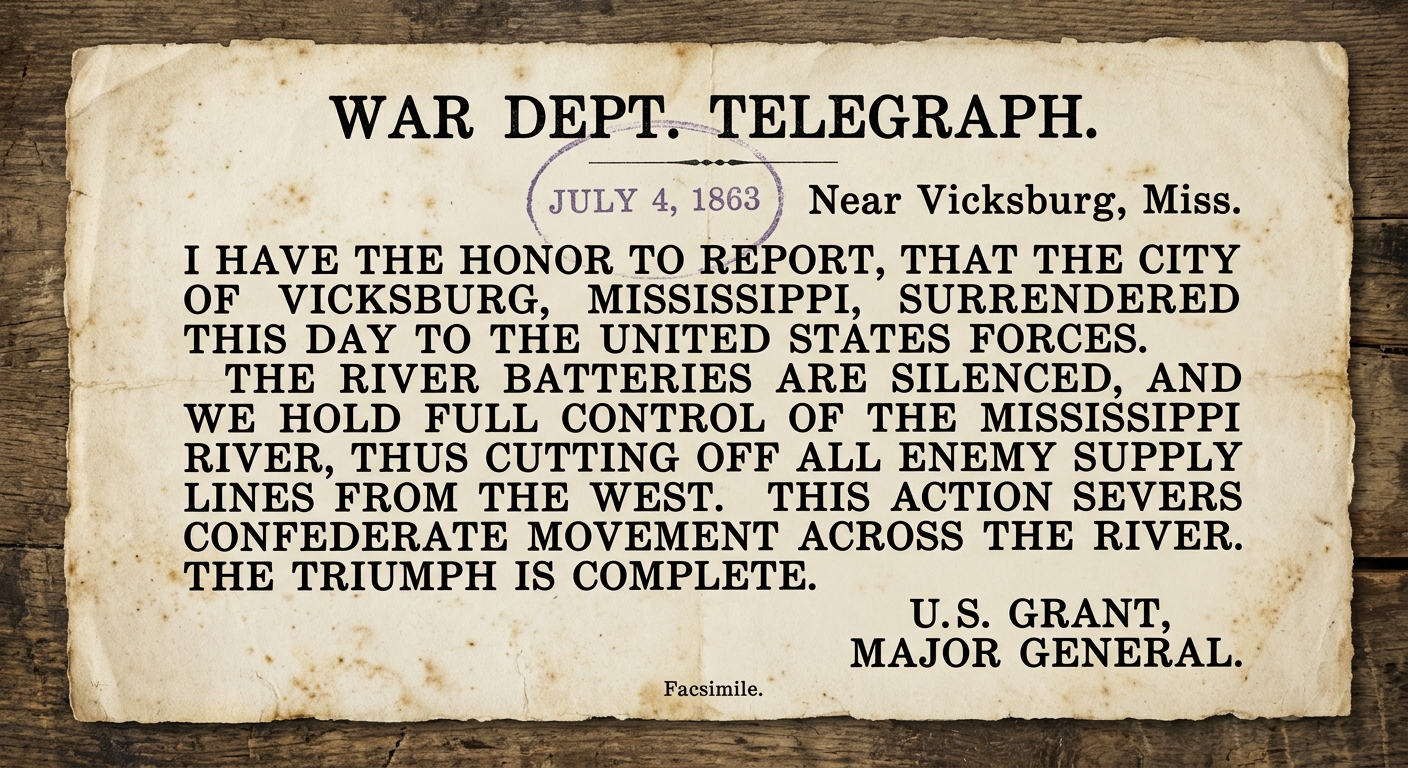
War Dept. Telegraph Dispatch Near Vicksburg (July 1863)

Civil War leaders used geography and new technology to shape strategy. Control of rivers and rail lines affected supplies and troop movement, and artillery made fortified positions harder to defend. Dispatches like this one show how decisive campaigns could change the war’s direction and outcome.
Based on the document and the reading, which geographic factor most directly contributed to the importance of this campaign?
Using the dispatch and the reading, explain how geography and military strategy helped influence the course and outcome of the Civil War.
In one paragraph, include at least one detail from the document or reading.
Which military leader is most closely connected to the campaign described in this dispatch?
Compare the campaign suggested by this dispatch to another decisive Civil War battle or campaign (such as Gettysburg, Antietam, or Sherman’s March).
In one paragraph, describe one similarity and one difference in how geography, leadership, or strategy influenced the outcome.
Which comparison best explains how the strategy suggested by this dispatch differs from fighting in earlier wars?
Historical Document:
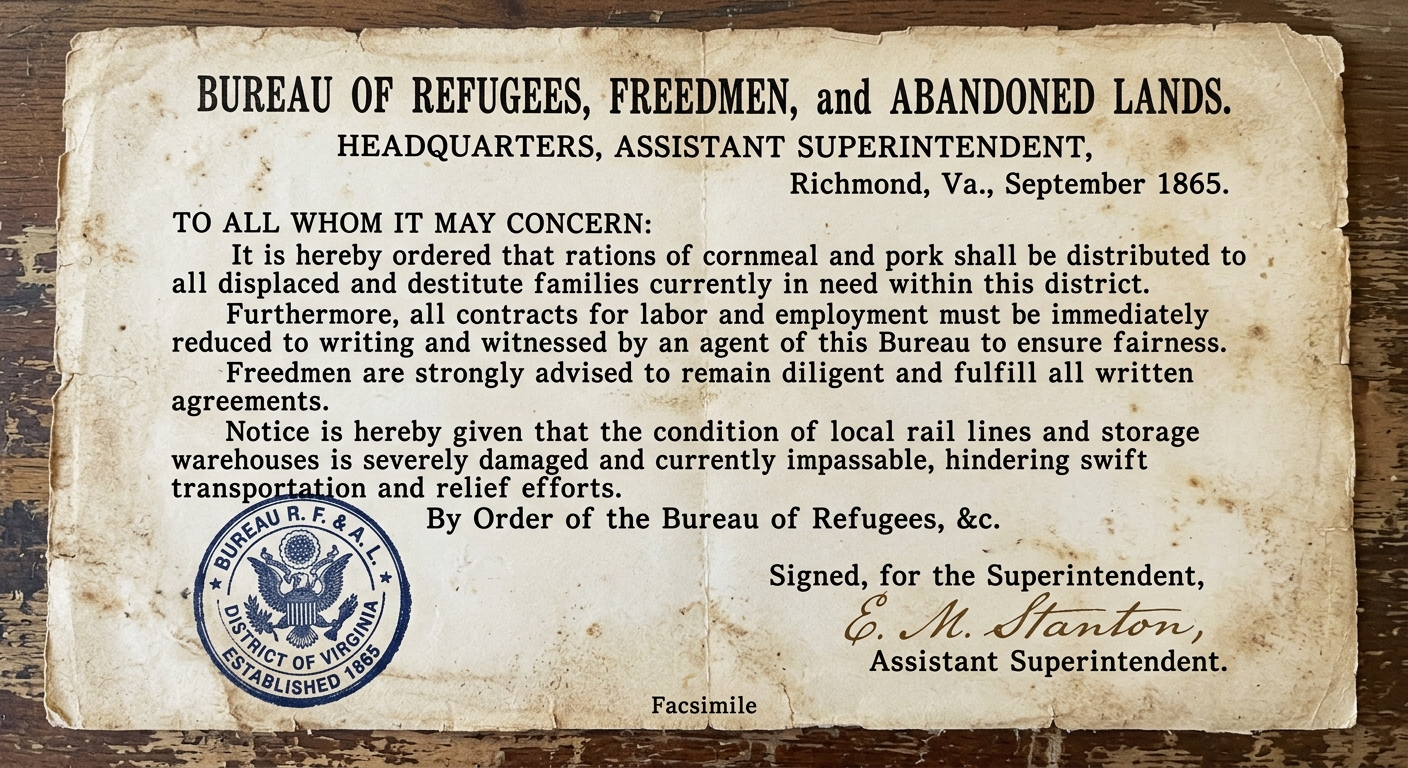
Freedmen’s Bureau Field Office Notice (September 1865)

After the Civil War, many families were displaced, farms and railroads were damaged, and local economies struggled. Emancipation and new federal agencies changed how the government operated in the South. Notices like this show relief efforts and attempts to rebuild work and public order.
Using the notice and the reading, explain how the Civil War affected human lives and governance. In one paragraph, include at least one detail from the document or reading.
Based on the document and the reading, which Civil War impact is most directly shown?
Compare the kinds of problems shown in this notice to problems faced in the Northern home front during the Civil War.
In one paragraph, describe one similarity and one difference, and support your comparison with at least one detail from the document or reading.
Which group would be most likely to support the federal actions described in this notice?
Which comparison best explains how this document reflects a shift from wartime goals to postwar challenges?