Use the historical document(s) and the short readings in the left panel to answer the associated questions.
In 1758, British officers planned how to move supplies to inland forts during fighting with France. Study the map and order. Use rivers, routes, and fort locations to explain how geography shaped British control—and why colonists later questioned new rules and costs.
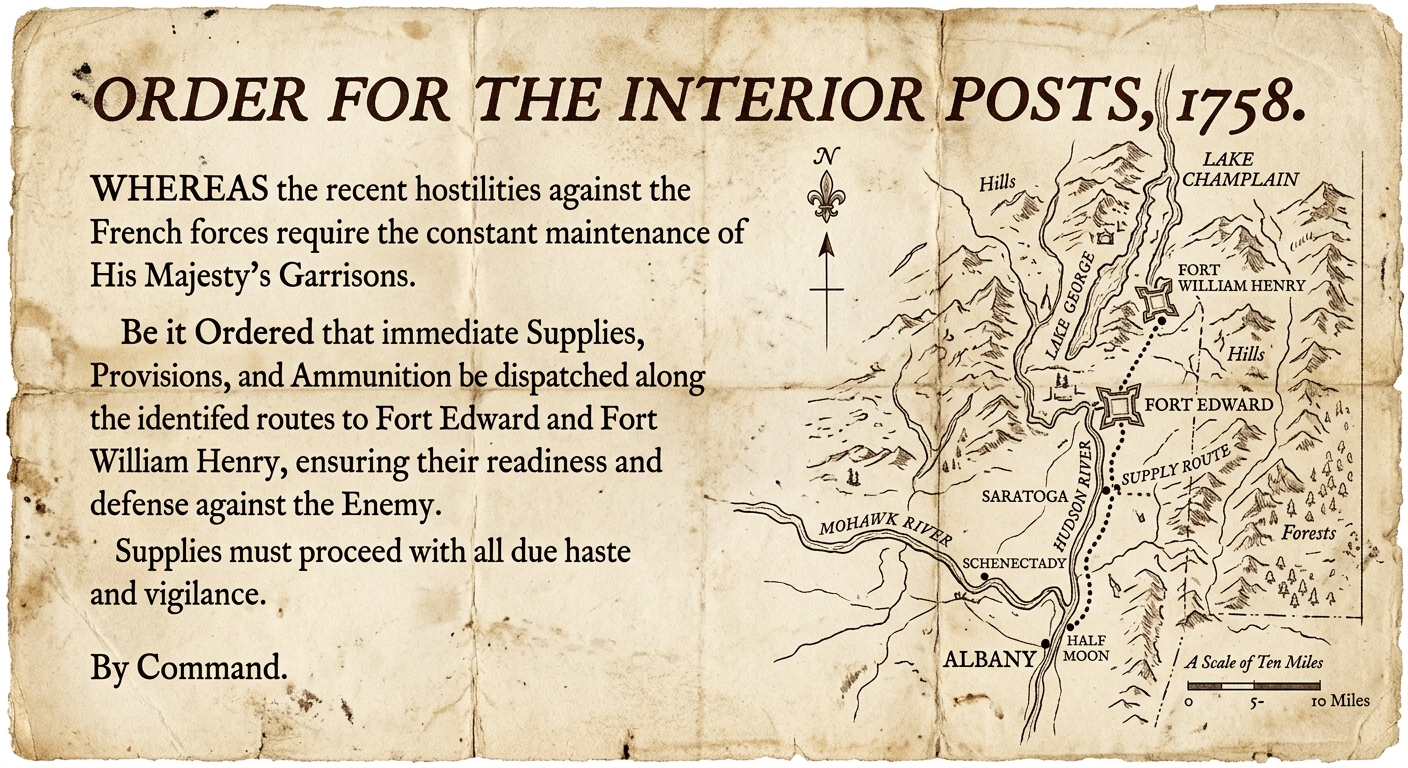
Which geographic feature is most important for moving supplies along the route shown on the map?
Why would Britain place forts along the route shown?
Which conclusion best links this document to how the wars with France changed the colonies’ relationship with Great Britain?
Explain how the map’s supply route and fort locations help you understand why Britain might increase control over the colonies after conflicts with France.
Use at least two geographic details from the document or map.
Name one waterway shown on the map.
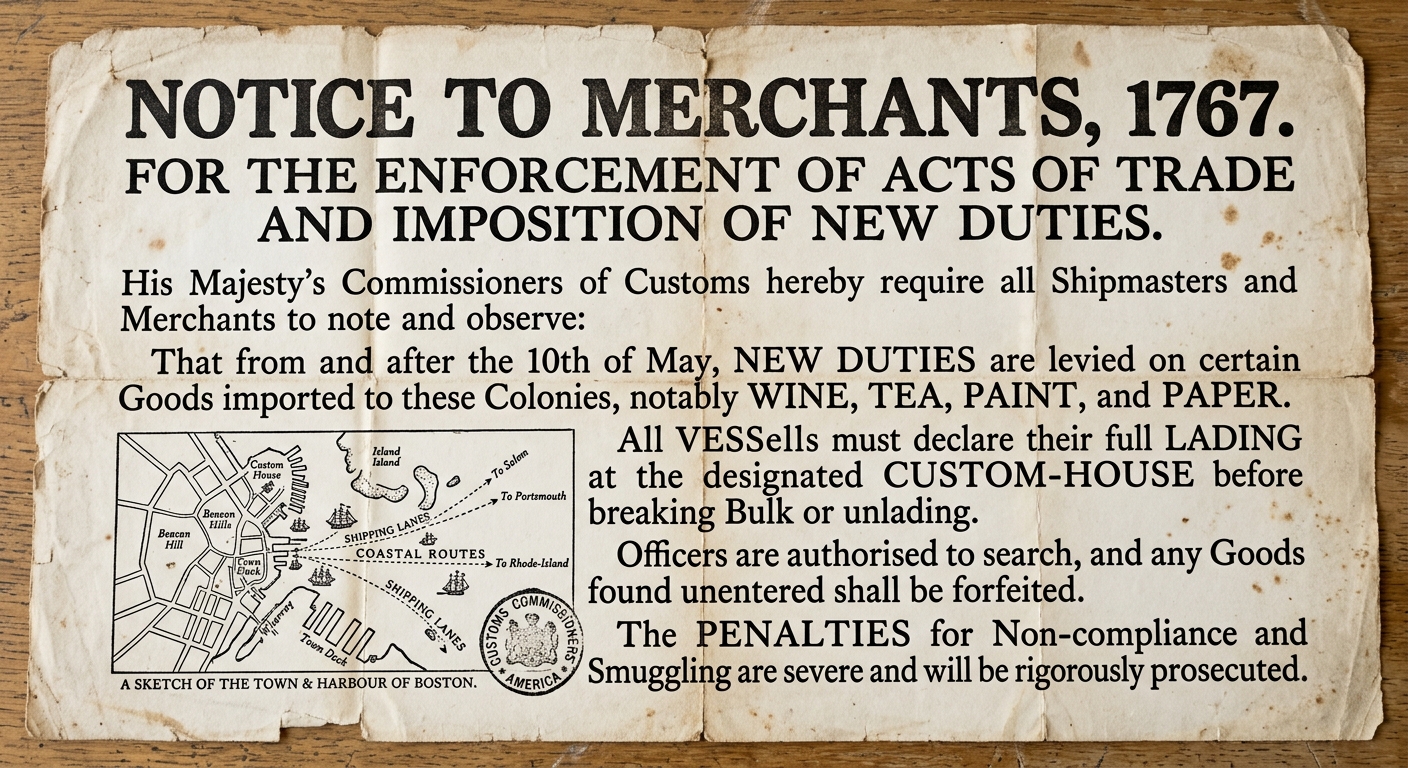
In 1767, Britain used new duties and stricter customs enforcement to raise revenue in the colonies. Read the customs notice and study the harbor sketch. Use details about ports, shipping routes, and enforcement locations to explain why these policies led to protests and dissent.

Which geographic factor helps explain why Britain focused enforcement on port cities like the one shown?
Based on the harbor sketch, where would British customs officials be BEST positioned to inspect imports?
Explain how the geography of ports and shipping routes helps you understand why Britain’s post-war economic policies (like duties and customs enforcement) triggered protests and dissent in the colonies.
Use at least two geographic details from the document or harbor sketch.
Which colonial response is MOST consistent with the document’s focus on duties and port enforcement?
Name one place labeled on the harbor sketch.
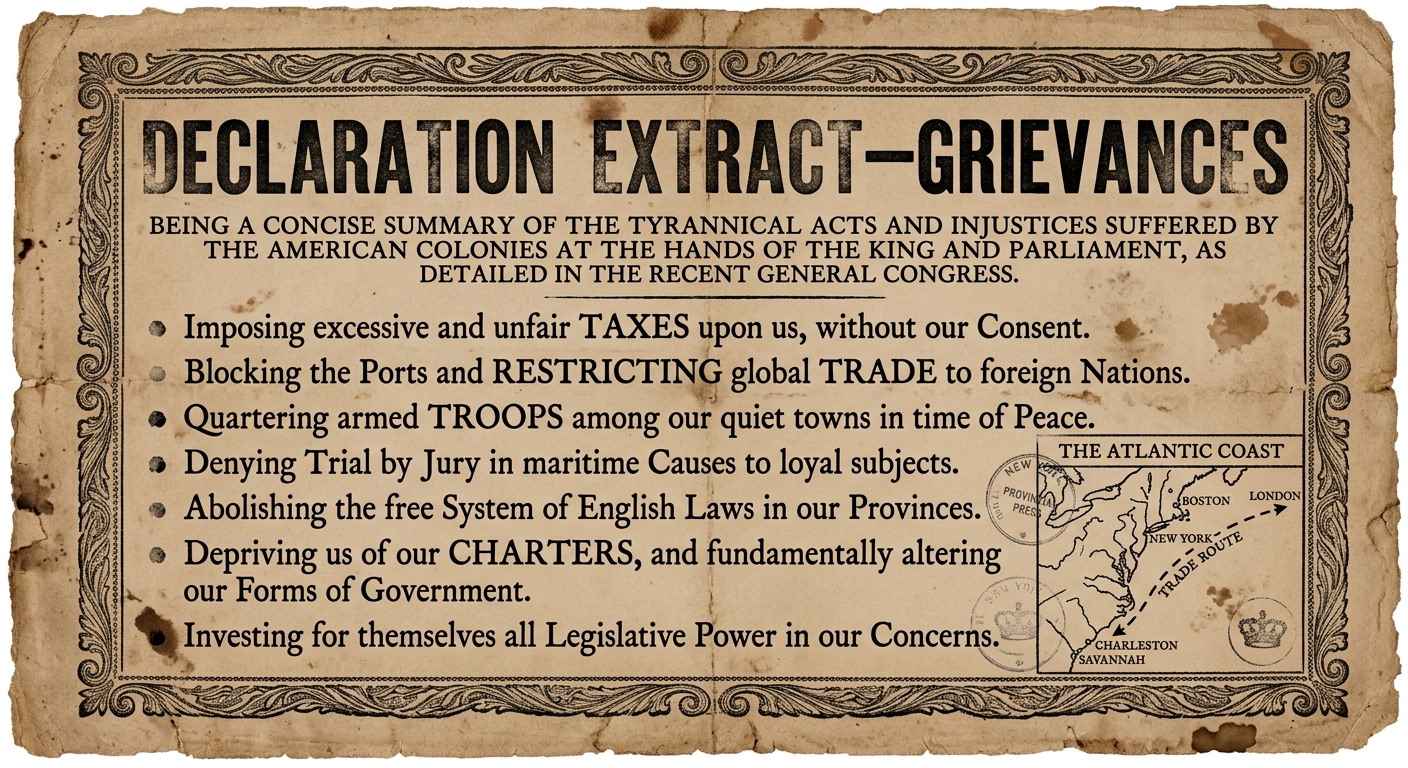
In 1776, colonial leaders listed grievances against British policies while arguing for rights. Read the broadside and study the map of ports and trade routes. Use geographic details to explain how control of trade and coastal cities shaped complaints in the Declaration of Independence.

Name one port city labeled on the map.
Explain how geographic control of ports and trade routes could become a grievance listed by colonial leaders in 1776.
Use at least two details from the broadside or map, and connect them to the idea that colonists had rights as Englishmen.
If Britain wanted to enforce trade restrictions mentioned in colonial grievances, where would enforcement be MOST effective based on the map?
Which geographic feature on the map best explains why controlling certain coastal cities could increase British power over the colonies?
Which inference best connects Enlightenment ideas about rights to the geographic evidence in the document and map?
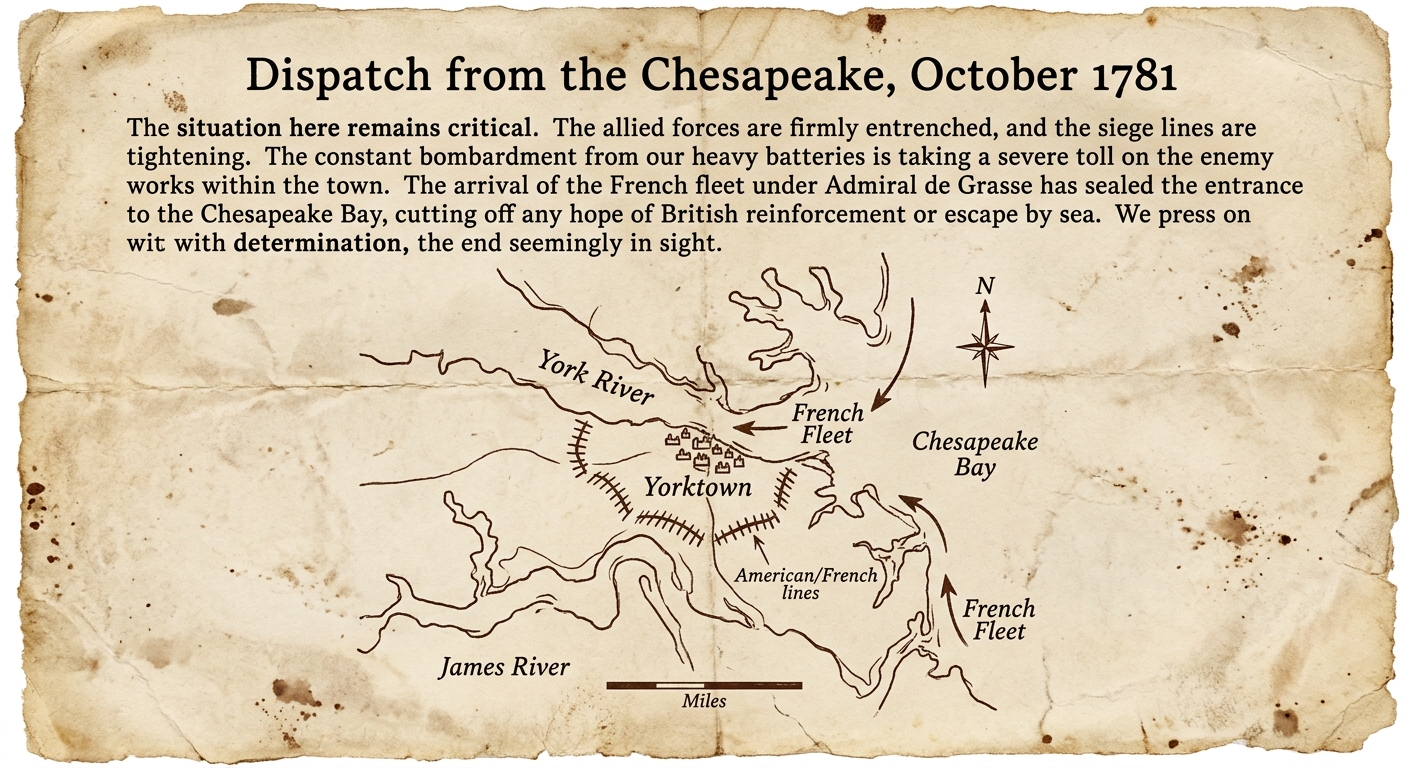
In October 1781, American and French forces surrounded British troops at Yorktown. Read the dispatch excerpt and study the map. Use water routes, siege lines, and fleet position to explain how geography and foreign aid shaped military strategy and the war’s outcome.

Which type of aid from another nation is most clearly shown on the map?
Which geographic feature on the map best explains why Yorktown could be trapped during a siege?
Name one body of water labeled on the map.
Which inference best connects the map to military strategy at Yorktown?
Explain how geography and aid from other nations helped influence the outcome of the American Revolution, using Yorktown as an example.
Use at least two geographic details from the map or dispatch excerpt in your explanation.