Twa kɔ nsɛm atitiriw so
Log in
Sign up for FREE
arrow_back
Laabri

7.4 - Historical Development of the Constitution: - Practice D

star
star
star
star
star
Last updated about 1 month ago
15 Nsɛmmisa
Hyɛ no nsow a efi ɔkyerɛwfo no hɔ:

Use the historical document(s) and the short readings in the left panel to answer the associated questions.

Use the historical document(s) and the short readings in the left panel to answer the associated questions.

7.4.a
DOK.SS.2
7.4.b
DOK.SS.2
7.4.c
DOK.SS.2
Ɛhia
1
7.4.a
DOK.SS.2
Ɛhia
2
7.4.a
DOK.SS.2
Ɛhia
1
7.4.a
DOK.SS.2
Ɛhia
1
7.4.a
DOK.SS.2
Ɛhia
2
7.4.a
DOK.SS.2
Ɛhia
1
7.4.b
DOK.SS.2
Ɛhia
2
7.4.b
DOK.SS.2
Ɛhia
1
7.4.b
DOK.SS.2
Ɛhia
1
7.4.b
DOK.SS.2
Ɛhia
2
7.4.b
DOK.SS.2
Ɛhia
1
7.4.c
DOK.SS.2
Ɛhia
2
7.4.c
DOK.SS.2
Ɛhia
1
7.4.c
DOK.SS.2
Ɛhia
1
7.4.c
DOK.SS.2
Ɛhia
2
7.4.c
DOK.SS.2

Historical Document:
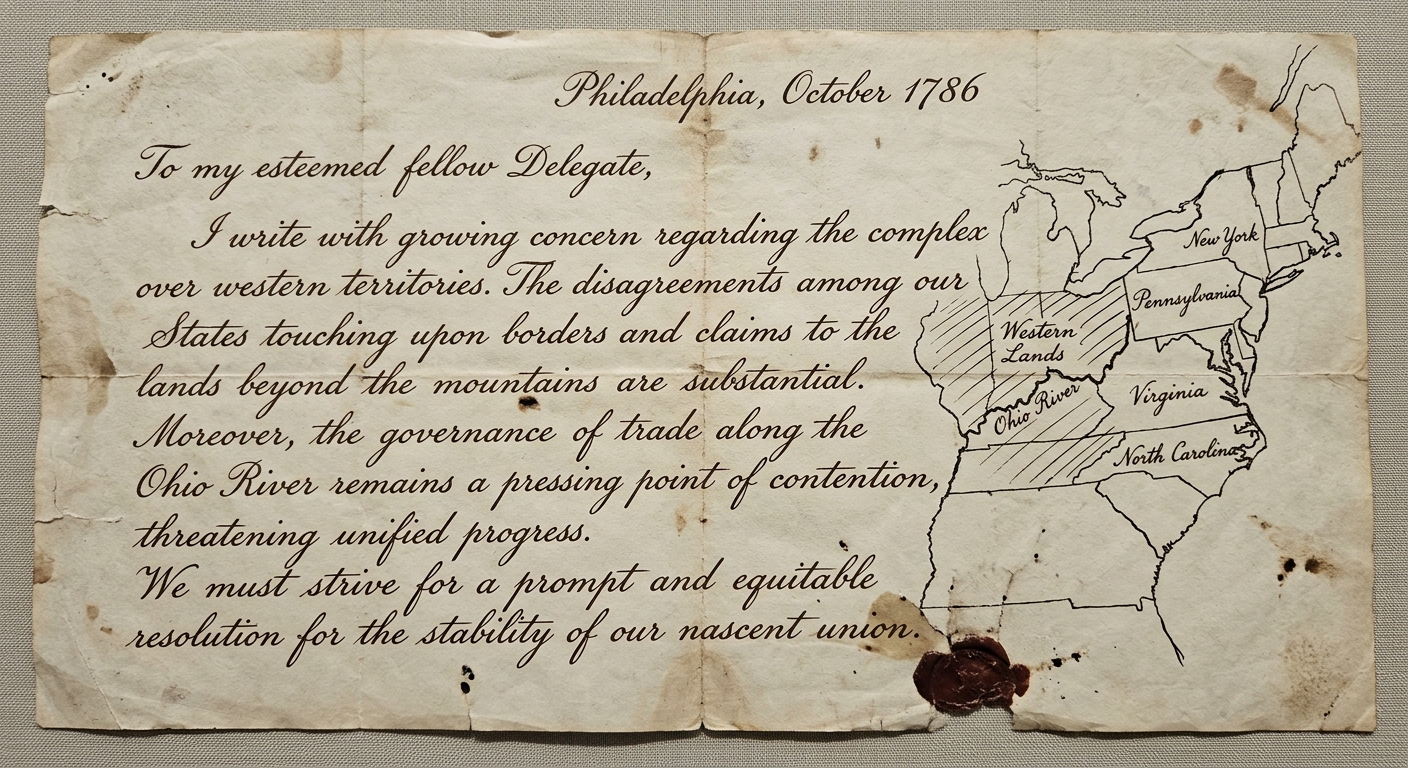
A parchment-style handwritten letter dated October 1786 with a small ink sketch map labeled “Ohio River” and “Western Lands,” discussing disputes among states over borders, trade routes, and western land claims.

After the Revolution, states argued over borders, western land claims, and access to river trade routes. Under the Articles of Confederation, Congress had limited power to settle disputes or set consistent policies. Geographic conflicts made unity difficult and increased calls for a stronger national government.
Asemmisa {{asɛmmisaAhyɛnsode}}
1.

Which action best explains why many leaders wanted a stronger national government after problems under the Articles of Confederation?

Asemmisa {{asɛmmisaAhyɛnsode}}
2.

Explain how disagreements over navigation rights or tolls on a major river (like the one referenced in the stimulus) could weaken unity among the states under the Articles of Confederation.

Use at least one piece of evidence from the document or reading.

Asemmisa {{asɛmmisaAhyɛnsode}}
3.

Which geographic issue in the stimulus would most directly increase conflict among states under the Articles of Confederation?

Asemmisa {{asɛmmisaAhyɛnsode}}
4.

Based on the document’s map and topic, which physical feature would most likely shape trade and transportation between states?

Asemmisa {{asɛmmisaAhyɛnsode}}
5.

Describe one way a stronger federal union could reduce conflicts between coastal and inland states over trade routes, ports, or western lands.

Use geographic terms (such as boundary, interior, river, port, or region) in your explanation.

Historical Document:

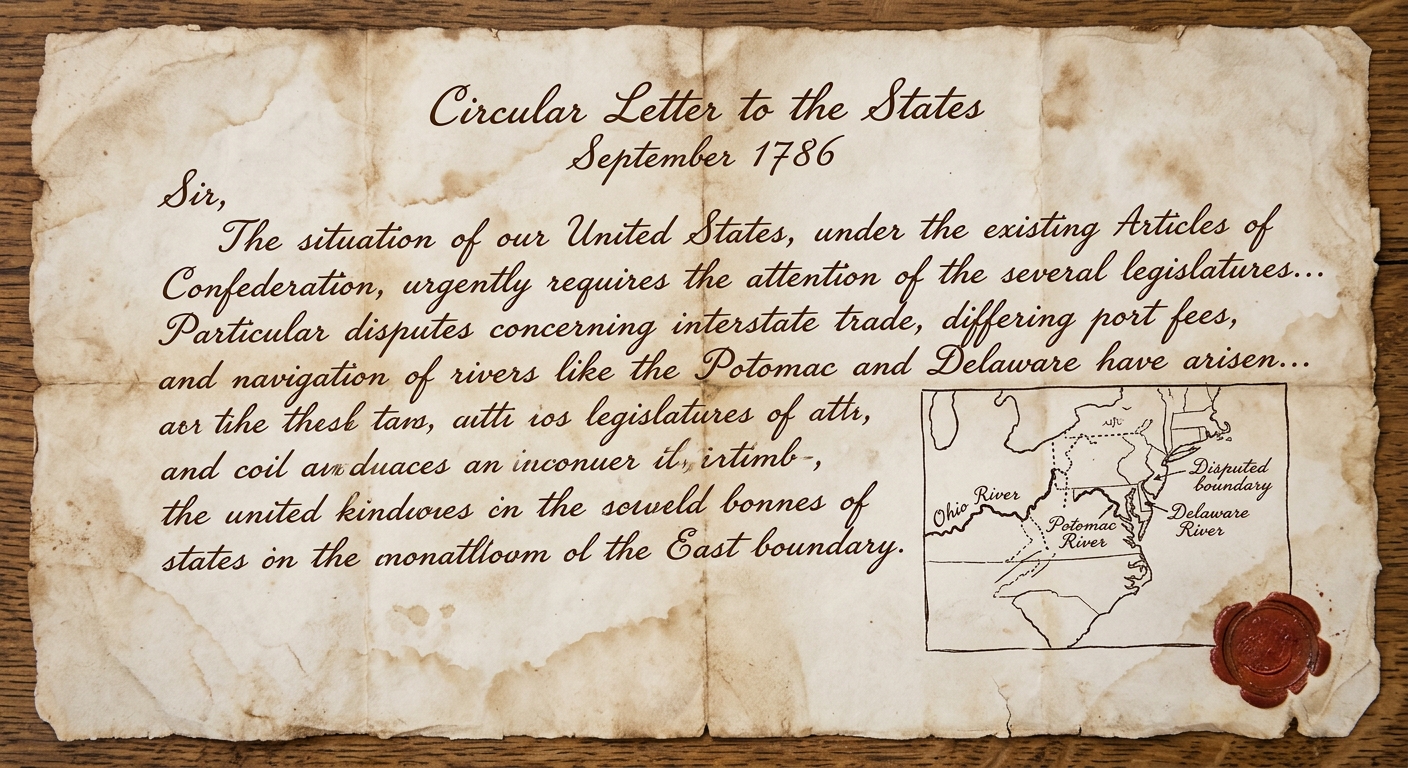
A parchment-style circular letter dated September 1786 urging delegates to meet to revise the Articles, with a small sketch map labeling the Potomac, Delaware, and Ohio Rivers and showing a disputed state boundary line.

In the mid-1780s, states set different trade rules and argued over port fees, river navigation, and borders. Because Congress under the Articles of Confederation lacked strong powers to regulate commerce or settle disputes, leaders called for a convention. The Constitution created a stronger national government.

Asemmisa {{asɛmmisaAhyɛnsode}}
6.

Which problem described in the stimulus most directly supports holding a convention to revise the Articles of Confederation?

Asemmisa {{asɛmmisaAhyɛnsode}}
7.

Explain how different state rules about port fees or river navigation could harm the economy and weaken unity among the states.

Use at least one piece of evidence from the document or reading.

Asemmisa {{asɛmmisaAhyɛnsode}}
8.

Based on the map inset and the document’s topic, which place would most likely serve as a practical meeting location for delegates because of access by major rivers and coastal trade routes?

Asemmisa {{asɛmmisaAhyɛnsode}}
9.

Which power of the national government under the Constitution would best address the geographic trade conflicts described in the stimulus?

Asemmisa {{asɛmmisaAhyɛnsode}}
10.

Describe one geographic reason a stronger central government would help address conflicts over western settlement or boundaries.

Use geographic terms (such as boundary, region, river valley, interior, or port) in your explanation.

Historical Document:

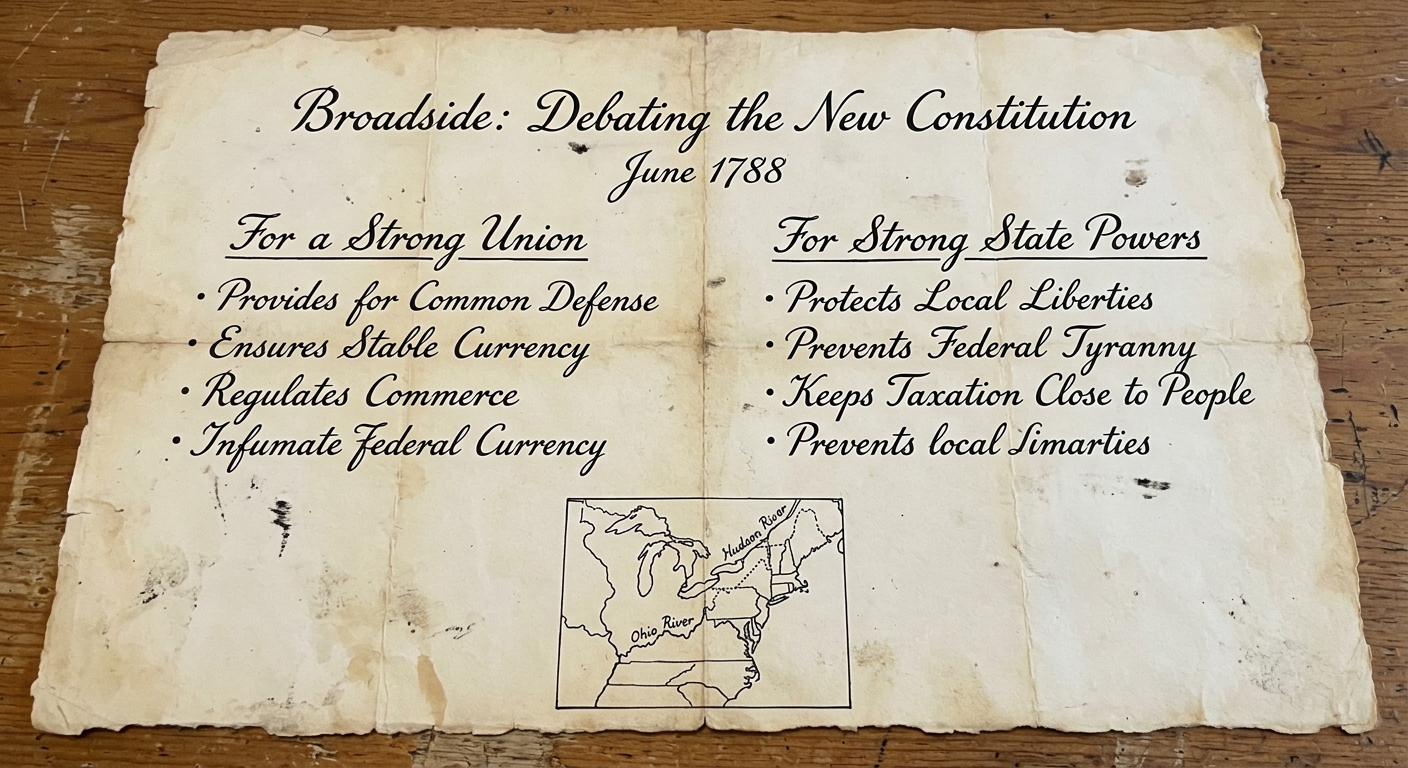
A parchment-style 1788 broadside with two columns comparing arguments for a strong national government versus strong state powers, plus a small sketch map with a state boundary line and rivers labeled Hudson and Ohio.

During ratification, Americans debated whether a stronger central government would solve problems among states or threaten freedoms. Geography mattered: river trade, port access, and boundary disputes linked regions. Supporters wanted national power to manage conflicts; opponents demanded limits and added protections for rights.

Asemmisa {{asɛmmisaAhyɛnsode}}
11.

Which issue in the stimulus best shows why people disagreed about the role of federal power during ratification?

Asemmisa {{asɛmmisaAhyɛnsode}}
12.

Explain how disagreements about control of river trade routes or port fees could connect to the debate over states’ rights versus federal power during ratification.

Use at least one piece of evidence from the document or reading.

Asemmisa {{asɛmmisaAhyɛnsode}}
13.

Which compromise or guarantee would opponents of a strong central government most likely demand if they feared federal power over regions and local communities?

Asemmisa {{asɛmmisaAhyɛnsode}}
14.

Based on the document’s geographic clues, which conflict would supporters of a stronger central government most likely claim the Constitution could reduce?

Asemmisa {{asɛmmisaAhyɛnsode}}
15.

Describe one geographic situation (boundary, river system, port, or region) that could make states hesitate to ratify the Constitution unless compromises were made.

Explain what compromise might address that concern.