Twa kɔ nsɛm atitiriw so
Log in
Sign up for FREE
arrow_back
Laabri

7.5 - The Constitution in Practice: - Practice D

star
star
star
star
star
Last updated about 1 month ago
20 Nsɛmmisa
Hyɛ no nsow a efi ɔkyerɛwfo no hɔ:

Use the historical document(s) and the short readings in the left panel to answer the associated questions.

Use the historical document(s) and the short readings in the left panel to answer the associated questions.

7.5.a
DOK.SS.2
7.5.b
DOK.SS.2
7.5.c
DOK.SS.2
7.5.d
DOK.SS.2
Ɛhia
1
7.5.a
DOK.SS.2
Ɛhia
1
7.5.a
DOK.SS.2
Ɛhia
2
7.5.a
DOK.SS.2
Ɛhia
1
7.5.a
DOK.SS.2
Ɛhia
2
7.5.a
DOK.SS.2
Ɛhia
1
7.5.b
DOK.SS.2
Ɛhia
1
7.5.b
DOK.SS.2
Ɛhia
2
7.5.b
DOK.SS.2
Ɛhia
1
7.5.b
DOK.SS.2
Ɛhia
2
7.5.b
DOK.SS.2
Ɛhia
1
7.5.c
DOK.SS.2
Ɛhia
1
7.5.c
DOK.SS.2
Ɛhia
2
7.5.c
DOK.SS.2
Ɛhia
1
7.5.c
DOK.SS.2
Ɛhia
2
7.5.c
DOK.SS.2
Ɛhia
2
7.5.d
DOK.SS.2
Ɛhia
1
7.5.d
DOK.SS.2
Ɛhia
2
7.5.d
DOK.SS.2
Ɛhia
1
7.5.d
DOK.SS.2
Ɛhia
1
7.5.d
DOK.SS.2

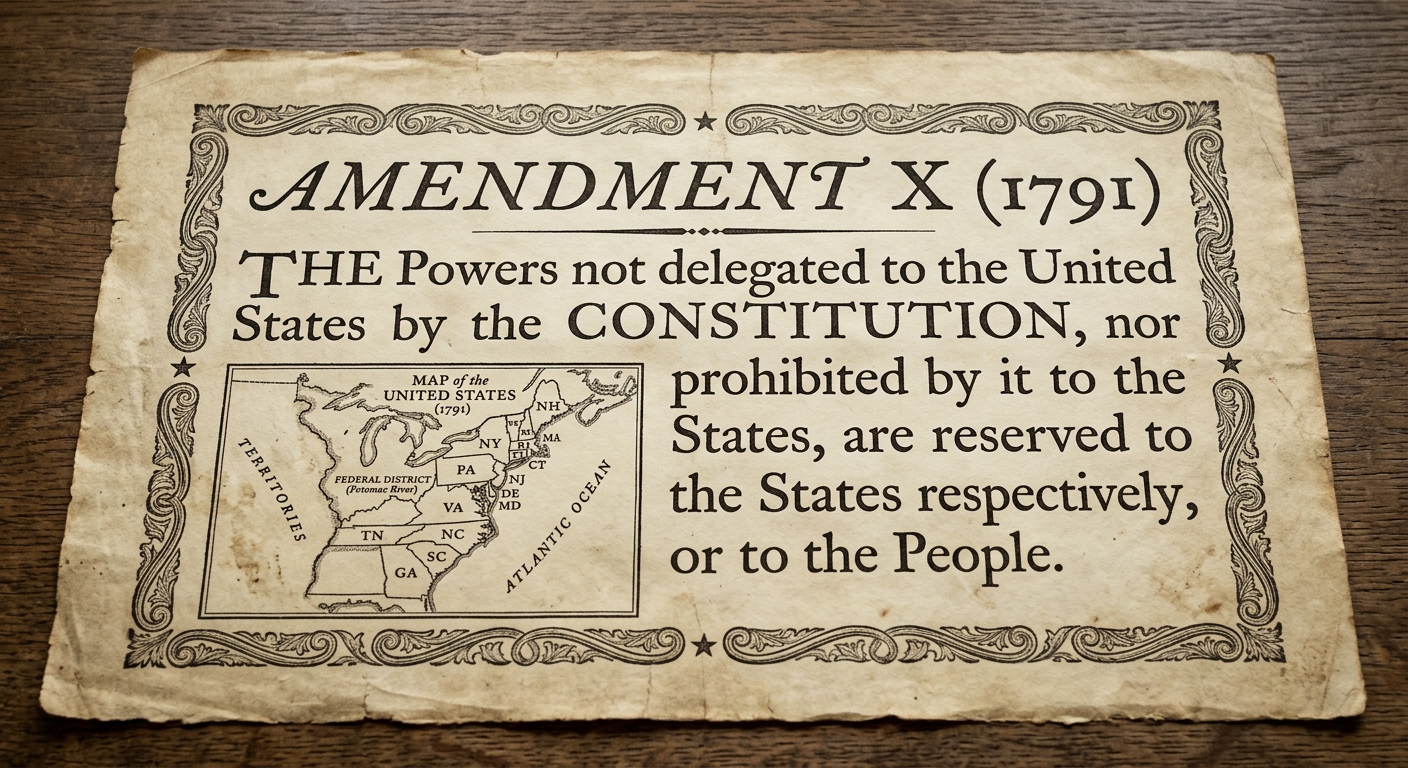
Parchment-style broadside labeled “Amendment X (1791)” with a short excerpt about powers reserved to the states, plus a small inset map of the early United States showing state boundaries and a marked federal district.

In 1791, the Bill of Rights was added to the U.S. Constitution. The Tenth Amendment explains that some powers belong to the national government, while others remain with state and local governments. Use the document and map to analyze how authority connects to place.
Asemmisa {{asɛmmisaAhyɛnsode}}
1.

A major river forms part of the boundary between two states, and repeated flooding affects towns on both sides. Which conclusion BEST fits the federalist idea shown in the document?

Asemmisa {{asɛmmisaAhyɛnsode}}
2.

Why do the state boundary lines on the map matter when deciding which government has authority?

Asemmisa {{asɛmmisaAhyɛnsode}}
3.

Using evidence from the document, explain how federalism connects government power to place (local, state, and national).

Include one concrete example of an issue in a specific location (city/county/state) and identify which level(s) of government would likely act and why.

Asemmisa {{asɛmmisaAhyɛnsode}}
4.

Based on the document, which action is MOST likely reserved to a state government within its borders?

Asemmisa {{asɛmmisaAhyɛnsode}}
5.

A bridge is proposed over a river that serves as a state boundary and connects two towns in different states.

Using the document as support, explain how responsibilities might be shared among local, state, and federal governments for approving and building the bridge.

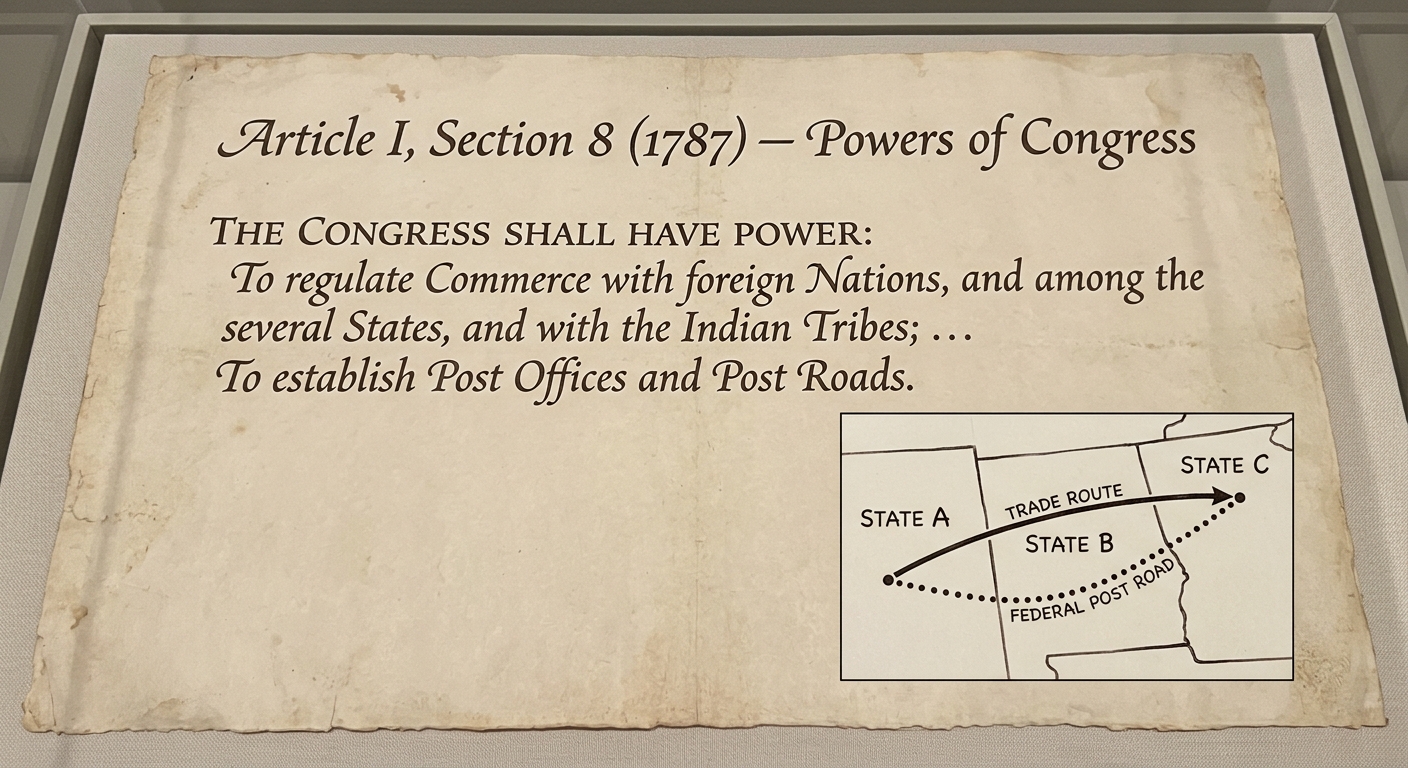
Aged-paper document titled “Article I, Section 8 (1787) — Powers of Congress” with a short excerpt about regulating interstate commerce and post roads, plus a small inset map showing three states with borders and a trade route crossing them.

In 1787, the Constitution created three branches of government and a system of checks and balances. This excerpt describes a power of Congress that involves movement across state borders. Use the document and map to explain how geography can shape national, state, and local responsibilities.

Asemmisa {{asɛmmisaAhyɛnsode}}
6.

A goods shipment travels by truck from City A in State 1 to City B in State 2 using the marked route. Which branch of the federal government is MOST directly connected to the power described in the document?

Asemmisa {{asɛmmisaAhyɛnsode}}
7.

A state government passes a law requiring a special tax on all products coming from neighboring states. Based on the document, which check is MOST likely to limit this state action?

Asemmisa {{asɛmmisaAhyɛnsode}}
8.

Using evidence from the document and the map, explain how checks and balances can affect a national decision about an interstate road or trade route.

Identify at least two branches and describe what each could do.

Asemmisa {{asɛmmisaAhyɛnsode}}
9.

Why does the map’s state boundary information matter when applying the power described in the document?

Asemmisa {{asɛmmisaAhyɛnsode}}
10.

A state tries to block trucks from another state on the marked route at the border checkpoint. Explain how the Constitution’s structure (branches and checks) could resolve this conflict.

Use the document as evidence and include why the location of the border matters.

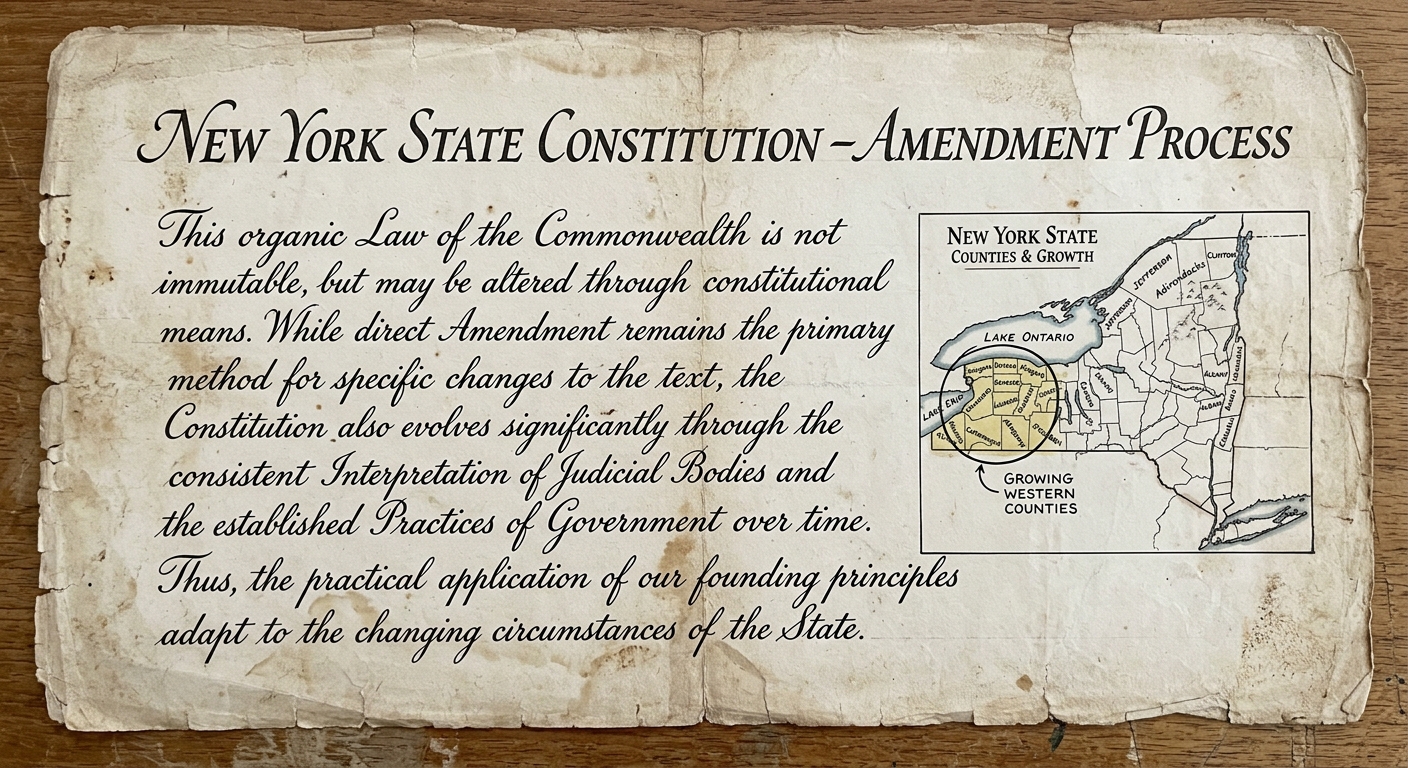
Aged-paper document titled “New York State Constitution — Amendment Process” describing ways a constitution can change, with a small inset map of New York State showing county boundaries and a highlighted western region.

In the early 1800s, New York debated changing its constitution as new counties grew and populations shifted west. The state could revise rules through amendments, but courts and government practices could also reshape how the constitution worked. Use the document and map as evidence.

Asemmisa {{asɛmmisaAhyɛnsode}}
11.

The map highlights growing western counties. Which conclusion BEST connects this geographic change to why a constitution might be revised over time?

Asemmisa {{asɛmmisaAhyɛnsode}}
12.

Which example BEST shows the Constitution responding to change in a way other than a formal amendment, as described in the document?

Asemmisa {{asɛmmisaAhyɛnsode}}
13.

A law is applied differently in two counties after a new court decision.

Using the document as evidence, explain how this could be an example of constitutional change without a formal amendment.

Include why county boundaries and locations matter when people experience the change.

Asemmisa {{asɛmmisaAhyɛnsode}}
14.

According to the document, which change to New York’s government would MOST directly require using the formal amendment process?

Asemmisa {{asɛmmisaAhyɛnsode}}
15.

Using evidence from the document and map, explain one reason New York might change representation or voting rules as population shifts between regions.

Describe how geography (counties/regions/boundaries) can influence what changes are debated.

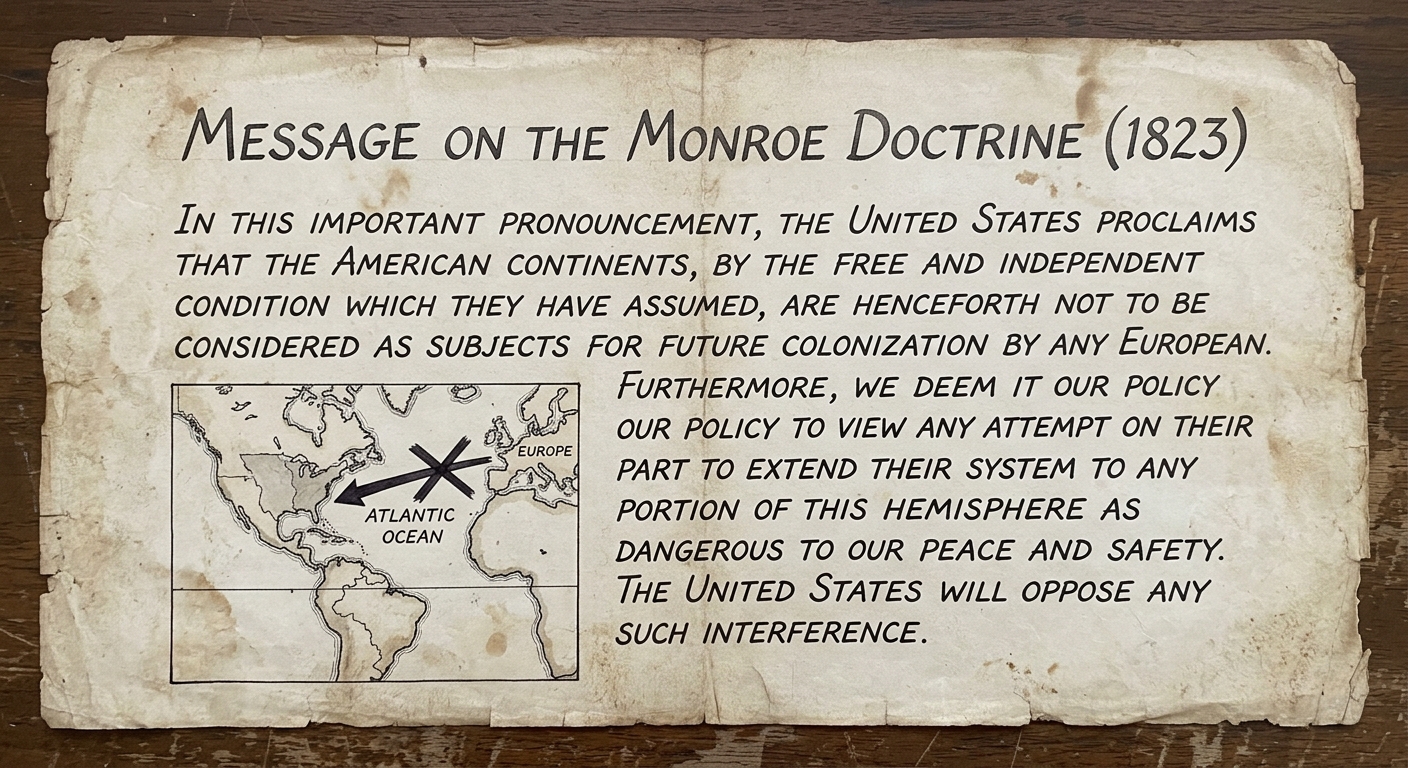
Aged-paper document titled “Message on the Monroe Doctrine (1823)” stating the U.S. would oppose European interference in the Western Hemisphere, with an inset map of the Americas and crossed-out arrows from Europe.

In the early 1800s, foreign and domestic disputes tested the Constitution. Leaders favored isolationism but warned Europe not to interfere in the Western Hemisphere. Because this policy involved oceans and borders, geography shaped decisions about which branch or level of government could act.

Asemmisa {{asɛmmisaAhyɛnsode}}
16.

Using evidence from the document and map, explain how geography (oceans, hemispheres, and distance) influenced why the United States warned Europe about interference.

Describe how the Constitution’s separation of powers could shape the U.S. response.

Asemmisa {{asɛmmisaAhyɛnsode}}
17.

A European nation threatens to establish a new colony on an island in the Caribbean. Based on the document’s purpose, which response is MOST consistent with the Constitution’s structure?

Asemmisa {{asɛmmisaAhyɛnsode}}
18.

A coastal state wants to sign its own agreement with a European power to protect its ports.

Use the document’s ideas to explain why this could cause a constitutional conflict.

Include how location (coasts, ports, and borders) affects the issue.

Asemmisa {{asɛmmisaAhyɛnsode}}
19.

Which statement BEST connects isolationism to the Western Hemisphere focus shown in the document and map?

Asemmisa {{asɛmmisaAhyɛnsode}}
20.

The map shows the Atlantic Ocean between Europe and the Americas.

Which conclusion BEST explains why this geographic information matters for the policy described in the document?