Twa kɔ nsɛm atitiriw so
Log in
Sign up for FREE
arrow_back
Laabri

7.8 - Nation Divided: - Practice D

star
star
star
star
star
Last updated about 1 month ago
25 Nsɛmmisa
Hyɛ no nsow a efi ɔkyerɛwfo no hɔ:

Use the historical document(s) and the short readings in the left panel to answer the associated questions.

Use the historical document(s) and the short readings in the left panel to answer the associated questions.

7.8.a
DOK.SS.2
7.8.b
DOK.SS.2
7.8.c
DOK.SS.2
7.8.d
DOK.SS.2
7.8.e
DOK.SS.2
Ɛhia
2
7.8.a
DOK.SS.2
Ɛhia
2
7.8.a
DOK.SS.2
Ɛhia
1
7.8.a
DOK.SS.2
Ɛhia
1
7.8.a
DOK.SS.2
Ɛhia
1
7.8.a
DOK.SS.2
Ɛhia
1
7.8.b
DOK.SS.2
Ɛhia
1
7.8.b
DOK.SS.2
Ɛhia
1
7.8.b
DOK.SS.2
Ɛhia
2
7.8.b
DOK.SS.2
Ɛhia
2
7.8.b
DOK.SS.2
Ɛhia
1
7.8.c
DOK.SS.2
Ɛhia
2
7.8.c
DOK.SS.2
Ɛhia
1
7.8.c
DOK.SS.2
Ɛhia
1
7.8.c
DOK.SS.2
Ɛhia
2
7.8.c
DOK.SS.2
Ɛhia
1
7.8.d
DOK.SS.2
Ɛhia
1
7.8.d
DOK.SS.2
Ɛhia
1
7.8.d
DOK.SS.2
Ɛhia
2
7.8.d
DOK.SS.2
Ɛhia
2
7.8.d
DOK.SS.2
Ɛhia
2
7.8.e
DOK.SS.2
Ɛhia
1
7.8.e
DOK.SS.2
Ɛhia
1
7.8.e
DOK.SS.2
Ɛhia
1
7.8.e
DOK.SS.2
Ɛhia
2
7.8.e
DOK.SS.2

Historical Document:
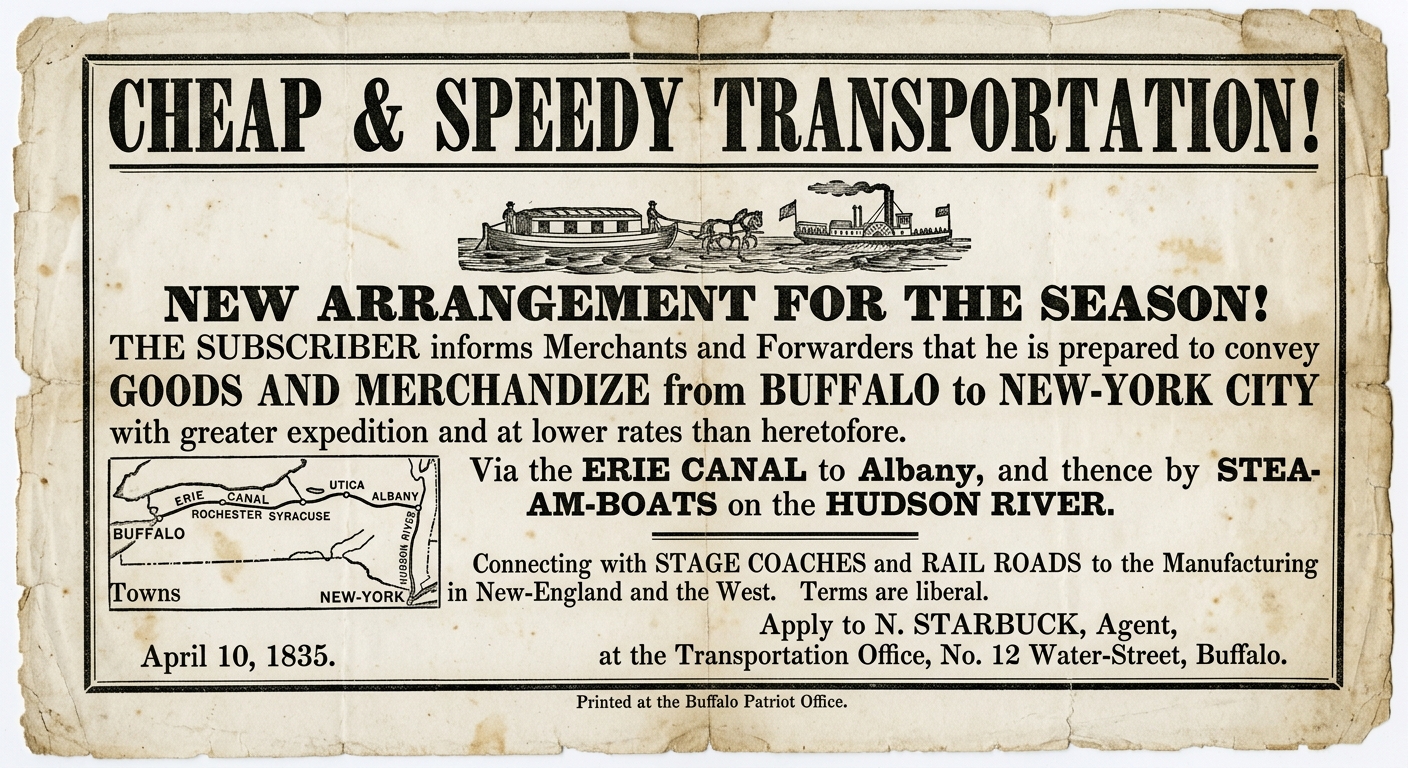
Aged black-and-white 1830s transportation broadside advertising shipping via the Erie Canal and Hudson River, with a small inset route map from Buffalo to Albany to New York City.

This 1830s broadside promotes moving goods from western New York to New York City by traveling east along the Erie Canal, then south on the Hudson River. Notices like this appeared as canals, roads, and early rail lines reshaped regional economies.
Asemmisa {{asɛmmisaAhyɛnsode}}
1.

Explain how the transportation route in the document could change economic relationships between at least two U.S. regions (for example, the Northeast and the West).

Use evidence from the document/reading (route, directions, or connections) in your explanation.

Asemmisa {{asɛmmisaAhyɛnsode}}
2.

Describe one way regional economic differences tied to transportation improvements could shape different views of federal power.

In your answer, connect an economic interest (trade, industry, or agriculture) to a likely position on a strong national government versus states’ rights.

Asemmisa {{asɛmmisaAhyɛnsode}}
3.

How could improvements like canals and early rail lines contribute to sectional (regional) tensions in the United States?

Asemmisa {{asɛmmisaAhyɛnsode}}
4.

Which inference is best supported by the route shown (Buffalo → Albany → New York City)?

Asemmisa {{asɛmmisaAhyɛnsode}}
5.

Based on the document and reading, which geographic advantage most directly helped New York City grow as a commercial center in the early 1800s?

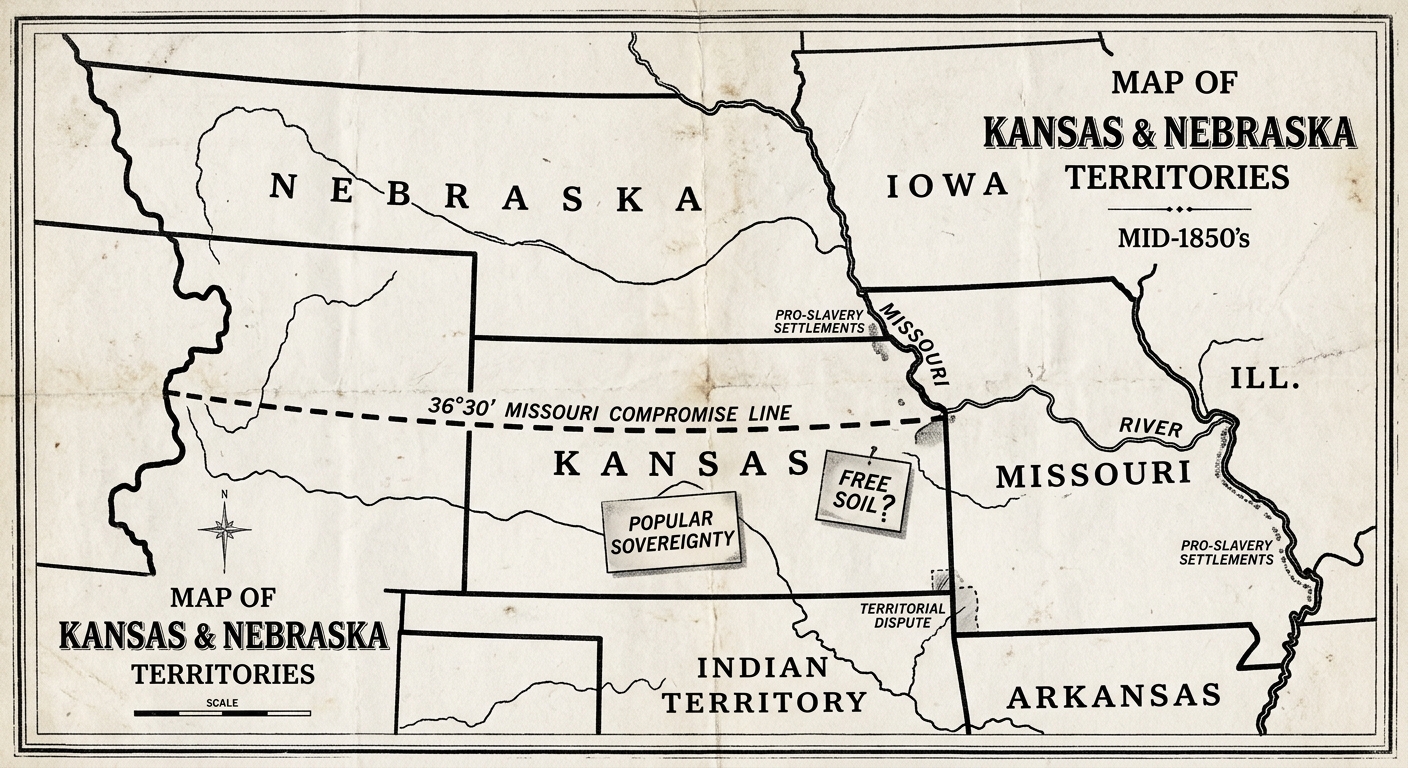
Historical Document:

Black-and-white 1850s newspaper-style map of Kansas and Nebraska Territories showing nearby states, the Missouri River, and a dashed 36°30′ line.

This 1850s newspaper map shows Kansas and Nebraska Territories near Missouri and the Missouri River. Earlier compromises tried to limit where slavery could expand, but new western territories reopened the debate. The map highlights borders and lines that shaped arguments over slavery in new lands.

Asemmisa {{asɛmmisaAhyɛnsode}}
6.

Based on the map and reading, which geographic factor most directly increased sectional tension over slavery in the 1850s?

Asemmisa {{asɛmmisaAhyɛnsode}}
7.

Which inference is best supported by the map’s emphasis on Kansas’s border with Missouri?

Asemmisa {{asɛmmisaAhyɛnsode}}
8.

How does the map help explain why compromises over slavery in new territories were difficult to maintain?

Asemmisa {{asɛmmisaAhyɛnsode}}
9.

Describe one way the geographic expansion of the United States made sectional tensions worse in the 1800s.

Connect a specific place or boundary shown in the document to a political conflict about slavery.

Asemmisa {{asɛmmisaAhyɛnsode}}
10.

Explain how the location of Kansas and Nebraska Territories could affect whether slavery expanded.

Use at least two pieces of geographic evidence from the map/reading (for example, borders, nearby states, or the Missouri River).

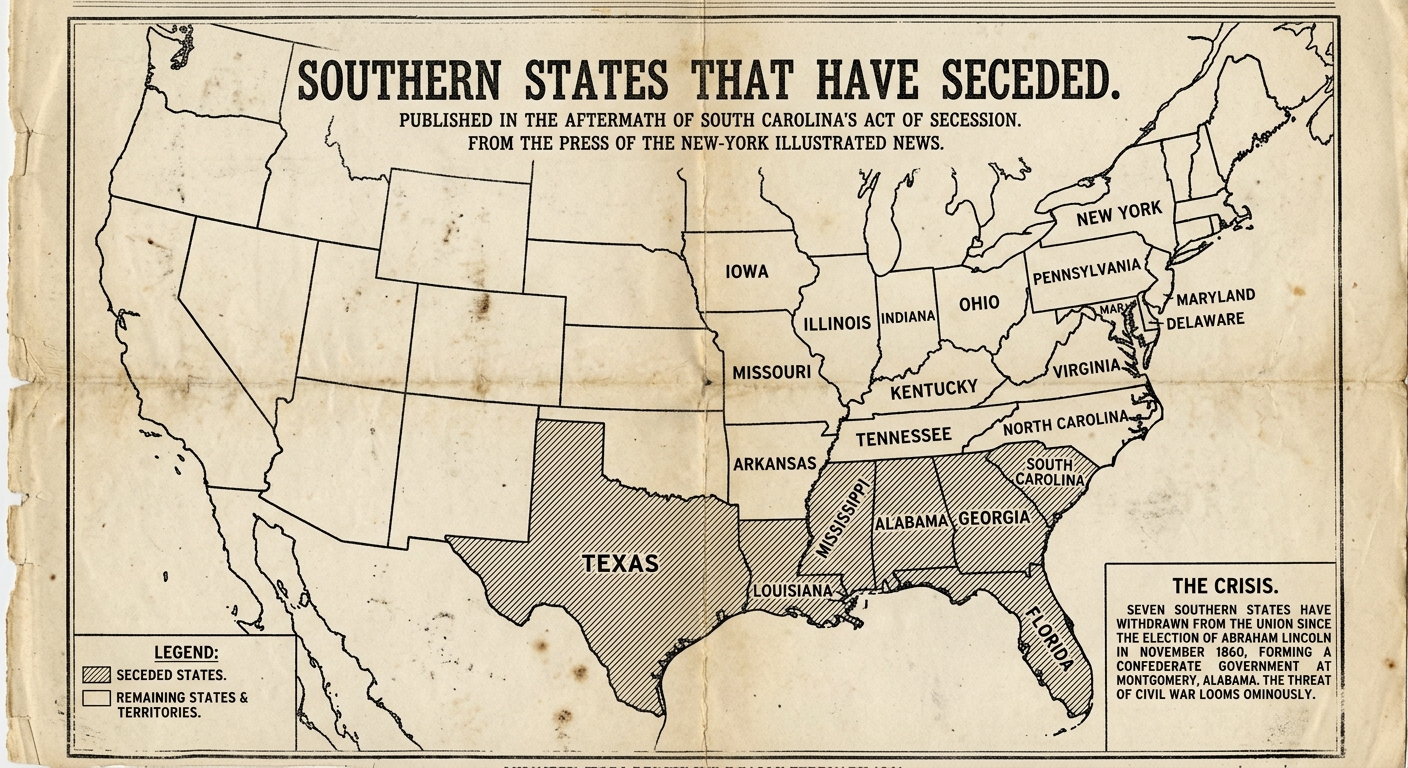
Historical Document:

Black-and-white 1860–1861 newspaper map of the United States shading the first Southern states that seceded, with a legend and caption about the 1860 election.

This 1860–1861 newspaper map shades the first Southern states to secede after the election of a Republican president. By showing which states left the Union first—and which remained—readers could compare regions and predict how geography, borders, and neighboring states might shape the spread of secession.

Asemmisa {{asɛmmisaAhyɛnsode}}
11.

How does the map help explain why the election of 1860 could lead to different reactions in different regions?

Asemmisa {{asɛmmisaAhyɛnsode}}
12.

Explain how the map’s pattern of shaded states supports the idea that the election of a Republican president was an immediate cause of secession in the South.

Use at least two pieces of geographic evidence (such as regional clustering, shared borders, or coastal location).

Asemmisa {{asɛmmisaAhyɛnsode}}
13.

Based on the shaded pattern on the map, which statement best describes the early geography of secession?

Asemmisa {{asɛmmisaAhyɛnsode}}
14.

Which inference about the spread of secession is best supported by a map that highlights state borders and neighboring states?

Asemmisa {{asɛmmisaAhyɛnsode}}
15.

Describe one geographic reason why secession might not have spread to every state at the same time.

Use evidence from the map (for example, which states are shaded versus unshaded, or where the shaded states are located).

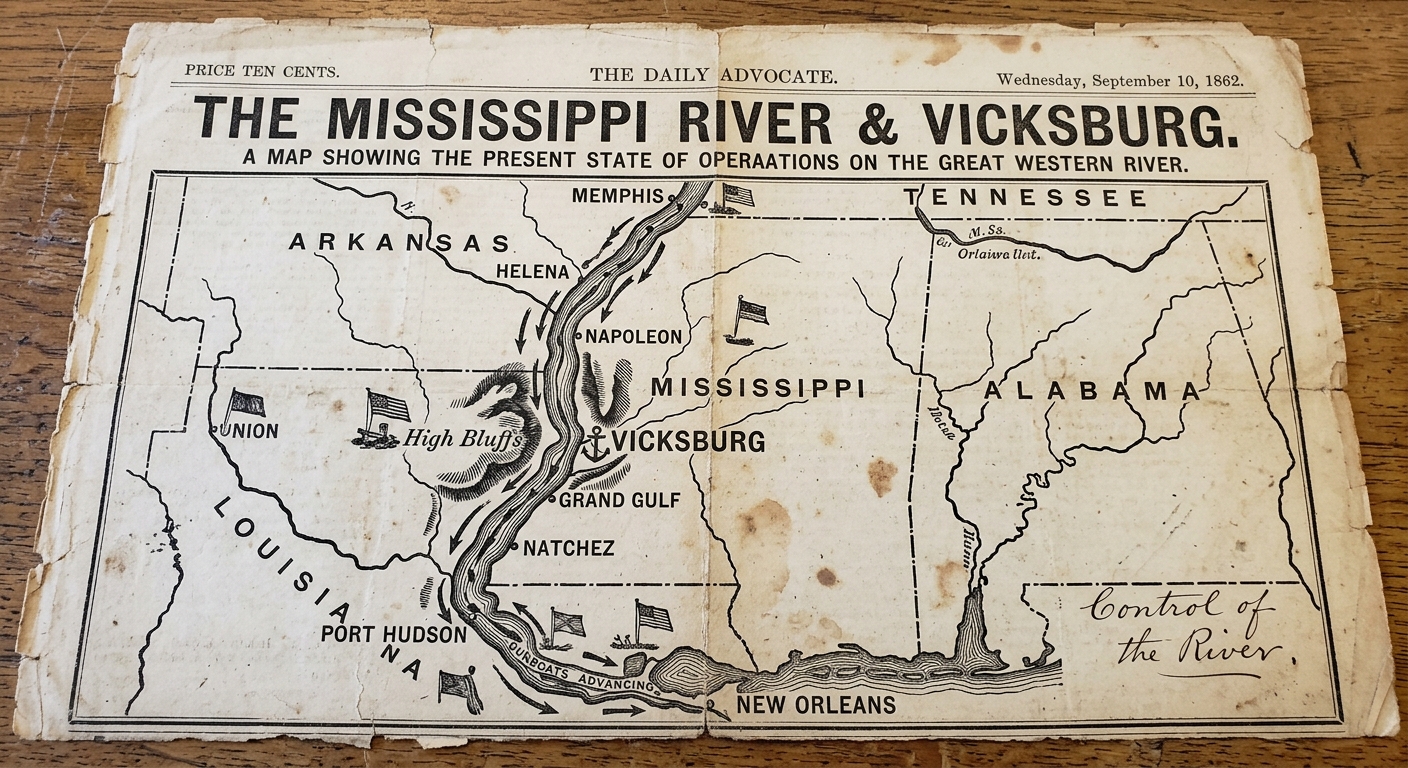
Historical Document:

Black-and-white 1862 newspaper map of the Mississippi River highlighting Vicksburg’s bluffs and nearby towns, with arrows showing river movement.

This 1862 newspaper map highlights Vicksburg, Mississippi, on high bluffs above a sharp bend in the Mississippi River. The map suggests why controlling this location mattered: river traffic carried troops and supplies, and whoever held key bends could block movement. Geography shaped Civil War strategy.

Asemmisa {{asɛmmisaAhyɛnsode}}
16.

Which inference is best supported by a map that emphasizes river bends and high bluffs at Vicksburg?

Asemmisa {{asɛmmisaAhyɛnsode}}
17.

How could controlling the Mississippi River affect the course of the war between the Union and the Confederacy?

Asemmisa {{asɛmmisaAhyɛnsode}}
18.

Based on the map and reading, why would Vicksburg’s location be strategically important during the Civil War?

Asemmisa {{asɛmmisaAhyɛnsode}}
19.

Explain how two geographic features shown or implied by the map (for example, the river, a bend, or high bluffs) could influence military strategy for both the Union and the Confederacy.

Asemmisa {{asɛmmisaAhyɛnsode}}
20.

Describe one way control of a river system could change the outcome of a Civil War campaign.

Use evidence from the document to connect a specific location (such as Vicksburg) to a strategic advantage.

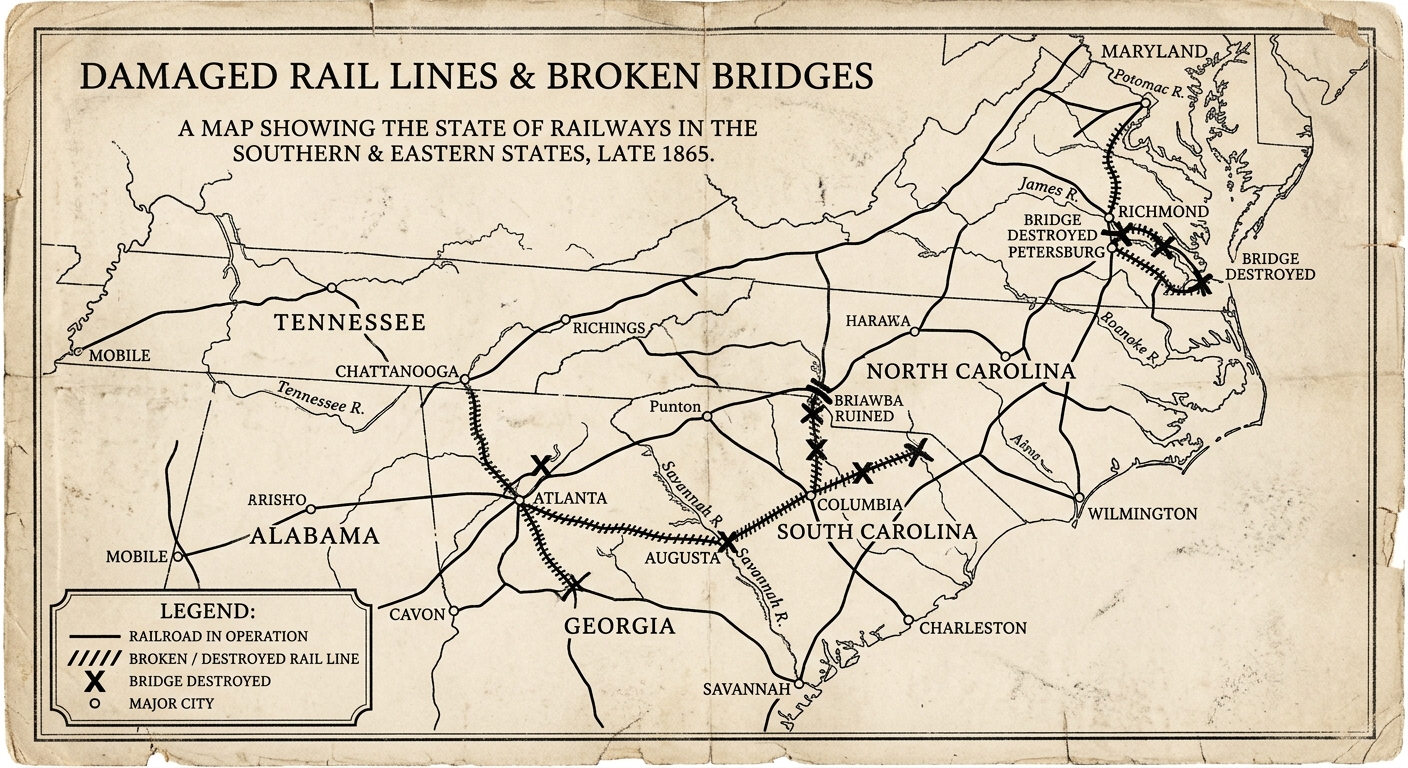
Historical Document:

Black-and-white 1865 map showing damaged rail lines and destroyed bridges across parts of the South, with a legend.

Reading (50 words): This 1865 map marks damaged rail lines and destroyed bridges in parts of the Confederacy. Railroads connected towns to markets and armies to supplies, so wrecked routes made recovery harder. The map helps explain how the war damaged infrastructure and weakened regional economic capacity after 1865.

Asemmisa {{asɛmmisaAhyɛnsode}}
21.

Explain how damage to transportation infrastructure could affect both human lives and economic capacity after the Civil War.

Use at least two pieces of geographic evidence from the map/reading (such as broken rail lines, bridge locations, or connections between towns).

Asemmisa {{asɛmmisaAhyɛnsode}}
22.

Based on the map and reading, which effect of the Civil War is most directly illustrated by the damaged rail lines and destroyed bridges?

Asemmisa {{asɛmmisaAhyɛnsode}}
23.

Which inference about human lives during and after the war is best supported by a map showing many broken transportation links between towns?

Asemmisa {{asɛmmisaAhyɛnsode}}
24.

How does the geographic pattern of damaged rail corridors help explain why some regions recovered more slowly after the Civil War?

Asemmisa {{asɛmmisaAhyɛnsode}}
25.

Describe one way the war’s impact on physical infrastructure could change governance in the postwar South.

Connect a damaged transportation feature shown in the document to a challenge for local, state, or federal authorities.