Use the historical document(s) and the short readings in the left panel to answer the associated questions.
During the French and Indian War, British officials sought revenue and tighter trade control. This notice says new import duties will help pay for defense and wartime supplies sent to North America, showing how imperial conflict shaped colonial commerce and increased tensions over British economic policy.
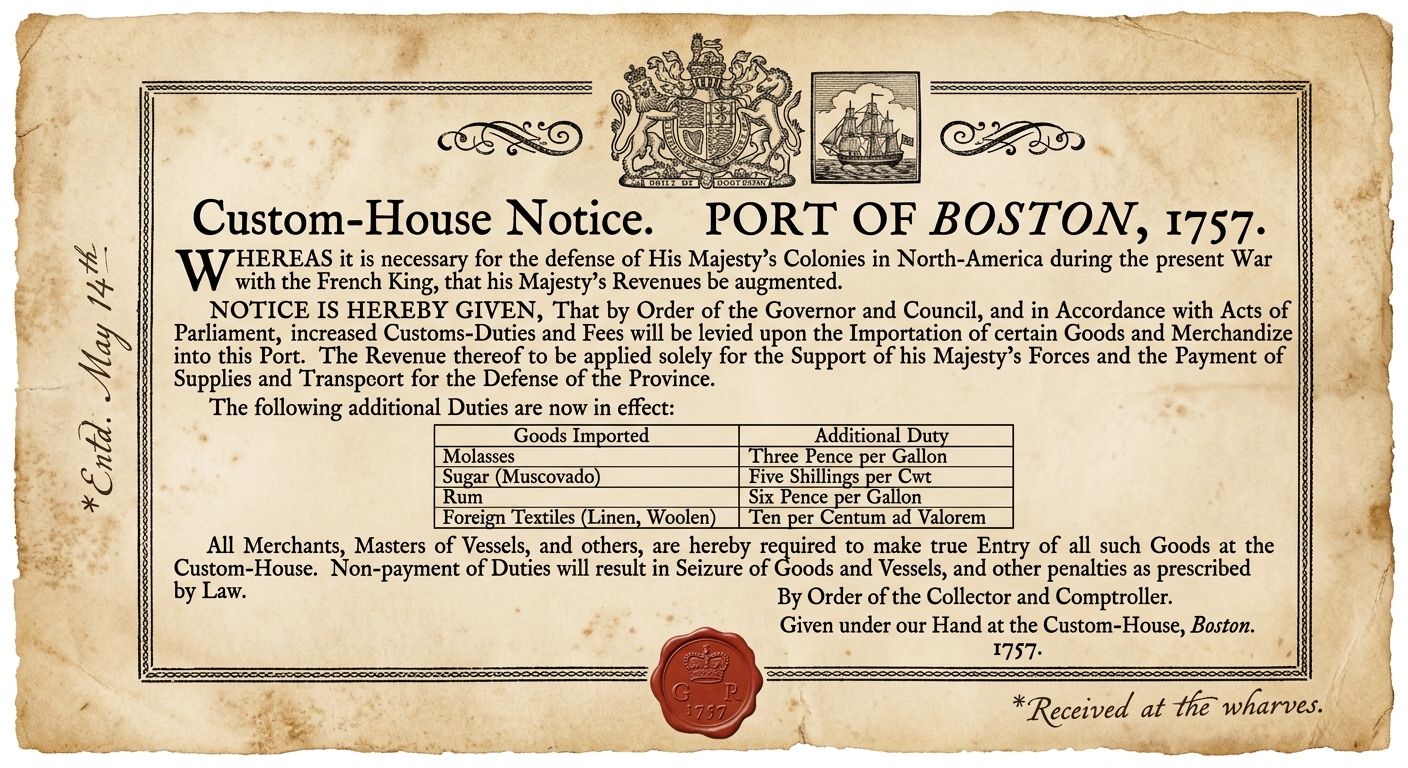
Based on the Custom-House Notice, which economic idea is MOST reflected in Britain’s policy toward the colonies?
Which outcome is the BEST example of how a war between France and Great Britain could change the colonies’ relationship with Great Britain?
What is the MOST reasonable inference about who would benefit from enforcing the duties listed in the notice?
Using evidence from the Custom-House Notice, explain one way an imperial war could affect colonial economic life (trade, prices, or work).
How might a colonist argue that Britain’s economic policy in the notice changed the colonies’ relationship with Great Britain?
Answer in one paragraph and reference a specific detail from the document.
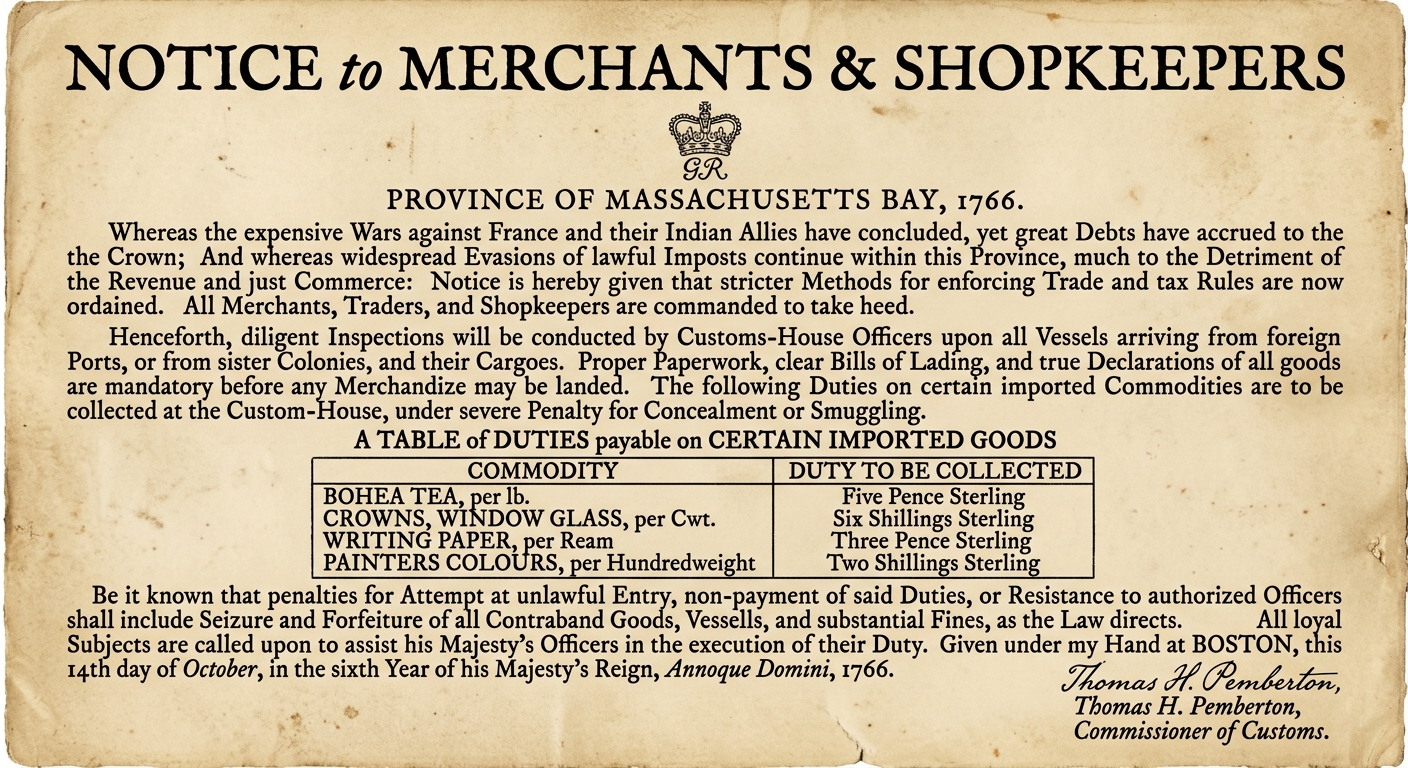
After the French and Indian War, Britain tried to enforce new trade rules and collect revenue in the colonies. This merchant notice announces stricter customs inspections and duties on imported goods. It shows how postwar economic policies increased British control and sparked colonial protests and dissent.

Based on the merchant notice, which BEST describes Britain’s economic goal in the colonies after the French and Indian War?
Which colonial group would MOST directly feel the effects of stricter customs inspections described in the notice?
Which colonial response is MOST consistent with the kind of policies described in the notice?
Using evidence from the notice, explain one way stricter customs enforcement could affect prices or trade in the colonies.
How could a colonist use a detail from the notice to argue that Britain’s new economic policies were unfair?
Answer in one paragraph.
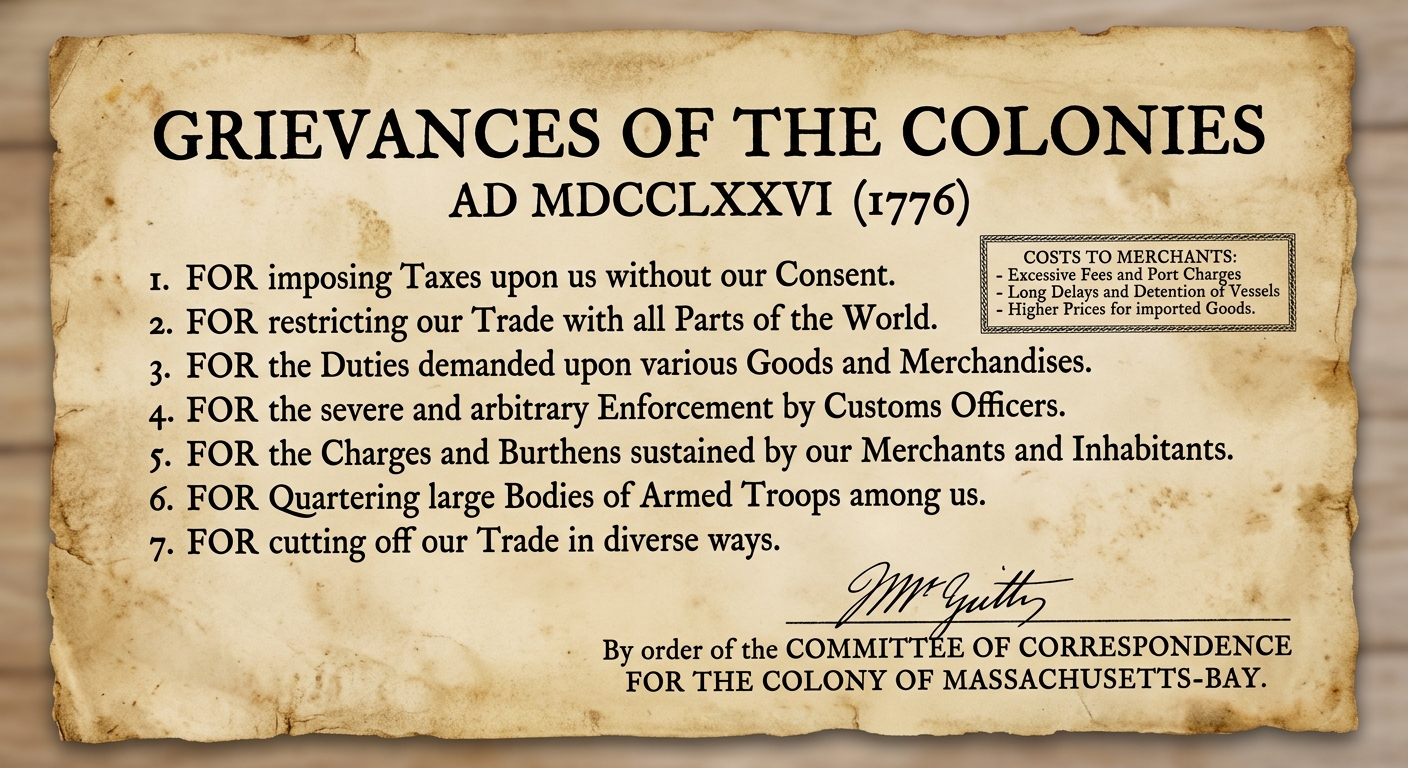
In 1776, colonial leaders listed grievances to justify independence. This pamphlet excerpt criticizes taxes and trade restrictions imposed without colonial consent and describes their costs to merchants and consumers. It shows how Enlightenment ideas about rights shaped economic complaints that appeared in arguments for separation from Britain.

Based on the pamphlet excerpt, which economic grievance is MOST closely connected to the idea of “no taxation without representation”?
Which statement BEST explains how Enlightenment ideas about rights could shape the economic complaints in the excerpt?
Which economic effect is MOST consistent with the “Costs to Merchants” box described in the document?
Using evidence from the pamphlet excerpt, explain one way British economic policies could be framed as a violation of colonists’ rights.
Explain one way the economic grievances in the excerpt could support the argument for independence.
Answer in one paragraph and reference a specific economic detail from the document.
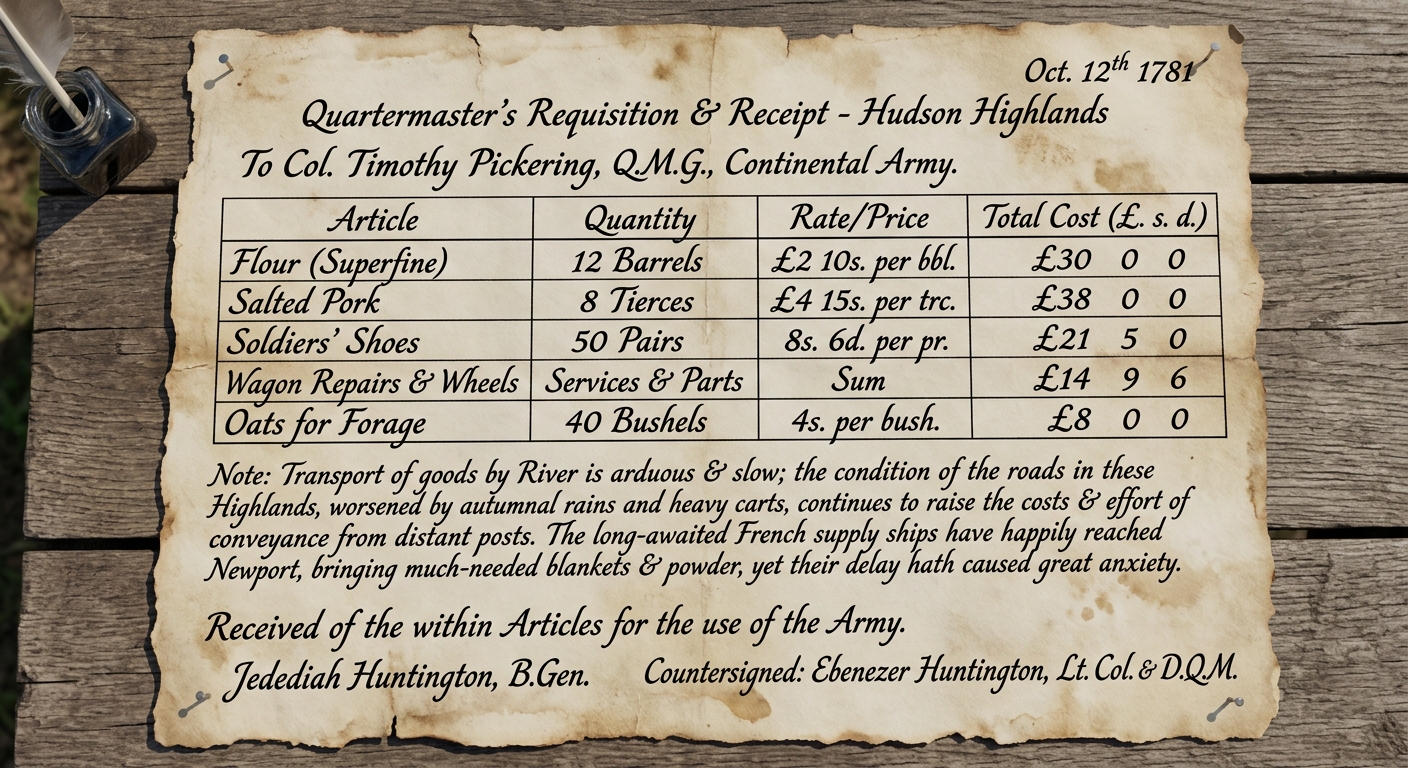
During the American Revolution, armies needed food, clothing, horses, and transportation. This quartermaster requisition lists supplies, prices, and shipping challenges near major rivers and rough roads. It also notes allied aid arriving by ship. The document shows how strategy and geography shaped wartime economic demands.

Based on the requisition, which economic challenge of the Revolutionary War is MOST clearly shown?
Which detail from the document BEST connects geography to economic decisions during the war?
The note about allied supplies arriving by ship MOST strongly suggests what economic impact of foreign aid?
Using evidence from the requisition, explain one way military strategy could affect local economic life during the Revolution.
Explain one way geographic conditions mentioned in the document could increase the costs of fighting the war.
Answer in one paragraph.