Use the historical document(s) and the short readings in the left panel to answer the associated questions.
Historical Document (1828, excerpt)
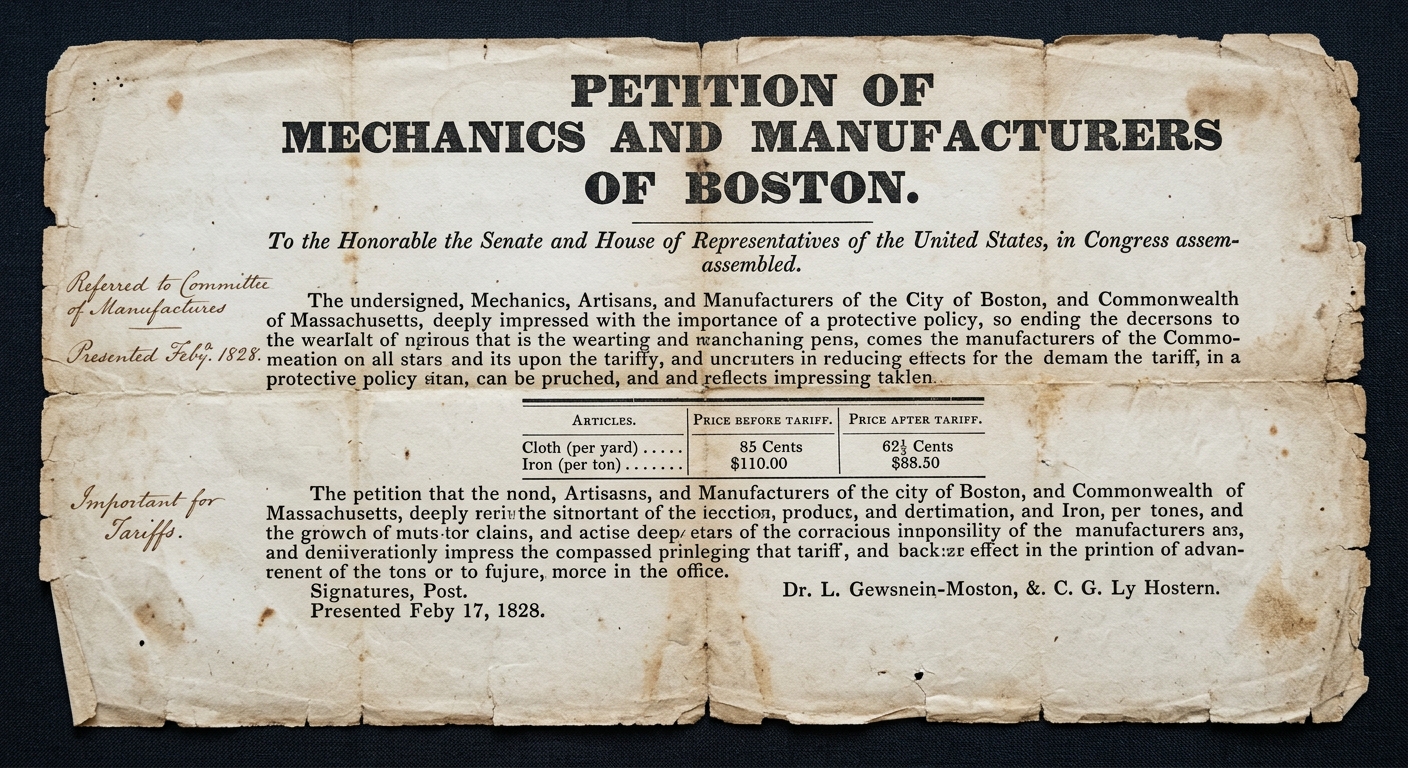
In this petition, northern manufacturers argue that protective tariffs will help American factories compete with imports. They claim tariffs can raise demand for U.S.-made goods and support jobs. Critics in farming regions warn that tariffs increase consumer prices and favor one region over another.
Which statement best explains how this tariff debate could increase sectional tension before the Civil War era?
Based on the reading stimulus, which region is most likely to oppose a protective tariff, and why?
Explain how a protective tariff could affect at least two different groups (for example: factory owners, factory workers, farmers, or consumers).
Use evidence or details from the document and stimulus to support your explanation.
Describe one way regional economic differences could lead to disagreements about the Constitution (states’ rights vs. federal power) during early U.S. industrialization.
Connect your answer to the tariff issue shown here.
Which economic goal is most clearly supported by the petition’s argument for protective tariffs?
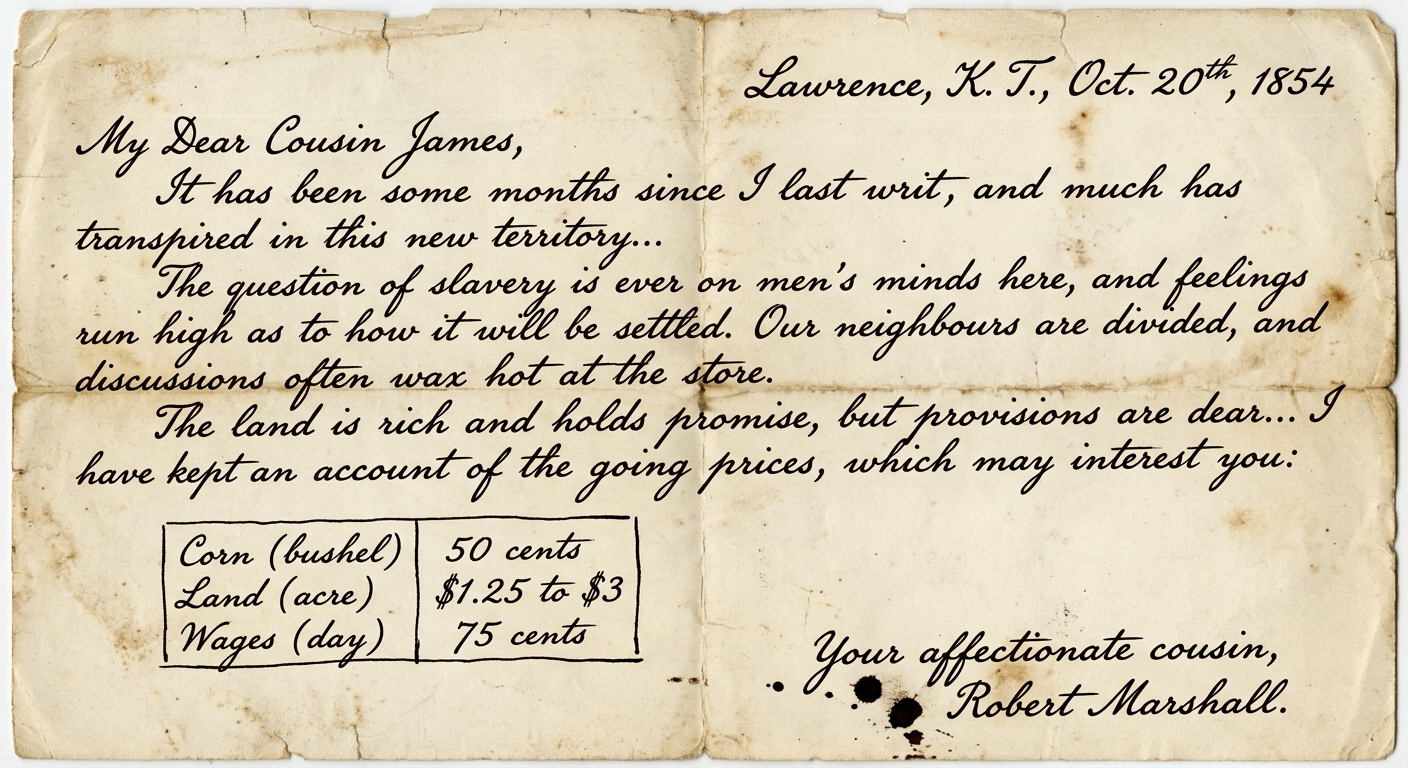
Historical Document (1854, excerpt)

A settler in the Kansas Territory writes that arguments over slavery in the new territory are affecting daily life. The writer notes that families choose where to move based on labor needs and safety, and that uncertainty is changing land prices and wages.
Which economic effect of sectional conflict in a new territory is described most directly in the reading stimulus?
Explain how uncertainty about slavery in a new territory could affect at least two economic decisions made by families or businesses.
Use evidence or details from the stimulus and document.
Based on the document and stimulus, which group would most likely support allowing slavery in the territory for economic reasons?
Describe how the failure of compromise over slavery in new territories could contribute to rising sectional tension.
Connect your answer to at least one economic concern mentioned in the stimulus (prices, wages, labor needs, or land).
Which statement best explains how debates over slavery in new territories could increase sectional tensions?
Historical Document (1861, excerpt)

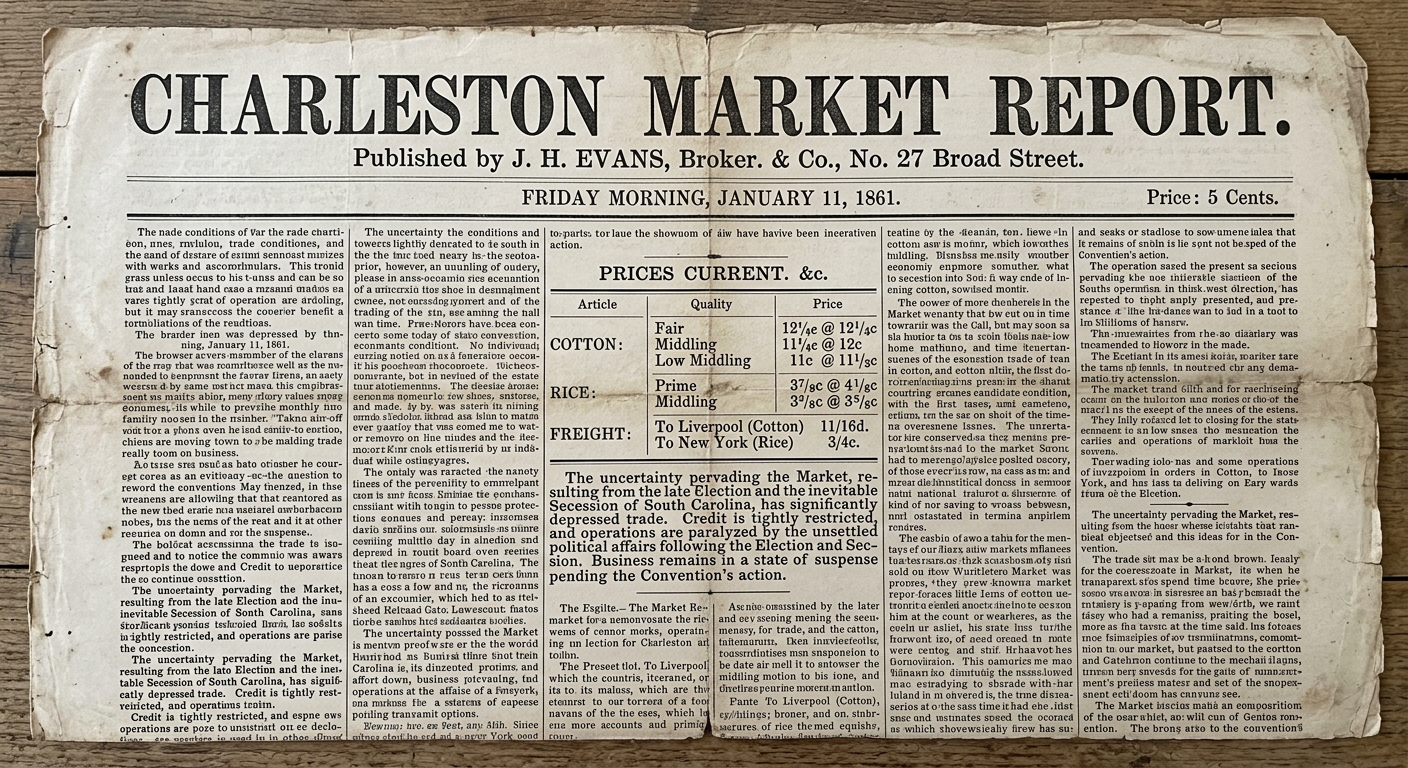
A Charleston market report printed soon after the 1860 election warns that political events are disrupting trade. The report notes uncertainty about shipping and credit, and it lists changing prices for Southern export crops. The writer suggests secession debates could make it harder to sell goods abroad.
Why would Southern leaders who relied on export crops be especially concerned after the election of a Republican president?
Which economic problem is described most directly in the reading stimulus?
Explain how election results and secession debates could affect at least two economic decisions made by Southern businesses or farmers.
Use evidence or details from the stimulus and document.
Describe one way different regional economies could shape perspectives on the causes of the Civil War.
Connect your answer to the economic concerns shown in the market report.
Which statement best connects the document to a cause of Southern secession mentioned in the standard?
Historical Document (1863, excerpt)

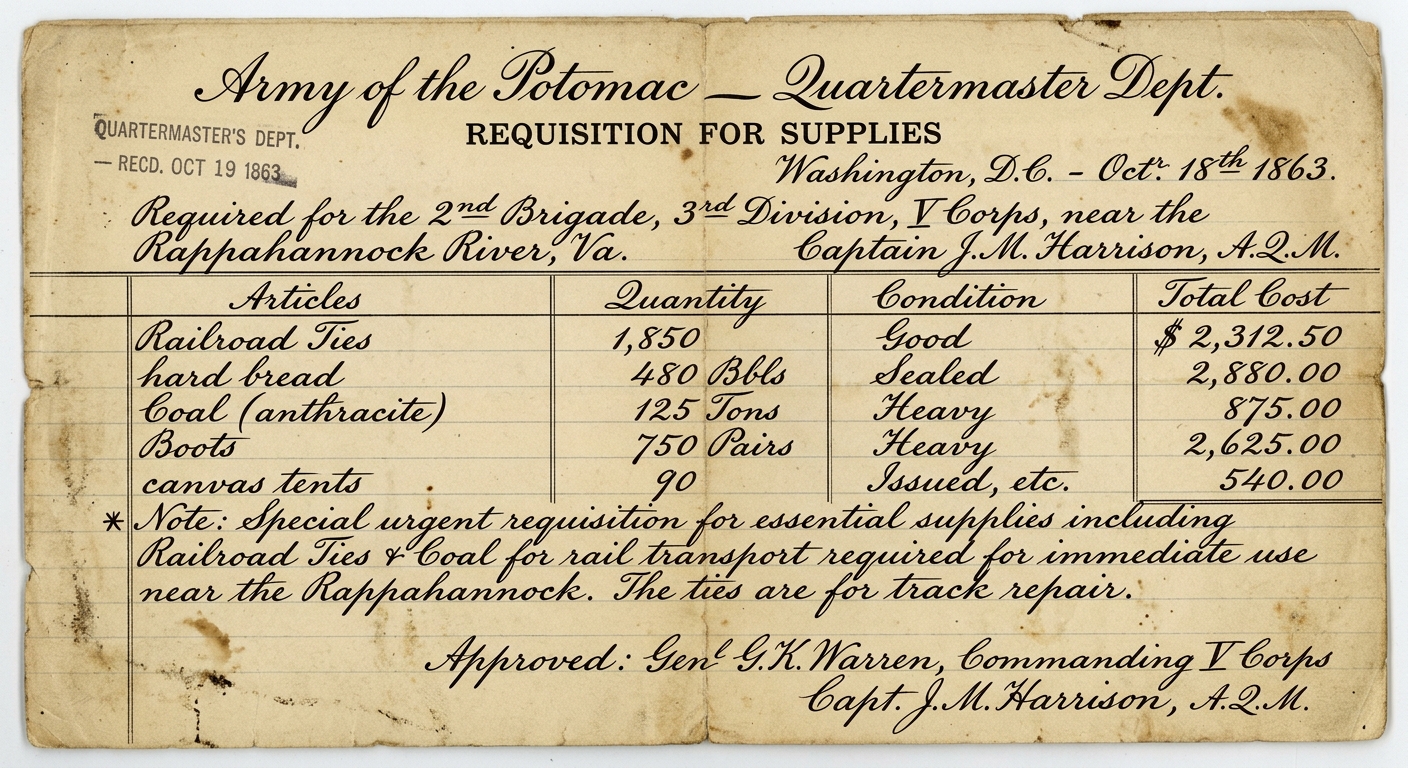
A Union quartermaster record lists supplies and costs needed to move an army by rail and river. The entry notes that delays in transport can raise prices and reduce the amount of food and equipment reaching soldiers. The document suggests that geography and transportation affected military planning.
Which factor affecting the war effort is described most directly in the reading stimulus?
Based on the stimulus, how could geography influence military costs during the Civil War?
Which statement best connects the quartermaster record to how military technology influenced the course of the war?
Explain how supply costs and transportation problems could influence a commander’s strategy.
Use evidence or details from the stimulus and document.
Describe one way logistics (moving supplies) could affect the outcome of a battle or campaign during the Civil War.
Connect your answer to the economic details (costs, prices, or quantities) in the quartermaster record.
Historical Document (1865, excerpt)

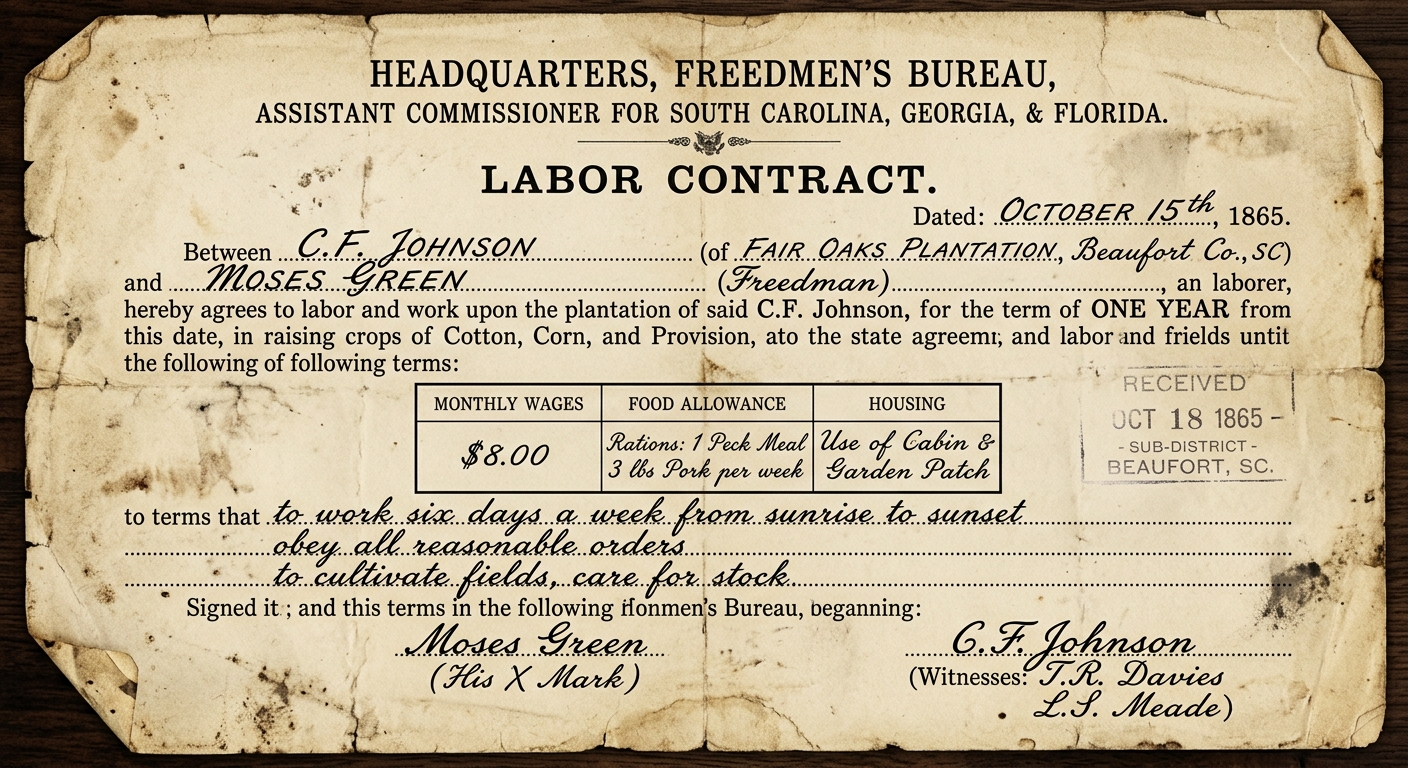
A postwar labor contract outlines wages, rations, and housing for workers on a Southern farm. The terms show how emancipation changed labor arrangements, but also how landowners tried to control work through contracts and debt. The document suggests economic rebuilding affected daily life.
Which economic change after the Civil War is shown most directly in the document?
Which statement best connects this document to the standard about the Civil War’s effects?
Explain how a labor contract like this could affect the well-being of both workers and landowners after the Civil War.
Use details from the document and stimulus (wages, rations, housing, control, or debt).
Based on the reading stimulus, why might some workers still have limited economic freedom even with a labor contract?
Describe one way the Civil War could reduce a region’s economic capacity and slow recovery.
Then connect that idea to why contracts like this might become common after the war.