Twa kɔ nsɛm atitiriw so
Log in
Sign up for FREE
arrow_back
Laabri

7.1a - Native Americans: - Practices A through E

star
star
star
star
star
Last updated about 1 month ago
25 Nsɛmmisa
Hyɛ no nsow a efi ɔkyerɛwfo no hɔ:

Use the historical document(s) and the short readings in the left panel to answer the associated questions.

Use the historical document(s) and the short readings in the left panel to answer the associated questions.

Ɛhia
1
7.1.a
DOK.SS.2
Ɛhia
1
7.1.a
DOK.SS.2
Ɛhia
1
7.1.a
DOK.SS.2
Ɛhia
2
7.1.a
DOK.SS.2
Ɛhia
2
7.1.a
DOK.SS.2
Ɛhia
1
7.1.a
DOK.SS.2
Ɛhia
1
7.1.a
DOK.SS.2
Ɛhia
1
7.1.a
DOK.SS.2
Ɛhia
2
7.1.a
DOK.SS.2
Ɛhia
2
7.1.a
DOK.SS.2
Ɛhia
1
7.1.a
DOK.SS.2
Ɛhia
1
7.1.a
DOK.SS.2
Ɛhia
1
7.1.a
DOK.SS.2
Ɛhia
2
7.1.a
DOK.SS.2
Ɛhia
2
7.1.a
DOK.SS.2
Ɛhia
1
7.1.a
DOK.SS.2
Ɛhia
1
7.1.a
DOK.SS.2
Ɛhia
1
7.1.a
DOK.SS.2
Ɛhia
2
7.1.a
DOK.SS.2
Ɛhia
2
7.1.a
DOK.SS.2
Ɛhia
1
7.1.a
DOK.SS.2
Ɛhia
1
7.1.a
DOK.SS.2
Ɛhia
1
7.1.a
DOK.SS.2
Ɛhia
2
7.1.a
DOK.SS.2
Ɛhia
2
7.1.a
DOK.SS.2

(Historical Document):

This reproduced map-and-notes page was created by a traveler who recorded seasonal movement in a northeastern woodland region. Study the labeled camps, fields, and trails, plus the margin notes about weather and food sources. Use these details as evidence in the questions that follow.
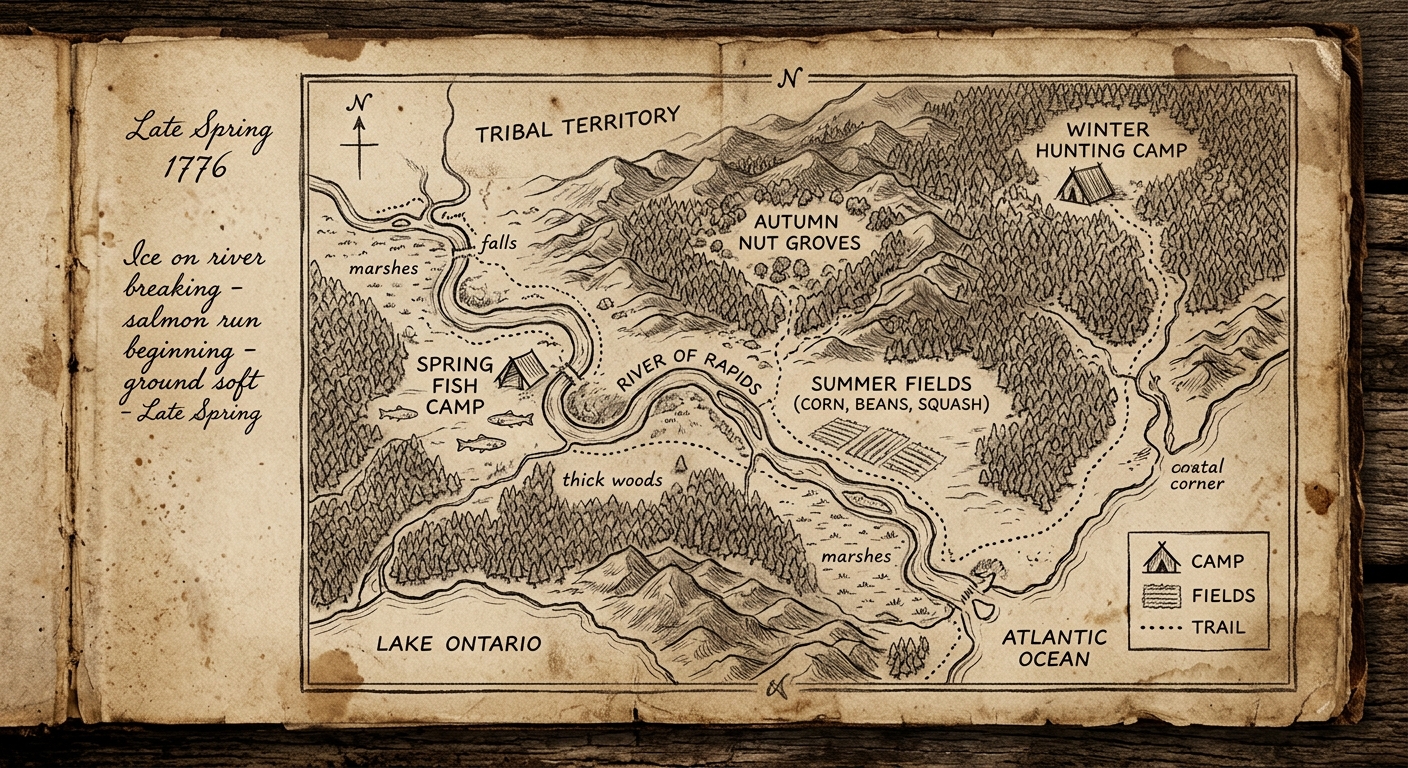
Sepia-toned scanned document showing a hand-drawn map with labeled seasonal camps, fields, and trails, plus handwritten notes about fish runs and winter hunting.

Asemmisa {{asɛmmisaAhyɛnsode}}
1.

Which labeled feature is the clearest evidence that geography influenced where people settled for part of the year?

Asemmisa {{asɛmmisaAhyɛnsode}}
2.

Which statement best interprets the relationship between climate and migration shown?

Asemmisa {{asɛmmisaAhyɛnsode}}
3.

Which inference about cultural development is best supported by the evidence?

Asemmisa {{asɛmmisaAhyɛnsode}}
4.

Explain how geography and climate influenced migration and cultural development.

In one well-formed paragraph, cite two specific pieces of evidence from the document (for example, labeled locations, trails, or margin notes) and explain what each piece of evidence shows.

Asemmisa {{asɛmmisaAhyɛnsode}}
5.

In one paragraph, explain one way daily life or resources would likely differ between these areas (such as river areas and upland/hill areas).

Support your claim with at least one detail from the document.

(Historical Document):

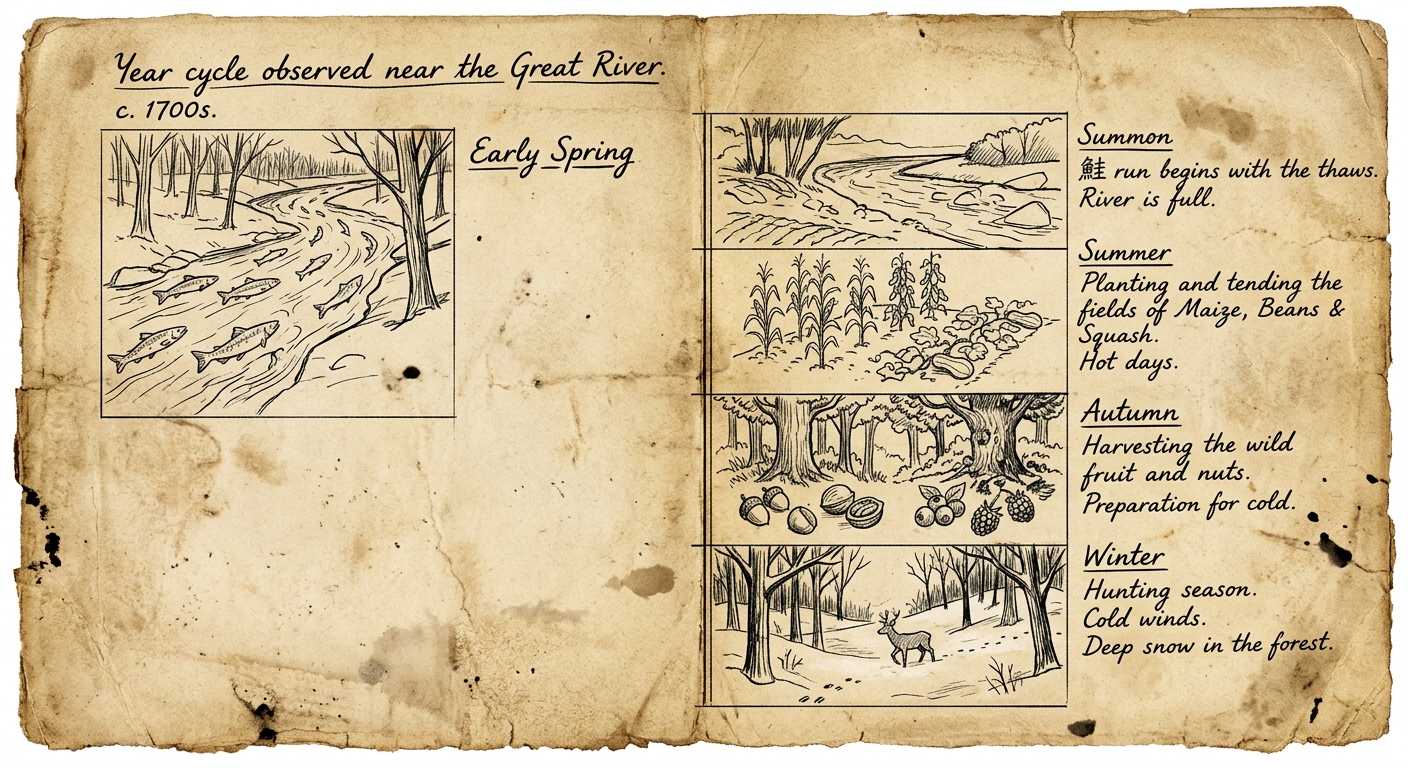
This reproduced seasonal timeline was recorded by an observer in a northeastern woodland region. Read the notes for each season and place the activities in order across the year. Use the sequence as evidence to explain how climate shaped migration and ways of getting food.

Sepia-toned scanned document showing a hand-drawn seasonal timeline with notes about spring fishing, summer planting, autumn harvest, and winter hunting.

Asemmisa {{asɛmmisaAhyɛnsode}}
6.

Which sequence correctly places the activities in chronological order across the year?

Asemmisa {{asɛmmisaAhyɛnsode}}
7.

Which detail is the best evidence that climate changed what people did at different times of year?

Asemmisa {{asɛmmisaAhyɛnsode}}
8.

Which conclusion best explains how seasonal timing could influence migration within a region?

Asemmisa {{asɛmmisaAhyɛnsode}}
9.

Explain how chronological order across the seasons provides evidence that geography and climate influenced cultural development.

In one well-formed paragraph, cite two specific season notes and explain what the timing suggests about how people met their needs.

Asemmisa {{asɛmmisaAhyɛnsode}}
10.

Choose one season and explain why doing that activity in a different season would be less effective in this region.

Use at least one specific detail as evidence.

(Historical Document):

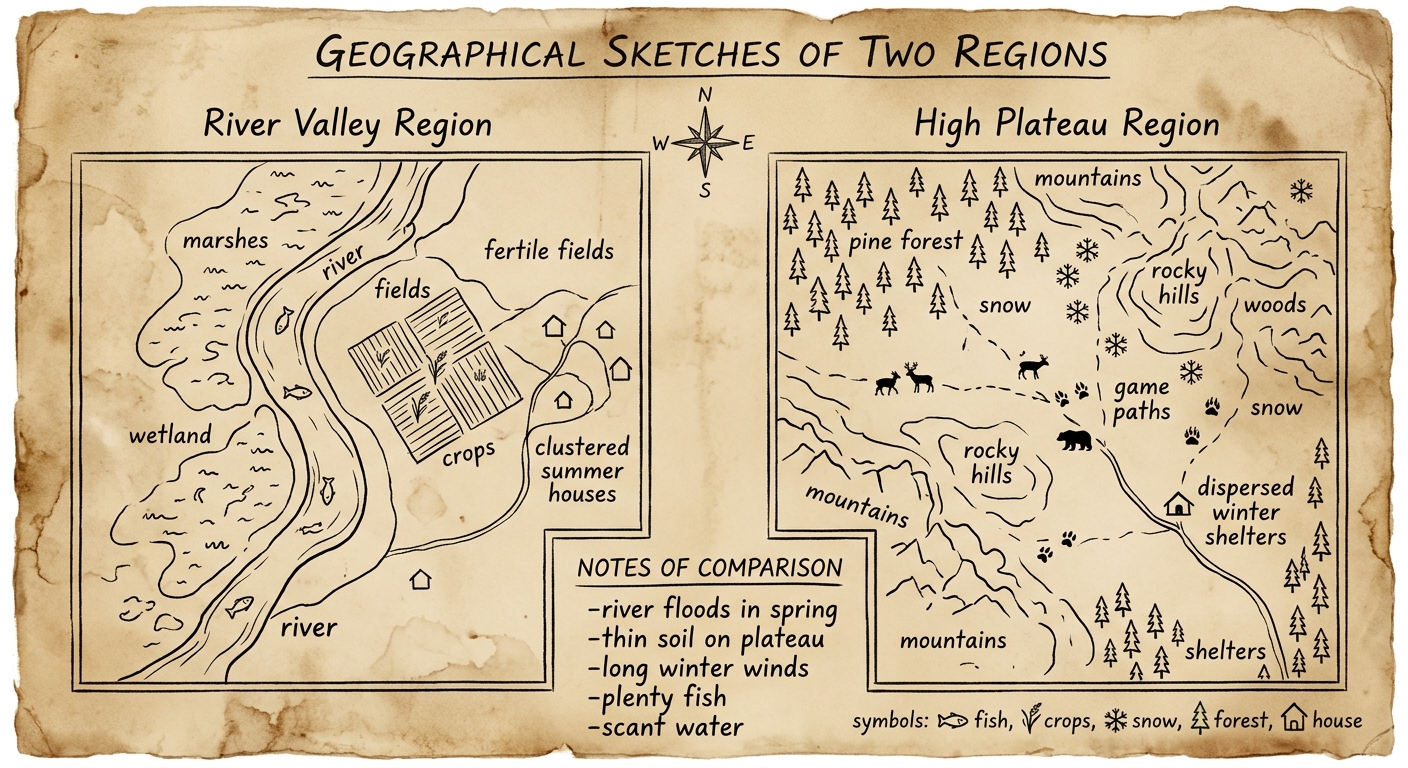
This reproduced comparison page shows two inset maps—one of a river valley and one of a high plateau—in a northeastern woodland region. Study the landforms, resource symbols, and margin notes about seasons. Use evidence from both insets to compare how geography and climate shaped culture.

Sepia-toned document with two inset maps comparing a river valley region and a high plateau region, with notes about resources and seasonal conditions.

Asemmisa {{asɛmmisaAhyɛnsode}}
11.

Which comparison is best supported by the evidence in the two insets?

Asemmisa {{asɛmmisaAhyɛnsode}}
12.

Which piece of evidence most clearly supports the idea that climate affected where people could live or travel?

Asemmisa {{asɛmmisaAhyɛnsode}}
13.

Which additional information would be most useful to better understand the choices shown in the two insets?

Asemmisa {{asɛmmisaAhyɛnsode}}
14.

Compare the two regions. In one well-formed paragraph, identify one similarity and one difference in how people likely met their needs, and support each with specific evidence from the insets or notes.

Asemmisa {{asɛmmisaAhyɛnsode}}
15.

Explain how geography and climate in a northeastern woodland environment could lead to different cultural practices in a river valley versus a high plateau.

Use two specific pieces of evidence to support your explanation.

(Historical Document):

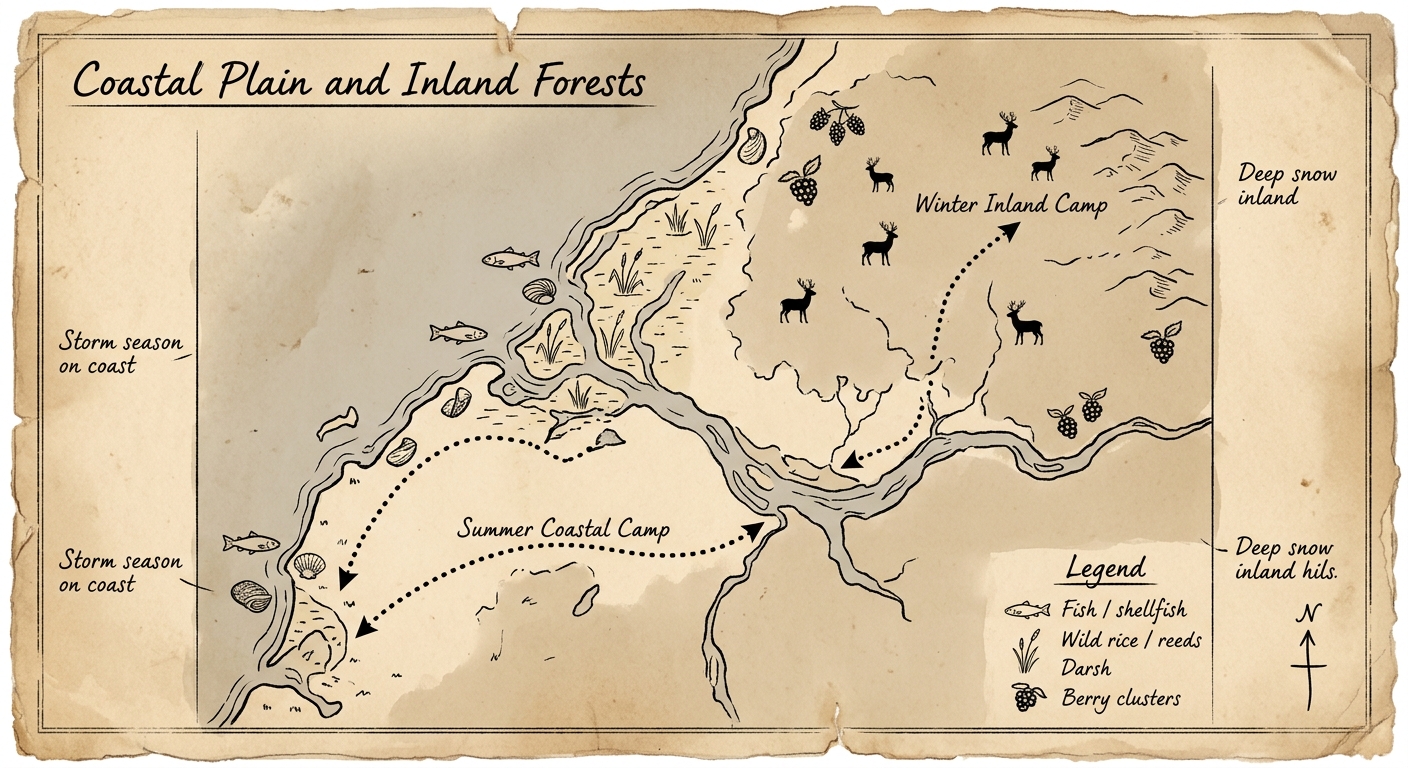
This reproduced coastal-and-inland map was recorded by an observer in a northeastern woodland region. Study the coastline, rivers, landforms, resource symbols, and travel routes. Use the document to explain how geography and climate influenced where people lived and moved during different seasons.

Sepia-toned scanned map showing a coastline and inland forests with labeled summer and winter camps, resource symbols, and dotted seasonal travel routes.

Asemmisa {{asɛmmisaAhyɛnsode}}
16.

Which map detail best shows that people chose settlement locations based on access to specific geographic features?

Asemmisa {{asɛmmisaAhyɛnsode}}
17.

Which statement best explains how the travel routes show adaptation to regional geography?

Asemmisa {{asɛmmisaAhyɛnsode}}
18.

Which inference best explains how climate could affect where people stayed in different seasons?

Asemmisa {{asɛmmisaAhyɛnsode}}
19.

Explain how geography influenced migration and cultural development.

In one well-formed paragraph, cite two specific map details (such as landforms, resources, or routes) and explain what each detail suggests about how people met their needs.

Asemmisa {{asɛmmisaAhyɛnsode}}
20.

Choose one landform shown (coastline/estuary, river, marsh, forest, or hills).

In one paragraph, explain how that landform could shape both movement and resources for people living in the region.

Use at least one detail as evidence.

(Historical Document):

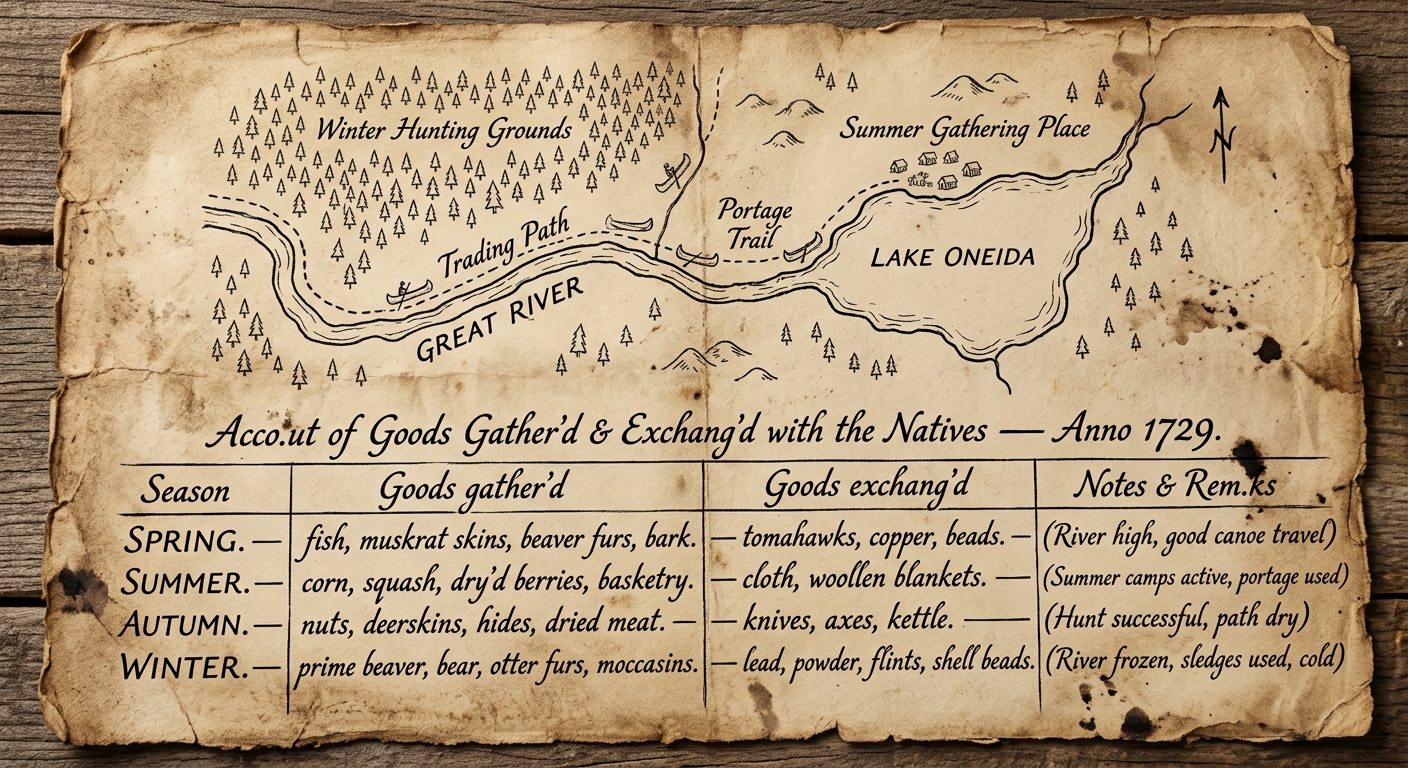
This reproduced route-and-ledger page was kept by a trader in a northeastern woodland region. Study the travel sketch and the seasonal list of goods gathered and exchanged. Use this evidence to explain how geography and climate influenced economic choices and seasonal trade.

Sepia-toned document with a small route map and a seasonal trading ledger listing goods gathered and exchanged in different seasons.

Asemmisa {{asɛmmisaAhyɛnsode}}
21.

Which statement best explains how geography influenced the region’s economic activity?

Asemmisa {{asɛmmisaAhyɛnsode}}
22.

Which evidence best supports the idea that climate/seasonality affected the economic system in the region?

Asemmisa {{asɛmmisaAhyɛnsode}}
23.

Which conclusion best describes the type of economic system shown?

Asemmisa {{asɛmmisaAhyɛnsode}}
24.

Explain how geography and climate influenced economic choices (what to gather, what to exchange, and when).

In one well-formed paragraph, cite two specific pieces of evidence from the map or ledger and explain what each suggests.

Asemmisa {{asɛmmisaAhyɛnsode}}
25.

Imagine one key geographic feature changes (for example, the river freezes earlier, flooding increases, or a portage trail becomes unusable).

In one paragraph, explain one likely economic impact on trade or resource gathering, using at least one detail from as evidence.