Use the historical document(s) and the short readings in the left panel to answer the associated questions.
(c. 1480): Navigator’s sea chart
European sailors improved exploration by using better ships and better navigation tools. A caravel could sail closer to the wind, and devices like the magnetic compass and astrolabe helped crews keep a course and estimate location, making longer ocean voyages more reliable.
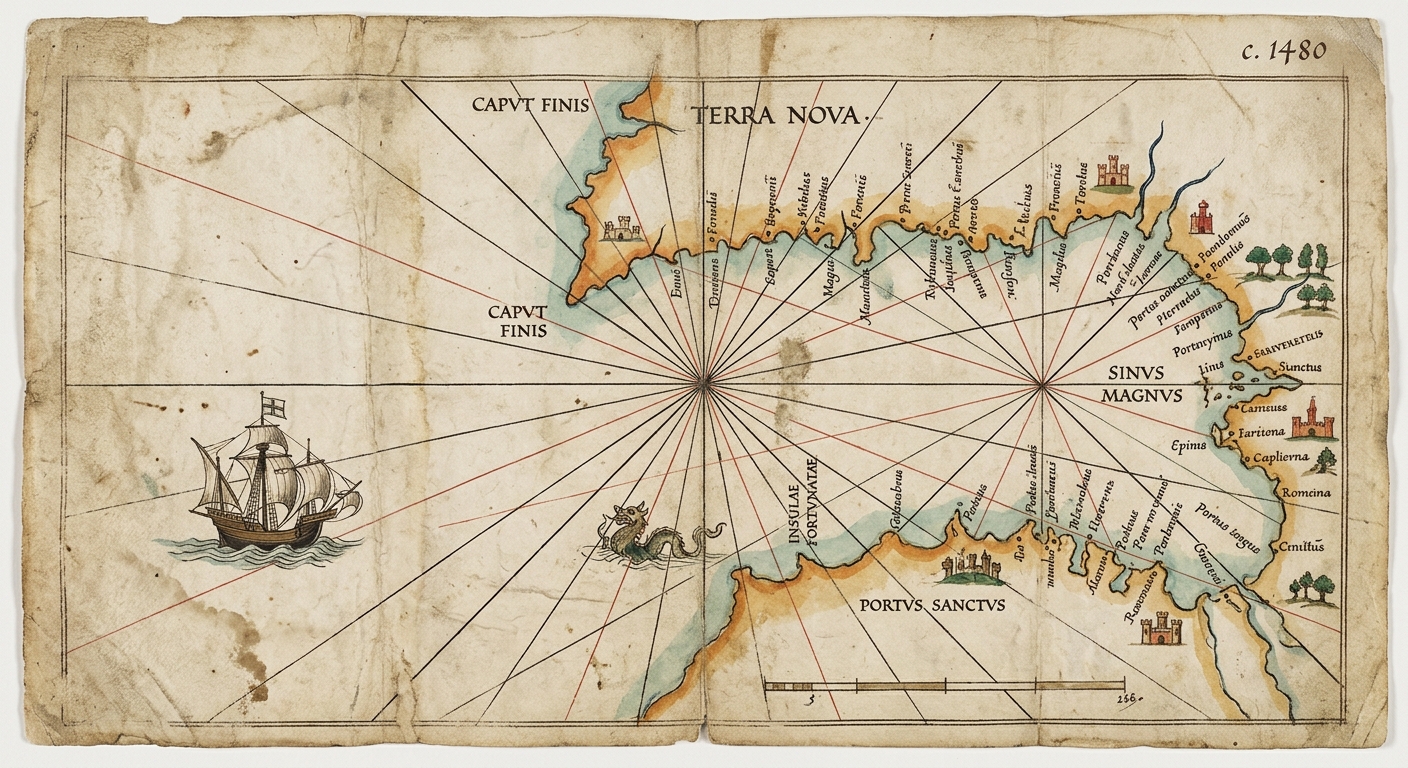
Which tool BEST explains how sailors could keep a steady direction across open ocean?
Which inference about European exploration is BEST supported by the reading stimulus?
Which claim is BEST supported by evidence from BOTH the image and the reading stimulus?
Explain how TWO improvements (such as the caravel, magnetic compass, astrolabe, or better maps) could make European exploration more successful.
Cite one detail from the image and one detail from the reading.
Explain one way improved navigation and mapmaking could affect European goals (such as trade, claiming territory, or creating colonies).
Use at least two pieces of evidence from the sources.
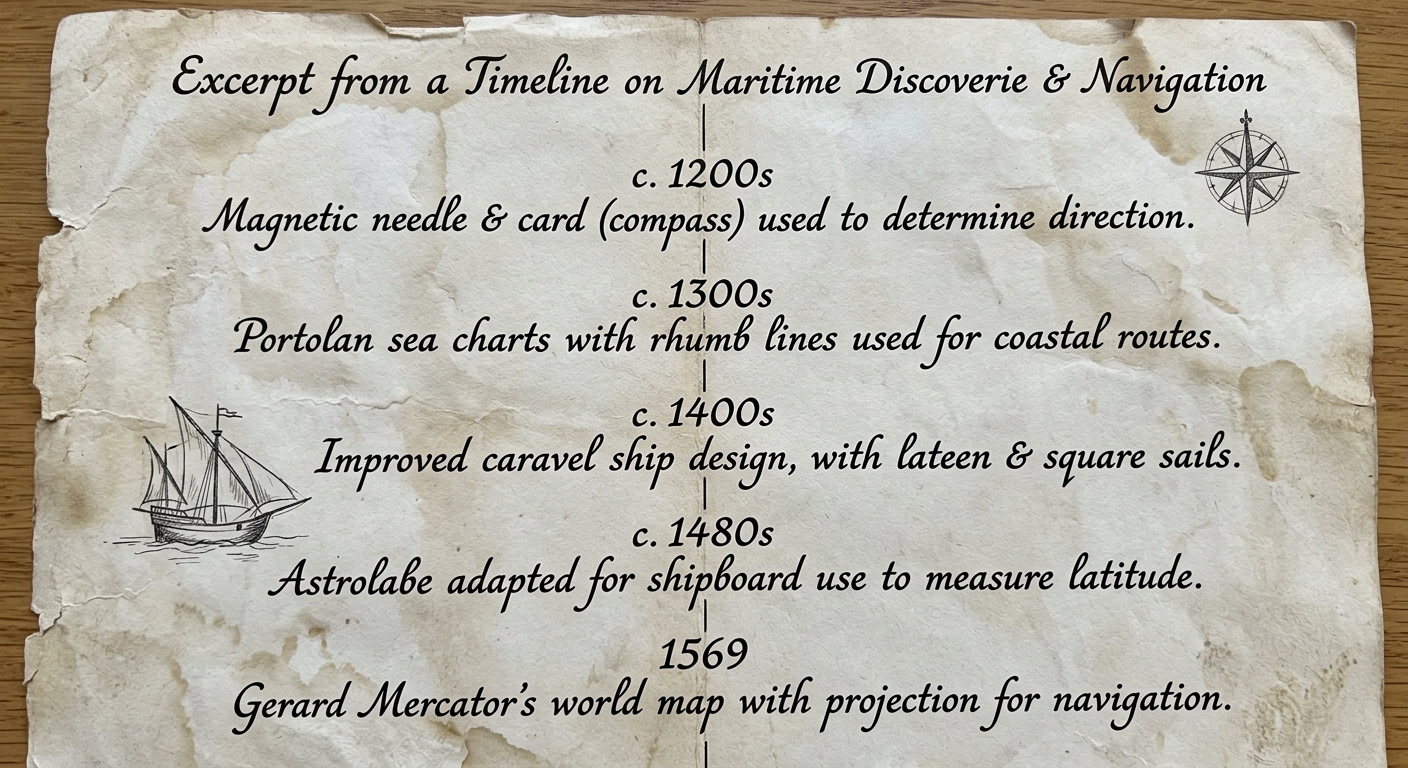
(c. 1200s–1500s): Timeline of navigation improvements
European exploration expanded over time as sailors adopted new tools and ideas. This timeline shows how direction-finding, mapmaking, and ship design developed in sequence. Earlier advances helped later voyages become longer and more predictable, which supported trade and territorial claims across oceans.

Which development happened latest in time?
Which sequence matches the order shown (earliest → latest)?
Which earlier development most directly helped sailors make planned ocean routes before accurate longitude was possible?
Explain why the sequence of improvements matters for understanding how European exploration expanded.
Use at least two pieces of evidence (one from the timeline and one from the reading stimulus).
Choose ONE pair of developments that occur next to each other in time.
Explain how the earlier development could help the later one.
Use evidence from the timeline.
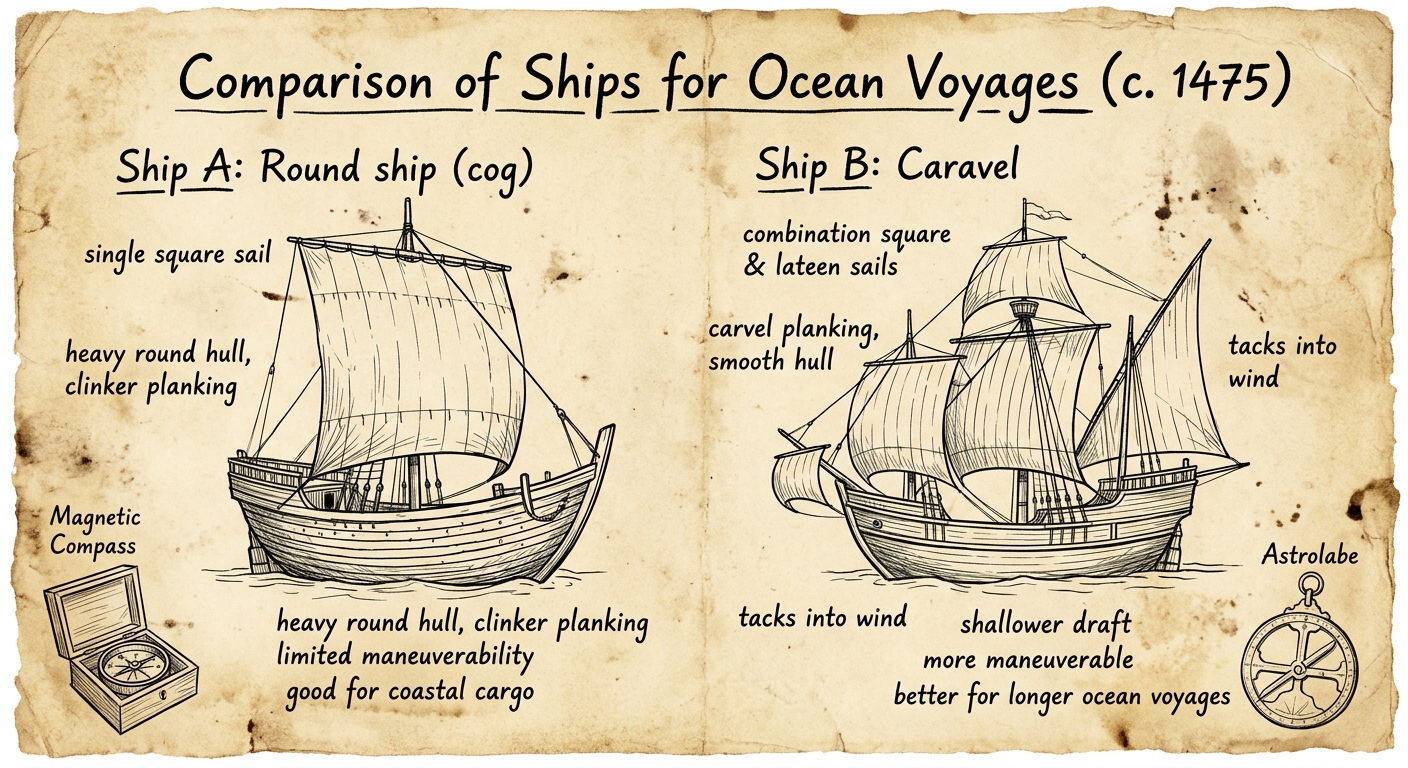
(c. 1475): Shipwright’s comparison sketch
As European kingdoms competed for trade routes, shipbuilders tested designs for longer voyages. This sketch compares an older round ship with a caravel. Notes highlight sail types, handling, and shallow draft—features that, with tools like the compass and astrolabe, made open-ocean travel more practical.

Which feature BEST explains why a caravel could be more useful than an older round ship for long exploration voyages?
Which statement BEST contextualizes why European rulers would support ship and navigation improvements?
Which comparison between Ship A and Ship B is BEST supported by evidence?
Explain ONE similarity and ONE difference between the two ships (or between ships and navigation tools) and how that would affect exploration.
Use at least two pieces of evidence from the sources.
Explain how improvements in ship design and navigation tools could change what European explorers were able to do (such as trade, claiming territory, or founding colonies).
Use evidence from BOTH the document and the reading stimulus.
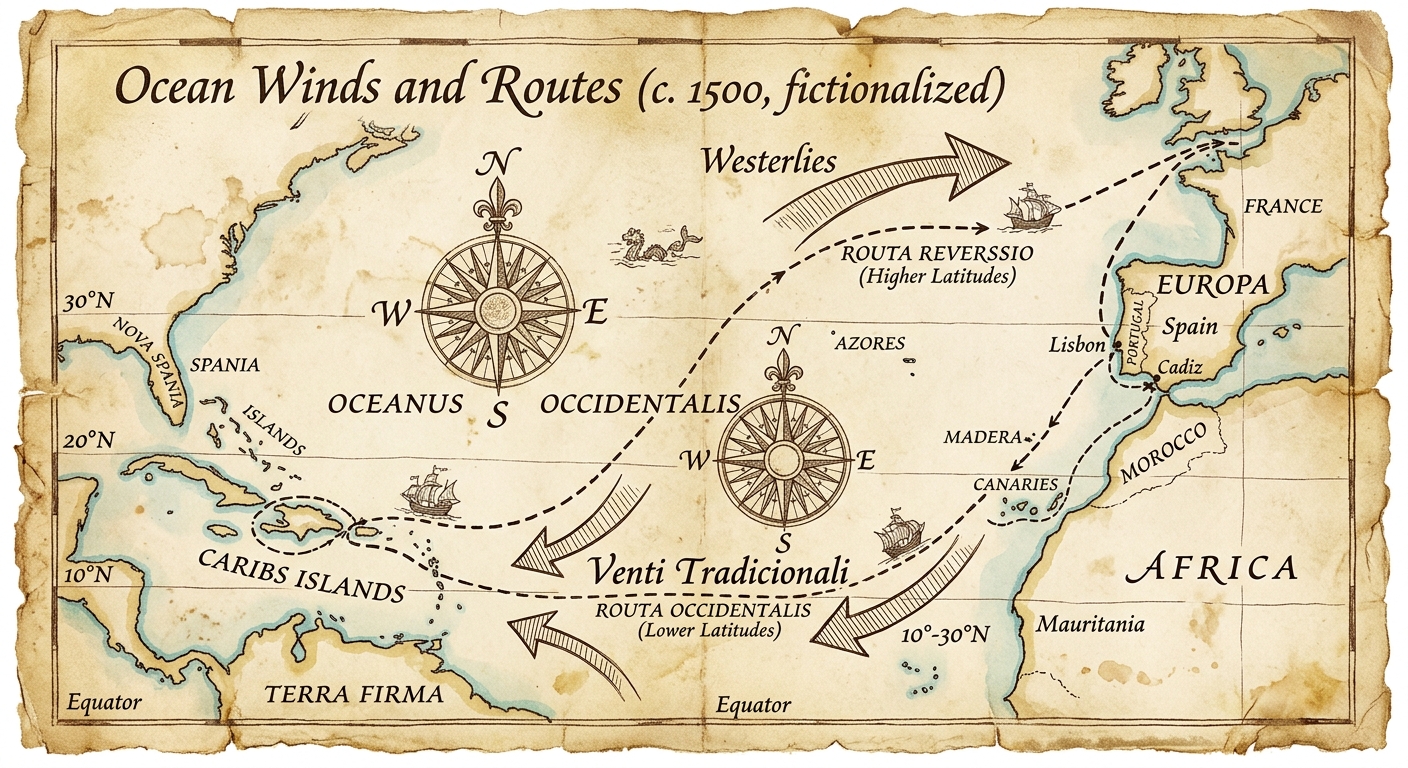
(c. 1500): Atlantic winds and routes map
European sailors combined geographic knowledge with new technology to plan ocean voyages. By using wind patterns, latitude lines, and improved maps, crews could choose routes across the Atlantic and back. Tools like the magnetic compass and better ship design helped sailors stay on course when land was out of sight.

Which geographic factor would MOST help a ship travel west from Europe toward the Caribbean?
Which inference about the return trip to Europe is BEST supported?
Which claim is BEST supported by evidence from BOTH the document and the reading stimulus?
Explain how geographic information (such as winds, latitude, or routes) and ONE technological improvement (such as the compass or ship design) could make Atlantic voyages more successful.
Use at least two pieces of evidence—one from the map and one from the reading.
Explain one way that improved geographic understanding (winds/routes/latitude) could support European goals during the Age of Exploration (such as trade, claiming territory, or creating colonies).
Use at least two pieces of evidence from the document and the reading stimulus.
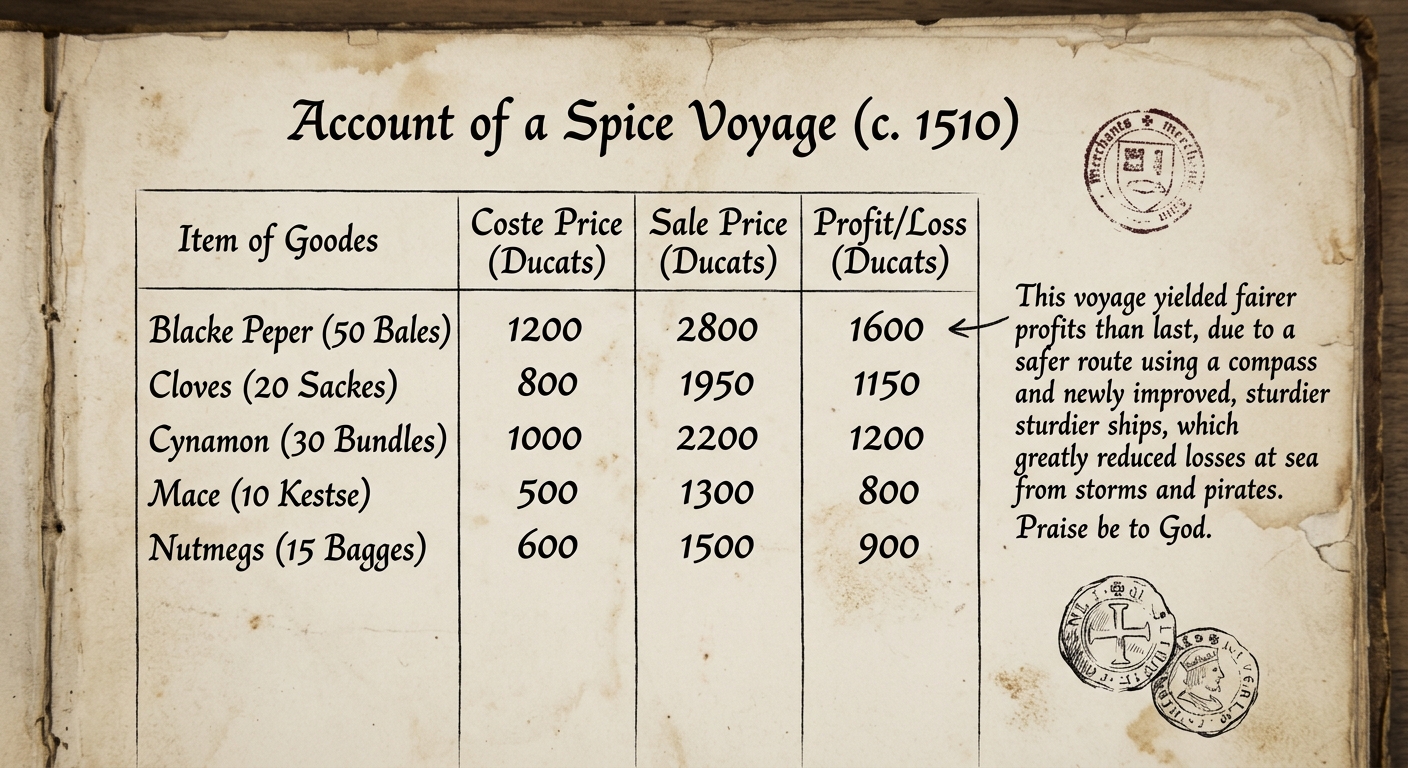
(c. 1510): Merchant ledger from a spice voyage
European merchants and rulers invested in long-distance voyages to earn profit from valuable goods. This ledger records costs and sales from an overseas cargo. Improvements like sturdier ships, better maps, and the magnetic compass helped crews travel more predictably, reducing losses and making trade routes more reliable.

which economic goal is BEST supported by the evidence?
Which conclusion about long-distance trade is BEST supported by the numbers?
Which inference is BEST supported about why a government might support navigation improvements during the Age of Exploration?
Explain how ONE technological improvement (such as better maps, the magnetic compass, or ship design) could change the costs, risks, and profits of long-distance trade.
Use at least two pieces of evidence—one from the ledger and one from the reading.
Explain how the evidence in the ledger fits an economic system in which governments and merchants work together to increase national wealth through trade.
Use at least two pieces of evidence from the document and the reading stimulus.